

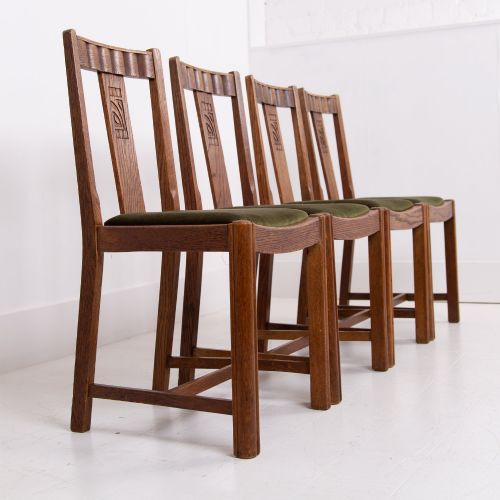
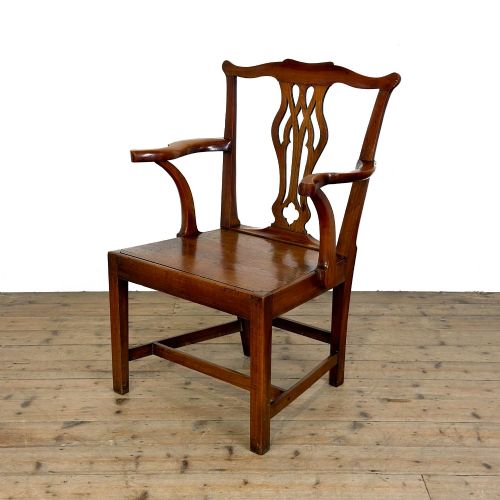
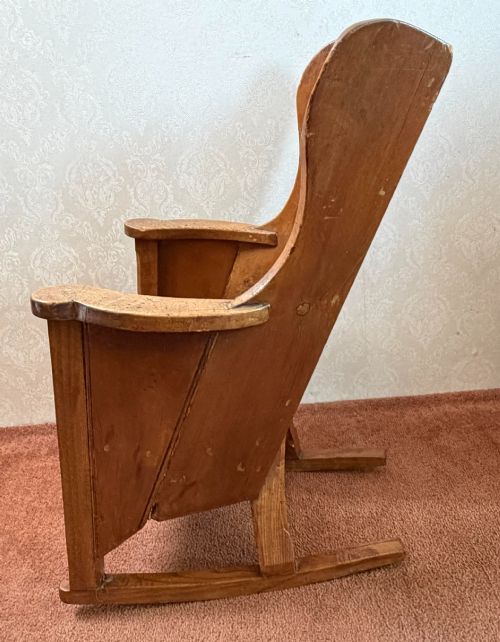
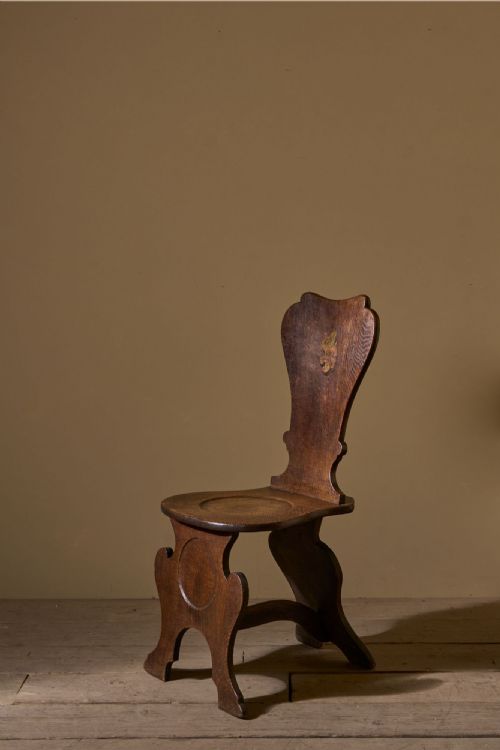
Solid Seat Chair
A solid seat chair offers robust, unyielding comfort built from heavy native timbers like oak, elm, and ash.
Solid Seat Chair
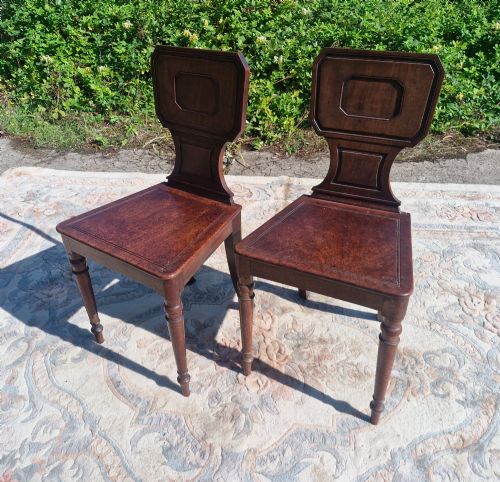
A solid seat chair encompasses a wide functional spectrum, ranging from formal hall chairs and dining seats to sturdy country armchairs and kitchen Windsors. When exploring this selection, buyers frequently encounter 19th-century oak and mahogany hall pieces alongside rustic elm and ash country variations.
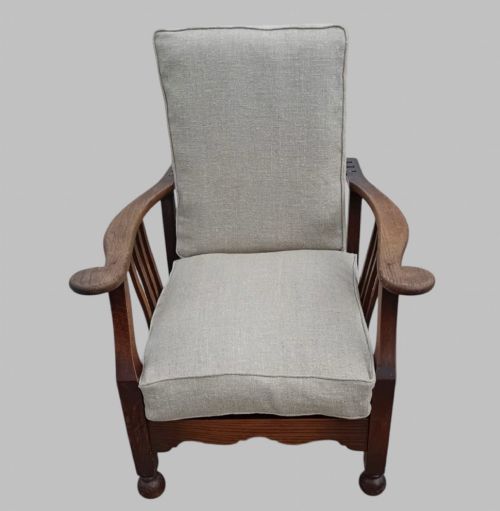
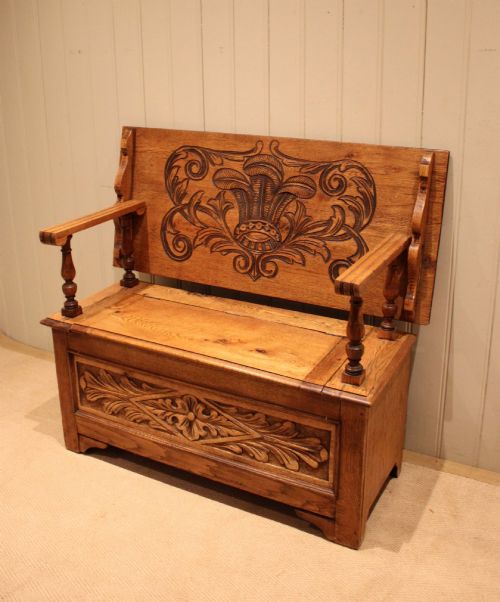
The category spans diverse forms such as swivel desk chairs, monks benches, box settles, and reclining armchairs. These items draw from periods including the 18th century, the Regency era, Victorian manufacturing, and Arts and Crafts workshops.
Originating primarily from domestic, ecclesiastical, and reception settings, these wooden seats provide enduring utility through unjointed or thickly planked timbers. They appear both individually and in matched or harlequin sets.
Materials and construction methods
Constructed predominantly from native hardwoods like oak, mahogany, elm, ash, and fruitwood, these chairs rely on heavy timber planks for their unyielding bases. Turnery, pegged joints, and carved details bind the uprights and backs directly to the thick wooden boards.
Makers utilised contrasting woods such as ebony or walnut for decorative accents, while brass fittings and cane or rush elements occasionally supplement the primary timber structures. Surface finishes range from polished mahogany to waxed oak and natural fruitwood.
Solid Seat Chair Retail Price Guide 2026
Typical asking prices for solid seat chair among the pieces listed under this phrase on Sellingantiques today, from the lower quarter to the upper quarter. They describe what is for sale here now, not the wider market.
Miniature doll's house chairs bring full-scale joinery techniques down to palm-sized proportions.
Distinctions in construction and design
Quality in a solid seat chair depends upon the selection of timber, the weight of the plank used for the base, and the crispness of any carved or turned ornamentation. Superior examples display fine grain figuring in woods like oak and mahogany, paired with tight, original joinery.
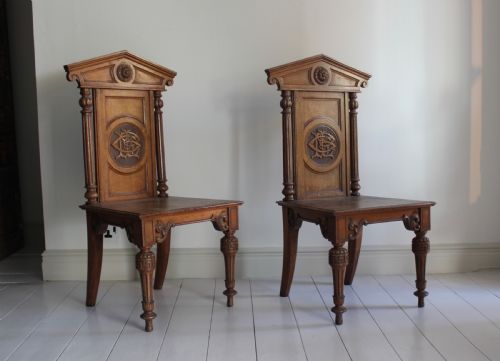
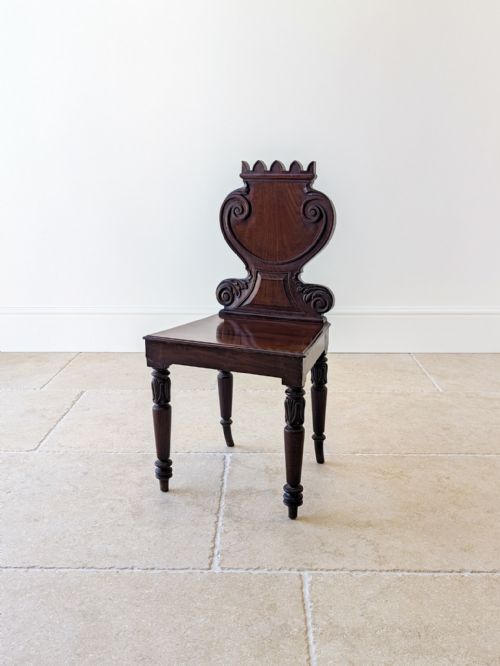
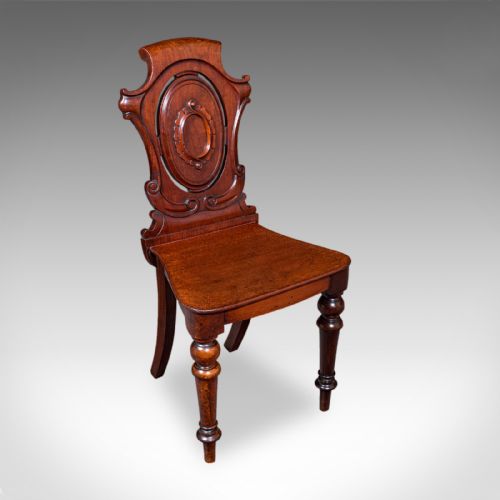
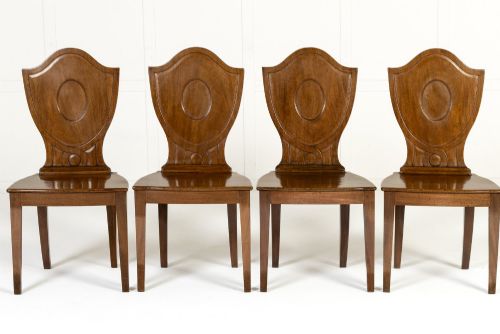
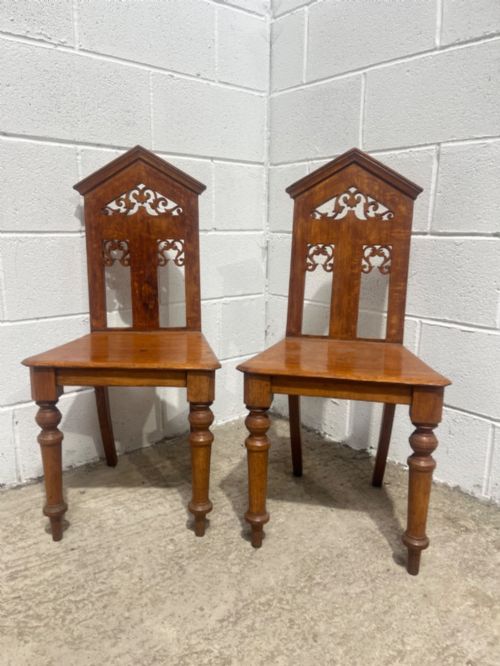
Design complexity also separates standard utility furniture from finer items, such as shield-back hall chairs with heraldic carving or refined Chippendale and Gothic Revival styling. Maker attribution, such as factory stamps on dining sets, elevates an example above anonymous provincial work.
Strahan of Dublin·Titchmarsh and Goodwin
The Solid Seat Chair Glossary
- Hall chair
- A rigid wooden seat, often featuring a carved or shield-shaped back, designed for occasional use in entranceways rather than prolonged sitting.
- Windsor
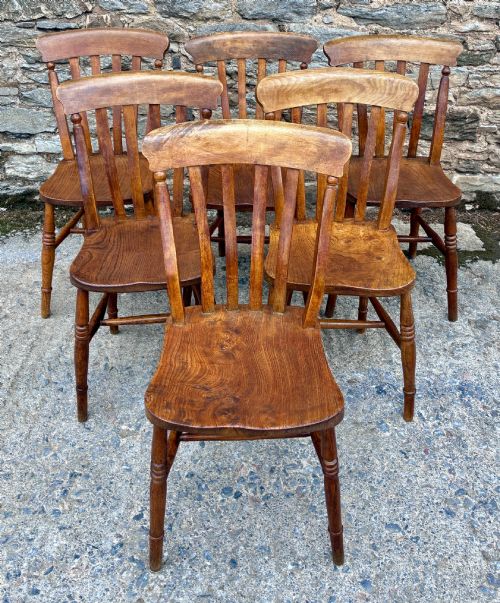
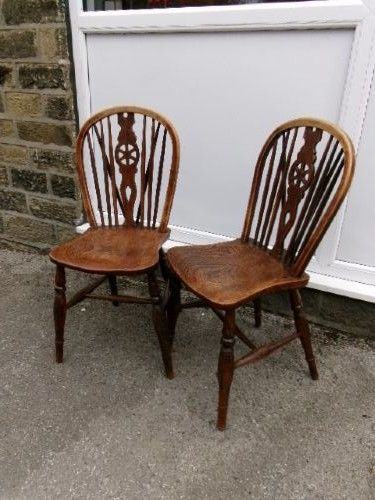
- A traditional chair construction where legs and back spindles are wedged directly into a thick wooden seat plank rather than a framed chassis.
- Wainscot
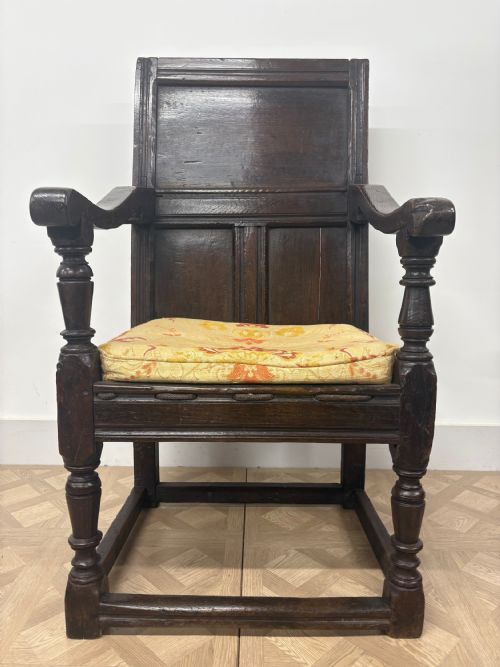
- An early heavy armchair form constructed predominantly from panelled oak, reflecting medieval and 17th-century interior joinery.
- Harlequin set
- A collection of chairs that are closely related in style, period, and material, but assembled from different original sources rather than made together.
- Settle
- A high-backed wooden bench with solid arms and an enclosed lower box or storage base beneath the seating plank.
Solid Seat Chair: Frequently Asked Questions
Where were hall chairs placed?
Hall chairs stood in entrance lobbies, hallways, and reception rooms to accommodate visitors waiting briefly indoors. Their rigid wooden construction and upright backs encouraged posture rather than lounging.
They frequently displayed family crests or decorative shield backs suited to formal interiors.
Are these chairs comfortable for daily use?
Solid timber seats lack soft padding, making them firm for extended sitting unless paired with a loose cushion. Country armchairs and Windsor designs offer ergonomic contouring carved directly into the wood.
Desk chairs and reclining armchairs provide more flexible positioning for prolonged tasks.
What woods were used for country chairs?
Country makers relied on accessible regional hardwoods like elm, ash, fruitwood, and oak for everyday seating. Elm provided exceptional toughness for solid seats because its interlocking grain resisted splitting.
Ash offered strong, flexible spindles for stick-back and ladder-back construction.