
Carved Back Hallway Chair
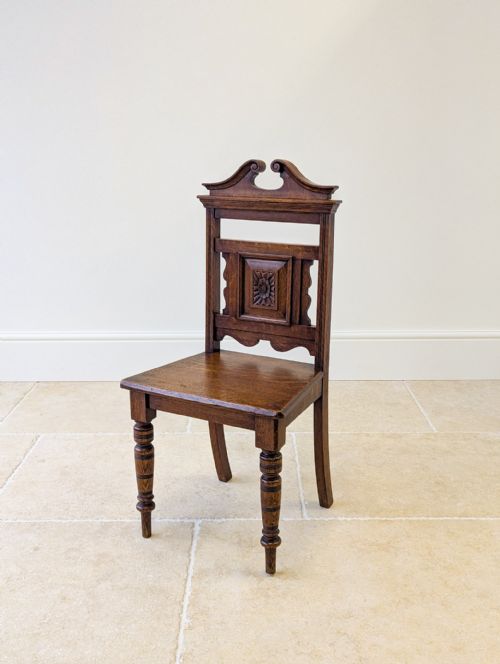
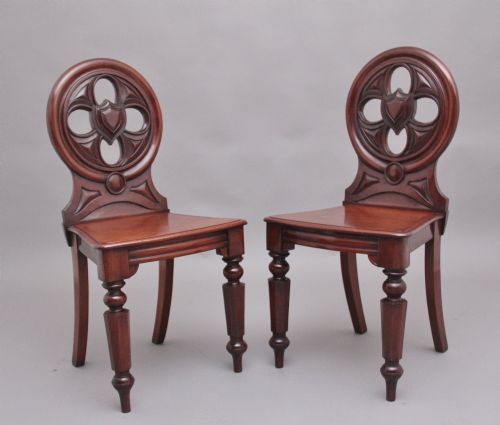
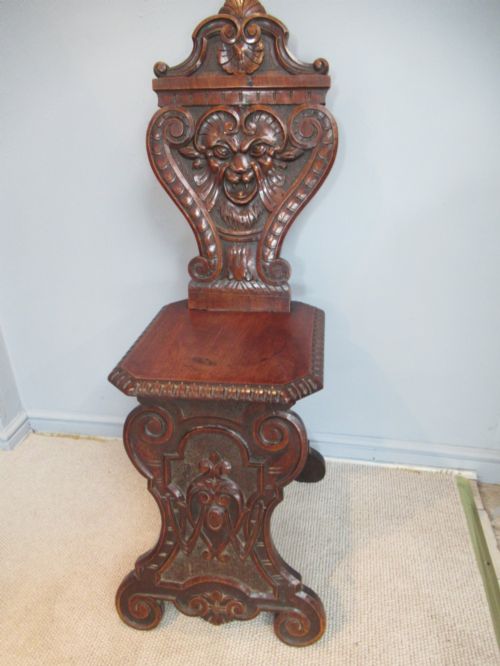
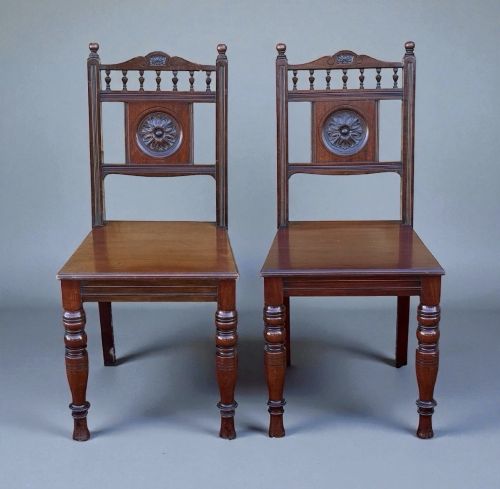
A carved back hallway chair offers an immediate architectural presence near an entrance, crafted in mahogany or oak during the nineteenth century.
Carved Back Hallway Chair
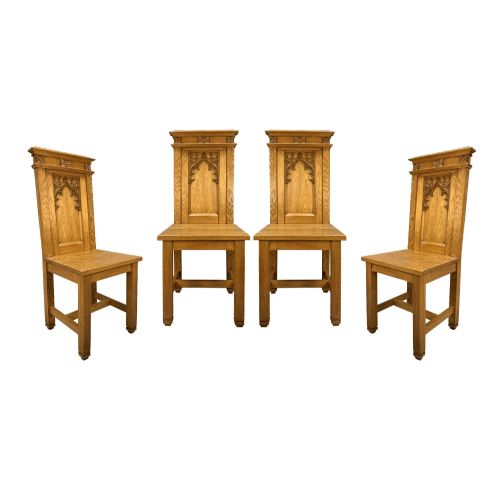
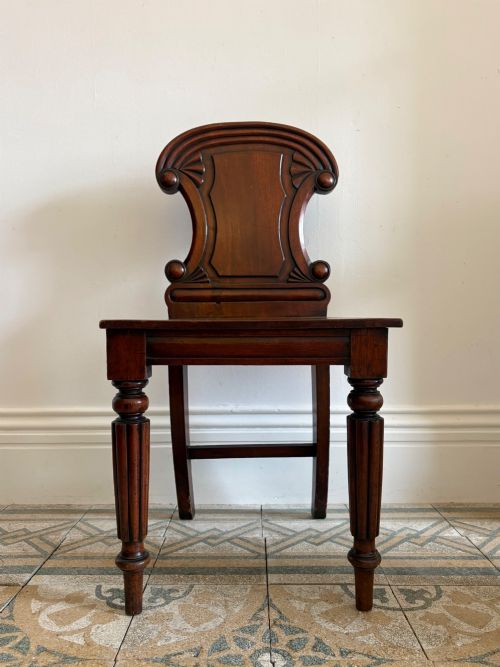
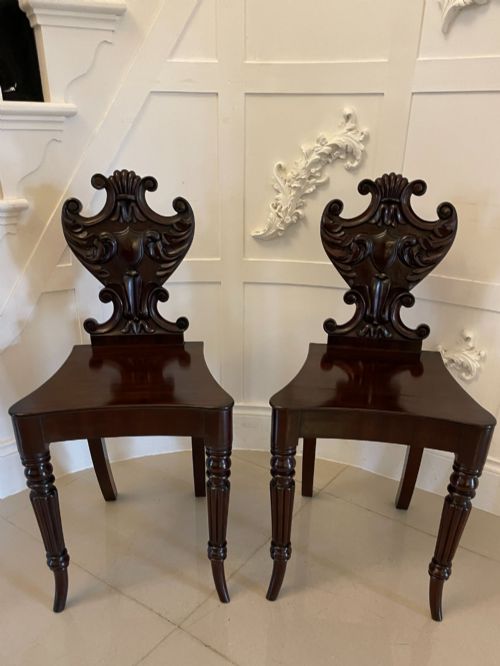
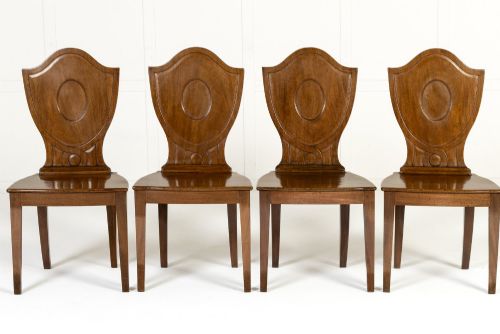
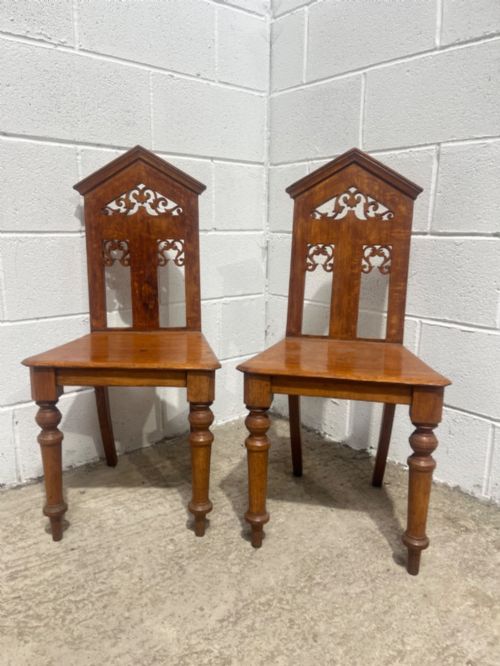
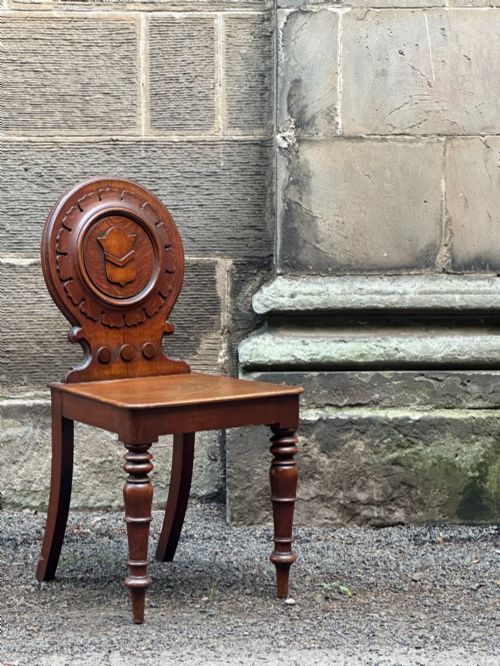
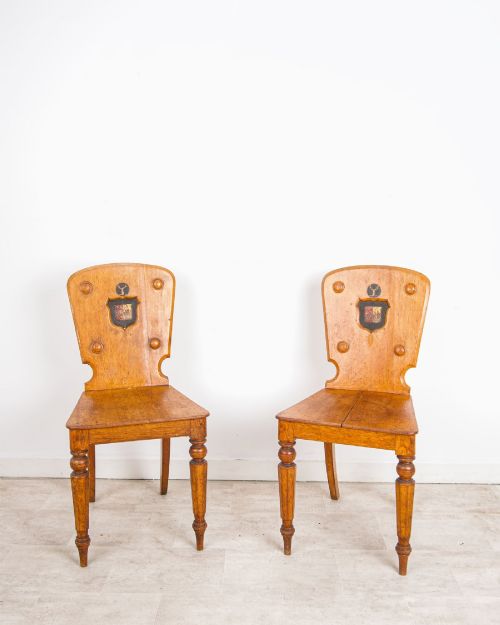
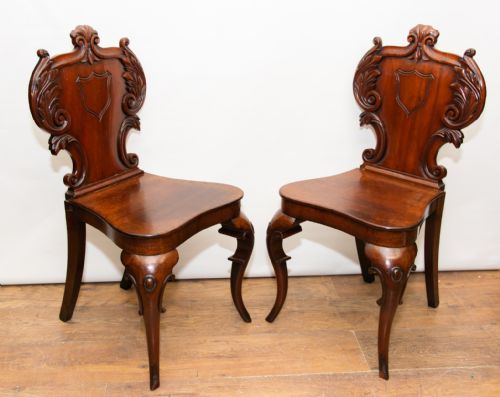
A carved back hallway chair stands as a functional piece designed for an entrance hall or passage, appearing frequently in mahogany and oak timber. These items frequently display solid wood seats and elaborate carved crests, including heraldic shields and shell motifs. The selection spans the Victorian era, Regency period, and William IV years.
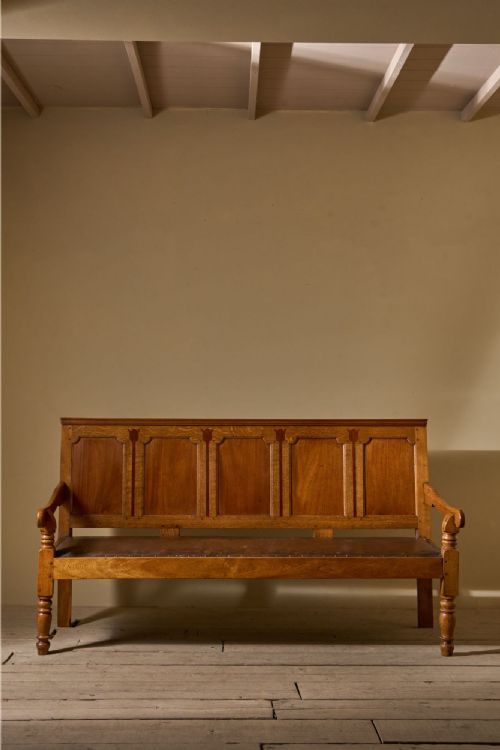
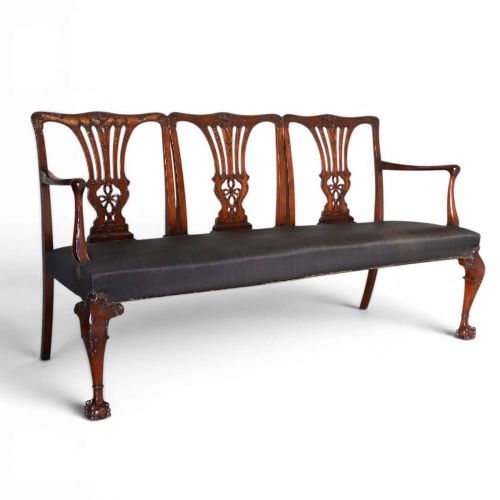
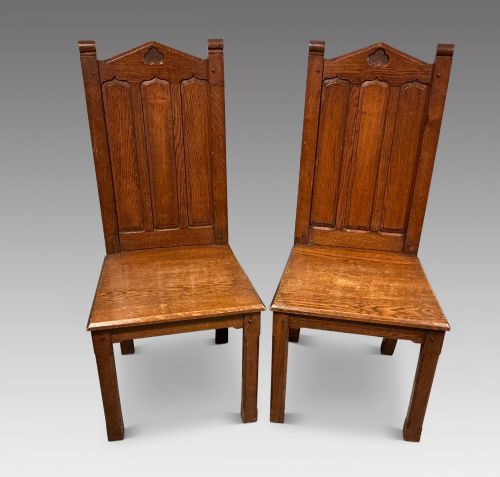
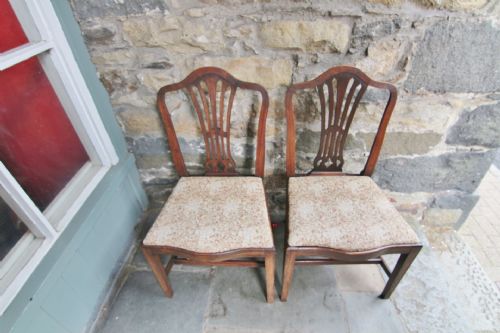
Most examples found on this page date from the nineteenth century, including specific decades such as the eighteen-eighties and eighteen-nineties. Forms range from single hall chairs to matched pairs and sets, alongside occasional oak benches and settees with carved backs. Stylistic influences incorporate Gothic Revival and Georgian Revival designs.
Makers and origins stretch across English workshops, alongside Scottish and Italian pieces from the same historical periods. The core purpose remains an upright seat placed in a hallway, distinguished by carved wooden backs rather than deep upholstery.
Distinctions in quality
Quality rests in the depth and sharpness of the hand-carving on the back panel, where crisply defined heraldic shields or shell motifs separate superior items from simpler production. The choice of timber grain, particularly figured mahogany or quarter-sawn oak, elevates a piece further.
Proportion and structural integrity define the remaining differences across the range. Pieces retaining their original solid wood seats without extensive timber replacement command greater appreciation among collectors.
Heraldic shield backs allowed Victorian homeowners to display imaginary family crests while waiting for the carriage.
The Carved Back Hallway Chair Glossary
- Shield back
- A chair back shaped in the outline of a heraldic shield, frequently carved with crests or coats of arms. This form became popular during the Regency and Victorian periods.
- Gothic Revival
- An architectural and decorative style drawing on medieval forms, featuring pointed arches and tracery. Items in this style display heavy oak construction and solemn ornamentation.
- William IV
- A brief transitional design period spanning the early nineteenth century between Regency and Victorian eras. Furniture from this time combines robust proportions with classical carving.
- Regency
- A style period spanning the early nineteenth century characterised by classical restraint and polished mahogany surfaces. Pieces often reference ancient Greek and Roman forms.
Carved Back Hallway Chair: Frequently Asked Questions
Where should I place a hallway chair?
These chairs suit narrow spaces like corridors, landings, and entrance halls where a slim, upright profile is practical. Their solid wooden seats mean they function well as accent pieces rather than lounging chairs.
Because they feature decorative carved backs, they look best positioned against a clear wall where the woodwork remains visible.
How do I care for antique wood?
Maintain the timber by applying a traditional beeswax polish occasionally to nourish the surface of the mahogany or oak. Avoid placing the chair near direct heat sources or strong sunlight to prevent the wood from drying out.
Regular dusting with a soft, dry cloth preserves the hand-carved details on the back panels.
Were these chairs used for sitting?
Hall chairs were traditionally designed for brief use by callers waiting in an entrance hall rather than for long periods of sitting. Their solid wood or carved seats reflect this transient function.
Despite this historical purpose, they serve well today as striking decorative seating or sculptural elements in a room.
How can I tell the period?
Dating relies on identifying stylistic markers such as Gothic Revival tracery, Regency curves, or Victorian proportions. The choice of wood also provides clues, as oak dominates earlier and revival pieces while mahogany prevails in Regency and Victorian designs.
Examining the construction methods underneath the seat reveals hand-cut joinery typical of nineteenth-century workshops.