


Antique Needlepoint Armchair
An antique needlepoint armchair brings textured wool upholstery and timber frames together, offering rich historical character for a traditional room.
Antique Needlepoint Armchair
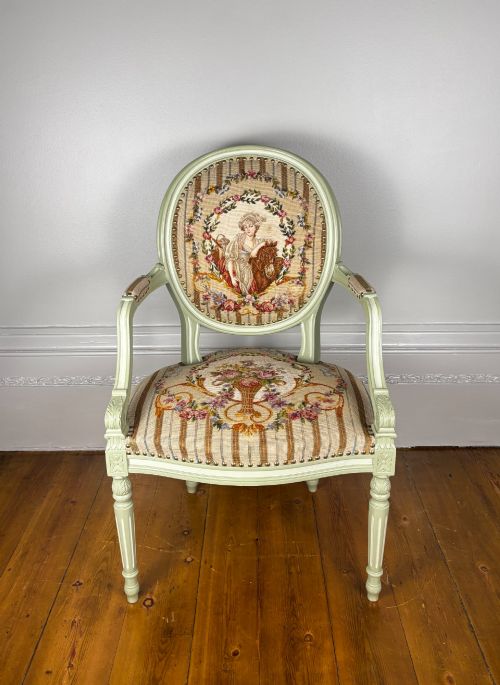
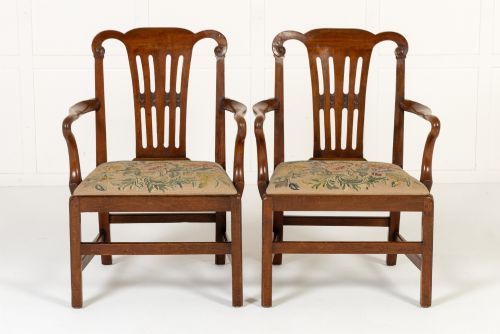
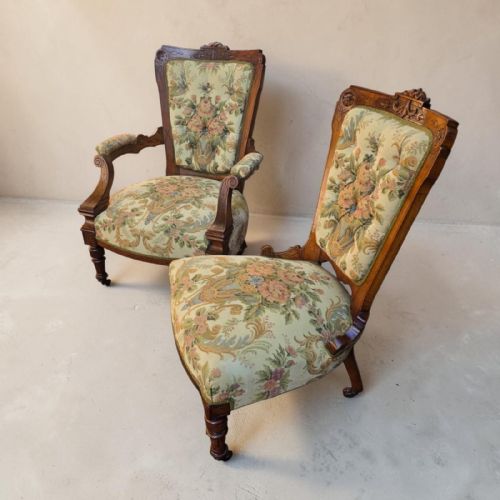
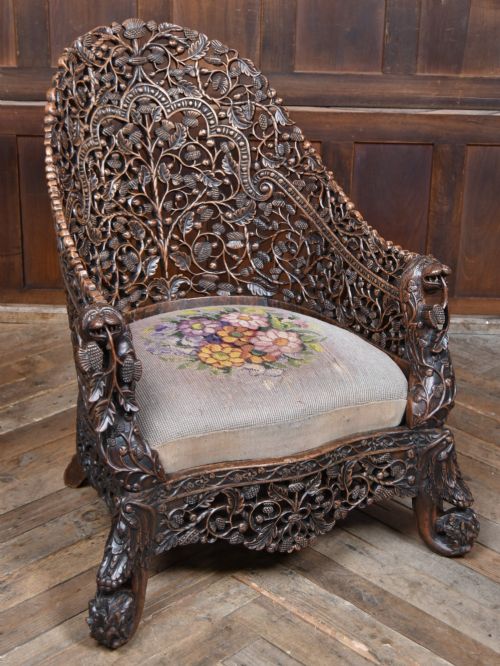
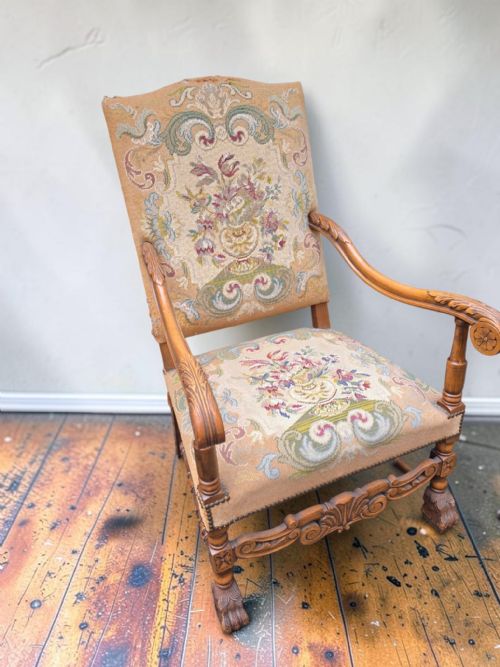
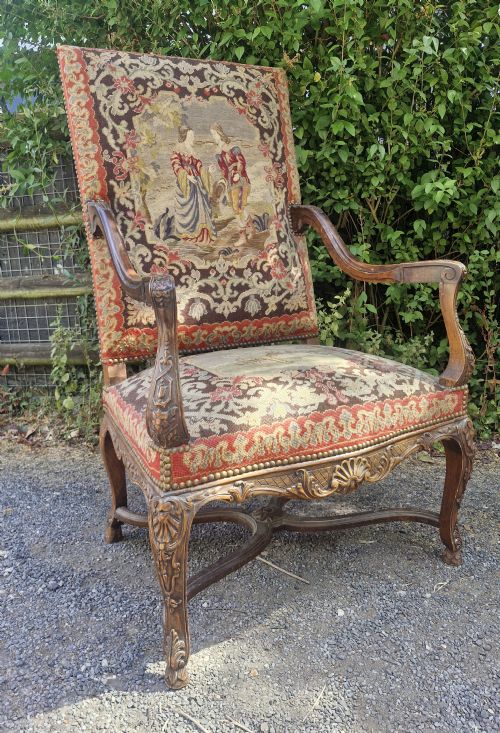
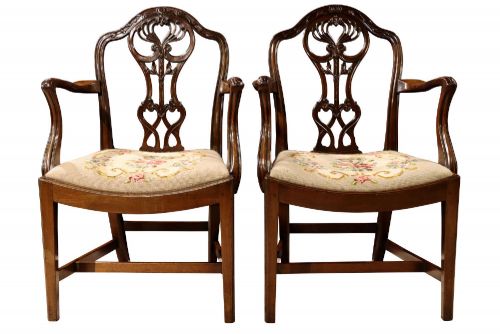
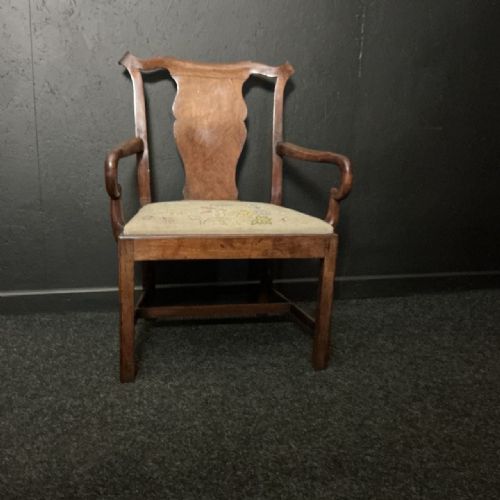
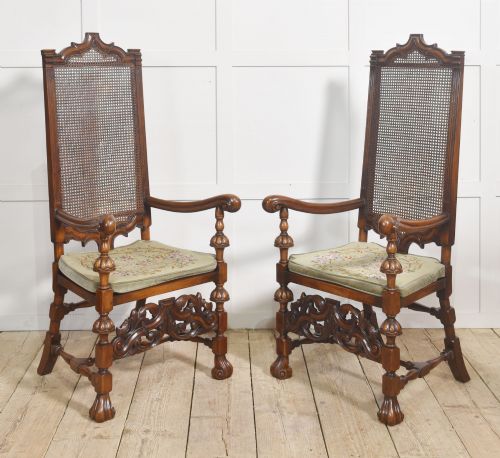
An antique needlepoint armchair combines a sturdy wooden frame with detailed tapestry work on the seat and backrest. These pieces appear across several periods, most commonly taking the form of Victorian walnut salon chairs or robust 19th century elbow chairs.
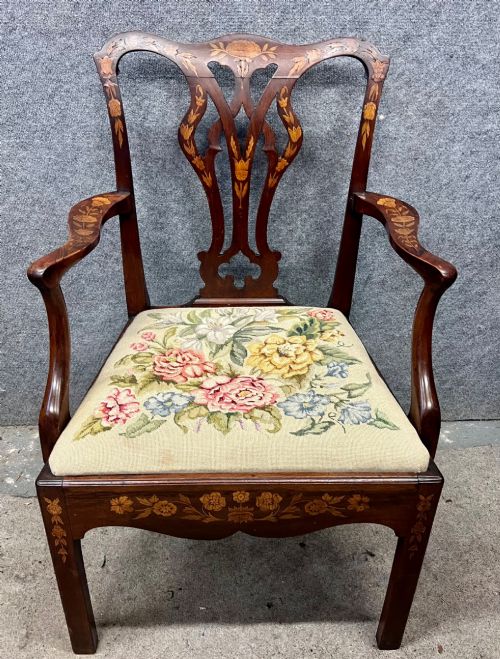
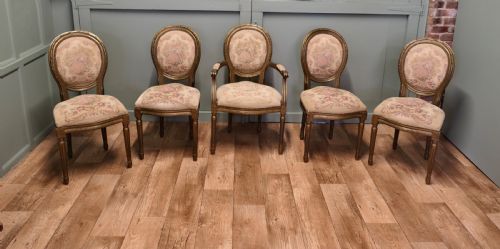
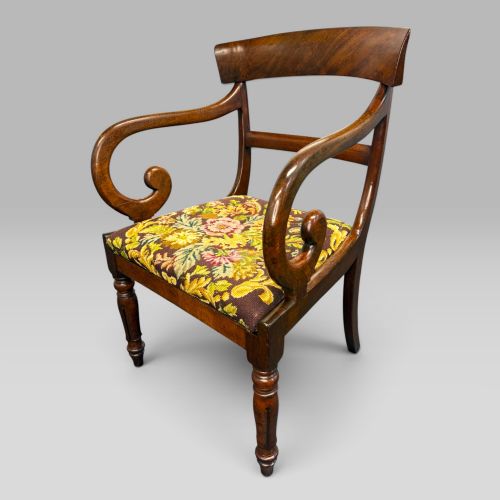
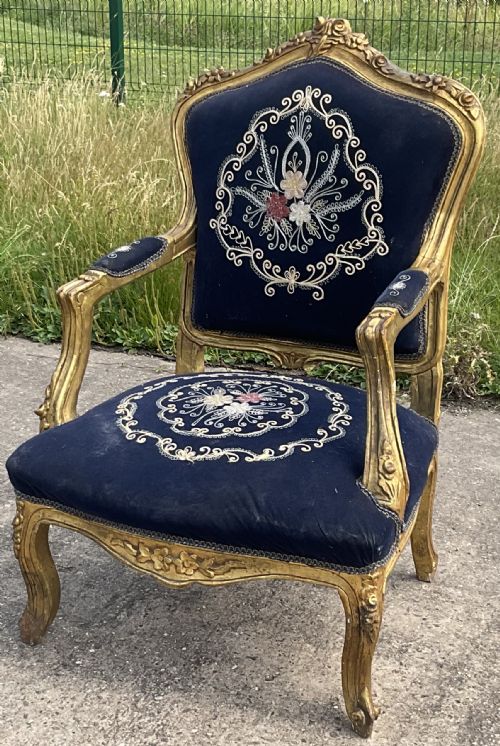
The selection ranges from French walnut fauteuils with floral textile panels to sturdy English mahogany and beech designs. Buyers find various seating forms here, including occasional chairs, fireside seats, and larger scroll-backed armchairs upholstered in wool tapestry.
How they were made
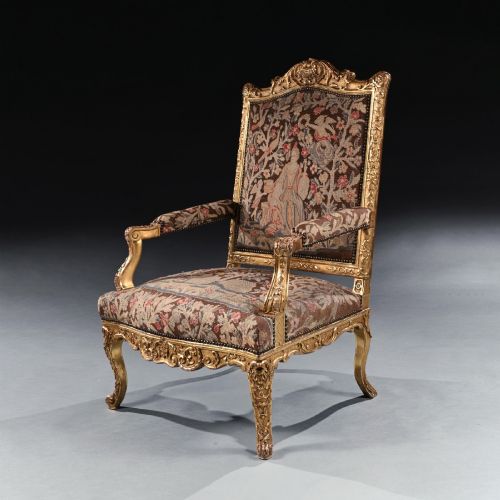
Cabinetmakers constructed the supportive skeletons using timbers such as mahogany, walnut, beech, and giltwood, often employing carved details or satinwood inlay. Frames reflect regional cabinetmaking traditions from English workshops and French ateliers.
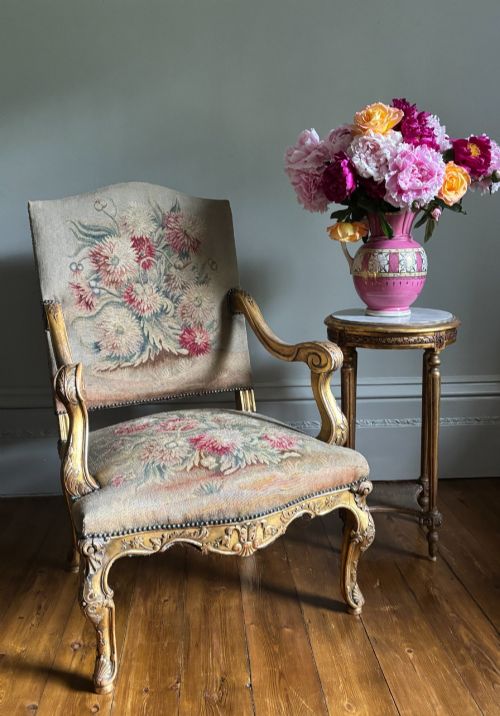
The upholstery consists of wool tapestry and needlepoint textile panels, worked by hand with botanical or figurative motifs before being secured to the wooden frames with brass tacks or traditional webbing.
Antique Needlepoint Armchair Retail Price Guide 2026
Typical asking prices for needlepoint armchair among the pieces listed under this phrase on Sellingantiques today, from the lower quarter to the upper quarter. They describe what is for sale here now, not the wider market.
Listings feature timber frames in walnut, mahogany, beech, and giltwood, paired with wool tapestry and needlepoint upholstery.
What varies in quality
The refinement of the carved woodwork distinguishes the examples, with crisp hand-carving on walnut or giltwood frames sitting above simpler turned or plain timber legs. Dense needlepoint work utilising fine petit point stitches shows greater artisan effort than coarser wool upholstery.
Structural integrity of the wooden joints and the original tension of the internal webbing dictate the durability of the seating. Pieces retaining their original period frames alongside well-preserved tapestry panels represent the upper end of the selection.
Warings·Holland and Sons
The Antique Needlepoint Armchair Glossary
- Needlepoint
- A type of counted thread embroidery stitched over an even-weave canvas mesh. This technique forms the durable pictorial and floral panels seen on the upholstery.
- Fauteuil
- An open-framed armchair with wooden armrests and upholstered elbow pads originating in France. These seats typically feature exposed carved walnut or giltwood frames.
- Giltwood
- Timber coated with a thin layer of gold leaf or gesso. This decorative finish appears frequently on formal French and Victorian salon chairs.
- Elbow Chair
- A dining or desk chair fitted with low armrests. These compact seats provide support without the bulk of a full armchair.
- Petit Point
- A fine needlepoint stitch worked over a single thread of canvas. It allows for high detail and intricate shading in textile panels.
Antique Needlepoint Armchair: Frequently Asked Questions
What is an antique needlepoint armchair?
These are historic seats constructed from timber frames and upholstered with hand-stitched wool tapestry panels. They combine structural woodwork with decorative textile art from past centuries.
Craftsmen built them using traditional joinery methods, resulting in sturdy seating designed for parlours, libraries, and bedrooms.
How do I care for needlepoint upholstery?
Protect the wool textile panels from direct sunlight to prevent the coloured threads from fading over time. Gentle vacuuming through a mesh screen helps remove dust without pulling the stitches.
Avoid harsh chemical cleaners on the fabric and maintain stable humidity levels in the room to protect both the wool and the underlying timber.
Can I use an antique armchair daily?
Most of these pieces are sturdy enough for regular seating if the wooden frame and internal webbing remain secure. Checking the stability of the joints ensures safe everyday use.
Lighter occasional chairs suit reading or sitting, while larger wingback and elbow styles offer robust support for daily living spaces.
How do I identify the period of a chair?
The timber choice, carved decorative motifs, and frame silhouette point toward specific historical eras like the Victorian or Georgian periods. Cabinetmaking techniques and tool marks on the hidden parts of the wood also offer clues to the date of manufacture.
Needlepoint styles often match the aesthetic of the frame, though some pieces feature later reupholstered textile panels.