
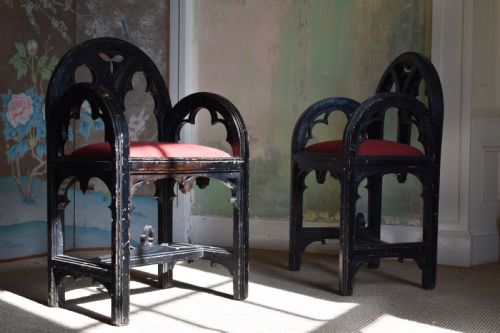


Ebonised Hall Chair
An ebonised hall chair brings dark, striking presence to an entrance, offering rigid posture and period character in equal measure.
Ebonised Hall Chair
The search for an ebonised hall chair uncovers a distinctive form of seating designed primarily for grand entrances, hallways and occasional reception spaces. These pieces combine dark, blackened timber surfaces with traditional upright proportions suited to formal interiors.
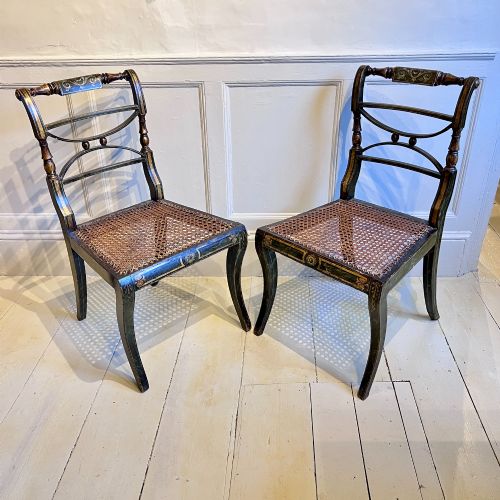
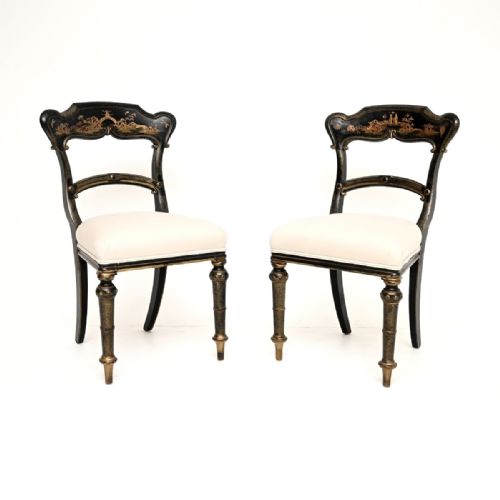
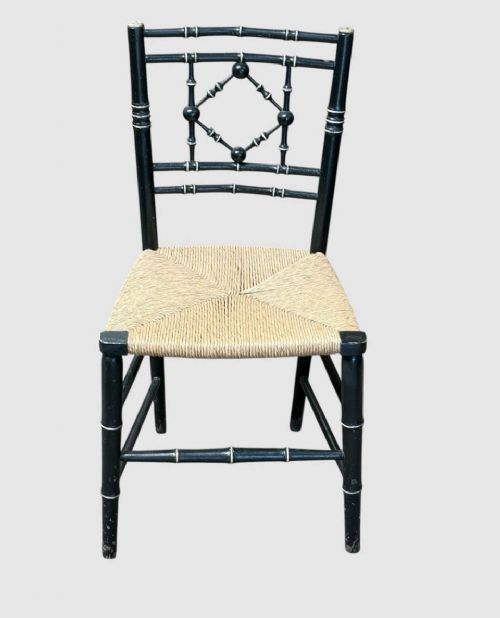
On this page, you are most likely to meet Victorian and Regency examples, alongside pieces influenced by the Aesthetic Movement and Gothic Revival. The selection spans single seats and matched pairs featuring carved wooden panels, painted details and cane seats.
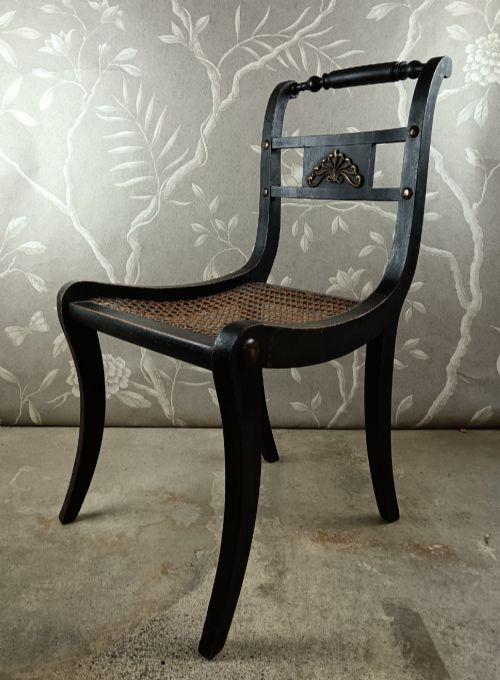
Makers often adopted historical idioms, producing chairs that reflect 17th-century styles, Chinoiserie decoration or classical sabre legs. The primary function remains decorative and structural, serving to anchor a hallway or landing with dramatic contrast.
How they were made
Makers achieved the dark, dense finish of an ebonised hall chair by staining, painting or japanning timber such as oak, mahogany or general hardwoods to emulate costly ebony. This dark ground frequently served as a base for parcel gilt highlights, polychrome paint or inlaid mother of pearl.
Structural integrity relied on traditional joinery, with turned legs, sabre legs or faux bamboo turnings supporting rigid solid wooden backs and carved panels. Seating surfaces incorporated woven cane, solid wood or drop-in pads upholstered in fabric.
Listings feature ebonised hall chairs spanning the Regency, Victorian, and Aesthetic Movement periods, constructed from woods including oak and mahogany.
What varies in quality
Quality in these chairs rests upon the depth of the ebonised finish, the crispness of carved wooden ornament and the integrity of the underlying timber. Superior examples display refined proportions, well-defined gilt or painted details and intact original cane or upholstery work.
Lesser pieces show crude timber selection, flat or uninspired carving, and later surface finishes that obscure the original character of the wood. The presence of matching pairs or sets elevates the distinction of the grouping within domestic interiors.
Bruce J. Talbert
The Ebonised Hall Chair Glossary
- Ebonised
- Wood finished to resemble ebony, typically through dark staining, painting or japanning. This technique gained immense popularity during the Regency and Victorian periods for creating high-contrast furniture.
- Aesthetic Movement
- A late 19th-century design style emphasising visual beauty over narrative or moral function. Pieces from this movement often incorporate stylised carving and ebonised surfaces.
- Sabre leg
- A curved, outwardly tapering chair leg inspired by classical Greek and Roman furniture. This form appears frequently on Regency pieces.
- Caning
- Woven rattan material used to form light, resilient chair seats and backs. Original cane work adds considerable interest to older seating.
Ebonised Hall Chair: Frequently Asked Questions
Where should I place an ebonised hall chair?
An ebonised hall chair belongs in spaces where its dark silhouette can stand against a pale wall, such as an entrance hallway, a wide landing or a bedroom corner. Because these chairs were built with upright postures for formal use, they function best as accent pieces rather than lounging seats.
Pairing a single chair with a small console table creates a deliberate focal point. Alternatively, matched pairs look striking when placed symmetrically on either side of a doorway.
Are these chairs comfortable to sit on?
Hall chairs were historically designed for short-term seating in entranceways rather than prolonged relaxation. Their rigid wooden backs and upright posture encourage proper posture rather than slouching.
Some variants feature woven cane or padded fabric inserts that offer slight give, but the primary purpose of the form remains decorative and architectural within a room.
How do I distinguish Regency from Victorian examples?
Regency ebonised chairs generally feature clean classical lines, such as sabre legs, reeded framing and restrained gilt decoration inspired by antiquity. They often retain light, crisp proportions typical of the early 19th century.
Victorian pieces tend toward heavier construction, embracing Gothic Revival motifs, Aesthetic Movement carving or ornate Chinoiserie paintwork. They frequently utilise oak and display deeper, more sculptural relief work on the back panels.