

19th Century Ebonised Chair
When choosing a 19th century ebonised chair, you select a piece offering dark elegance and striking stylistic versatility for any interior.
19th Century Ebonised Chair
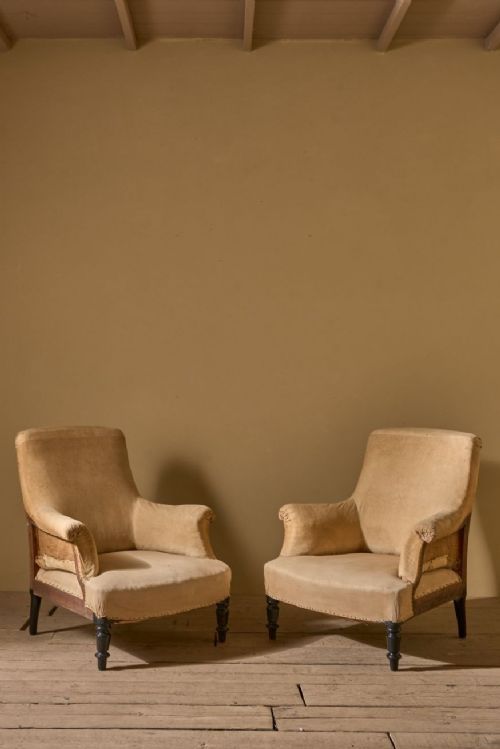
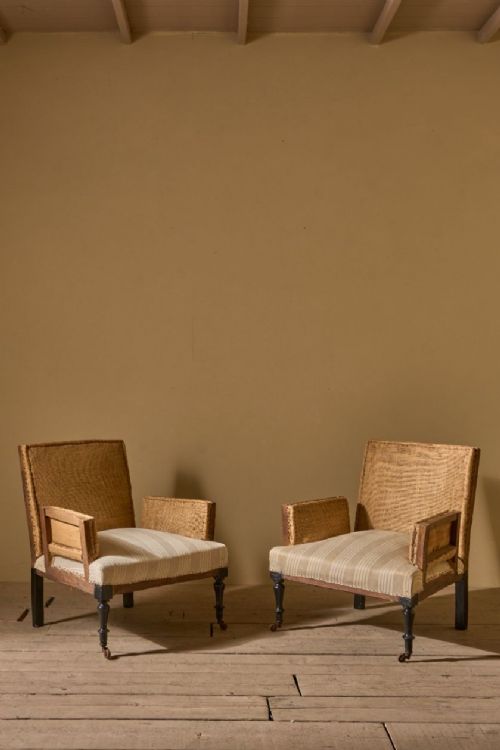
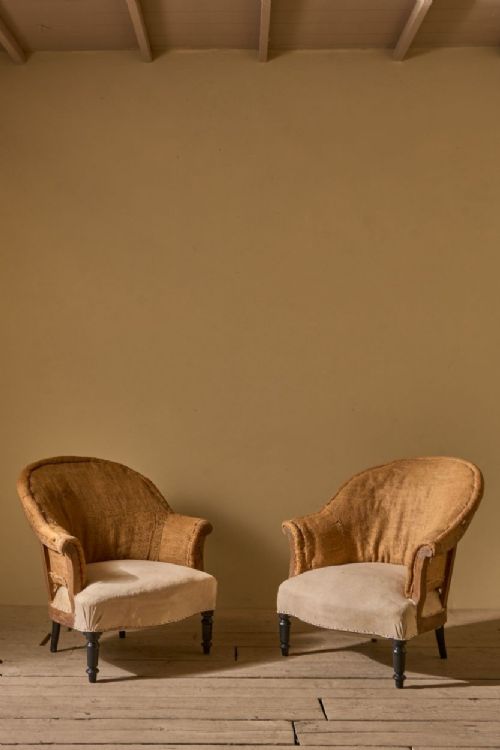
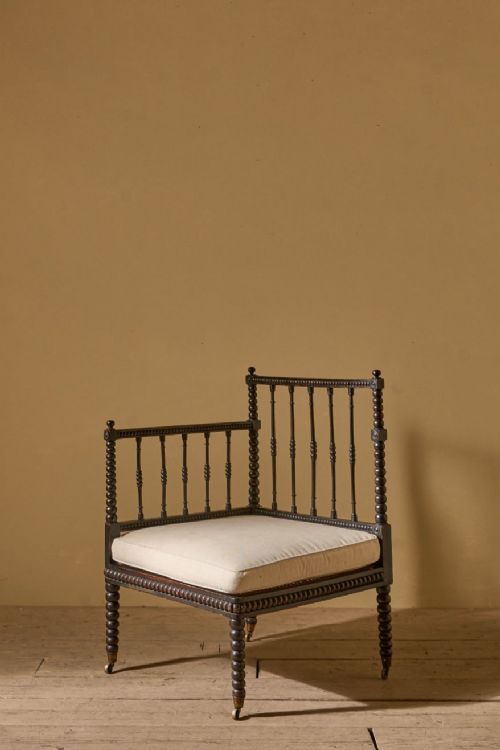
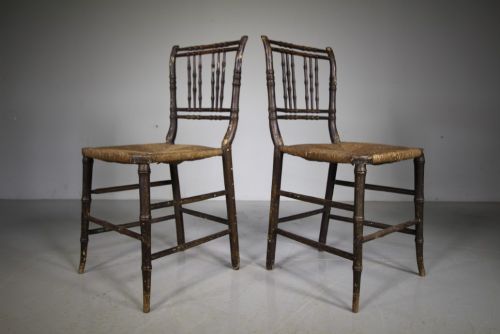
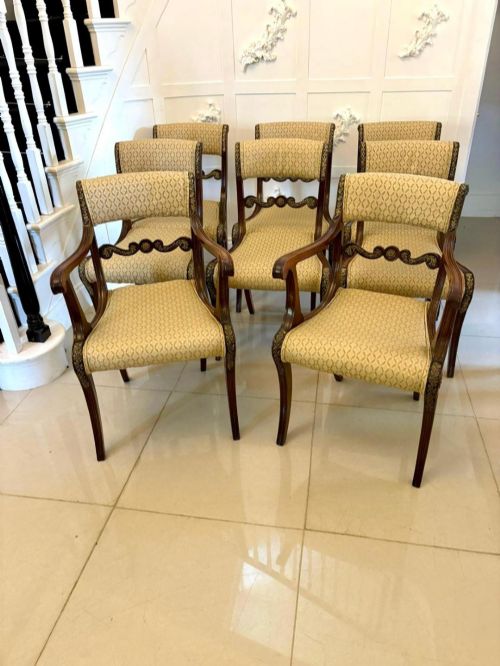
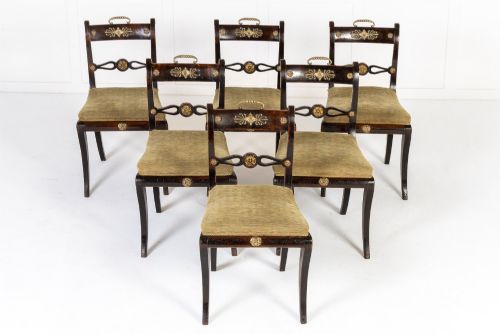
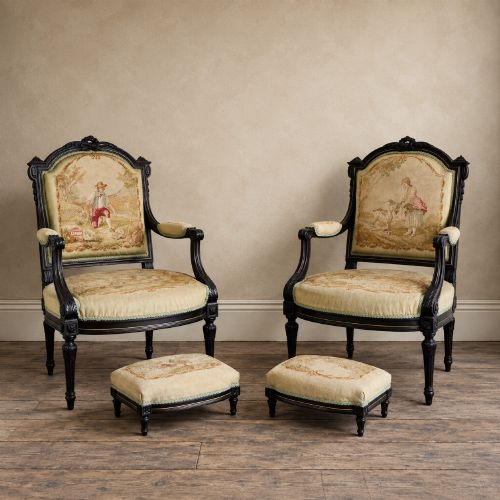
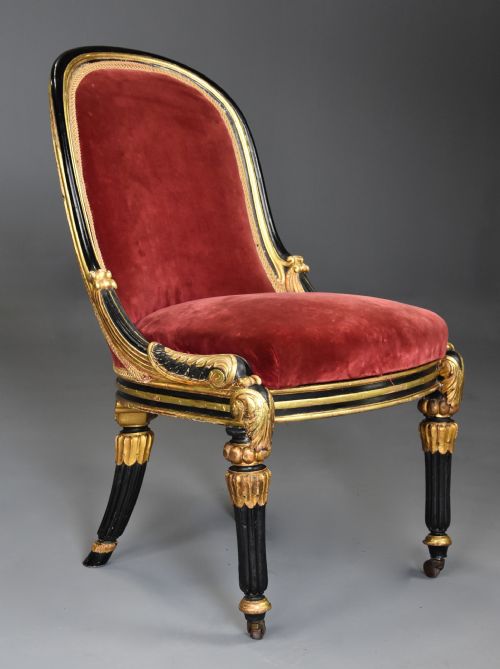
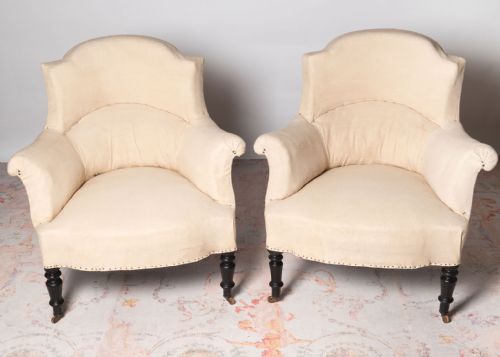
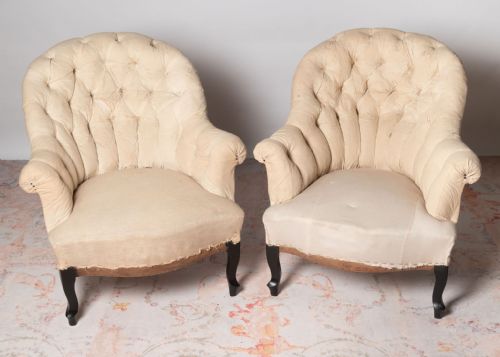
A 19th century ebonised chair encompasses various forms ranging from Regency dining seats and library armchairs to Aesthetic Movement designs, Victorian nursing chairs, and French Napoleon III salon pieces. Buyers encounter numerous seating variations, including side chairs, corner chairs, bobbin-turned frames, and rocking chairs, originating from English, French, Swedish, and Anglo-Indian workshops.
Armchairs and side chairs dominate the selection, often appearing in pairs or matched sets alongside occasional prayer chairs and campaign folding variants. These furnishings demonstrate the Victorian and Regency preference for dark, dramatic wood finishes that imitate costly exotic timbers like ebony.
Materials and construction methods
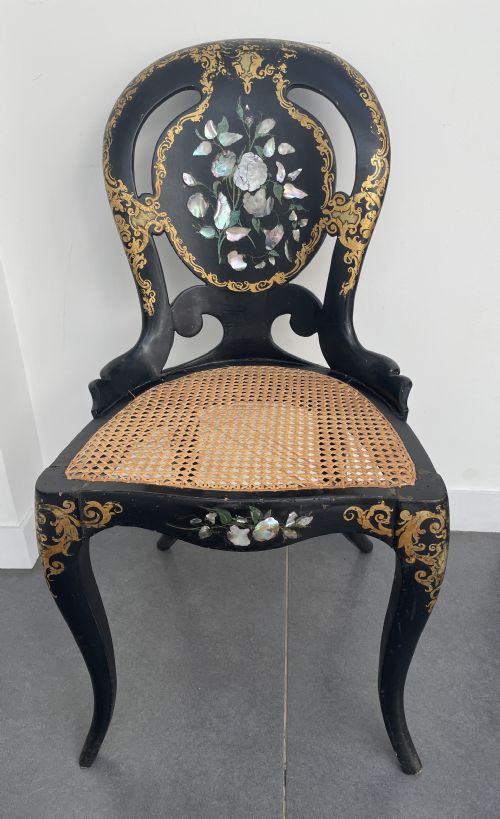
Craftsmen utilised various foundational timbers, including beech, ash, elm, birchwood, and mahogany, applying a dense black finish to simulate solid ebony. Surface decoration frequently combined this ebonised coating with parcel-gilt detailing, brass mounts, mother-of-pearl inlay, or bone highlights.
Structural elements relied on traditional joinery techniques, featuring turned bobbin components, curved sabre legs, or expansive carved frames. Upholstery materials recorded in the construction include horsehair, calico, hessian, green velvet, and woven cane panels.
Match your reading habits with a dedicated prayer chair, or furnish the study with a matched pair of His and Hers reading seats.
Judging the quality of ebonised seating
Quality rests heavily on the integrity of the ebonised finish and the crispness of any applied gilt work or carved detailing. Pieces retaining their original surface treatment and authentic secondary elements, such as cane panels or brass castors, command greater regard.
The sophistication of the underlying joinery and framing dictates structural excellence, particularly in turned spindle work and complex bentwood or carved components. Masterful proportion and adherence to specific design movements, such as the Aesthetic style or Regency neoclassical canons, elevate individual examples.
Gillows·Morris and Co·Bruce J Talbert·Collier and Plucknett
The 19th Century Ebonised Chair Glossary
- Ebonised
- Wood treated with a dark stain, dye, or paint to imitate expensive ebony. This technique gained immense popularity during the Regency and Victorian eras for formal and artistic furniture.
- Bobbin
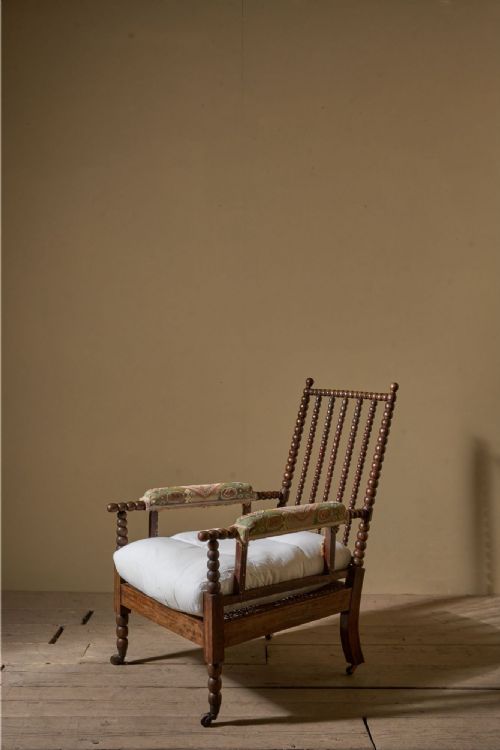
- A turned furniture component shaped like a series of spools or bobbins set end to end. This rustic yet decorative turning method defines many English and Scottish chairs.
- Aesthetic Movement
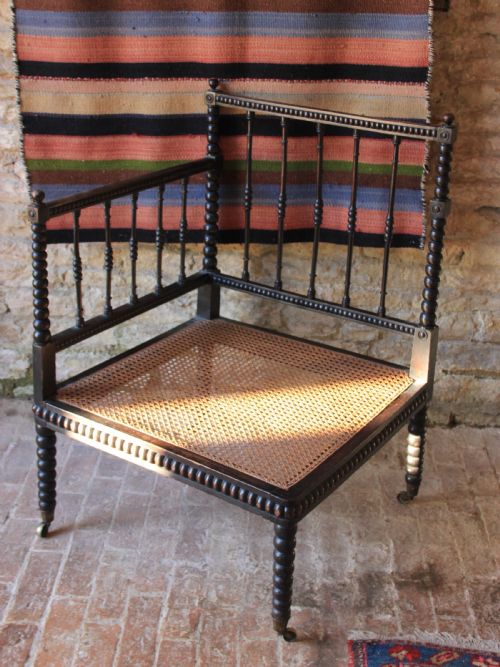
- A late nineteenth-century design style emphasising art for art's sake, often featuring simplified ebonised frames with Japanese or Anglo-Japanese motifs. Such pieces frequently include gilt highlights and spindle galleries.
- Bergère
- An enclosed upholstered armchair with wooden framing exposed around the sides and back. These seats typically incorporate cane work or cushioned inserts.
- Sabre leg
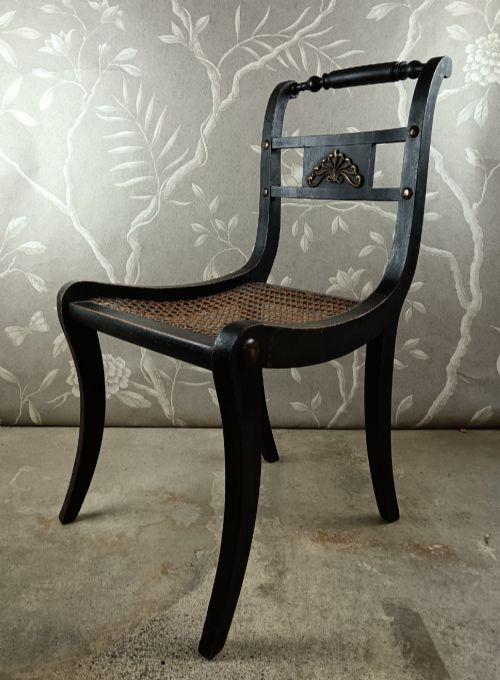
- A concave, outwardly curving furniture leg tapering toward the foot, commonly found on Regency dining and side chairs. This classical form imitates ancient Greek klismos furniture.
- Prie-dieu
- A devotional prayer chair featuring a low seat and an upper rest designed for kneeling and leaning. Victorian examples often display rich velvet upholstery and turned supports.
19th Century Ebonised Chair: Frequently Asked Questions
How do I identify a true ebonised finish?
Authentic period ebonisation involves staining or painting timber directly, often showing subtle wear across high-touch areas like arms and top rails.
Modern replicas typically rely on synthetic lacquers that lack the depth and patina accumulated over decades of handling.
Where were bobbin chairs made?
Bobbin-turned chairs were produced extensively across Britain, with distinct regional variations appearing in English workshops and Scottish cabinet-making centres.
Maker attribution often depends on secondary woods and specific turning profiles rather than stamped signatures.
Are these chairs suitable for daily use?
Most antique seating structures remain robust, provided the joints have been inspected and secured by a professional conservator.
Delicate canework or original upholstery requires careful management, prompting many owners to use protective throws or limit active seating.
What defines an Aesthetic Movement chair?
Aesthetic pieces reject heavy Victorian upholstery in favour of linear ebonised frames, often accented with gilt decoration or incised botanical motifs.
These designs frequently draw inspiration from Japanese art and architecture popular in late nineteenth-century Britain.