
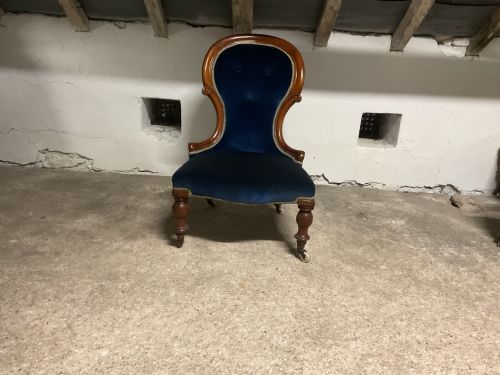
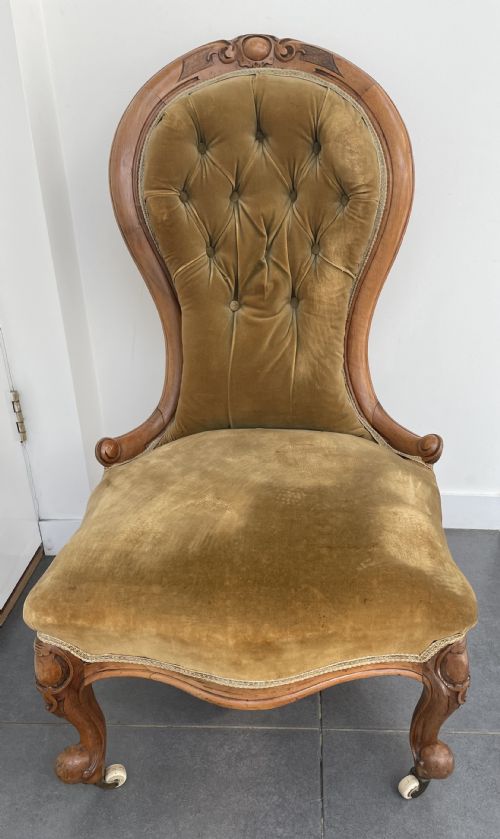
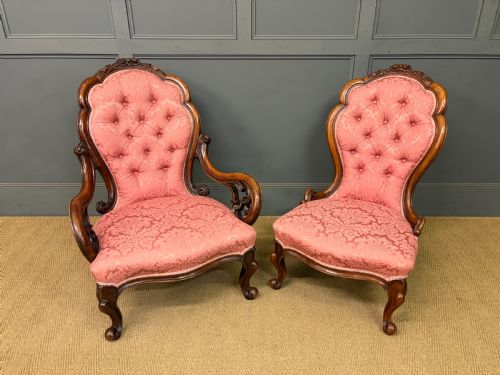


Low Seat Occasional Chair
These low seat occasional chair examples offer compact comfort and period charm, bringing practical seating into smaller spaces.
Low Seat Occasional Chair
A low seat occasional chair is a compact form designed for parlours, bedrooms, and drawing rooms during the nineteenth and early twentieth centuries. These pieces encompass nursing chairs, slipper chairs, salon chairs, and gossip chairs created to sit close to the floor for comfort and ease.
The versions most frequently met on this page date from the Victorian and Edwardian eras, spanning mahogany, walnut, ebonised, and oak frames. Many feature upholstered button backs, textile coverings, and occasional brass details.
Makers and regional workshops produced diverse regional interpretations, from Scottish vernacular pieces to Anglo-Indian designs and inlaid mahogany salon chairs. These seating options combine low profiles with decorative woodwork and varied upholstery styles.
Materials and construction
Frames rely principally on hardwoods such as mahogany and walnut, alongside ebonised timber, oak, and Indian hardwood. Cabinetmakers shaped these timbers into carved, curved, or inlaid structures that supported sprung or padded upholstery.
Upholstery utilised traditional materials including fabric, velvet, textile, and floral tapestry, frequently secured with button back techniques. Brass fittings and ceramic castors occasionally completed the lower framework of these pieces.
Assessing quality
The distinction between standard and finer examples rests upon the execution of the timber frame and the sophistication of its carving or inlay. Solid walnut and mahogany structures with intricate woodwork represent a higher standard of craftsmanship than plain or utilitarian alternatives.
The integrity of the original upholstery and the retention of period textiles also influence the character of each piece. Frames retaining their original floral tapestry or button back padding demonstrate greater historical continuity.
Wheeler Of Arncroach
The Low Seat Occasional Chair Glossary
- Nursing chair
- A low-seated chair traditionally designed for nursing infants, featuring an accommodatingly low seat and often a button back.
- Slipper chair
- An upholstered chair with a very low frame, originally created for dressing rooms to allow ease when putting on shoes.
- Gossip chair
- An asymmetrical or conversation-oriented seating form intended for informal sitting and talking.
- Salon chair
- A light, decorative chair made for entertaining guests in a formal reception room or parlour.
- Button back
- An upholstery method where depressions are created in the padding by stitching buttons through to the frame, securing the fabric.
Low Seat Occasional Chair: Frequently Asked Questions
What is a low seat occasional chair?
A low seat occasional chair is a nineteenth or early twentieth century seating form designed with a shortened distance between the floor and the seat.
These pieces typically served in bedrooms, dressing rooms, and salons for tasks requiring a lower seating position.
How do I date a Victorian nursing chair?
Dating involves examining the timber used, such as mahogany or walnut, and observing stylistic traits like ebonising or button back upholstery.
Mid to late nineteenth century examples often display specific regional characteristics and framing techniques typical of the period.
Where were these chairs used historically?
Historically, these chairs sat in private chambers, bedrooms, and drawing rooms where compact or specialised seating was required.
Their low profiles made them practical for sitting near fires or attending to personal grooming.
Can I use an antique occasional chair daily?
These chairs can function in modern interiors as accent seating in living spaces or bedrooms.
Consider the stability of the hardwood frame and the condition of the upholstery when planning regular use.
What is the difference between a nursing chair and a slipper chair?
Nursing chairs generally feature supportive button backs and low seats intended for prolonged sitting in bedrooms.
Slipper chairs often exhibit even lower profiles originally tailored for dressing rooms and changing footwear.