




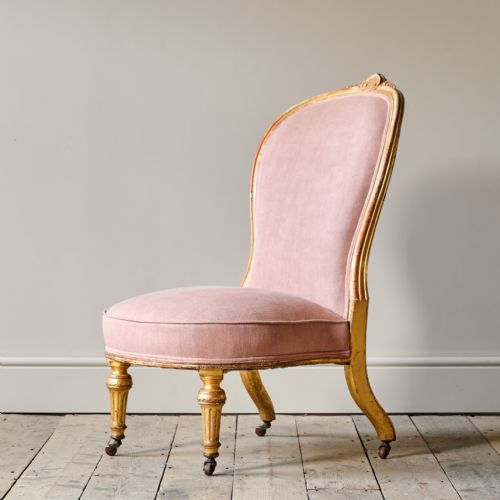


Gold Velvet Bedroom Chair
A gold velvet bedroom chair brings rich texture and practical seating to a corner, drawing on nineteenth-century and Edwardian forms.
Gold Velvet Bedroom Chair
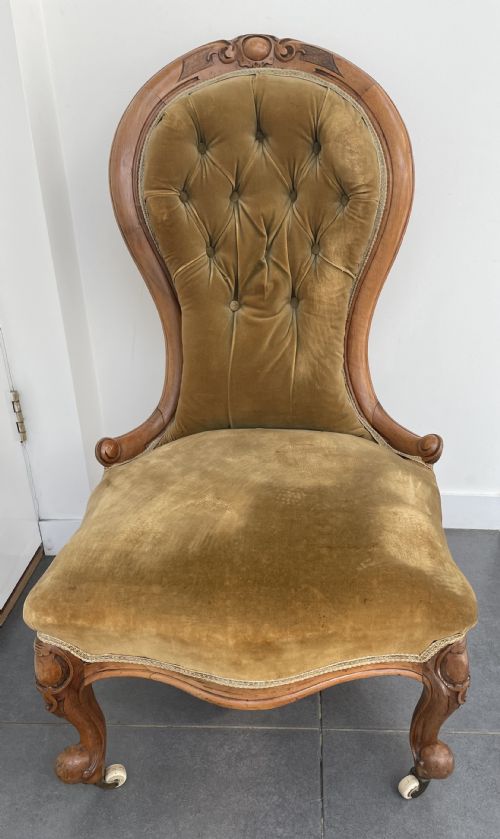
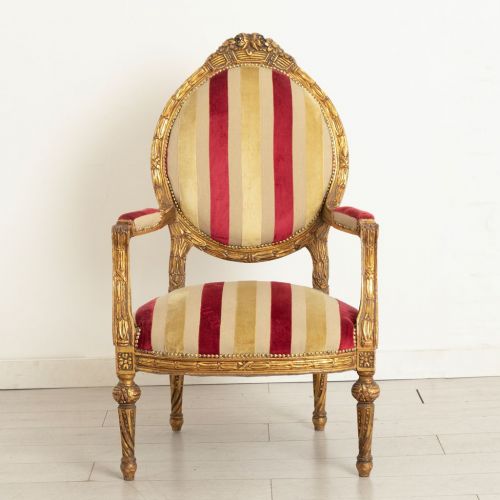
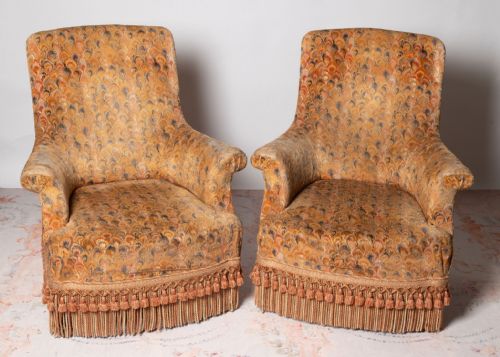
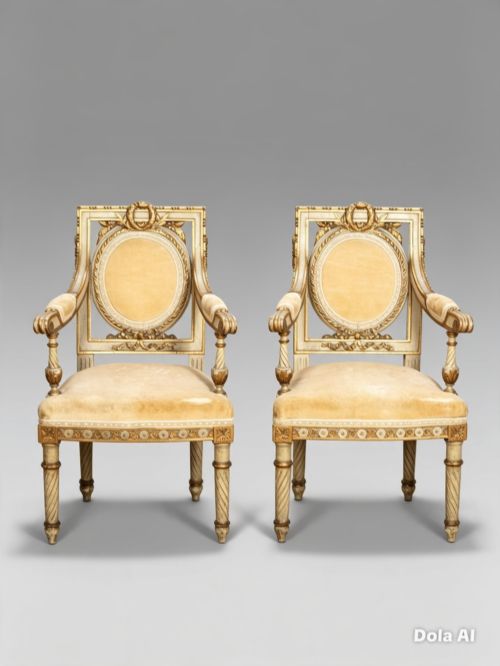
A gold velvet bedroom chair encompasses low-slung nursing chairs, carved giltwood boudoir seats, and occasional armchairs designed for private rooms. These pieces originate across the nineteenth and early twentieth centuries, spanning Victorian, Edwardian, and Louis XVI revival styles.
Buyers will encounter compact Victorian walnut frames, French giltwood fauteuils, and turned-leg slipper chairs in this selection. The forms serve both decorative and functional roles in domestic spaces.
Originating from British workshops, French ateliers, and Anglo-Indian makers, these chairs combine traditional timber frames with plush pile fabrics.
How they were made
Maker construction relies on hardwood frames of walnut, mahogany, and giltwood, frequently shaped with hand-carved detailing or ebonised finishes. Brass castors and turned front legs appear regularly on Victorian examples.
Upholstery techniques involve button backs, sprung seats, and new or traditional velvet coverings secured with piping. Wood gilding and painted highlights define the French and revival pieces.
Listings feature woods including walnut, mahogany, and giltwood, paired with velvet and ceramic elements across nineteenth-century and Edwardian periods.
What varies in quality
Quality rests in the crispness of the timber carving and the structural integrity of the underlying frame, whether walnut, mahogany, or gilded wood. Finer examples display balanced proportions and sophisticated joinery rather than purely decorative execution.
The sophistication of the gilding, the depth of the woodturning, and the fidelity of the revival style separate standard pieces from exceptional ones. Upholstery standard and fabric choice also influence the finished character of each seat.
Lamb of Manchester·Howard and Sons
The Gold Velvet Bedroom Chair Glossary
- Giltwood
- Timber treated with gold leaf or gilding preparation. This finish appears frequently on French revival salon and boudoir chairs.
- Nursing chair
- A low-seated armchair historically designed for comfort during nursing. These typically feature low profiles and upright backs.
- Fauteuil
- An open-armed French armchair with upholstered armrests and exposed wooden frame. This form is often executed in Louis XVI style.
- Slipper chair
- An upholstered chair with short legs designed for bedrooms. They sit low to the ground for ease of dressing.
Gold Velvet Bedroom Chair: Frequently Asked Questions
Where do I put a bedroom chair?
These compact seats fit easily into corners, beside dressing tables, or alongside larger bedroom furniture. Their small scale allows them to function as occasional seating without crowding the room.
Positioning one near a window or fireplace creates a quiet reading spot while adding colour through the velvet upholstery.
How do I tell Victorian from Edwardian chairs?
Victorian pieces often feature darker timbers like walnut and mahogany, alongside heavy carving, button backs, and turned legs with castors. Edwardian items tend to present lighter proportions and simpler lines.
Revival pieces from both eras frequently borrow heavily from French Louis XVI models, complicating straightforward period attribution.
Are these chairs comfortable to sit in?
Most of these forms were built for private sitting rooms, boudoirs, or dressing spaces, offering supportive upright or slightly reclined postures. Sprung seats and padded velvet backs provide a soft sit.
Slipper and nursing chairs sit lower than standard dining seats, suiting shorter periods of relaxation rather than long desk work.
How should I care for velvet upholstery?
Velvet requires gentle brushing with the pile to maintain its direction and sheen. Regular light vacuuming prevents dust from settling deep into the woven pile.
Professional cleaning is advisable for stubborn marks to avoid damaging the delicate fabric surface or the underlying frame structure.