


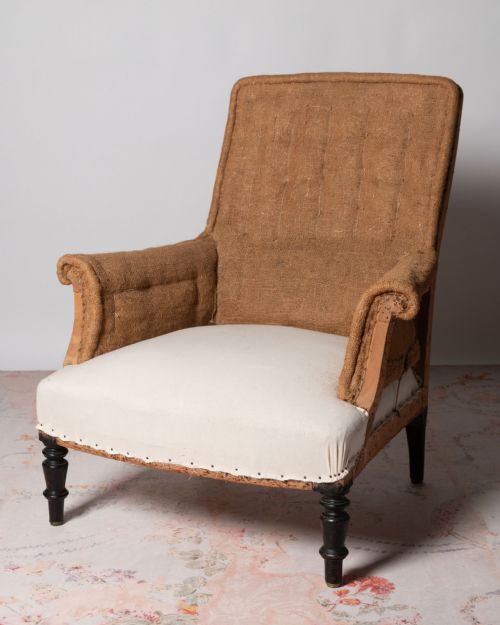
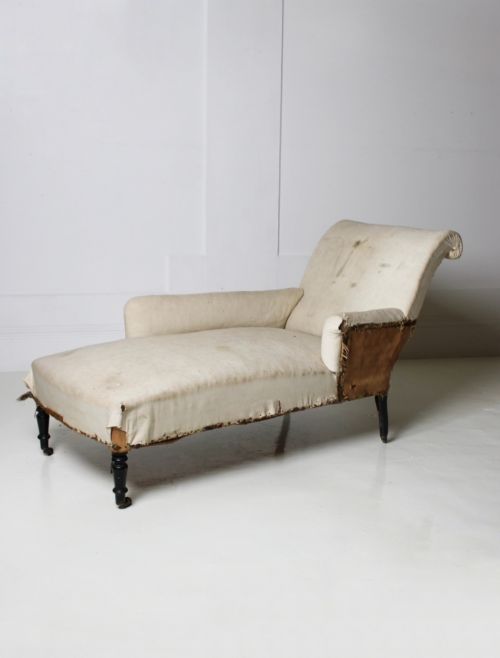
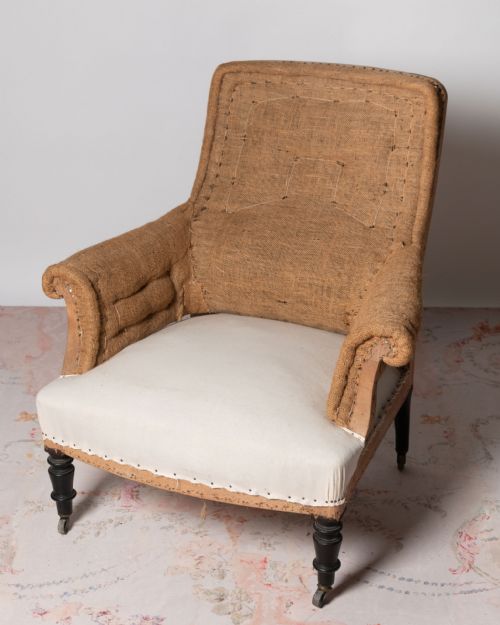


Victorian Ebonised Lounge Chair
A victorian ebonised lounge chair brings dramatic dark woodwork and generous nineteenth-century seating into a room.
Victorian Ebonised Lounge Chair
A victorian ebonised lounge chair encompasses nineteenth-century seating built from dark ebonised wood or black lacquered finishes, often drawing on French Napoleon III design alongside British Victorian craftsmanship. These pieces span armchairs, salon chairs, nursing chairs, and larger daybeds or chaise longues designed for relaxed sitting.
The versions most commonly met on this page include Napoleon III French chairs and Victorian salon armchairs dated around eighteen-eighty, frequently upholstered in calico, hessian, or cotton fabric. Country house armchairs also appear, offering robust nineteenth-century proportions and deep seating.
Buyers seeking a victorian ebonised lounge chair will find distinct forms ranging from low nursing seats to library chairs and carved black lacquered frames. Each piece relies on dark wooden structures combined with supportive fabric foundations.
How They Were Made
Construction relies on sturdy timbers such as beech and general wood frames finished with ebonised treatments or black lacquer to imitate expensive ebony. Carved details define the structural framework of the nineteenth-century pieces.
Upholstery foundations utilise traditional materials including hessian, calico, and cotton calico beneath top fabrics. Brass components frequently appear as castors or structural accents on Napoleon III and Victorian frames.
Victorian Ebonised Lounge Chair Retail Price Guide 2026
Typical asking prices for victorian ebonised lounge chair among the pieces listed under this phrase on Sellingantiques today, from the lower quarter to the upper quarter. They describe what is for sale here now, not the wider market.
Object forms recorded on this page include armchairs, nursing chairs, salon chairs, and daybeds originating from British and French makers.
What Varies in Quality
Quality rests upon the crispness of the ebonised finish and the depth of the wood carving across the frame. Elaborate moulding and well-executed black lacquer distinguish finer salon armchairs from simpler country house seating.
The integrity of the underlying wooden structure and the calibre of the original frame proportions dictate the overall standing of each piece. Surviving brass details and intact framework separation mark the higher tier of nineteenth-century seating.
The Victorian Ebonised Lounge Chair Glossary
- Ebonised Wood
- Timber treated with stain or paint to imitate ebony. This dark finish was highly fashionable during the nineteenth century.
- Napoleon III
- A nineteenth-century French design style associated with the Second Empire. These pieces often feature dark frames and elegant proportions.
- Calico
- A plain-woven cotton fabric used historically as an inner upholstery layer. It provides a stable foundation for top covers.
- Hessian
- A coarse woven fabric made from jute fibres. Traditional seating uses this material for internal webbing and stuffing support.
- Nursing Chair
- A low-seated nineteenth-century chair originally designed for comfort in bedrooms or nurseries.
Victorian Ebonised Lounge Chair: Frequently Asked Questions
What is a victorian ebonised lounge chair?
A victorian ebonised lounge chair is a nineteenth-century seating piece featuring dark ebonised woodwork or black lacquer. These chairs combine ornate framing with upholstered seats for formal or domestic settings.
Such pieces reflect both British Victorian production and French Napoleon III stylistic influences, offering diverse forms from salon chairs to daybeds.
How were these chairs used historically?
These seats served various domestic functions ranging from formal library and salon seating to relaxed lounging in country houses. Low nursing variants provided comfort in private rooms.
Owners placed them in reception rooms and drawing rooms where dark wood furniture complemented sophisticated interior schemes.
How do I identify a Napoleon III chair?
Napoleon III chairs originate from nineteenth-century France and typically display dark ebonised frames, sometimes with carved black lacquer or brass accents. Their forms often mirror contemporary French upholstery trends.
They share visual traits with British Victorian ebonised seating through the use of dark wood and traditional fabric coverings like calico and hessian.
What fabrics cover these chairs?
Original and replacement upholstery on these pieces commonly involves cotton calico, plain calico, and supportive hessian foundations. Top covers range from simple textiles to period-appropriate fabrics.
Underneath the visible surface, makers relied on durable natural textiles to maintain the shape and structure of the padded seats.