




Patterned Fabric Bedroom Chair
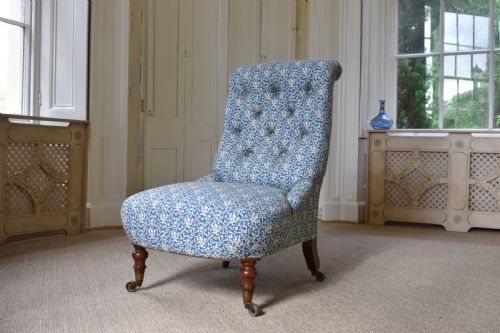
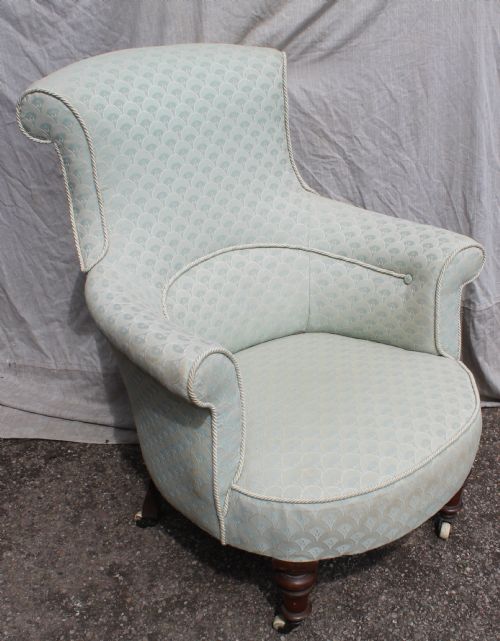
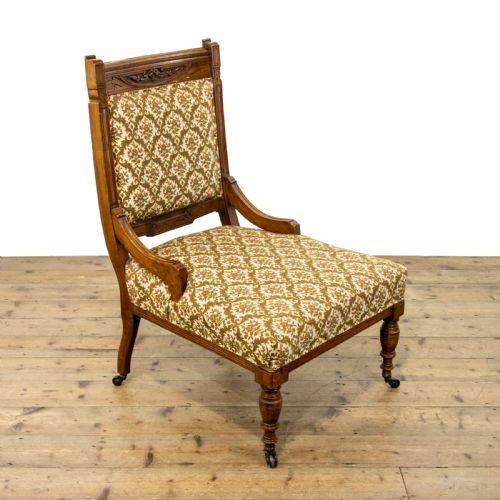
These patterned fabric bedroom chair examples range from Victorian button-backs to Edwardian designs, offering low-slung comfort and period character for a dressing room.
Patterned Fabric Bedroom Chair
A patterned fabric bedroom chair is a low or upholstered seat designed for private chambers, boudoirs and dressing rooms during the eighteenth, nineteenth and early twentieth centuries. The selection here spans Victorian, Edwardian and earlier Georgian periods, encompassing forms like slipper chairs, nursing chairs and compact armchairs.
Buyers encounter numerous variations in shape and scale, from deep-seated slipper chairs to upright side chairs and low nursing chairs built for comfort near a hearth or dressing table. Mahogany, rosewood and gilt woods form the structural framework beneath diverse textile coverings.
Origins stretch across British workshops and continental makers, including French Empire and Napoleon III pieces alongside native Victorian and Edwardian outputs. This variety reflects the changing domestic requirements of private spaces over two centuries.
How they were made
Construction relies upon traditional timber framing using hardwoods such as mahogany and rosewood, shaped into scroll arms, cabriole legs or straight supports. Brass and ceramic castors often facilitate movement across carpets and floorboards.
Upholstery techniques involve traditional stuffing secured beneath outer textiles, utilising cotton, damask and patterned upholstery fabric. Button-back tufting and intricate inlaid woodwork appear on select nineteenth and twentieth-century examples.
Materials appearing across these chairs include brass castors, cotton, damask and ceramic fittings.
What varies in quality
Quality rests in the architectural integrity of the wooden frame and the precision of decorative elements such as woodwork inlay, scroll arms and gilt finishes. Superior examples maintain rigid joinery and well-proportioned silhouettes that balance decorative impact with structural strength.
The sophistication of the upholstery work and the selection of covering textiles, from damask to patterned cotton, distinguish standard functional seating from finer salon and parlor pieces. Original components like ceramic castors and brass fittings further indicate a higher grade of manufacture.
Howard and Sons
The Patterned Fabric Bedroom Chair Glossary
- Slipper chair
- A low-seated upholstered chair originally designed for bedrooms, allowing women to dress comfortably.
- Nursing chair
- A low armchair designed in the nineteenth century for feeding infants, typically featuring a padded back and seat.
- Damask fabric
- A reversible figured textile woven on a jacquard loom, frequently utilised for historic upholstery.
- Prie Dieu chair
- A devotional prayer chair characterised by a narrow upper panel, seen in nineteenth-century Gothic Revival interiors.
Patterned Fabric Bedroom Chair: Frequently Asked Questions
What is a bedroom chair?
A bedroom chair is a compact, upholstered seat intended for private chambers rather than formal reception rooms. These pieces provided comfortable seating for dressing, reading or resting.
Historically, they included low nursing chairs, slipper chairs and small armchairs designed to fit into restricted bedroom spaces while matching the prevailing aesthetic of the period.
How do I date a Victorian chair?
Dating a Victorian chair involves examining the underlying timber, upholstery techniques and stylistic markers such as button-back tufting or scroll arms. Victorian pieces span the mid-to-late nineteenth century and often employ mahogany or rosewood.
Comparing the specific proportions and decorative details against documented nineteenth-century cabinetmaker outputs helps narrow the timeframe of manufacture.
Are these chairs comfortable?
Many period chairs offer deep seating and padded backrests designed for relaxation in private quarters. Slipper chairs and nursing chairs were specifically built low to the ground for ease of use.
Comfort levels can vary depending on the condition of the internal stuffing and springing, which may require professional restoration depending on the age of the piece.
Where were they used?
These seats were originally placed in bedrooms, dressing rooms, boudoirs and private salons across British and European homes. Their compact dimensions allowed them to sit neatly beside dressing tables or fireplaces.
Today, buyers continue to place them in bedrooms, hallways and reading corners where a smaller-scale antique seat is required.