


Vintage Boudoir Chair
A vintage boudoir chair is a low, intimate seat designed for private dressing rooms, offering low-slung comfort and distinct period character.
Vintage Boudoir Chair
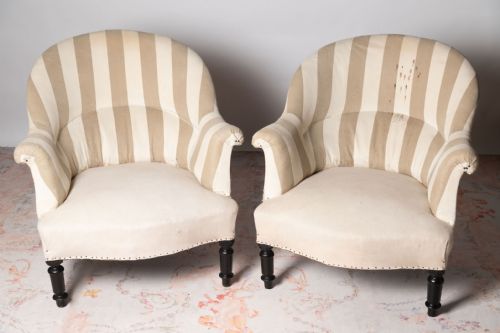
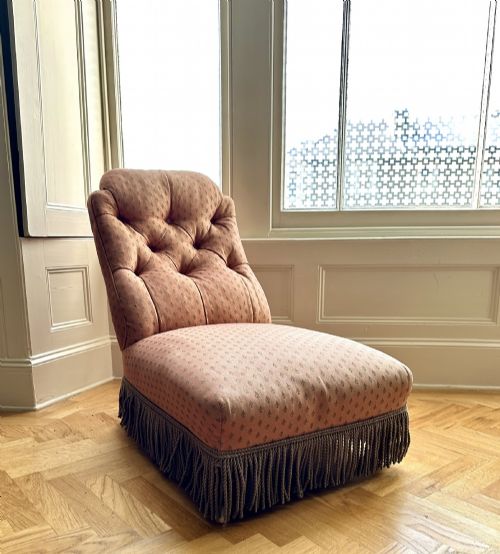
A vintage boudoir chair encompasses low-slung bedroom seating, slipper chairs, and small accent armchairs designed for private chambers. These pieces frequently appear in French nineteenth-century variants, alongside later Victorian and Edwardian examples.
The form prioritises intimacy and ease of movement over formal upright posture, often sitting closer to the floor than standard parlour seating. Buyers frequently encounter low tub shapes, open square backs, and compact slipper forms intended for dressing rooms.
Origins heavily lean towards French nineteenth-century workshops, encompassing Napoleon III and Louis XVI styles, alongside domestic Victorian and Edwardian iterations. Pieces range from fully upholstered velvet resting chairs to raw frames awaiting fabric.
Materials and construction
Construction relies primarily on hardwood timbers such as beech and ebonised wood, providing sturdy structural frames for intensive upholstery. Metal elements like brass frequently appear on castors or decorative legs, supporting mobility and aesthetic trim.
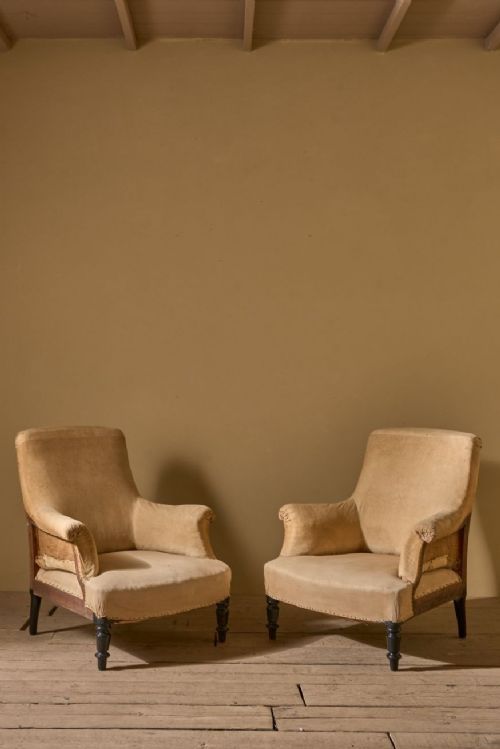
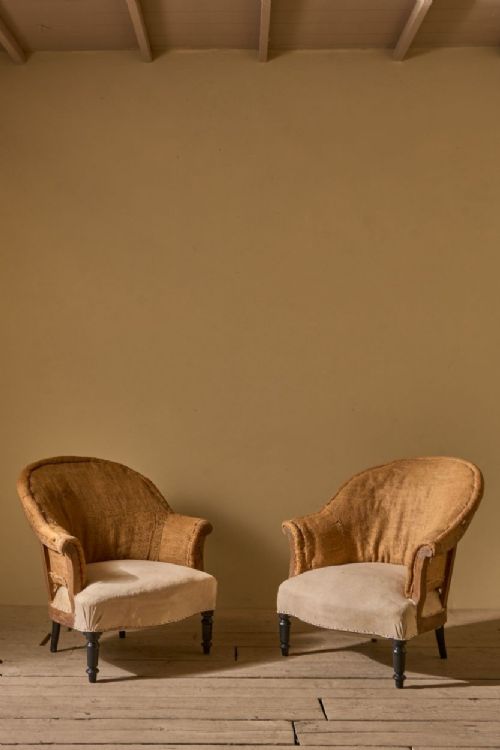
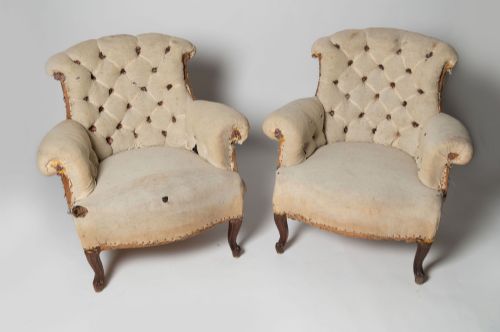
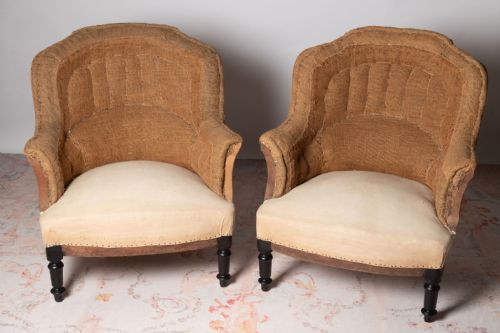
Textiles define the surface finish, utilising rich velvet, cotton, calico, and hessian layered over traditional spring or stuffing cores. Many examples survive in preliminary upholstery layers or raw calico and hessian, awaiting final decorative fabric selection.
Listings demonstrate a strong presence of nineteenth-century French pieces, featuring velvet, beech, and ebonised wood alongside raw hessian frames.
Assessing quality
Quality rests in the sculptural grace of the wooden frame and the integrity of the underlying joinery, whether exposed gilt wood or ebonised timber. Finer examples display refined carving, balanced proportions, and substantial weight in the hardwood structure.
The sophistication of the silhouette dictates distinction, separating simple utilitarian bedroom seats from elaborately styled French revival pieces. Upholstery finish and the preservation of original fabric or supportive inner webbing further separate standard items from finer survivals.
The Vintage Boudoir Chair Glossary
- Boudoir chair
- A small, low-seated chair historically kept in a private dressing room or bedroom. These seats prioritise relaxed posture and compact dimensions.
- Slipper chair
- A low-set upholstered chair lacking arms, originally designed to assist nobility with putting on shoes. Their low profile makes them ideal for modern bedrooms.
- Napoleon III style
- A nineteenth-century French design movement favouring eclectic revivals, rich upholstery, and ebonised or gilt finishes. This aesthetic dominates many antique low chairs.
- Hessian
- A coarse woven fabric typically utilised as an inner foundation layer for traditional upholstery stuffing. It provides structural support beneath outer decorative textiles.
- Ebonised wood
- Timber treated with a dark finish to imitate expensive ebony wood. It appears frequently on nineteenth-century seating frames for a dramatic silhouette.
Vintage Boudoir Chair: Frequently Asked Questions
What is a boudoir chair?
A boudoir chair is a compact, low-slung seat traditionally kept in a private dressing room or bedroom for personal use. They are designed to be smaller and more intimate than standard living room armchairs.
These pieces often feature decorative exposed wood, fringe detailing, or rich velvet upholstery suited to private chambers rather than formal reception rooms.
How do I style a vintage boudoir chair?
These chairs fit naturally in bedrooms, dressing rooms, or quiet reading corners where a full-sized armchair would overwhelm the floor space. Pair them with a low dressing table or place them beside a wardrobe.
Consider the existing textile weights in the room, contrasting smooth wood finishes with textured velvet or patterned upholstery to anchor the space.
What does upholstery ready mean?
Upholstery ready indicates that the wooden frame and internal webbing or hessian are intact, but the chair lacks a final decorative outer fabric. This allows buyers to select textiles that match their specific interior scheme.
It offers an opportunity to inspect the bare wooden frame's craftsmanship and foundation before committing to a final fabric finish.