



Tufted Armless Accent Chair
These tufted armless accent chair designs offer low, comfortable seating built for bedroom and parlour use.
Tufted Armless Accent Chair
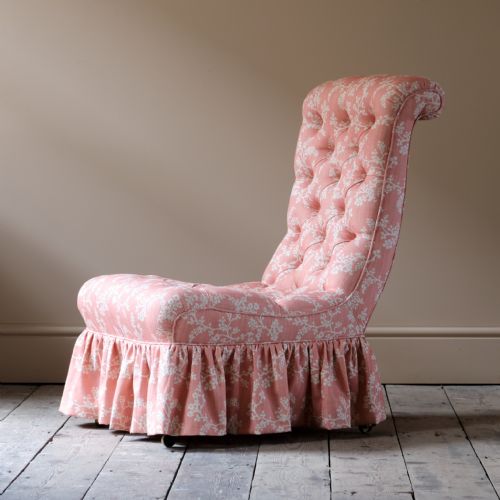
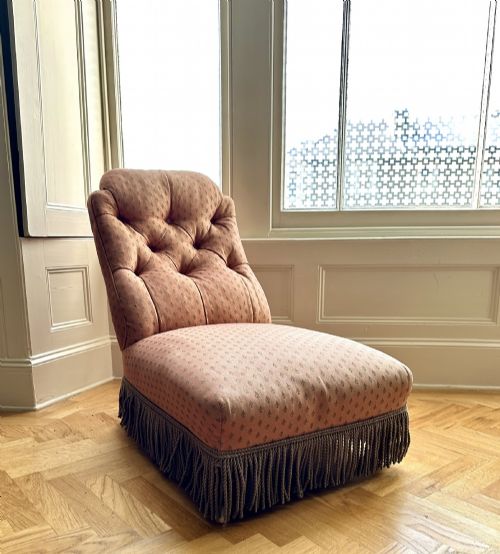
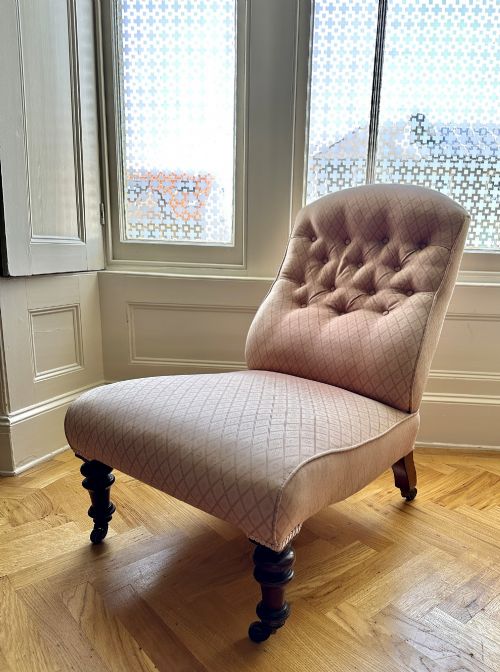
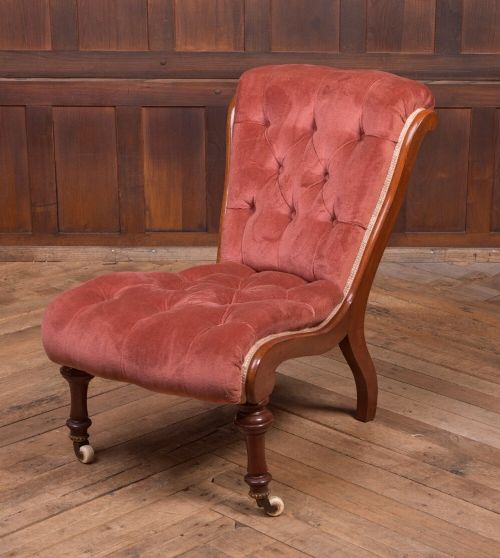
When buyers search for a tufted armless accent chair, they encounter low-slung nineteenth-century seating designed for dressing rooms and bedrooms. These pieces include slipper chairs, nursing chairs, bedroom chairs, and accent chairs originating from the Victorian period.
The versions most commonly met on this page feature button backs, low seats, and open, armless profiles. Makers built them in forms like the deep-seated slipper chair and the walnut framed nursing chair.
Makers shaped these nineteenth-century chairs to allow easy movement for voluminous historical clothing. The absence of arms made dressing and sitting practical in tight domestic spaces.
Materials and Construction
Timbers such as mahogany and walnut form the structural frames of these Victorian seats. Craftsmen frequently turned or carved these woods for legs, sometimes finishing them with ebonising, gilding, and brass castors.
Upholstery relies on fabric, linen, and velvet pulled tight over deep-seated frames. Deep buttoning secures the padding while creating the signature tufted texture across the backrests.
Tufted Armless Accent Chair Retail Price Guide 2026
Typical asking prices for tufted armless accent chair among the pieces listed under this phrase on Sellingantiques today, from the lower quarter to the upper quarter. They describe what is for sale here now, not the wider market.
The inventory records Victorian slipper chairs, nursing chairs, and bedroom chairs with brass castors.
Assessing Quality and Craftsmanship
The distinction between standard production and exceptional quality lies in the execution of the timber frame and the precision of the upholstery work. Walnut and mahogany frames with refined turning or gilding represent the higher tier of workmanship.
The complexity of the silhouette also dictates the standard of the piece, moving from simple profiles to curvaceous designs with elaborate fringing and buttoning.
Gillows·Howard and Sons
The Tufted Armless Accent Chair Glossary
- Slipper chair
- A low-seated chair originally designed in the nineteenth century for bedrooms and dressing rooms. The low profile made it easier to change shoes and garments.
- Nursing chair
- A low upholstered seat traditionally used by women for feeding infants. These chairs typically feature a supportive button back and an armless frame to accommodate bulky dresses.
- Button back
- An upholstery technique where twine pulls the fabric deep into the padding and secures it with fabric-covered buttons. This method creates a diamond pattern and tightens the surface.
- Ebonised
- Timber treated with a dark finish to imitate ebony. This process was common in nineteenth-century cabinet making to achieve a stark, black appearance often highlighted with gilt.
- Gilt
- A thin layer of gold leaf or paint applied to wood surfaces. This decorative technique accentuates carved details on frames.
Tufted Armless Accent Chair: Frequently Asked Questions
What is a slipper chair?
A slipper chair is a low-seated, armless chair that originated in the mid-nineteenth century. It was designed for bedrooms and dressing areas to allow women to sit comfortably while putting on footwear and garments.
The low frame and absence of arms provided the necessary clearance for heavy Victorian clothing and hoops. Today, they function as versatile accent seating in modern interiors.
How do I identify a nursing chair?
Nursing chairs sit exceptionally low to the ground and feature a supportive, padded backrest. They are typically armless to give mothers room while holding infants or wearing wide skirts.
Victorian examples often showcase walnut or mahogany frames with intricate button tufting. Their compact scale makes them practical for smaller rooms.
What materials were used?
Nineteenth-century makers built these frames using solid hardwoods like mahogany and walnut. They occasionally applied ebonised finishes and gilt details to enhance the visual appeal of the woodwork.
Upholstery materials included velvet, linen, and patterned fabrics stretched over deep padding. Brass castors were frequently added to the feet for mobility.
Why are they armless?
Armless designs were essential in the nineteenth century for practical reasons involving fashion and domestic space. Wide dresses and layered skirts required open seating that would not restrict movement.
Removing the arms allowed individuals to sit comfortably from any angle. This configuration also saved valuable floor space in bedrooms and dressing rooms.