


Ebonised Turned Wood Chair
An ebonised turned wood chair brings dark elegance and tactile form to a room, offering both sculptural presence and historical utility.
Ebonised Turned Wood Chair
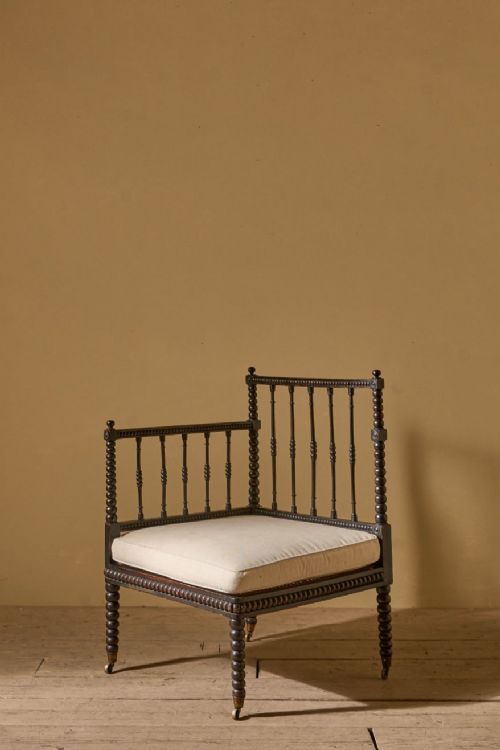
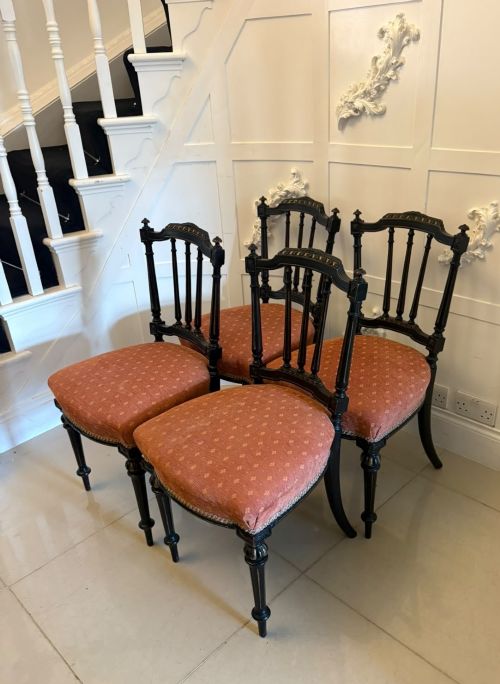
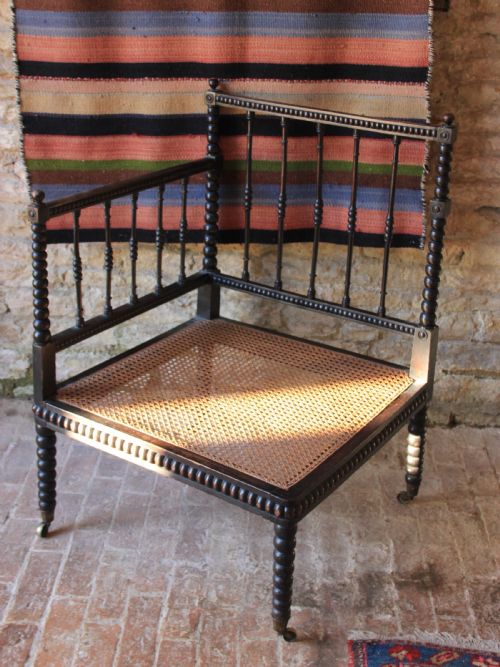
When you search for an ebonised turned wood chair, you encounter a variety of forms spanning the nineteenth century, including corner chairs, armchairs, and dining sets. These pieces utilise dark finishes or simulated rosewood to create a dramatic silhouette that suited Victorian parlours and Aesthetic Movement interiors alike.
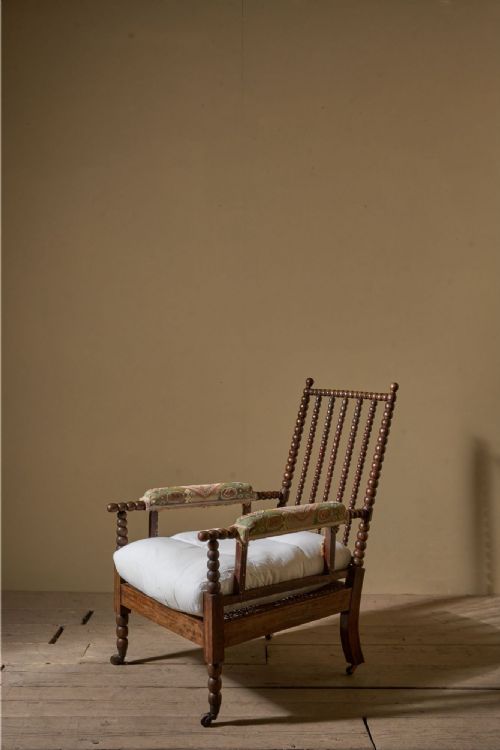
The most common examples on this page feature bobbin or spool turning, often paired with rush, cane, or fabric seats. You will also find regional variations, such as English country styles and French designs, reflecting diverse domestic uses from bedroom chairs to piano stools.
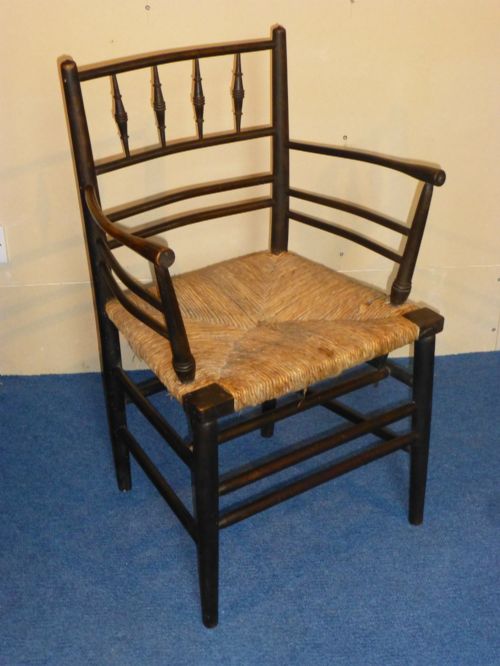
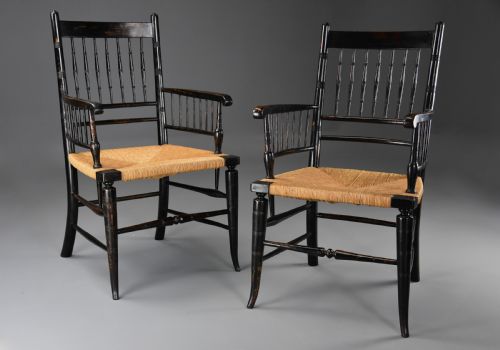
Makers such as Morris & Co produced influential designs like the Sussex chair, which remain highly sought after by collectors of nineteenth-century seating. Alongside these, simpler vernacular items demonstrate how widely turned woodwork appealed across different social strata.
How they were made
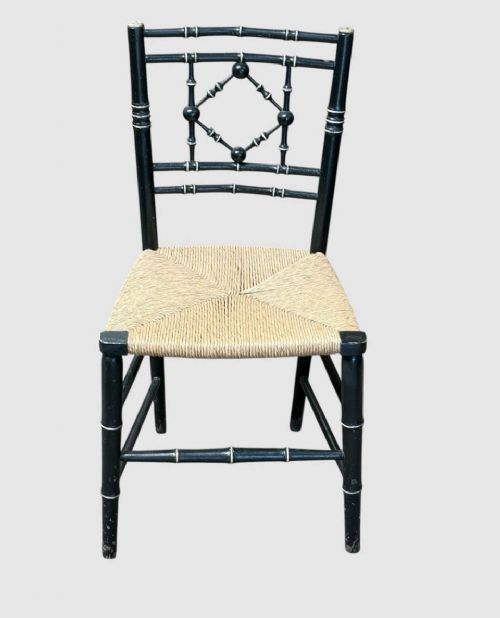
The construction of an ebonised turned wood chair relies on dense hardwoods such as beech and oak, shaped on a lathe to create repetitive structural or decorative motifs. Turners produced bobbin, spindle, and faux bamboo details that were subsequently stained, painted, or ebonised to resemble more costly exotic timbers.
Surface treatments included black paint or chemical ebonising, occasionally enhanced with gilt highlights or subtle stencilling, as seen on Hitchcock chairs. Seats were woven from natural materials like rush and cane, or upholstered in fabric to provide functional comfort.
Listings span the Regency era through the late Victorian period, featuring beech, oak, fabric, rush, and cane across diverse chair forms.
What varies in quality
Quality in these chairs rests upon the crispness of the turning and the structural integrity of the joints. Finer workshops ensured that bobbin mouldings remained sharp and symmetrical, whereas simpler vernacular pieces might show greater irregularity in hand-carved or hand-turned components.
The preservation of the original ebonised finish significantly influences the character of a piece. Examples retaining their initial surface treatment, gilt detailing, or early rush and cane seating demonstrate superior survival and material authenticity.
Morris & Co·Philip Webb·Hitchcock
The Ebonised Turned Wood Chair Glossary
- Ebonised
- Wood treated with stain, paint, or chemical processes to imitate costly ebony. This dark finish was especially popular during the Victorian and Aesthetic periods.
- Bobbin turning
- A form of woodturning consisting of spherical or spool-shaped segments carved sequentially along a stretcher or leg. It creates a rhythmic, tactile profile.
- Aesthetic Movement
- A late nineteenth-century design current that championed art for art's sake, favouring simplified forms and dark ebonised surfaces over elaborate historicism.
- Faux bamboo
- Wood turned and carved to imitate natural bamboo stalks, frequently finished with paint or ebonising to suit Regency and Victorian tastes.
- Rush seating
- Woven marsh grass utilised to create durable, textured seat pads. It appears frequently on vernacular and Arts and Crafts chairs.
Ebonised Turned Wood Chair: Frequently Asked Questions
How do I clean an ebonised finish?
Dust the turned surfaces regularly with a soft, dry cloth to prevent dirt accumulation in the carved crevices of the wood.
Avoid using harsh chemical polishes or water, as excess moisture can lift the dark stain or damage original painted details.
Can I use these chairs at a dining table?
Dining chairs and matching sets function well for daily seating if the frame joints remain sturdy and secure.
Delighter corner chairs or delicate armchairs suit occasional use or decorative placement in a hallway rather than heavy dining.
Are rush and cane seats durable?
Original rush and cane can withstand normal use if the material remains supple and the chair is kept away from damp environments.
Dry atmospheric conditions can cause natural fibres to become brittle over decades, requiring professional re-weaving to restore strength.
How do I distinguish Victorian from Regency examples?
Regency ebonised chairs typically feature classical lines, sometimes incorporating faux bamboo or gilt accents influenced by Grecian and Chinese styles.
Victorian variants embrace heavier bobbin turnings, Aesthetic Movement minimalism, or robust country house proportions.