




Chinoiserie Bedroom Chairs
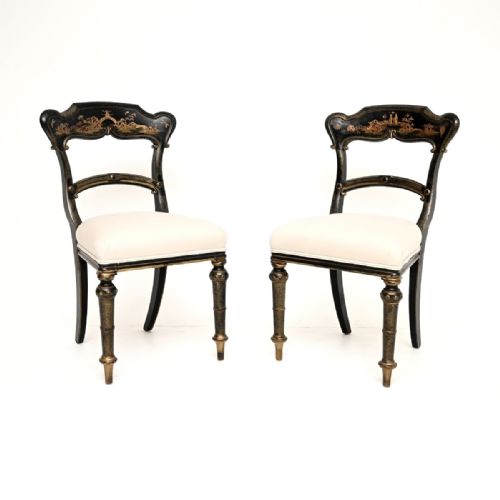
These chinoiserie bedroom chairs bring hand-painted motifs and bamboo frames into private spaces, offering distinct decorative character for a dressing room or parlour.
Chinoiserie Bedroom Chairs
When searching for chinoiserie bedroom chairs, collectors encounter forms ranging from side chairs to armchairs, alongside occasional seating that matches matching bedsteads. The items found here span the Regency period through to the early twentieth century, including Victorian and Edwardian examples.
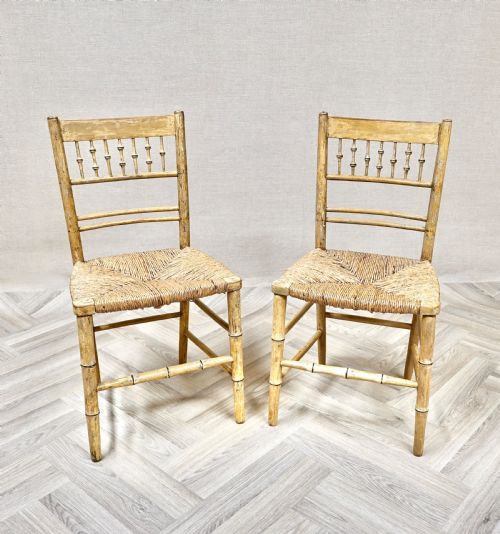
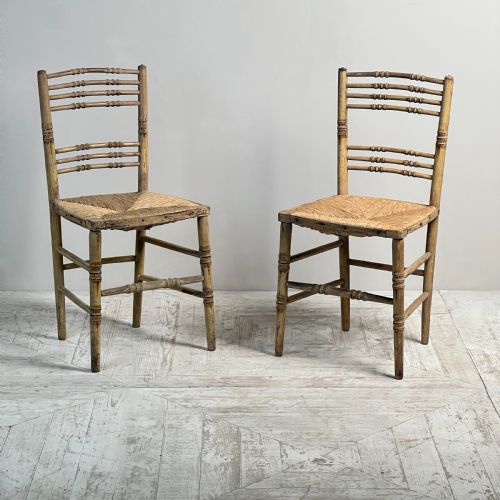
The versions most commonly met on this page are side chairs and armchairs constructed with painted finishes or simulated bamboo frames. Makers drew on specific historical styles, resulting in pieces labelled as Victorian Chinoiserie, French Napoleon III, and Edwardian Chinoiserie alongside Regency designs.
Materials and construction
Makers utilised wood as the core structural material, frequently shaping it to resemble bamboo or finishing surfaces with paint, lacquer, and gilt details. Actual bamboo appears alongside faux bamboo turnings, creating the lighter aesthetic associated with these seating forms.
Seating areas incorporate traditional methods, with surviving examples utilising rush or cane inserts. Decoration relies on hand-applied paint and lacquerwork to render the Asian-inspired motifs characteristic of the style.
One chair frame is disguised so thoroughly as bamboo that only a saw could reveal its true arboreal origins.
Judging quality
The standard of a piece rests heavily on the preservation of its painted or lacquered surfaces and the crispness of the bamboo turnings. Original decorative schemes hold greater distinction than later repaint applications.
Structural integrity within the frame and the tightness of cane or rush work separate standard examples from finer items. Pairs and sets command additional interest due to the survival of matching configurations.
The Chinoiserie Bedroom Chairs Glossary
- Chinoiserie
- European decorative style imitating Chinese artistic traditions. It appears on furniture through painted landscapes, figures, and motifs.
- Faux bamboo
- Wood turned and carved to imitate real bamboo stalks. This technique was popular during the Regency and nineteenth-century periods.
- Rush
- Woven marsh grass used for seating material. It provides a durable, textured surface on chair seats.
- Ebonised
- Wood finished with a dark stain or black paint to resemble ebony. This treatment often highlights turned bamboo-style framing.
- Satinwood
- A durable timber with a natural golden sheen utilised for fine cabinetry. It serves as a base for decorative painted surfaces.
Chinoiserie Bedroom Chairs: Frequently Asked Questions
What periods do these chairs come from?
The available selection spans from the Regency period through the nineteenth century into the early decades of the twentieth century, including Victorian and Edwardian interpretations.
Buyers encounter dates ranging from Regency examples up to pieces produced around nineteen thirty, reflecting shifts in taste across different eras.
How were these chairs used originally?
These seating pieces served functional roles in private apartments, dressing rooms, and bedrooms, often accompanying matching bedsteads or serving as occasional seating.
Their lighter frames made them easy to move around domestic interiors while providing decorative flair through painted and lacquered surfaces.
What materials make up the frames?
Construction relies primarily on wood, finished with paint, gilt, or lacquer. Many examples feature bamboo or simulated bamboo turnings.
Seat inserts typically consist of woven rush or cane, supporting the lightweight aesthetic typical of these designs.
Are pairs and sets common?
Surviving examples frequently appear as pairs of side chairs or armchairs, and occasionally within larger sets of four.
Matching bedroom suites comprising a chair and matching bedsteads also occur in Edwardian productions.