


Regency Chinoiserie Furniture
Regency chinoiserie furniture brings exotic painted lacquer and intricate penwork into the English interior, offering striking focal points for a collector.
Regency Chinoiserie Furniture
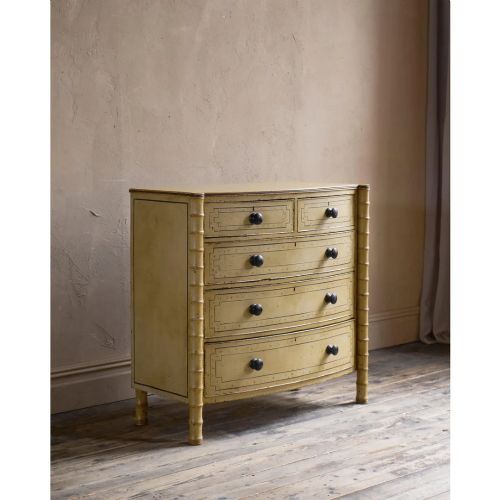
Regency chinoiserie furniture encompasses decorative tables, cabinets, and seating created during the Regency and nineteenth-century periods, often channeling the exuberant aesthetic of the Brighton Pavilion. These pieces combine classic Regency forms with imaginative Orientalist decoration, ranging from side cabinets and chests of drawers to delicate work tables and nest of tables.
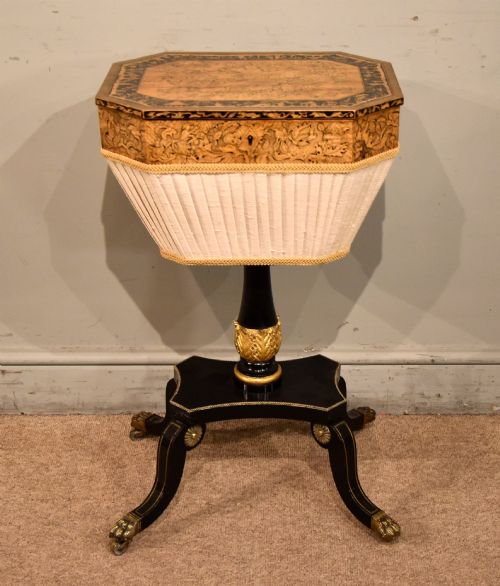
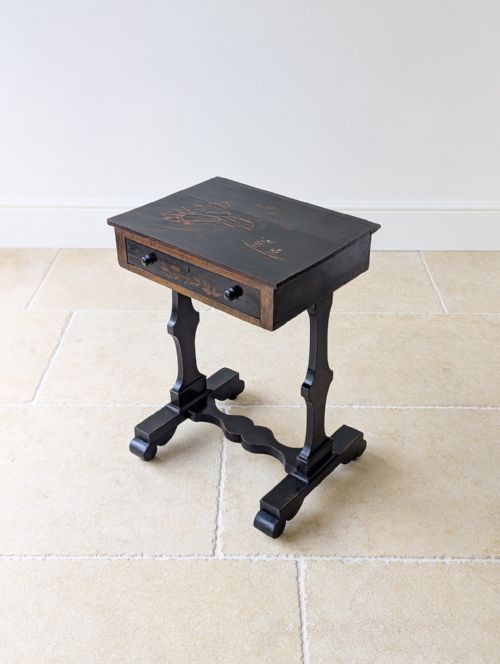
The objects on this page showcase specific regional interpretations and construction methods, including Chinese export pieces and Italian painted side tables alongside domestic British work. Collectors frequently encounter functional items designed for specific tasks, such as penwork sewing tables, chess tables, and collectors cabinets on stands.
Materials and Construction
Maker's workshops built these pieces using ebonised wood, pine, and structural timber frames finished with detailed lacquer, ink, and gold leaf decoration. Artisans applied meticulous penwork and hand-painted motifs directly onto prepared surfaces to achieve the characteristic pictorial scenes.
Structural elements incorporated alternative materials like faux bamboo and natural bamboo alongside brass hardware and inset marble tops on console tables. Silk linings frequently feature inside specialised storage pieces like work tables and sewing cabinets.
The listings on this page span the Regency, nineteenth-century, and Victorian periods, featuring materials from silk and gold leaf to ebonised wood.
Quality and Craftsmanship
The standard of execution in the surface decoration defines the division between ordinary production and superior work. Finely detailed penwork and deep, lustrous lacquer require exceptional hand control, whereas simpler items rely on heavier, less refined painted application.
Material selection and decorative complexity also determine distinction, with intricate multi-tiered nest of tables or elaborate cabinets on stands demonstrating greater ambition than straightforward occasional tables. The preservation of original gold leaf and delicate ink detail maintains the visual integrity of the piece.
The Regency Chinoiserie Furniture Glossary
- Chinoiserie
- European decorative art influenced by Chinese artistic styles and motifs, popular in furniture and interior design. This aesthetic often depicts imaginary landscapes, figures, and pavilions.
- Penwork
- A meticulous decorative technique utilising Indian ink applied with a fine pen to create intricate surface illustrations on wood. It produces detailed, engraving-like imagery reminiscent of prints.
- Japanned
- European work imitating Japanese and Chinese lacquerware through the application of layered varnishes and metallic dust. This finish is cured and polished to achieve a hard, glossy surface.
- Brighton Pavilion Style
- An architectural and decorative approach inspired by the Royal Pavilion in Brighton, characterised by extravagant Asian-inflected motifs. It represents the height of Regency exoticism in British design.
- Torchere
- A tall stand or pedestal designed to support a light source, candle, or decorative object. In Regency interiors, these often take slender, highly ornamented forms.
Regency Chinoiserie Furniture: Frequently Asked Questions
What is regency chinoiserie furniture?
It is decorative British and export furniture from the early nineteenth century featuring hand-painted orientalist motifs, lacquer finishes, and penwork.
These items reflect the period fascination with Eastern aesthetics, merging classical Regency furniture shapes with imaginative landscapes and figures.
How were penwork tables used?
Penwork tables served as specialised pieces for needlework, writing, or leisure activities like chess.
Their decorated tops provided a finished surface that combined utility with ornamental display in the drawing room.
What is Brighton Pavilion style?
Brighton Pavilion style refers to the flamboyant architectural and decorative taste popularized by the Prince Regent's seaside palace.
Furniture in this style embraces bold chinoiserie details, faux bamboo, and exotic ornamentation.
How do I identify lacquer and japanning?
Lacquer and japanning involve built-up layers of varnish and polished resin, often decorated with gold leaf scenes on dark grounds.
Original surfaces show fine craquelure and depth that distinguish them from modern painted reproductions.
Where were chinese export pieces made?
Chinese export pieces were produced in workshops in China specifically tailored to western tastes and dimensions.
They arrived in Britain via maritime trade, bringing authentic Asian materials and craftsmanship to European interiors.