


Regency Period Hall Chairs
Regency period hall chairs are striking entrance seats that command attention in any hallway with their architectural timber and classical lines.
Regency Period Hall Chairs
When you search for regency period hall chairs, you encounter formal entrance seating designed to impress visitors in grand houses. The examples found here span the Regency era alongside George III and broader nineteenth-century periods, capturing the classical revival taste of the early eighteen hundreds.
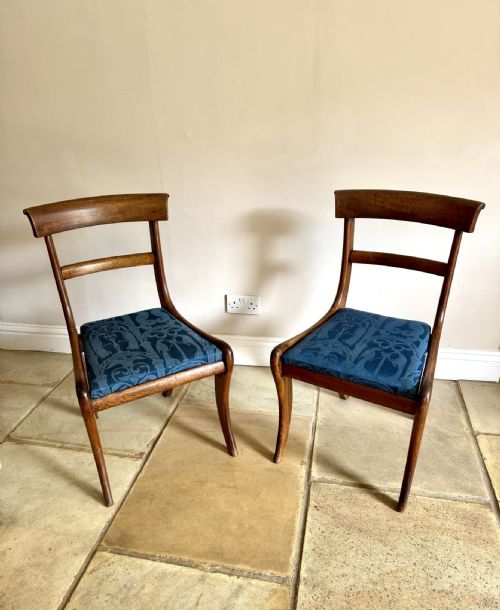
The forms vary from timber side chairs and oval back designs to striking shell back hall chairs. Many pieces originate from pairs or sets, showing the symmetry favoured in historic entrance halls.
Makers such as Gillows of Lancaster appear in the evidence, alongside simpler regional workshop pieces in mahogany, oak, walnut, and painted finishes.
How they were made
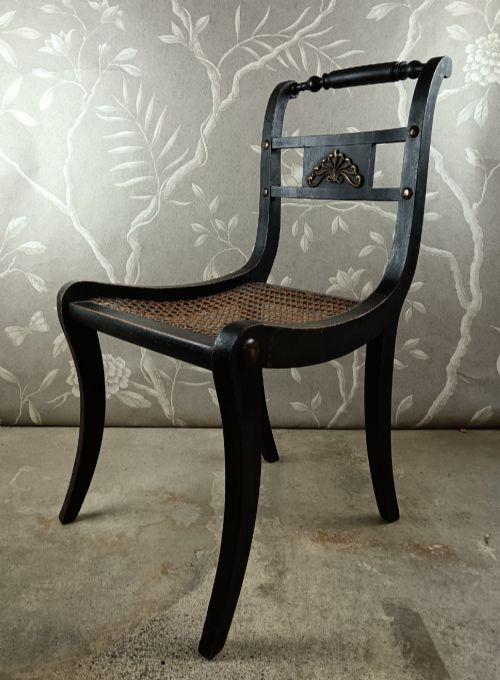
Cabinet makers utilised dense hardwoods including mahogany, walnut, and oak to construct these robust seats. Ebonised wood, beech, and painted bamboo also appear, often paired with cane seats or fabric upholstery.
Decoration relied on brass inlay, giltwood, and painted details to echo classical motifs. Sabre legs and turned supports provide the characteristic stance of the period.
Mahogany is the predominant timber across the historical inventory, frequently complemented by brass inlay and cane seating.
What varies in quality
Quality rests on the crispness of the timber carving and the sophistication of the design, such as carved shell backs or precise brass inlay. Finer examples display superior joinery and cabinet work from known workshops.
The choice of material elevates a piece, with figured mahogany and rosewood finishes holding greater presence than standard painted or softer woods.
Gillows of Lancaster
The Regency Period Hall Chairs Glossary
- Hall chair
- A rigid wooden seat placed in an entrance hall, often featuring a painted or carved crest on the back.
- Sabre leg
- A concave curving leg that tapers towards the foot, typical of furniture from the early nineteenth century.
- Ebonised wood
- Timber stained or treated to imitate ebony, creating a dense black finish popular during the Regency era.
- Shell back
- A chair back carved or shaped in the fluted form of a scallop shell.
- Faux rosewood
- Painted timber graining designed to mimic the rich reddish-brown figuring of genuine rosewood.
Regency Period Hall Chairs: Frequently Asked Questions
Where were regency period hall chairs placed?
These chairs stood primarily in entrance halls, corridors, and reception rooms of substantial houses. They served as formal seating for callers waiting to be announced.
Because they were intended for occasional sitting rather than long hours of comfort, the designs focused on upright posture and striking visual impact.
How do I identify a regency period hall chair?
Look for classical architectural influences, such as sabre legs, brass inlay, and carved shell or oval backs. The timber is frequently mahogany, walnut, or oak.
Proportions are typically neat and upright, reflecting the neoclassical taste prevalent around eighteen hundred to eighteen twenty.
Are regency period hall chairs comfortable?
Most examples feature solid wooden seats or simple cane panels without deep upholstery. They were built for formality and posture rather than lounging.
Some variations include upholstered pads or cushions, though the primary function remained decorative and transitional.
Did hall chairs come in sets?
Many hall chairs were made in pairs or larger sets to line the walls of grand hallways symmetrically. Surviving pairs remain common in historical collections.
Matching sets allowed large entrance spaces to maintain visual balance and architectural harmony.