



Green Marble Pier Table
A green marble pier table brings architectural presence to a hallway, offering a cool stone surface supported by carved wood or giltwork.
Green Marble Pier Table
A green marble pier table is a console or side table designed to stand flat against a wall, frequently between windows or beneath a mirror. These pieces combine a solid stone slab with a decorative frame, serving both a functional surface role and a striking visual purpose in domestic interiors.
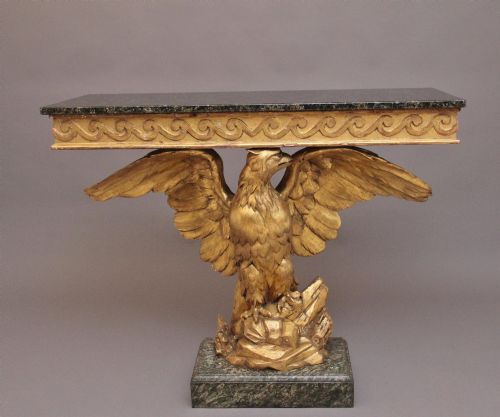
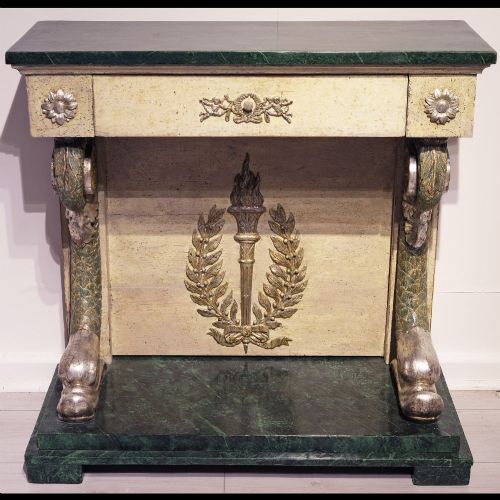
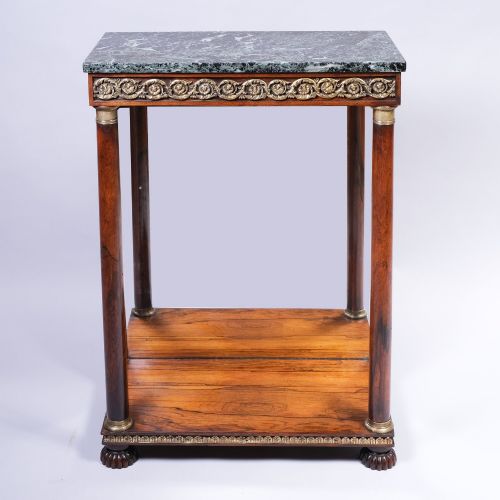
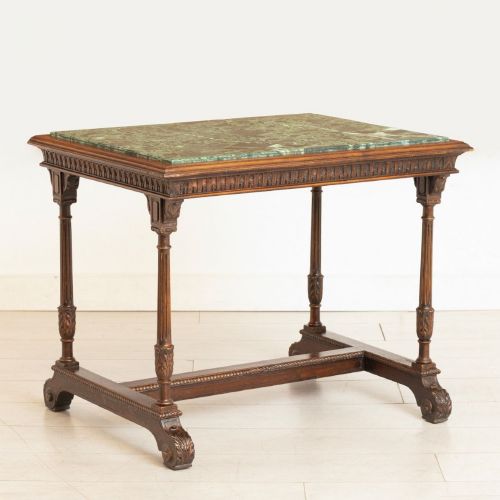
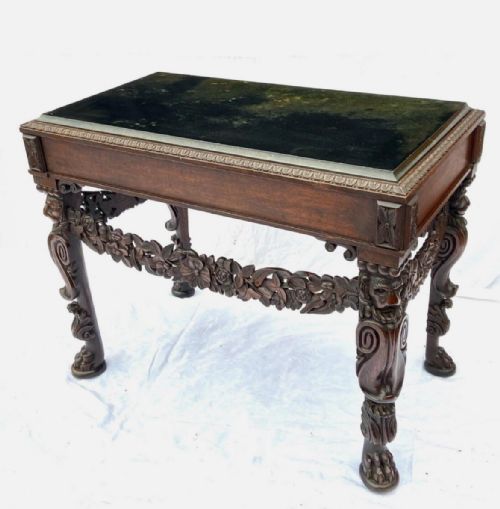
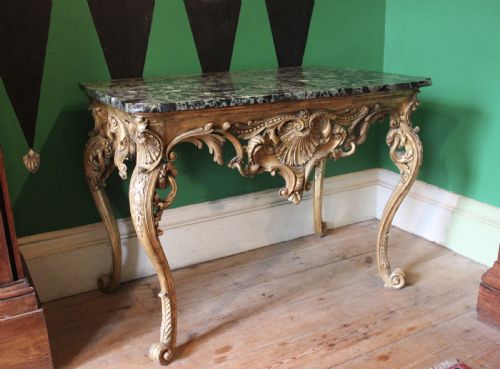
The versions met on this page span several centuries, including eighteenth-century Gustavian and Italian examples, nineteenth-century French Empire and William IV pieces, and early twentieth-century revivals. Forms range from straightforward mahogany side tables to elaborate carved and giltwood consoles featuring serpentine fronts or lion masks and paw feet.
Makers and designers drew upon Neoclassical, Rococo, and Chinoiserie vocabularies to shape the wooden frames that support the heavy marble. Whether painted, gilt, or polished to show the natural grain of mahogany or oak, each table reflects the stylistic preferences of its specific period.
Construction and materials
The physical substance of these tables relies on the pairing of heavy stone with supportive timber structures. Woodworkers shaped mahogany, oak, and rosewood for the foundational frames, often applying gesso to create crisp surfaces for subsequent gilding or paint.
Carvers and gilders worked the wood with intricate details such as brass mounts, leaf motifs, and figurative elements including lion masks. The crowning element, the green marble top, was cut and polished to fit the precise contours of the wooden base, whether straight, serpentine, or rounded.
Listings span periods from the eighteenth century through the 1920s, utilising materials such as giltwood, mahogany, paint, and specimen marble.
Assessing quality and execution
The distinction between tiers of execution rests in the depth and sharpness of the hand carving on the wooden frame. Fine examples display crisp relief work in the gesso and giltwood, whereas simpler pieces rely on basic turned legs and flat painted surfaces.
The selection and treatment of the marble slab also set pieces apart. Specimen marble tops and deeply figured Italian stones indicate higher ambition, requiring skilled stonemasonry to ensure a stable and flush fit with the supporting structure.
The Green Marble Pier Table Glossary
- Pier table
- A table designed to stand against a wall, typically placed between two windows beneath a pier glass mirror. These pieces are shallow in depth to maximise floor space in formal rooms.
- Console table
- A table supported by wall brackets or console legs rather than four independent vertical posts. They frequently carry heavy marble slabs requiring solid structural anchoring.
- Giltwood
- Timber coated with fine layers of gold leaf applied over a prepared gesso ground. This technique provides a bright, reflective finish popular in Neoclassical and Rococo designs.
- Gesso
- A plaster mixture applied to wood frames to create a smooth surface for carving and gilding. It allows craftsmen to achieve sharp details before applying gold leaf or paint.
- Serpentine
- A furniture front characterised by a curving line that bends outward in the centre and inward at the sides. This contour requires precise cutting of both the wooden frame and the marble top.
Green Marble Pier Table: Frequently Asked Questions
Where should I place a green marble pier table?
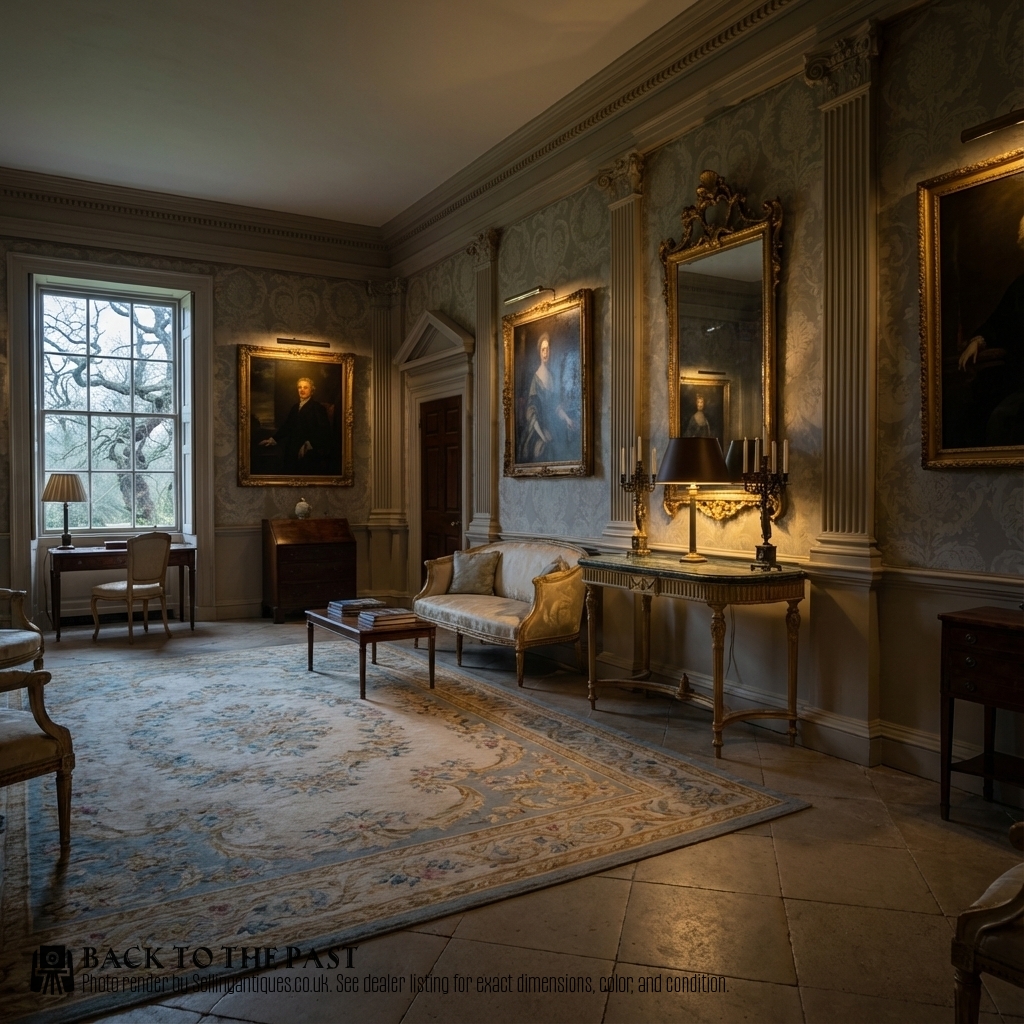
These tables find their natural home against a flat wall in an entrance hall, drawing room, or dining room. Because they are shallow, they fit well in narrow circulation spaces without blocking movement.
They often sit beneath a matching wall mirror or painting, creating a balanced focal point upon entering a room. The stone surface handles decorative objects well while keeping the overall footprint modest.
How do I care for the marble top?
Green marble requires gentle cleaning with a soft, damp cloth and mild, neutral soap. Acidic liquids like citrus juice or wine can etch the polished surface and should be wiped away immediately.
Using coasters and placemats protects the stone from scratches and rings. Periodic waxing or sealing helps maintain the sheen depending on the specific type of marble.
Are these tables sturdy enough for daily use?
The structural stability depends on the joinery and the weight of the stone slab. Many historical examples were designed to be fixed to the wall for additional safety, particularly when carrying heavy marble tops.
Checking the stability of the legs and the frame helps determine how much weight the table can support safely. Placing them out of high-traffic pathways prevents accidental bumps against the protruding stone corners.
How can I tell an eighteenth-century table from a later revival?
Examining the construction methods, tool marks, and wood ageing provides clues to a table's age. Eighteenth-century pieces often display hand-cut joinery and signs of wear consistent with long use.
Revival pieces from the nineteenth or twentieth centuries may show machine-sawn timber or standardised hardware beneath the decorative surface. Comparing the style of the carving to documented periods helps confirm the timeline of manufacture.