
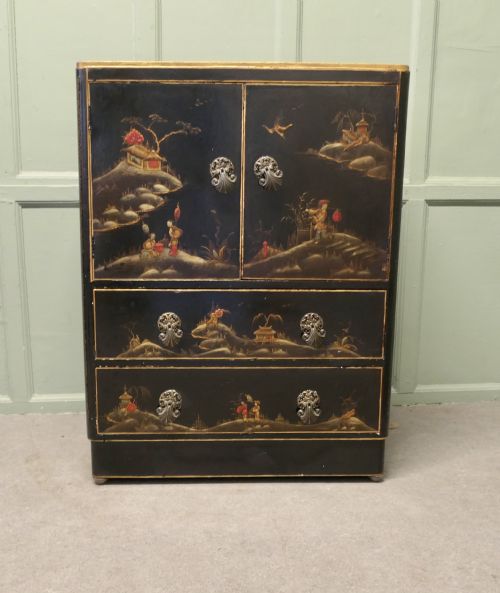
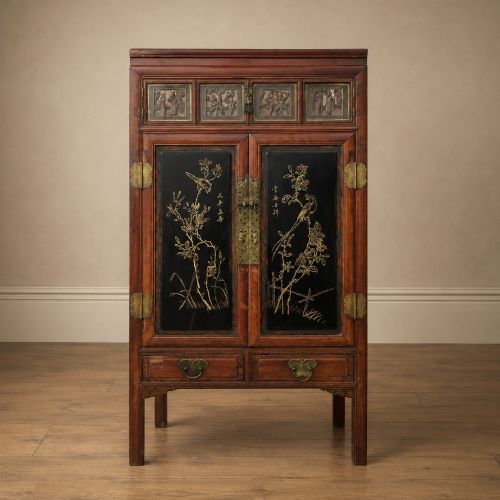
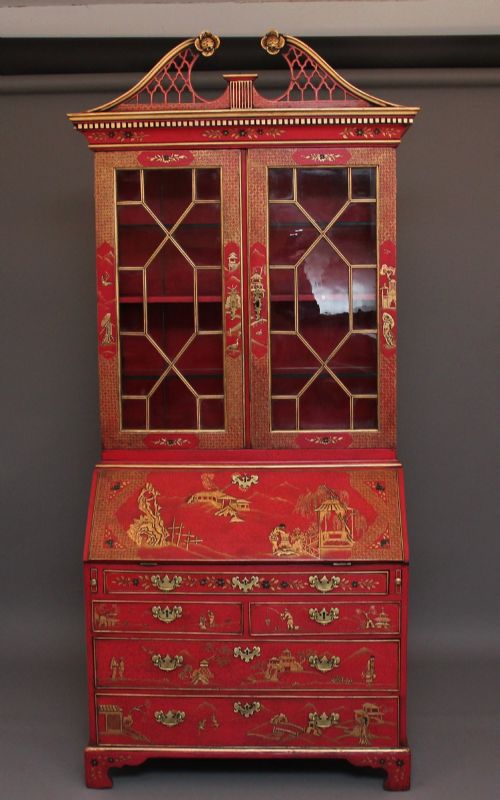
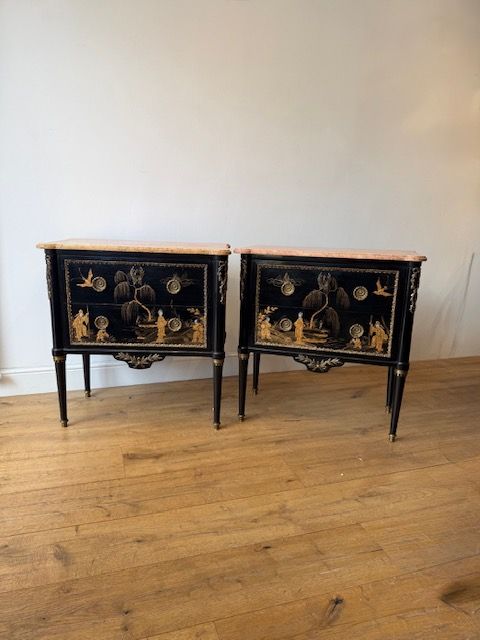



Gilt Chinoiserie Cabinet
These gilt chinoiserie cabinet pieces bring brilliant lacquer surfaces and gold decoration to interior spaces.
What They Are
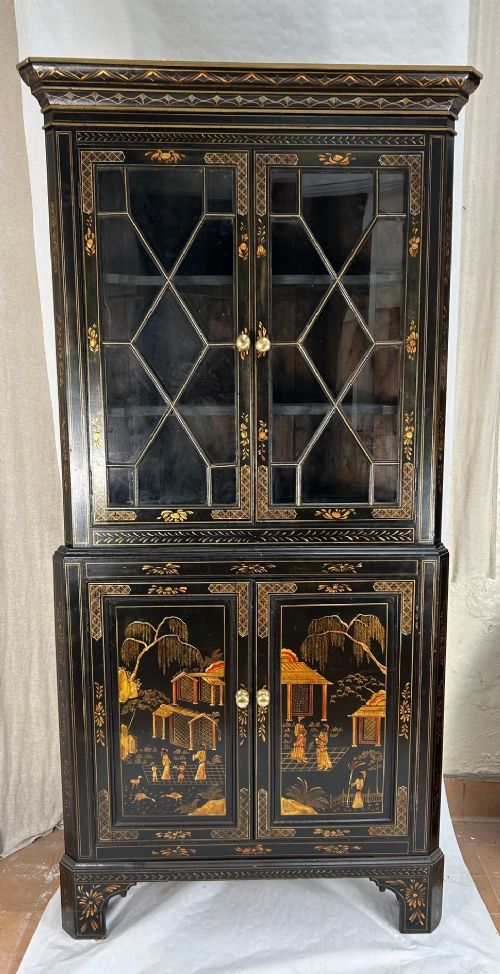
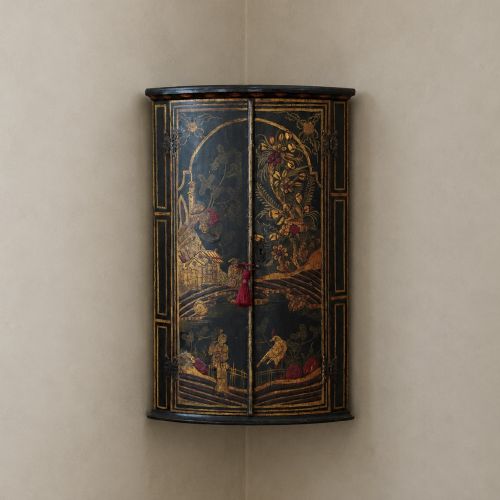
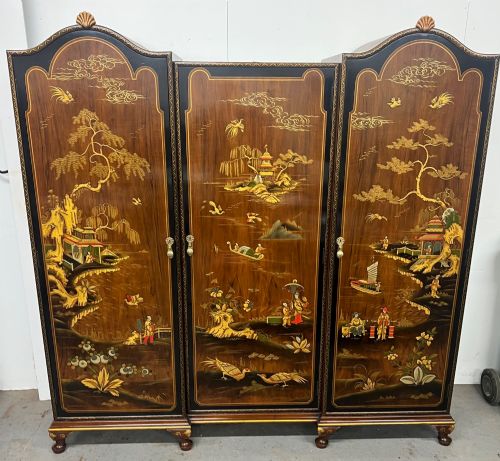
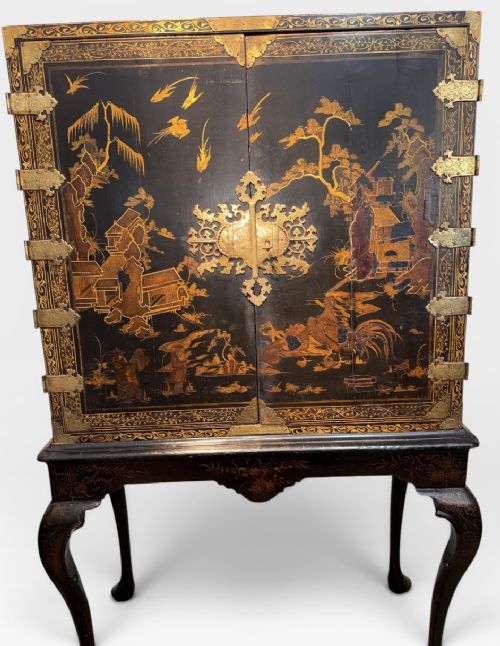
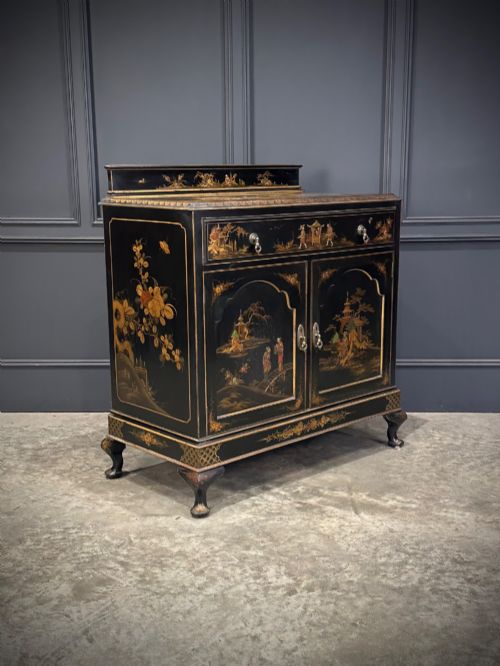
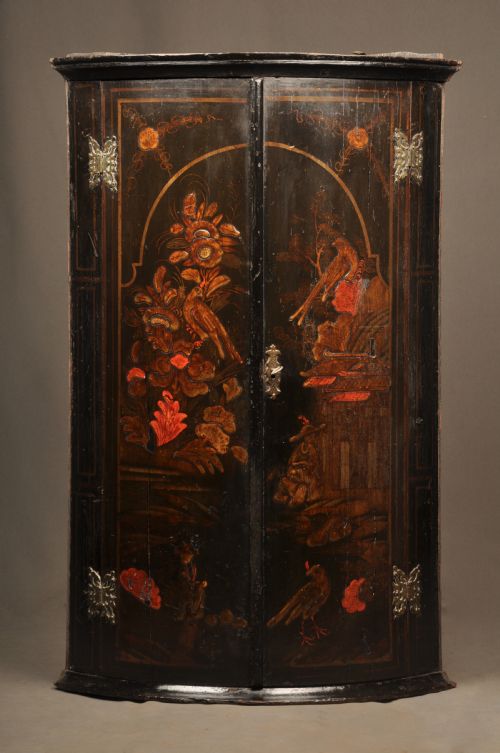
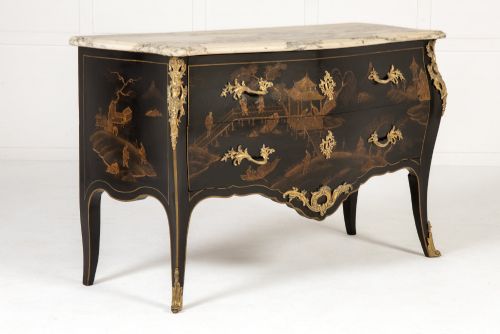
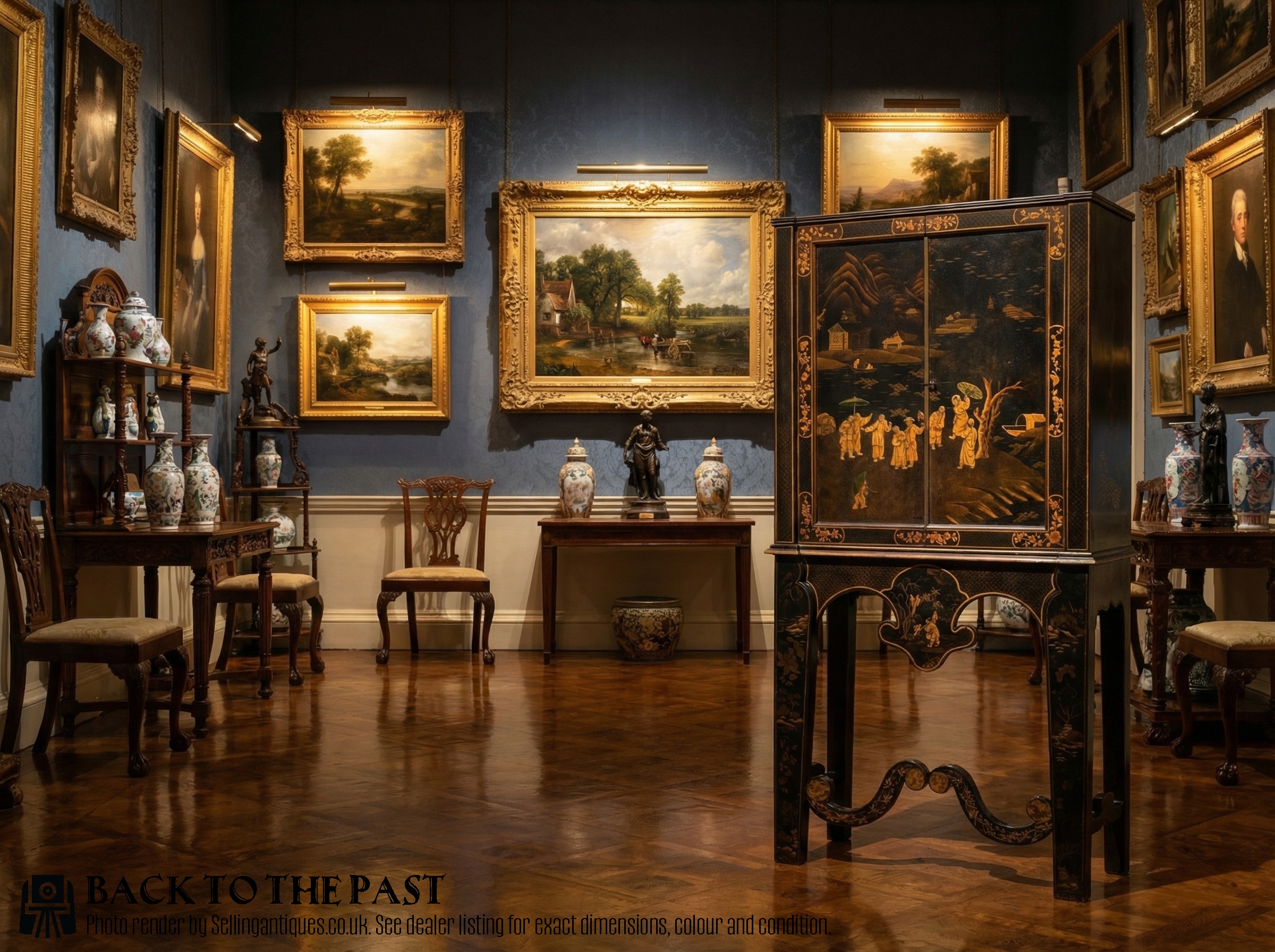
A gilt chinoiserie cabinet brings together decorative lacquerwork and gilded highlights in forms designed for storage and display. You will find bureau bookcases, wardrobes, side cabinets, and chests on stands within this selection.
The objects span several centuries, reaching from the eighteenth century and the Georgian period through to the nineteenth century, Regency styles, and twentieth-century revivals.
Forms range from tall bureau bookcases and wardrobes to compact side cabinets and chests raised on stands, offering varied storage capacities while maintaining distinct painted schemes.
How They Were Made
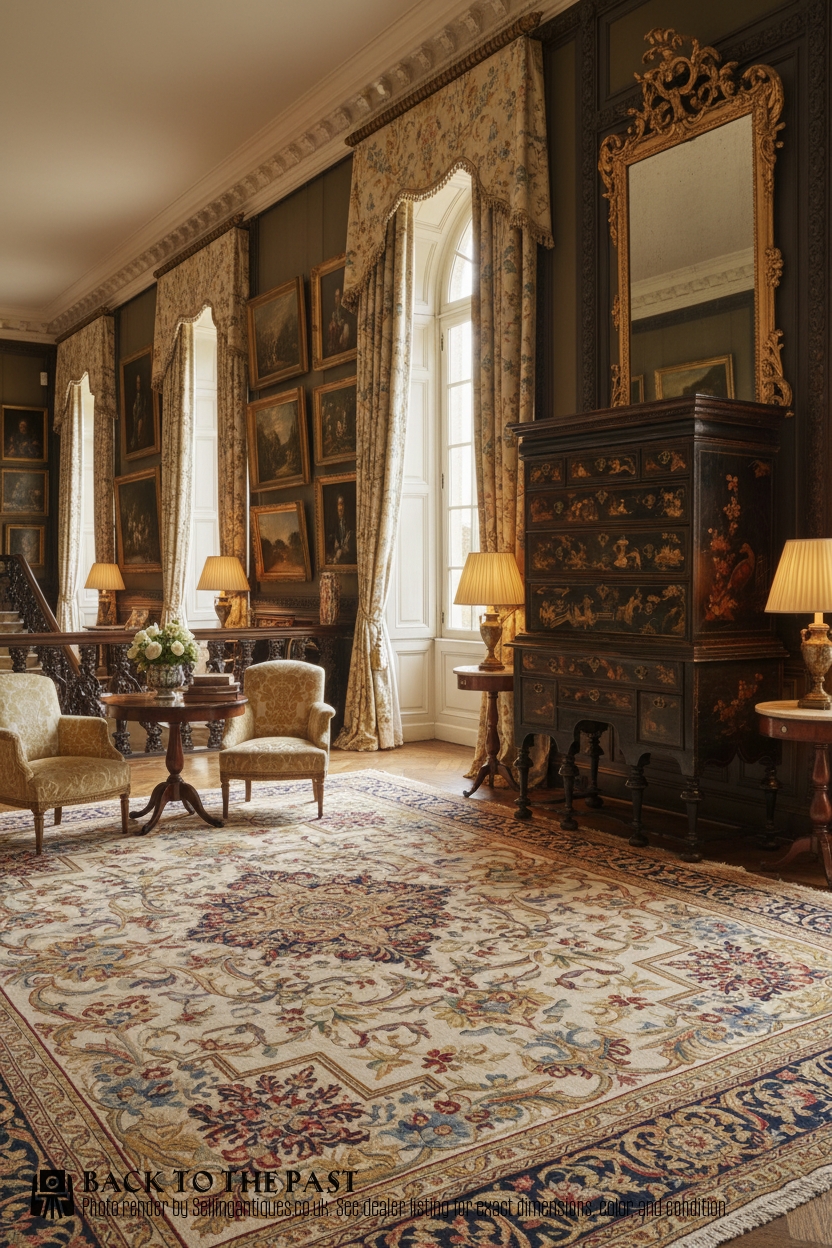
Construction relies upon wood carcasses, frequently incorporating mahogany, finished with layers of lacquer and highlighted with gold leaf, gilding, and brass fittings.
Surfaces receive hand-painted decoration depicting Asian-inspired motifs, often set against black or red lacquer grounds and enhanced with glass elements where fitted interiors or doors occur.
Retail Price Guide 2026
Typical UK retail prices for gilt chinoiserie cabinet, calculated from the Sellingantiques database of over a million retail prices indexed since 2003. This retail price guide relies exclusively on Sellingantiques data; no external sources or auction records are used, so the figures do not describe the wider market.
The archive and current listings span the eighteenth century, Georgian period, nineteenth century, and early twentieth-century revivals.
What Varies in Quality
The distinction between standard examples and exceptional pieces rests upon the depth of the lacquer layers and the precision of the hand-painted gold leaf figures.
Proportion and the integration of the cabinet with its stand separate ambitious workshop productions from simpler decorative items.
Maples & Co.
The Gilt Chinoiserie Cabinet Glossary
- Japanned
- European imitation of East Asian lacquerwork, created using layers of varnish and metallic dust. This finish defines the surface texture of many pieces.
- Bureau Bookcase
- A dual-purpose furniture form combining a sloping writing desk with upper shelving enclosed by doors. It provides both workspace and storage.
- Chest on Stand
- A cabinet section elevated on a separate supporting framework of legs. This form lifts the main body off the floor.
- Parcel Gilt
- Partial application of gold leaf to specific raised details or carvings. It accentuates particular decorative motifs against the dark lacquer.
Frequently Asked Questions
What periods do these cabinets originate from?
The pieces date from the eighteenth century, the Georgian era, and the nineteenth century, alongside later revivals from the early twentieth century.
Craftsmen across these different eras utilised traditional lacquer and gilding techniques to achieve the distinctive appearance.
What wood materials are used inside?
Construction incorporates wood carcasses, with mahogany frequently utilised for the primary structure of the furniture.
Brass handles, hinges, and glass panels often complement these wooden frames.
How do cabinets and chests on stands differ?
Cabinets provide enclosed storage in singular floor-standing units, whereas chests on stands elevate the storage body upon dedicated legs.
Both formats utilise gilt decoration and lacquer finishes to display painted Asian-inspired scenes.
Are these pieces finished with real gold leaf?
Many examples incorporate genuine gold leaf and gilding to highlight the hand-painted figures and borders across the lacquer surface.
This metallic application creates the luminous contrast characteristic of the style.