



Japanned Cabinet on Stand
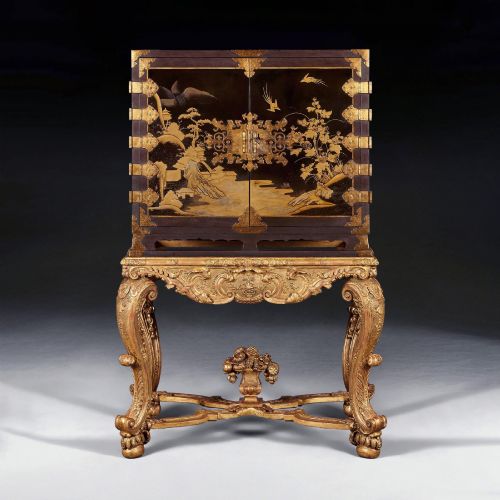
A japanned cabinet on stand brings rich Chinoiserie lacquer and raised gilt decoration into a room, offering both storage and striking visual presence.
Japanned Cabinet on Stand
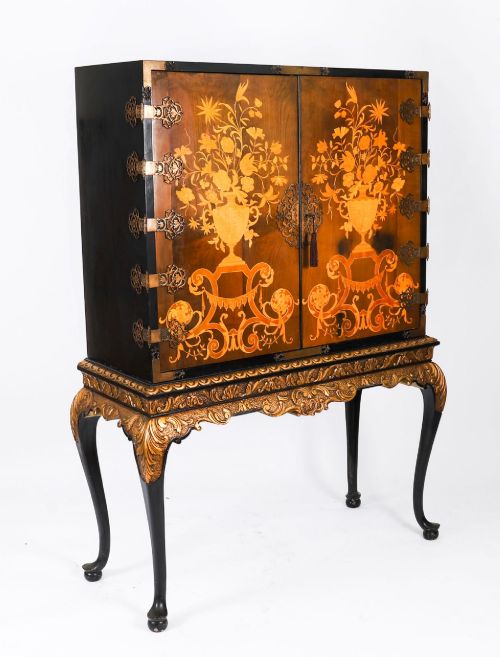
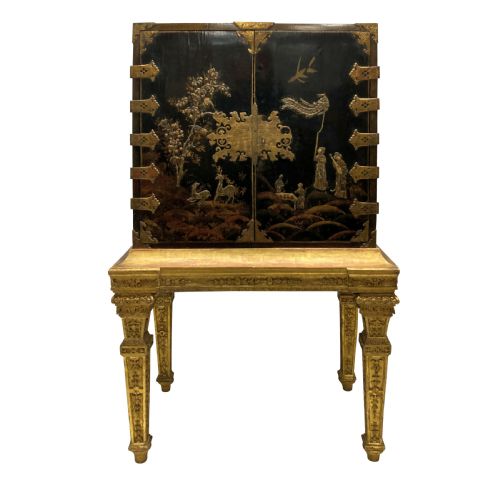
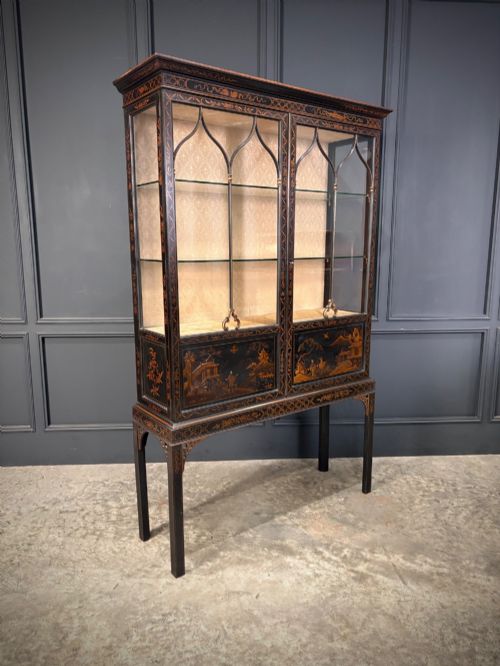
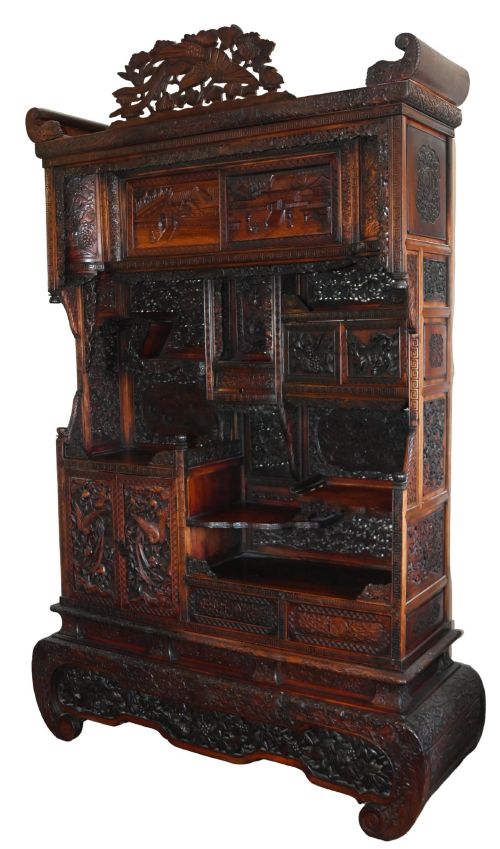
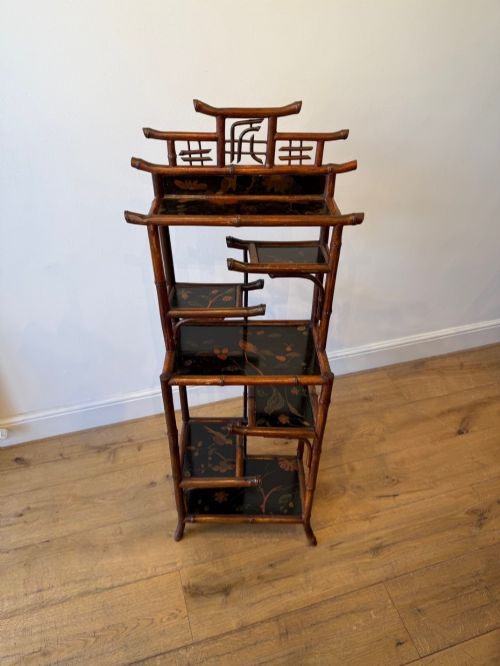
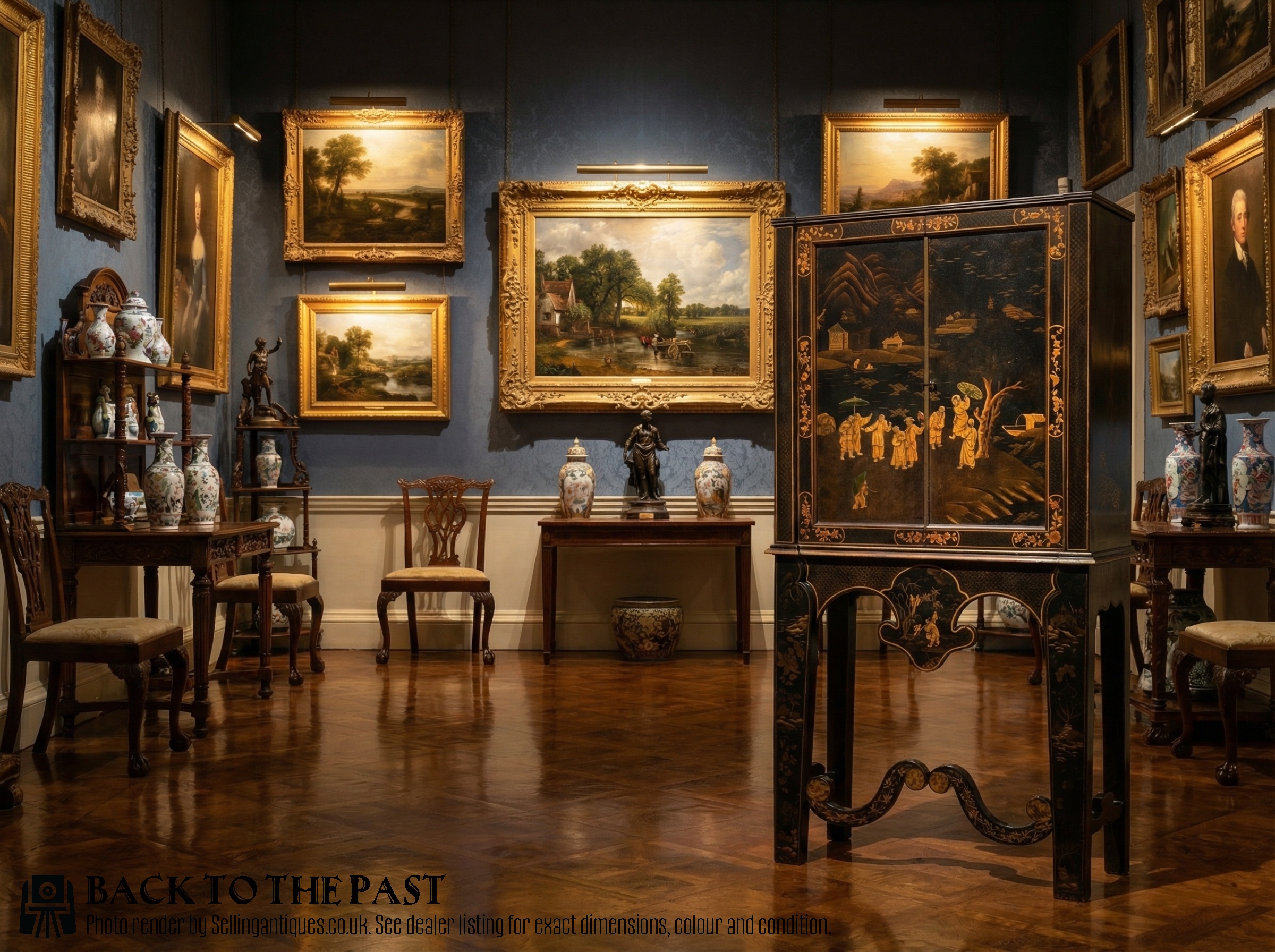
A japanned cabinet on stand is a dual-form piece pairing an enclosed cabinet with a supporting table or stand, commonly seen in eighteenth-century and seventeenth-century iterations. Buyers searching for a japanned cabinet on stand encounter forms ranging from large storage cupboards and medal cabinets to smaller collectors' pieces and cocktail cabinets. Chinoiserie motifs dominate the style, though William and Mary, Queen Anne, and Regency periods all contribute distinct silhouettes.
Materials and construction
Construction relies upon wood carcasses finished with layers of lacquer, often built on pine or other foundational timbers. Artisans applied successive coats of varnish to achieve a smooth ground before decorating the surface.
Gilt and gold leaf highlight the raised figures, pavilions, and landscapes characteristic of the Chinoiserie aesthetic. Engraved brass hardware, including elaborate hinges and lock plates, secures the doors and reinforces the corners.
Japanned Cabinet on Stand Retail Price Guide 2026
Typical asking prices for japanned cabinet on stand among the pieces listed under this phrase on Sellingantiques today, from the lower quarter to the upper quarter. They describe what is for sale here now, not the wider market.
Listings feature periods spanning the seventeenth century, the eighteenth century through Georgian and Regency eras, up to the Victorian aesthetic movement and twentieth-century pieces.
Distinctions in quality
Quality rests heavily on the depth and crispness of the japanned decoration, where finely rendered figures and landscapes distinguish superior examples from simpler work. The execution of the lacquer surface, from its initial smoothness to the preservation of the raised gilt details, dictates the visual impact.
The harmony between the upper cabinet and its stand influences the overall integrity of the piece, particularly where seventeenth-century or eighteenth-century elements combine with period-appropriate or later supports. The sophistication of the brass mounts and the joinery of the underlying wood further separate standard items from exceptional ones.
The Japanned Cabinet on Stand Glossary
- Japanning
- A European imitation of East Asian lacquerwork involving layered varnishes and raised metallic decoration. This technique defines the decorative surface of the cabinets.
- Chinoiserie
- The European interpretation of Chinese and East Asian artistic traditions, expressed through whimsical landscapes, figures, and pavilions. It provides the primary stylistic vocabulary for these pieces.
- Lacquer
- A durable resin finish applied in multiple coats to create a glossy, protective surface. It forms the base upon which gilt decoration is built.
- Giltwood
- Wood that has been coated with gold leaf or gold paint to simulate solid gold. Stands are frequently rendered in this material to contrast with dark lacquer.
- Medal cabinet
- A specialised storage unit fitted with shallow drawers designed for the display of small collectible objects. These compact interiors sit within the main cabinet structure.
Japanned Cabinet on Stand: Frequently Asked Questions
What is a japanned cabinet on stand?
A japanned cabinet on stand is a raised storage piece featuring European lacquer decoration inspired by Asian art. The upper cabinet sits upon a distinct wooden table or stand.
These pieces were originally designed to store valuable textiles, papers, or collections while serving as prominent decorative focal points in formal rooms.
How do I date a japanned cabinet?
Dating relies on examining the structural joinery of the cabinet, the timber used in the carcass, and the specific style of the stand. Seventeenth-century and eighteenth-century examples display different leg forms and proportions compared to later nineteenth-century revivals.
Hardware such as brass hinges and lock plates also provides chronological clues based on manufacturing techniques and prevailing designs of the era.
Where should I place a cabinet on stand?
These cabinets suit principal reception rooms or hallways where their decorated surfaces can be fully appreciated. Because they combine height with a relatively compact footprint, they fit well against prominent wall spaces.
Positioning them away from direct sunlight protects the sensitive lacquer and gilt surfaces from fading over time.
Are stands original to the cabinets?
Many cabinets and stands have travelled together for centuries, while others were paired during subsequent periods to match prevailing aesthetic tastes. Examining the junction between the cabinet base and the top of the stand helps determine their historical relationship.
Both period-matched pairs and later combinations appear within the historical record and contemporary collections.