

Early 18th Century Cabinet
An early 18th century cabinet brings substantial timber and architectural presence to a room, offering clever concealed compartments behind magnificent figured veneers.

Identifying an early 18th century cabinet
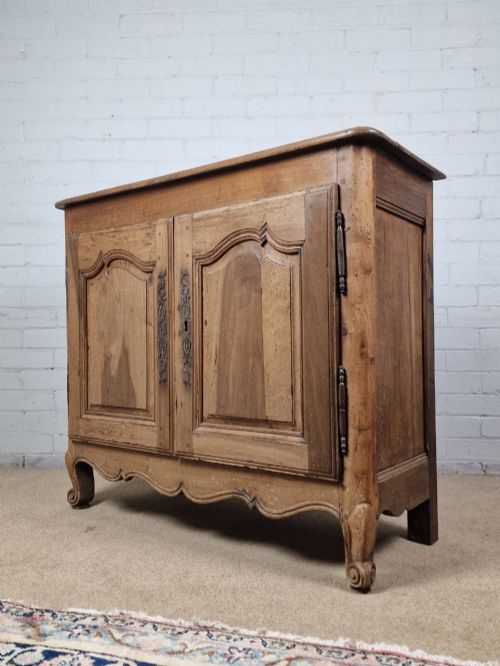
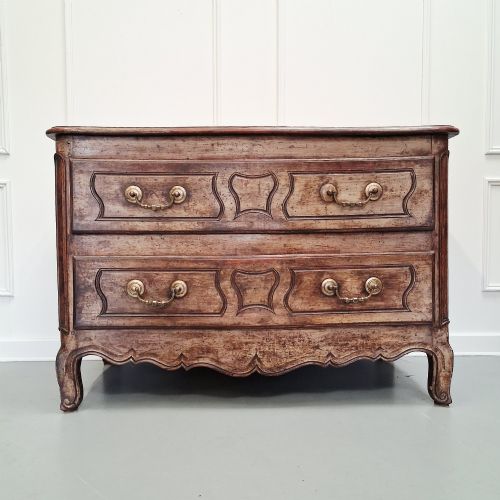
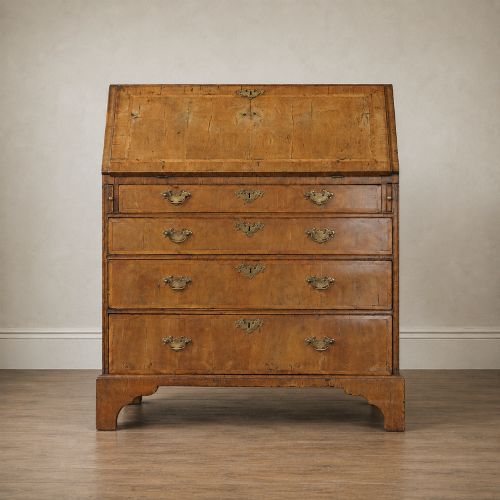
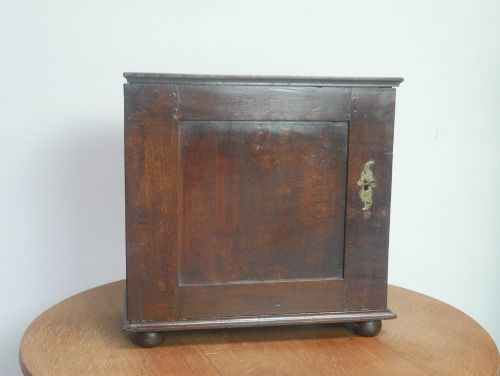
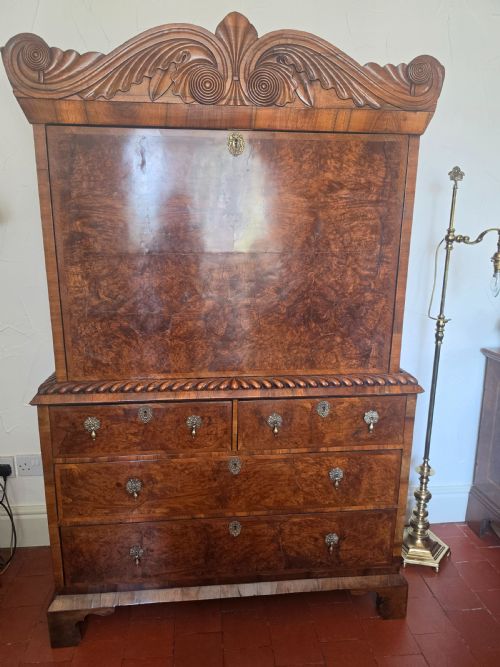
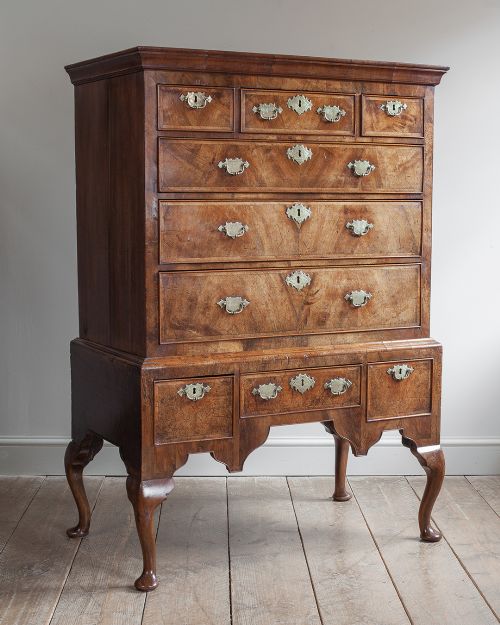
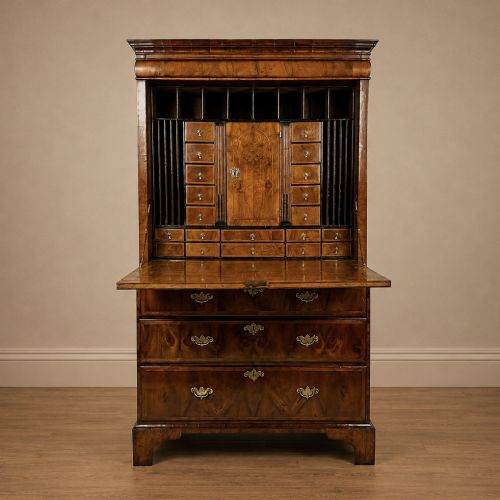
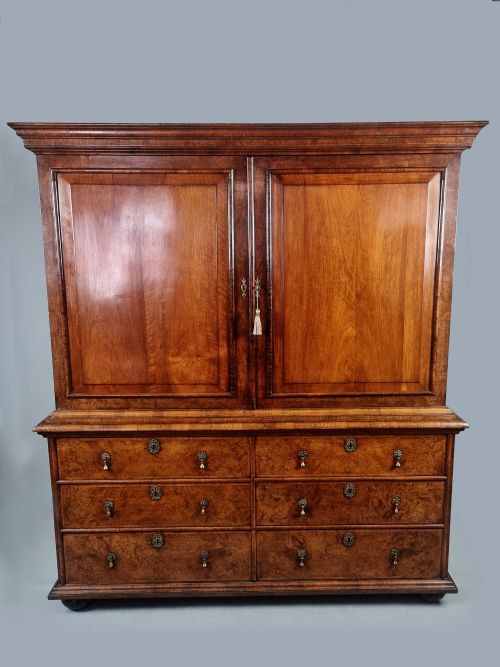
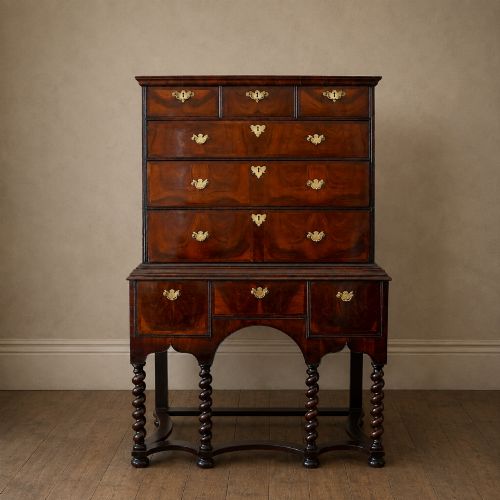
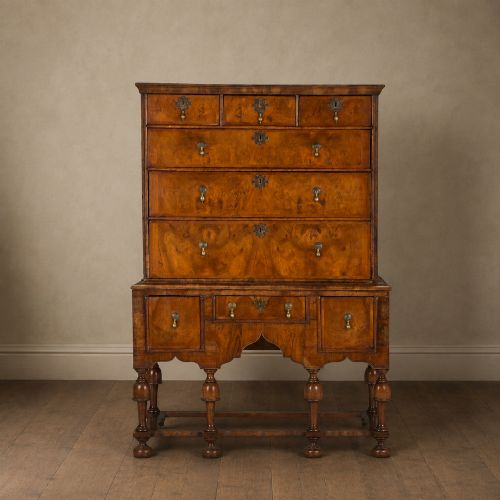
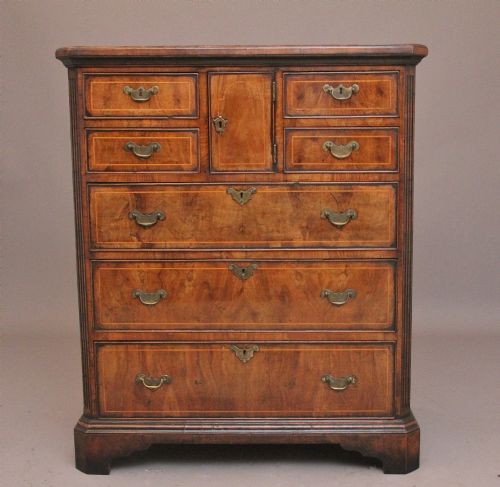
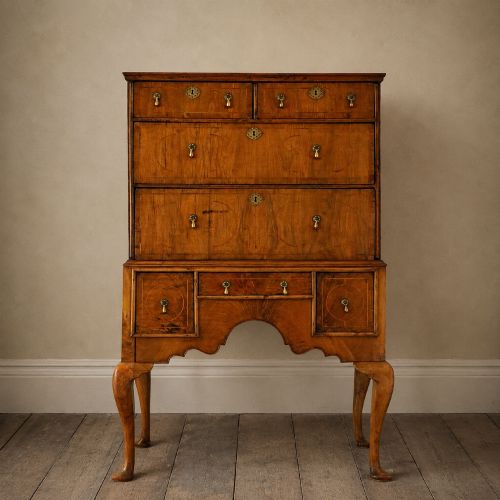
An early 18th century cabinet encompasses architectural wall cupboards, spice chests, and towering pieces built on stands or chests. Buyers inspecting this phrase encounter substantial oak and figured walnut forms designed to secure precious belongings and anchor a room.
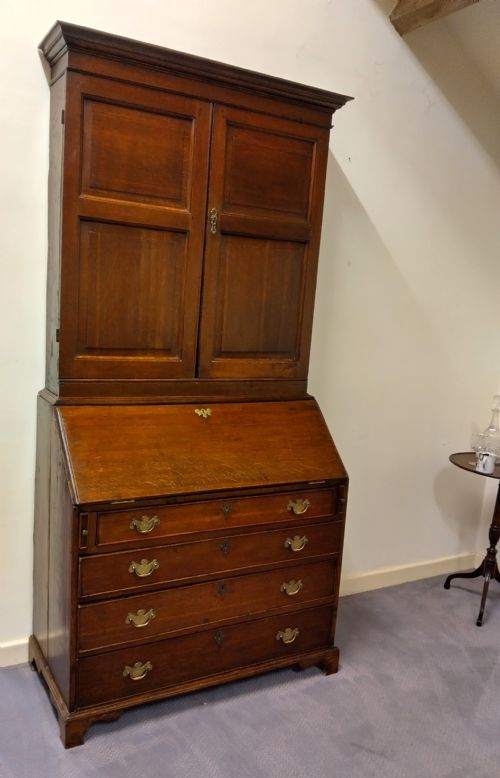
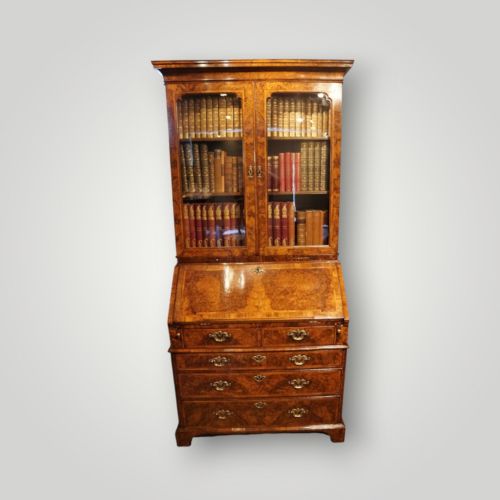
The selections span distinct regional variations including British Georgian workshops and Continental Baroque interpretations. Corner cupboards and wall-mounted spice cabinets appear frequently alongside grander walnut bureau bookcases and cabinets on chests.
Makers of this era constructed pieces primarily for domestic utility in parlours and bedchambers, adapting forms to corner spaces or freestanding walls. The survival of glazed display doors and fitted interiors reveals the evolving domestic habits of the period.
Materials and construction methods
Joiners built these pieces using solid oak, walnut, elm, and pine, often applying elaborate fruitwood inlay or glossy lacquer finishes known as japanning. Brass hardware such as hinges and escutcheons secure panelled doors and internal drawers.
Construction relies on traditional joinery methods including panelled framing and dovetailed drawer boxes designed to accommodate timber movement over centuries. Giltwood accents and glass panels enhance the visual weight of glazed display sections and elaborate cabinets on stands.
Retail Price Guide 2026
Typical UK retail prices for early 18th century cabinet, calculated from the Sellingantiques database of over a million retail prices indexed since 2003. This retail price guide relies exclusively on Sellingantiques data; no external sources or auction records are used, so the figures do not describe the wider market.
Secret compartments hidden behind sliding panels rewarded curious owners with private spaces for love letters and hidden gold.
Distinctions in craftsmanship and materials
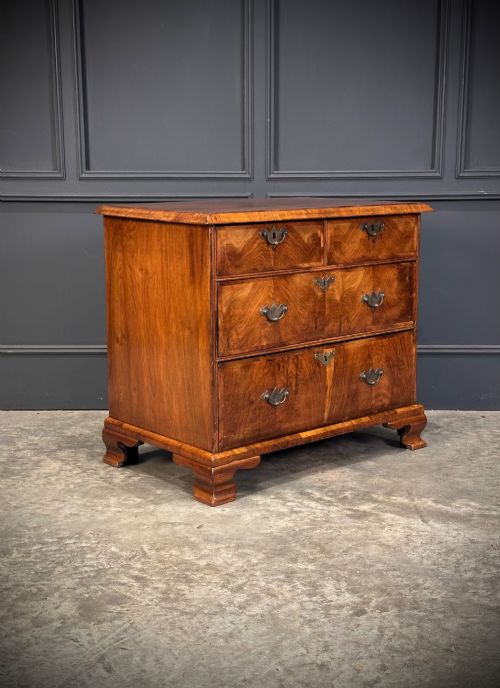
The hierarchy of quality rests primarily on the selection of timber veneers, where highly figured walnut or intricate fruitwood inlay distinguishes superior pieces from plain oak utility items. Surface treatments such as early japanning require immense skill in layering and curing.
Proportion and architectural integrity separate workshop standards, with finer examples retaining original brass hardware, unblemished glass, and intact internal fittings like secret drawers. The structural integration of cabinets onto their original stands or chests dictates the overall integrity of the piece.
The Early 18th Century Cabinet Glossary
- Japanning
- European imitation of East Asian lacquerwork using resin varnished surfaces decorated with raised motifs in gold and dark tones. This technique appeared on fashionable cabinets during the early Georgian period.
- Marquetry
- Decorative veneer patterns formed by fitted pieces of various woods or other materials applied to a carcase. Floral and geometric designs characterise high-status cabinet work.
- Bureau bookcase
- A writing desk combined with a shelved cabinet above, enclosed by doors or a fall-front. These dual-purpose items maximised storage in smaller domestic spaces.
- Escutcheon
- A protective plate surrounding a keyhole, usually cast in brass. These functional elements often feature decorative shaping that aids in dating the hardware.
- Carcase
- The main structural body or frame of a piece of furniture before drawers, doors, and decorative veneers are applied. The construction of the carcase reveals the underlying joinery traditions of the period.
Frequently Asked Questions
How do I clean walnut veneer?
Dust surfaces regularly with a soft, dry cloth to prevent abrasive particles from scratching the historic polish. Avoid modern chemical sprays or excessive moisture, which can penetrate hairline cracks in old finishes.
Feed the timber periodically with traditional wax polish applied sparingly and buffed gently. This maintains the natural lustre of the walnut without building up heavy chemical layers.
Were these cabinets used in kitchens?
Smaller oak spice cupboards and wall-mounted pieces often served domestic storage functions in private quarters. They kept valuable provisions, spices, and small documents secure.
Larger walnut and japanned examples stood in formal reception rooms and bedchambers. Their primary purpose was the display of status items and the safekeeping of correspondence.
Can I place one near a radiator?
Centuries-old timbers react severely to sudden fluctuations in humidity and heat. Direct thermal output causes historic oak and walnut to shrink, warp, and split.
Position these cabinets away from direct sunlight, heating vents, and fireplaces. Maintaining a stable room environment preserves the stability of the carcase and the adhesion of delicate veneers.
What is a cabinet on stand?
A cabinet on stand consists of a primary storage box lifted clear of the floor by a dedicated support structure or legs. This elevated form reduced dampness transfer from stone floors and showcased elite craftsmanship.
The separation between the upper cabinet and the supporting base allowed craftsmen to combine massive storage capacity with lighter visual proportions. Many surviving examples demonstrate distinct stylistic periods for the upper and lower sections.