
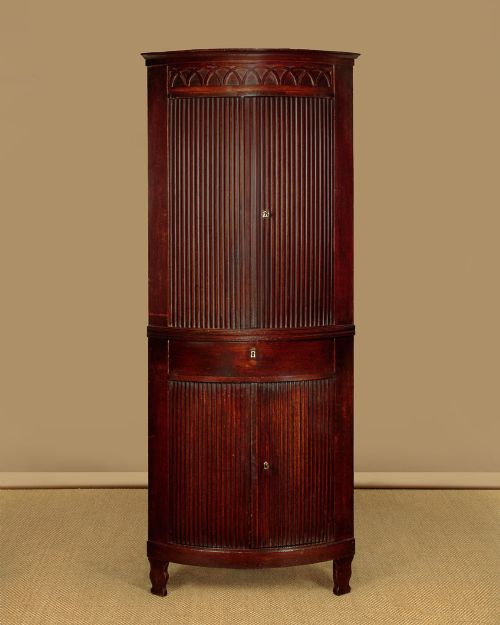

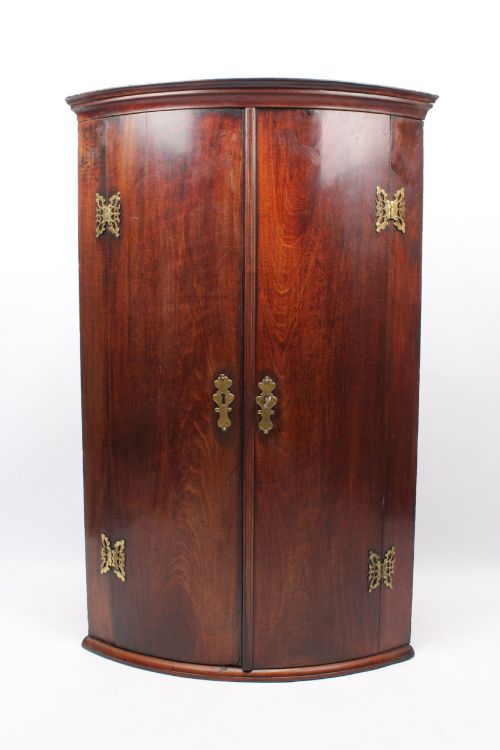
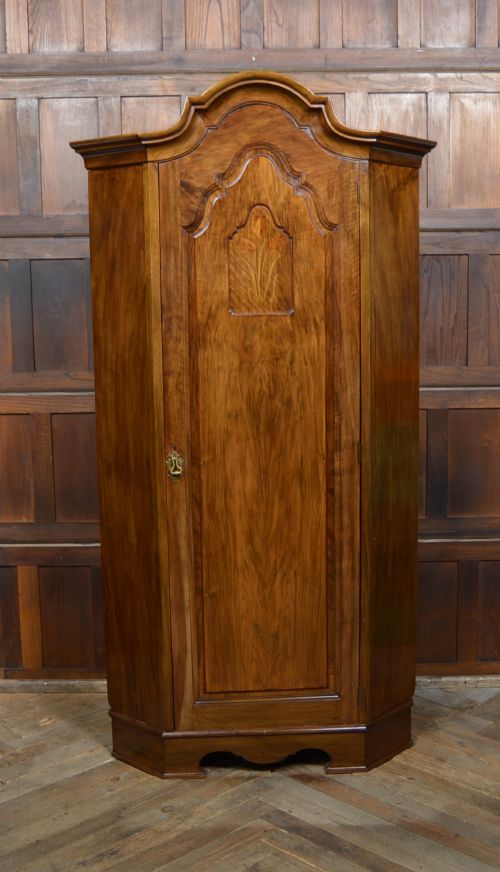
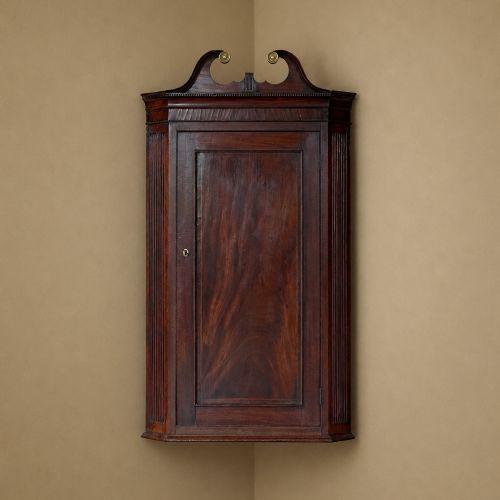
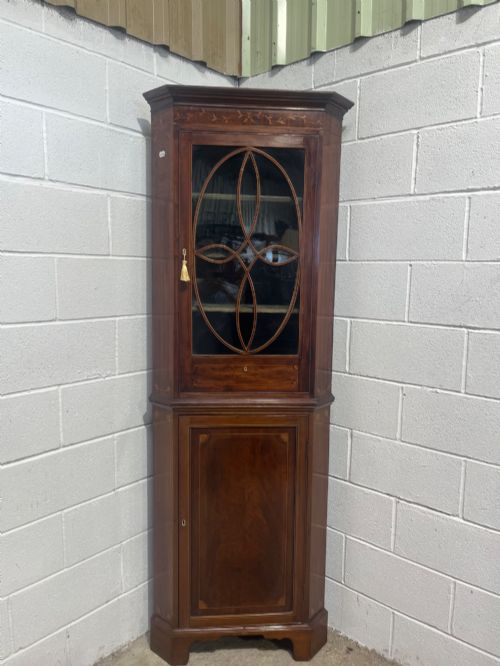
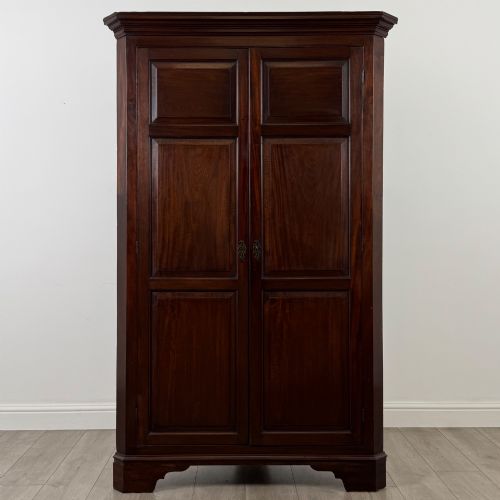
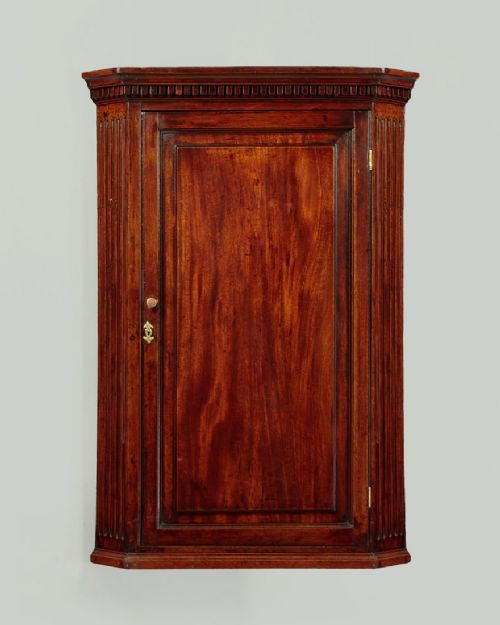
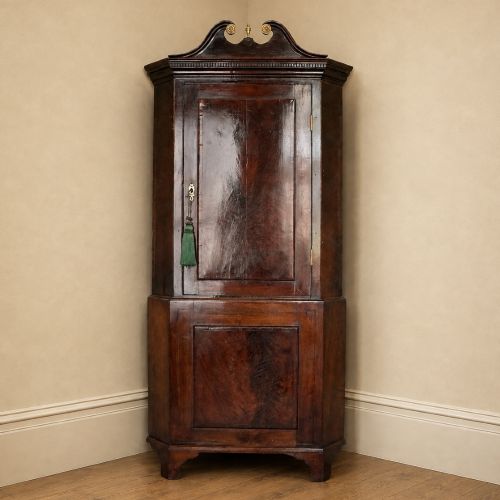
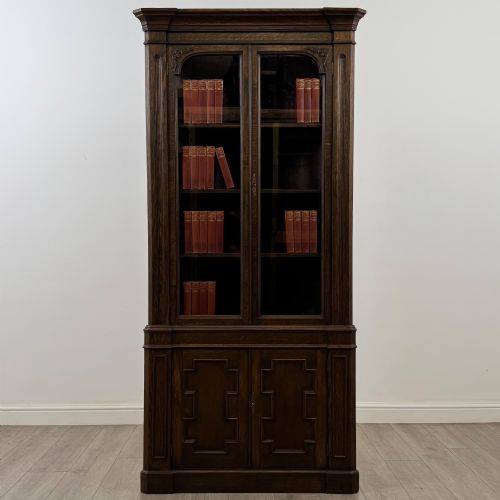
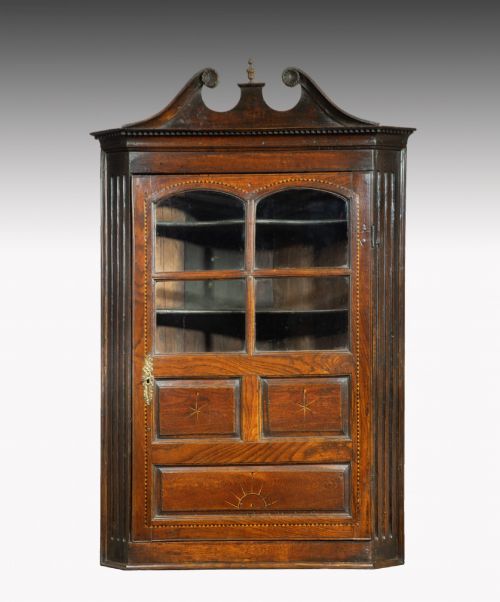
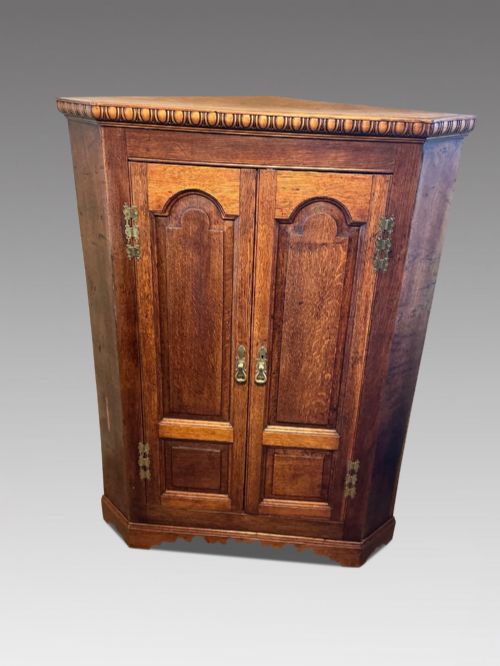
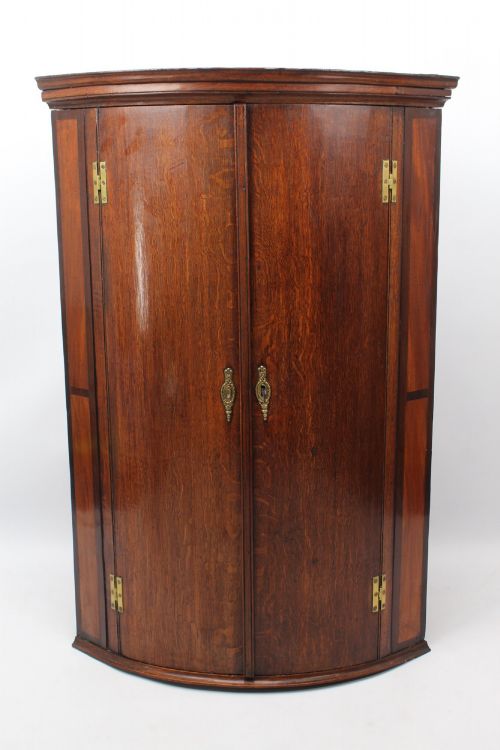
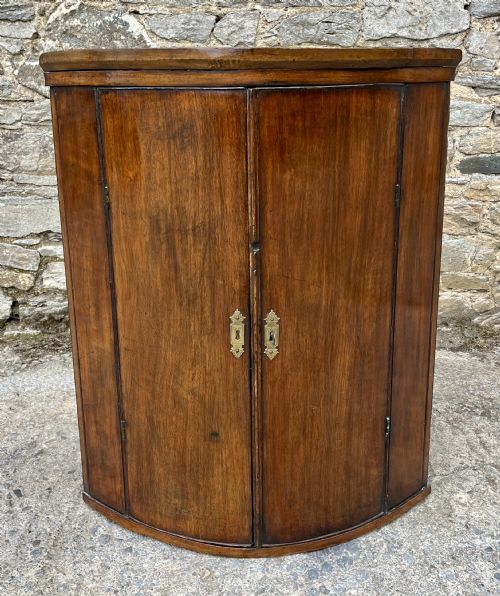
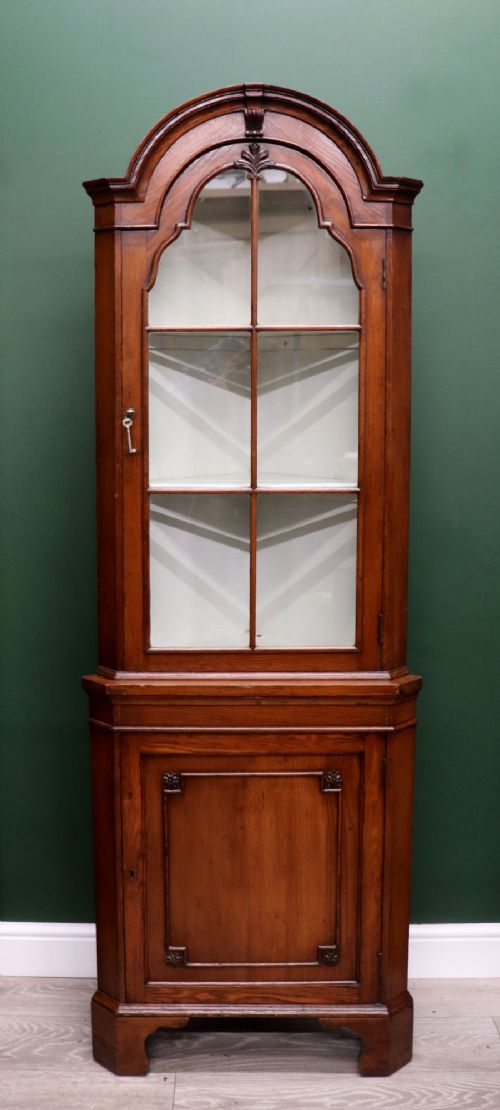
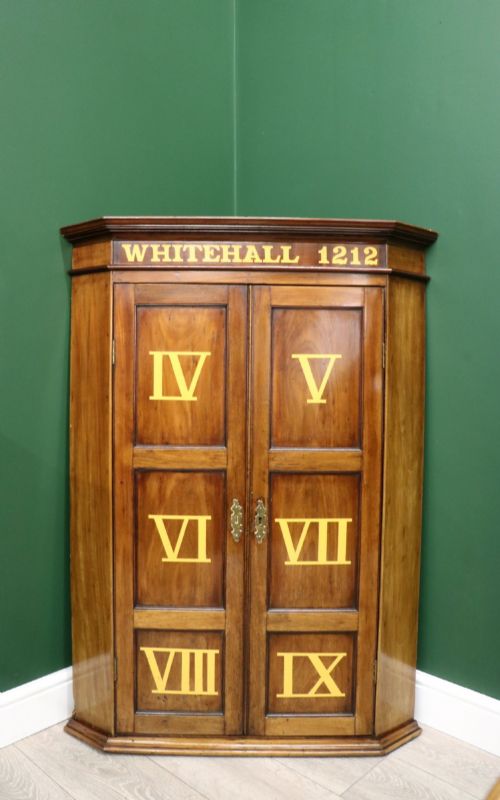
Brown Wood Corner Cupboard
These brown wood corner cupboard pieces offer clever storage for neglected rooms, combining period craft with practical daily use.
What these brown wood corner cupboards are
A brown wood corner cupboard brings traditional British joinery into domestic spaces, utilising awkward angles with practical wall-mounted or freestanding cabinets. These items emerge primarily from the Georgian and 18th century periods, alongside later Edwardian and mid-century interpretations.
The available selection displays considerable variety in scale and timber choice, ranging from modest oak hanging cabinets to grand country house cupboards in figured mahogany. Many examples showcase period specific traits such as panelled doors, brass H-hinges and fitted interior shelving.
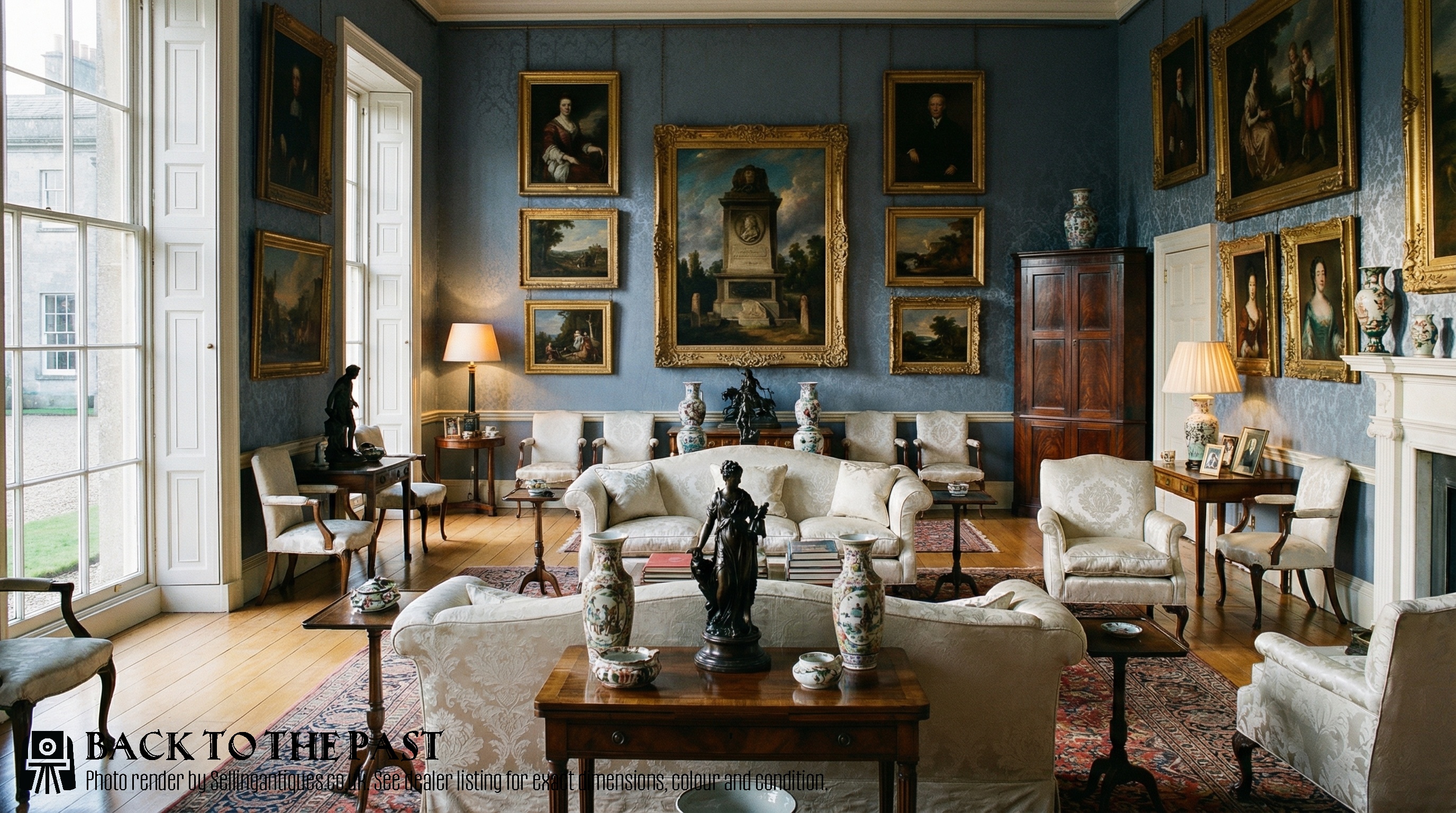
Makers designed these corner cabinets to maximise interior space in panelled rooms and parlours without obstructing floor traffic. The pieces appearing here span formal Georgian town houses and simpler provincial workshops.
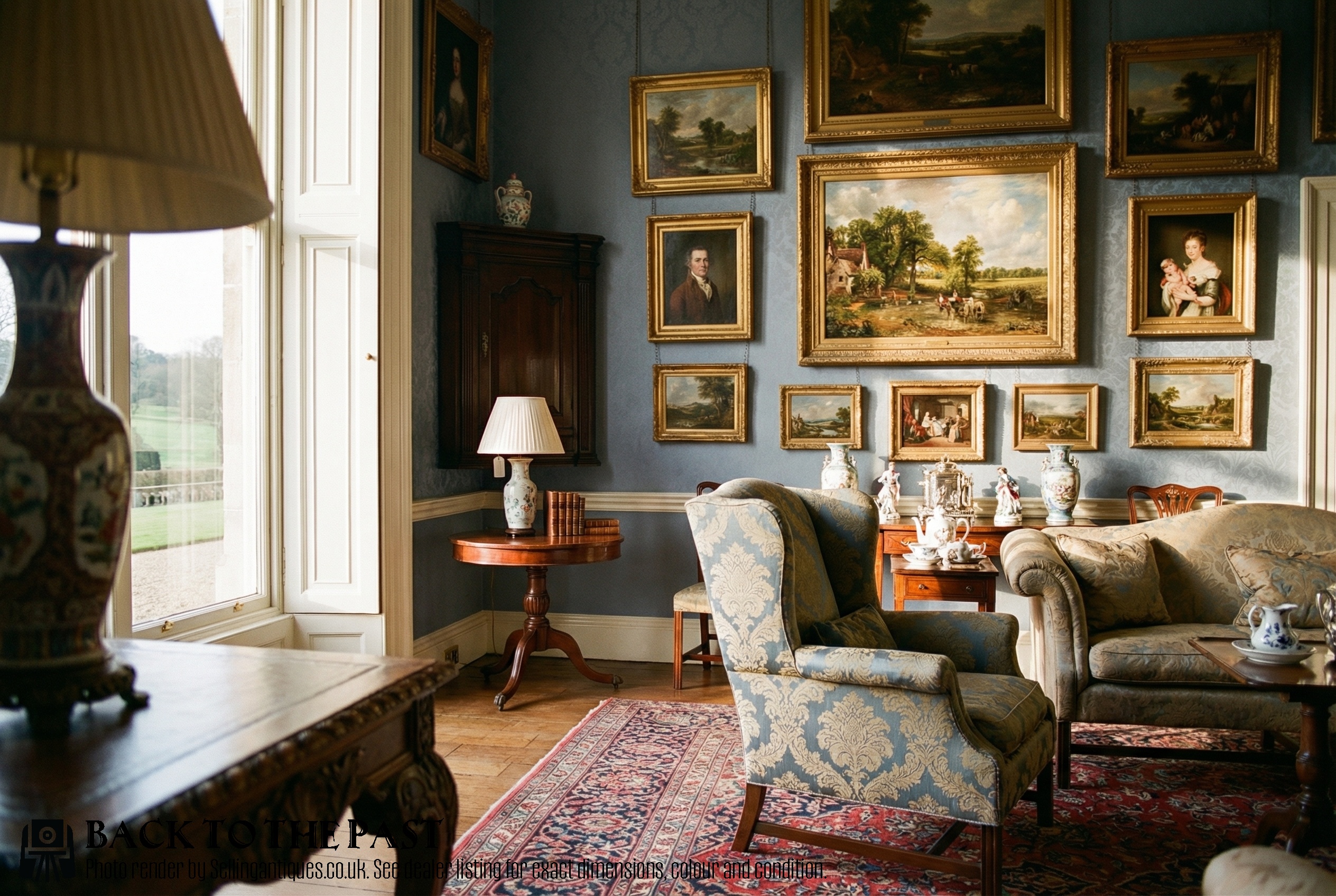
How they were made
Cabinet makers constructed these brown wood corner cupboard examples using solid timbers like oak, walnut and mahogany, frequently supplemented by decorative wood veneers and fruitwood inlay. Workshops employed traditional joinery techniques, housing panels within sturdy frames to accommodate seasonal wood movement.
Surface ornament relied upon the natural grain of flame mahogany or figured walnut, sometimes enhanced with painted finishes or contrasting stringing lines. Hardware components typically consist of brass escutcheons, hinges and working locks.
Retail Price Guide 2026
Typical UK retail prices for brown wood corner cupboard, calculated from the Sellingantiques database of over a million retail prices indexed since 2003. This retail price guide relies exclusively on Sellingantiques data; no external sources or auction records are used, so the figures do not describe the wider market.
Current listings demonstrate timber varieties including oak, mahogany, walnut, and fruitwood inlay across Georgian, Edwardian, and twentieth-century periods.
What varies in quality
The distinction between ordinary and exceptional pieces rests upon timber selection and the refinement of the interior detailing. Cabinets featuring highly figured flame mahogany veneers or intricate fruitwood inlay sit at the upper end of the scale.
Structural integrity and original surface patination also govern value, as untouched timber finishes carry greater appeal than stripped or heavily restored examples. Superior execution shows in the precision of the mitre joints and the depth of the brass furniture.
The Brown Wood Corner Cupboard Glossary
- H-hinge
- A traditional brass hinge shaped like the capital letter H, commonly found on 18th century cabinet doors. These fixtures sit surface-mounted rather than mortised into the wood.
- Flame mahogany
- A decorative veneer cut from timber where the branches join the main trunk, creating a distinct flickering flame pattern. This material defines high status Georgian furniture.
- Stringing
- A narrow strip of contrasting wood inlaid into the surface of a cabinet to form delicate border lines. This technique appears frequently on Edwardian and George III pieces.
- Escutcheon
- A protective brass plate surrounding a keyhole that prevents the surrounding wood from wearing down with use. Period examples often feature decorative pierced designs.
Frequently Asked Questions
How do I hang a wall cabinet?
Hanging corner cabinets require secure fixing directly into masonry or structural timber studs behind the plaster. Because these heavy wooden cupboards hold porcelain or glassware, professional installation ensures safe weight distribution.
Most period examples feature internal fixing holes or sturdy brass brackets built into the back frame specifically for wall mounting.
Are these cupboards meant for corners?
These cabinets are purpose-built with angled backs designed to fit neatly into ninety-degree room junctions. This specific geometry allows them to utilise dead space effectively.
Both floor-standing and hanging versions share this triangular footprint, though some mid-century iterations experiment with curved fronts.
How do I date a Georgian cupboard?
Dating relies upon examining the timber species, construction methods, and secondary woods used for interior framing and drawer linings. Hand-cut dovetails and original brass hardware offer reliable chronological clues.
Georgian pieces typically display denser native oak or imported mahogany alongside traditional beeswax finishes rather than modern lacquers.
Can I store heavy items inside?
Interior shelves are built to support standard domestic tableware, books, or glassware appropriate to the scale of the cabinet. The strength depends upon the original fixed support cleats inside the carcase.
Checking the stability of internal shelf supports prevents accidental damage to fragile antique ceramics and glass.