



English Oak Corner Cupboard
An english oak corner cupboard turns dead angles into practical storage while anchoring a room with centuries of craft.
English Oak Corner Cupboard
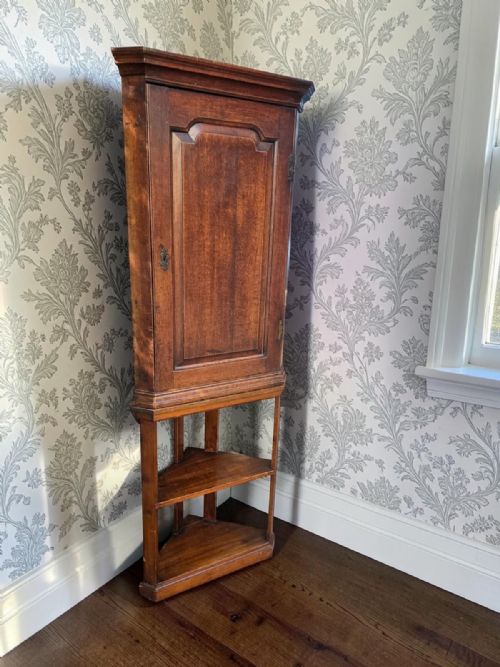
An english oak corner cupboard serves primarily to utilise awkward angles in domestic interiors, coming in two main formats: wall-hanging units and floor-standing pieces. The hanging variants attach securely to walls, often fitted with single panelled doors, while standing examples reach down to the floor, sometimes split into two stacked sections.
Most pieces seen here belong to the Georgian era, running from the mid-eighteenth century into the early nineteenth century, though Victorian revivals and Edwardian glazed display cabinets also appear regularly. These items originate from both formal urban workshops and country cabinet makers who relied on local timber.
The layout inside usually incorporates timber shelves for displaying china, glasses or provisions, occasionally accompanied by small drawers tucked beneath the primary door. Buyers encounter everything from compact wall cabinets meant for modest parlours to tall standing cupboards designed for larger dining spaces.
Materials and Technique
Makers built these carcases primarily using solid oak, chosen for its strength, dense grain and durability, frequently pairing it with secondary woods for internal elements. Cabinet makers joined corners using sturdy dovetails and pegged mortise and tenon joints to withstand the seasonal movement of timber.
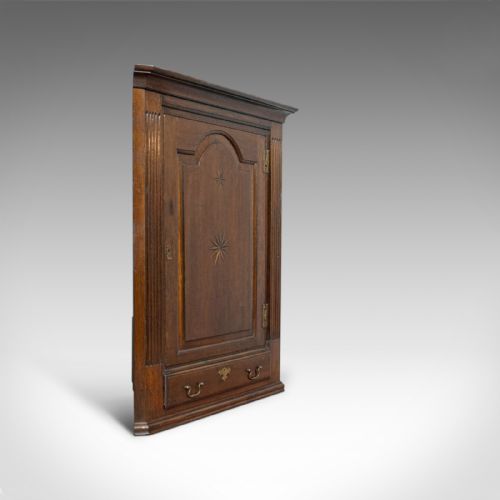
Surface ornamentation often relies on contrasting veneers and inlays, incorporating mahogany crossbanding, fruitwood, satinwood or amboyna details around the door panels and cornices. Glazed doors utilise timber framing with wooden glazing bars, such as astragal mouldings, to hold individual panes of glass securely.
Hardware played a functional and decorative role, featuring brass hinges and key escutcheons fixed to the wood with hand-finished screws. Fielded panels were laboriously bevelled by hand to fit snugly within grooved frames, adding depth and shadow to the front elevation.
English Oak Corner Cupboard Retail Price Guide 2026
Typical asking prices for english oak corner cupboard among the pieces listed under this phrase on Sellingantiques today, from the lower quarter to the upper quarter. They describe what is for sale here now, not the wider market.
Listings feature oak combined with mahogany, glass, and brass, spanning Georgian, Victorian, and Edwardian periods.
Judging Quality
The distinction between ordinary and exceptional work rests on the crispness of the timber carving, the harmony of the proportions, and the selection of figured oak. Superior examples display tightly fitted joints and careful grain matching across the door panels and curved drawer fronts.
The refinement of secondary details separates high-end pieces from utilitarian workshop output, such as delicate crossbanding, inlaid stringing, or finely moulded cornices. Original brasses, intact glass panes, and untouched interior paint surfaces also elevate the standing of a piece within the market.
Waring and Gillow
The English Oak Corner Cupboard Glossary
- Crossbanding
- A narrow strip of veneer laid perpendicular to the grain of the main surface, creating a contrasting border around a door or drawer front. This technique demands precise woodworking skill to execute cleanly.
- Astragal
- A narrow moulding profile used to divide glass panes within a door frame, typical of finer eighteenth-century display cabinets. It provides structural support while keeping the visual weight light.
- Fielded Panel
- A wooden panel with bevelled edges that fit into a surrounding frame, allowing the timber to expand and contract with humidity. It adds characteristic shadow lines to cabinet doors.
- Escutcheon
- A decorative plate surrounding a keyhole that protects the surrounding wood from wear. In better pieces, these are cast in brass and shaped to match the period style.
- Bow Front
- A convex curved cabinet front that softens the sharp angles of a room. This shape requires steam-bent or curved rails and custom glass panes.
English Oak Corner Cupboard: Frequently Asked Questions
Where were these cupboards placed in old houses?
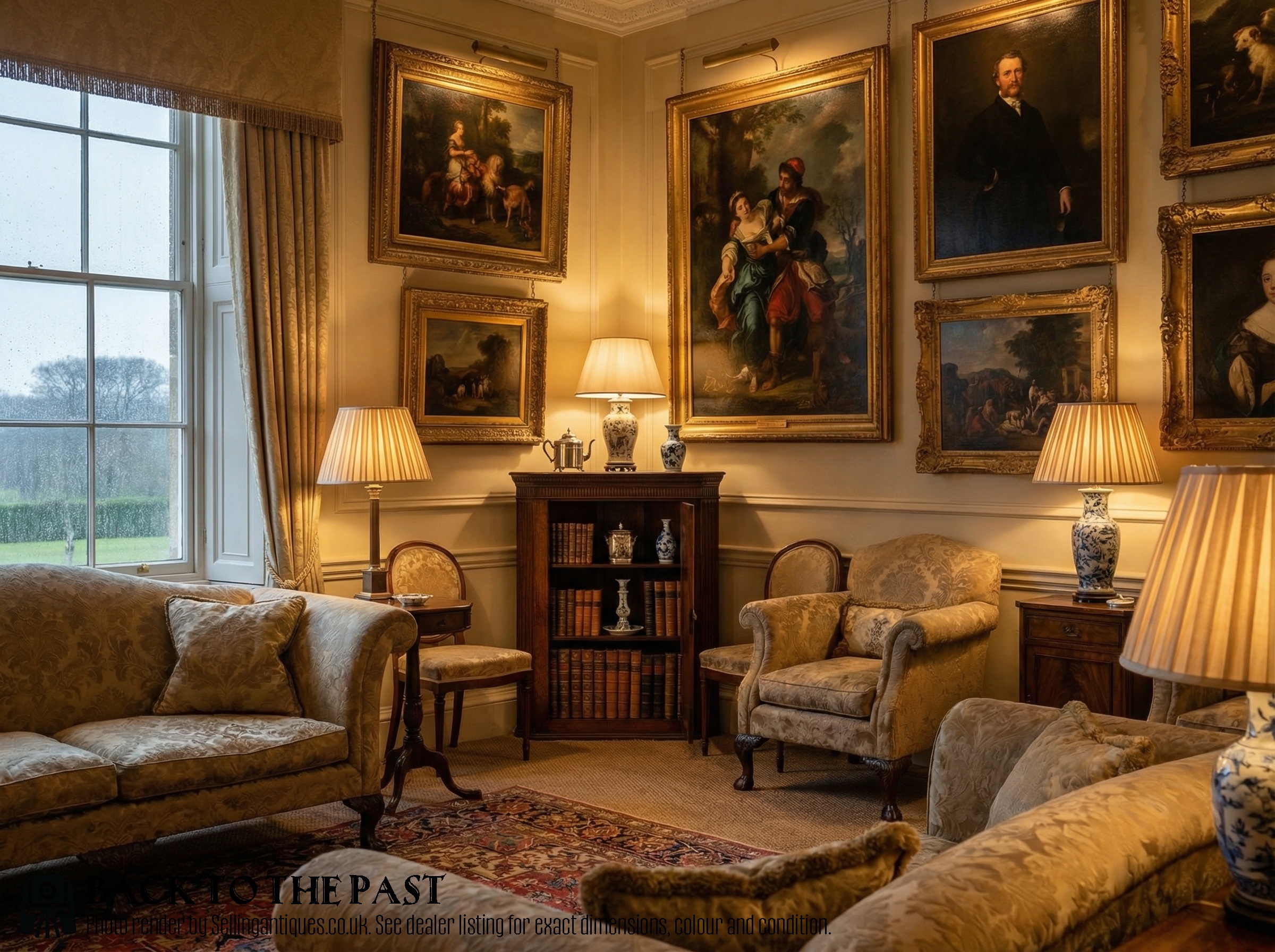
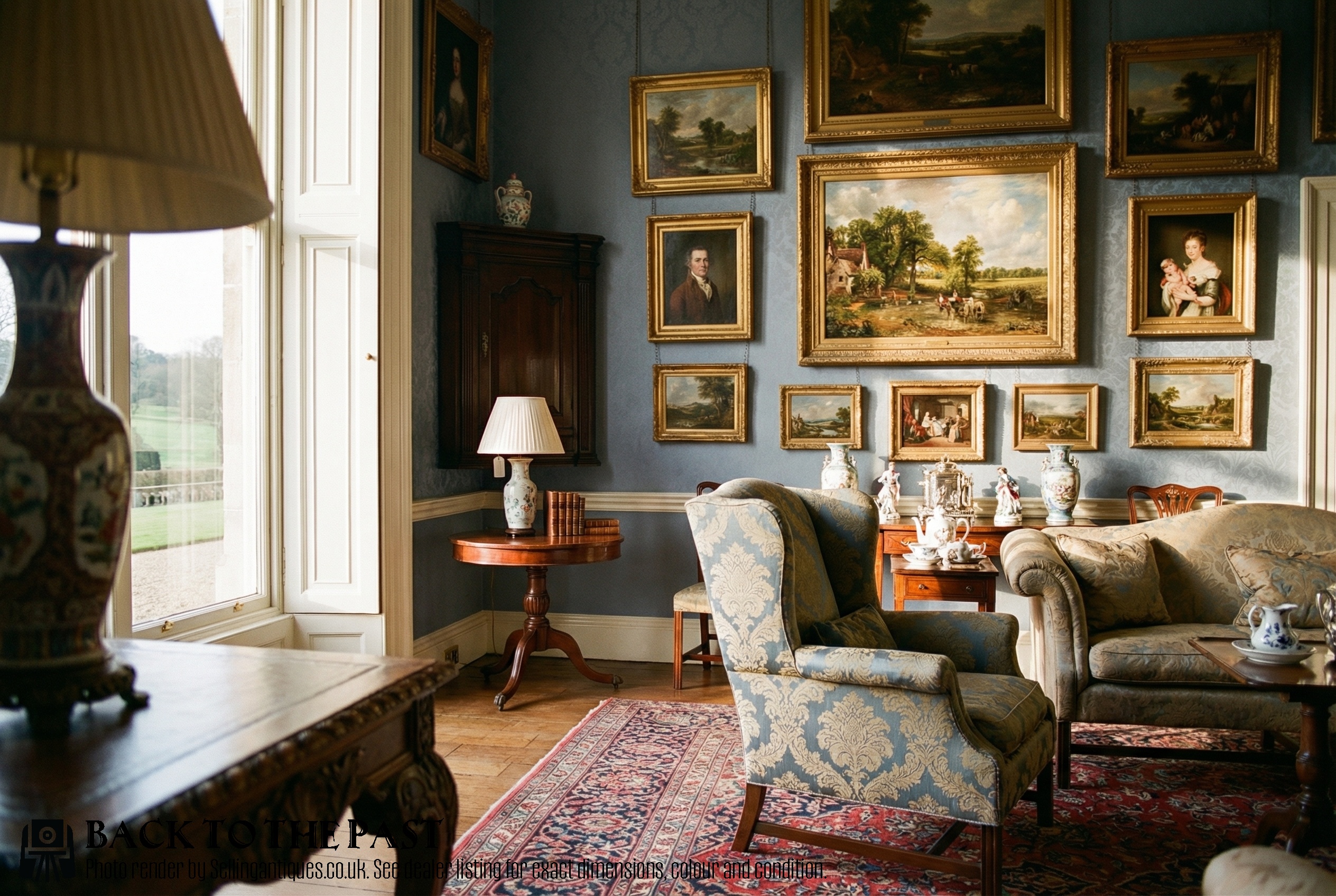
These units fit directly into the ninety-degree junction of two walls, making use of dead space in parlours, dining rooms, and kitchens. Their geometry allowed them to provide substantial storage without blocking floor space in smaller rooms.
Wall-hanging versions sat at eye level above sideboards or tables, while standing models occupied entire corners from floor to ceiling. This placement kept everyday items within arm's reach while framing the architecture of the interior.
How do I tell an eighteenth-century piece from a Victorian copy?
Eighteenth-century examples typically feature hand-sawn timber boards, irregular hand-forged nails, and pegged joinery that shows slight asymmetry upon close inspection. The oak develops a deep, dry patina over generations of polishing.
Victorian and Edwardian revivals often utilise more uniform machine-sawn framing, standardised hardware, and tighter, cleaner interior construction. Examining the backboards and the inside of the door frames usually reveals the age of the tooling marks.
Can I store heavy items on the shelves?
The interior shelves are designed for domestic tableware, glassware, and books, supported by fixed wooden fillets inside the carcase. Distributing weight evenly keeps the structure stable over time.
Wall-hung models depend entirely on the strength of the wall fixings and the structural integrity of the hanging brackets. Checking the mounting points ensures the cabinet safely holds heavier collections of ceramics.
What is the difference between wall-hanging and standing cupboards?
Wall-hanging cupboards attach directly to wall studs using internal brackets, leaving the floor underneath completely clear. They suit compact spaces and lower ceilings.
Standing cupboards rest on plinths or bracket feet, extending all the way to the floor and offering greater internal volume. Two-part standing versions separate into top and bottom sections for easier transport and placement.