

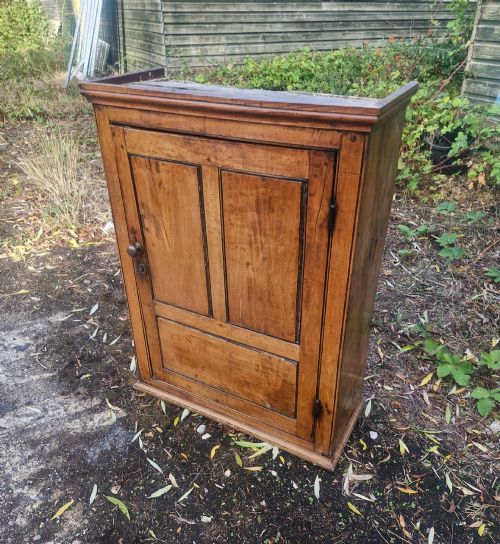
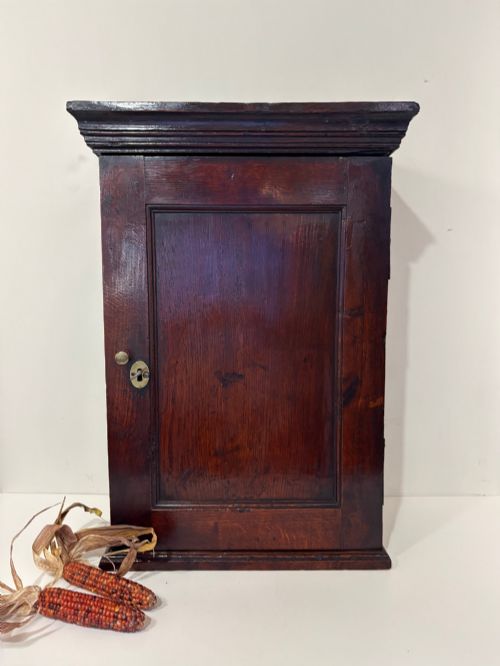
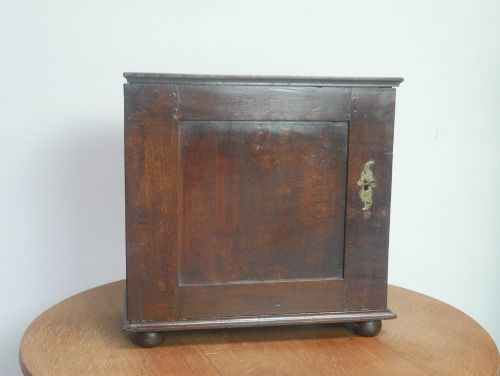
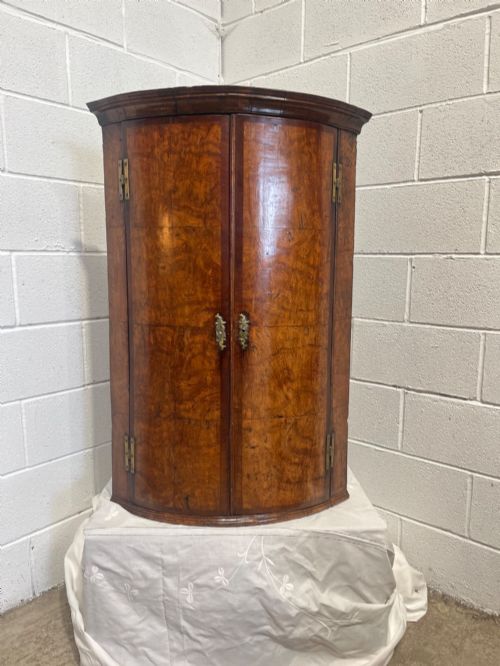
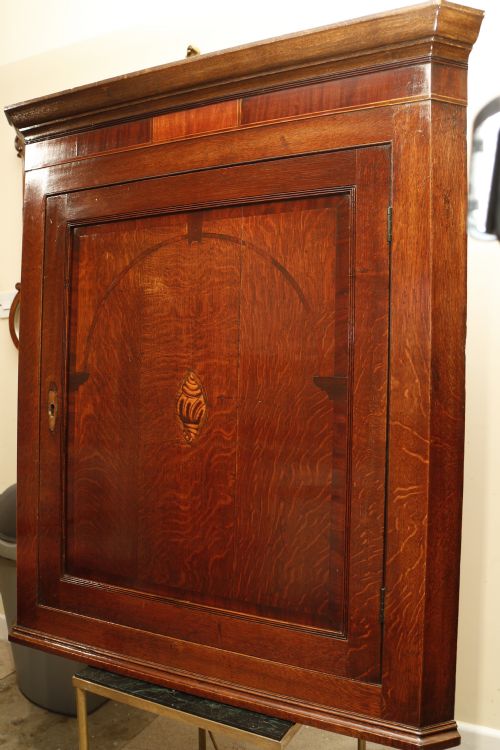


Georgian Oak Wall Cupboard
A georgian oak wall cupboard brings period warmth to a room, offering practical hanging storage shaped by eighteenth-century vernacular design.
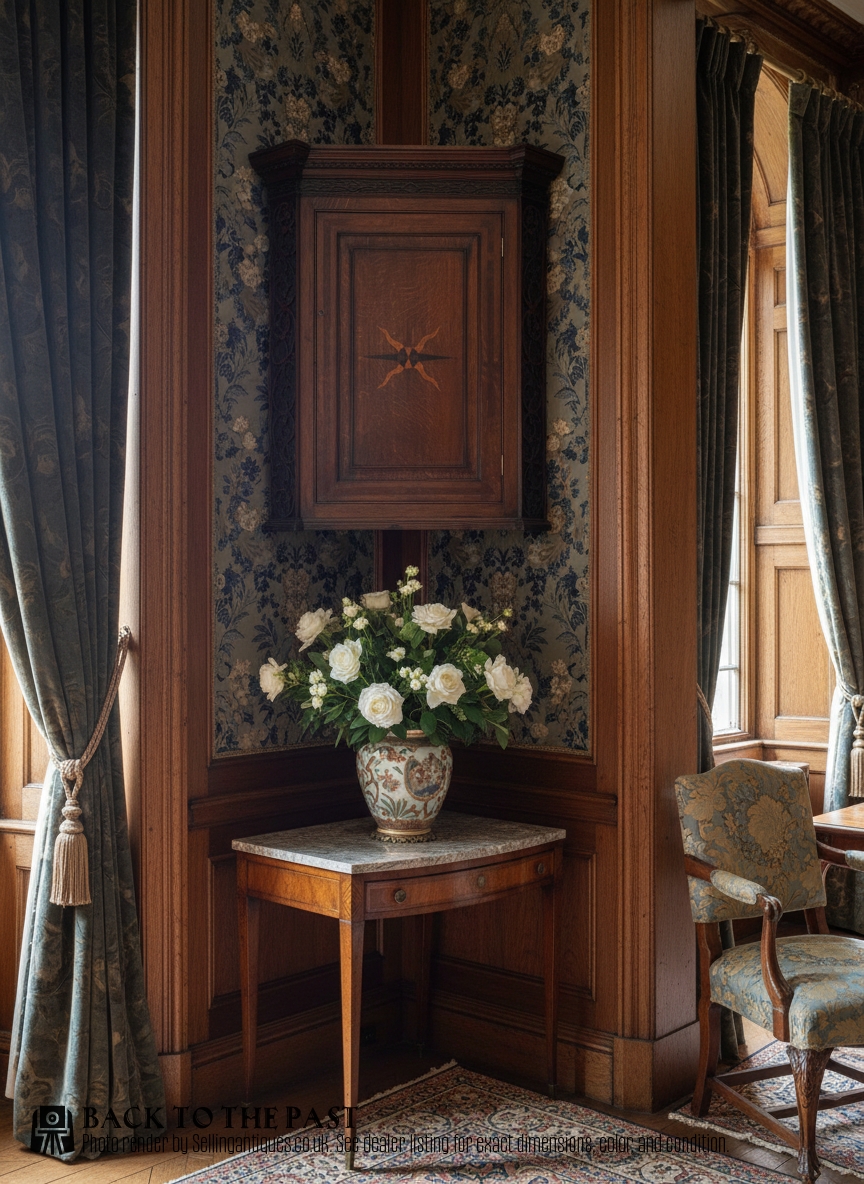
Georgian Oak Wall Cupboard
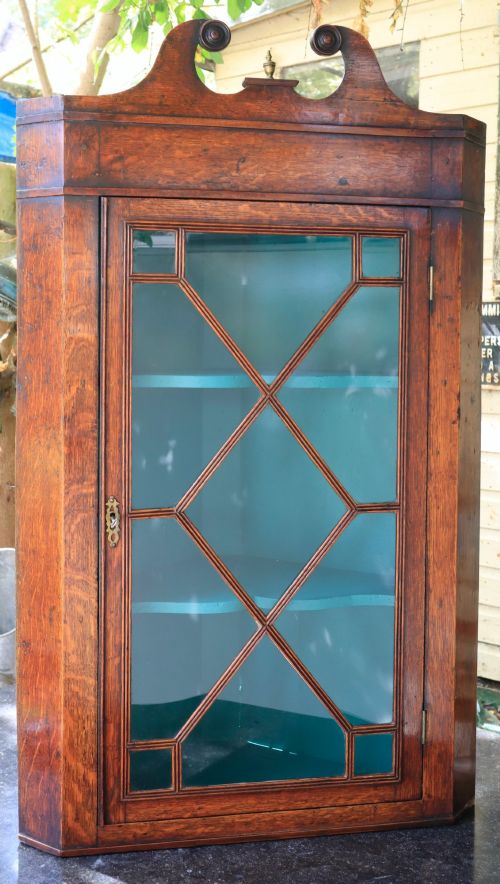
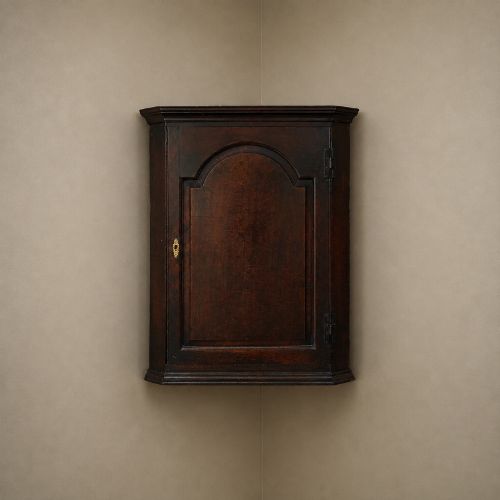
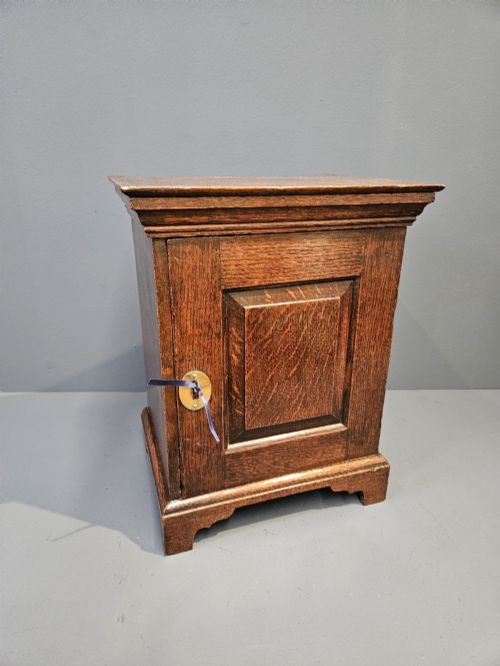
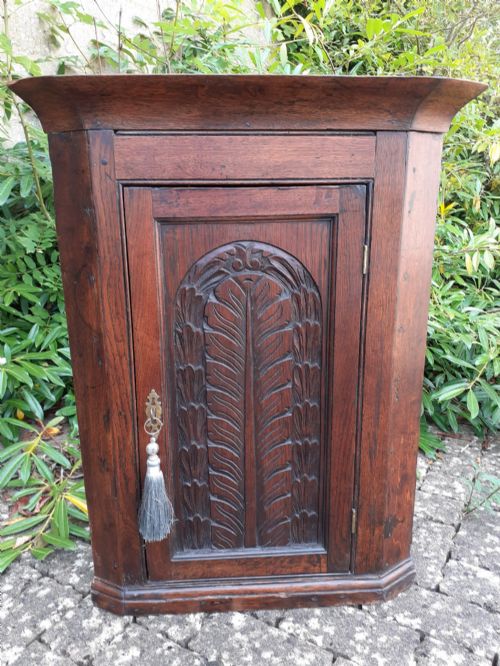
A georgian oak wall cupboard is a sturdy storage piece designed to be hung on a wall, making efficient use of interior space. The selection available centres heavily on corner cupboards and spice cupboards from the eighteenth century.
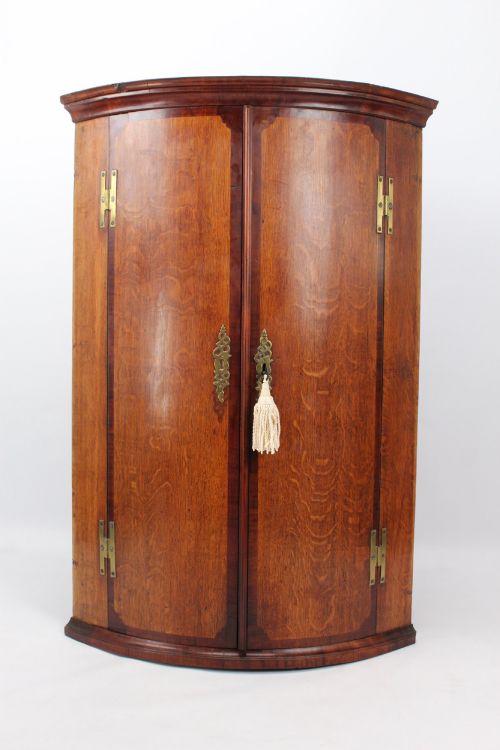
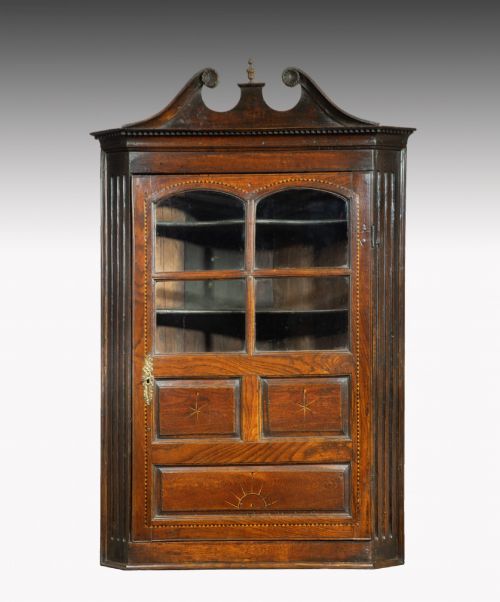
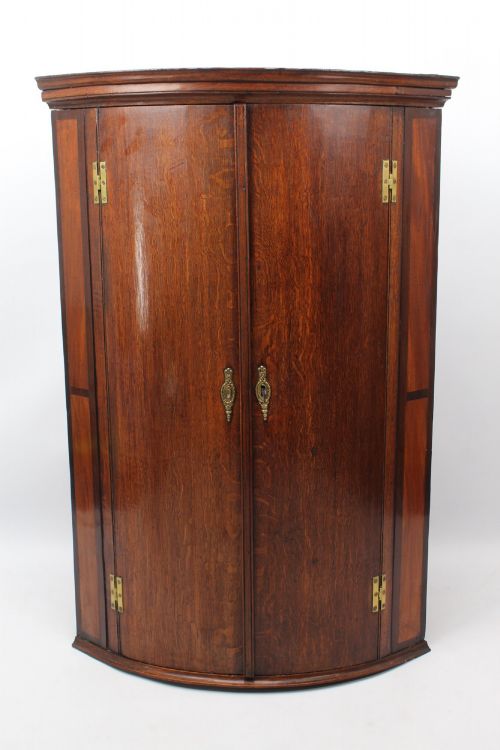
Makers shaped these pieces for provincial homes and country houses, utilising local timber to build hanging cabinets and corner shelves. Buyers regularly encounter bow-fronted versions and glazed display formats alongside simpler solid-door panels.
How They Were Made
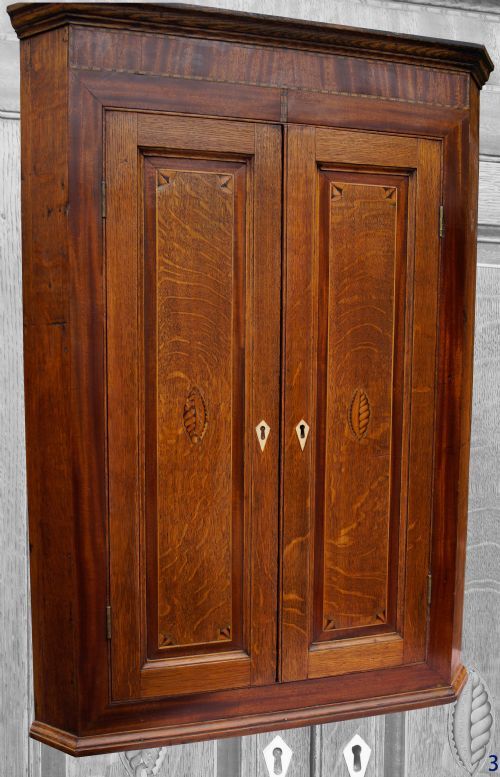
Makers constructed these cabinets primarily using solid oak, sometimes incorporating burr oak, pine, or mahogany elements for contrast. Wood inlay and brass hardware provided decorative detail on finer examples.
Joinery techniques included panels fitted into frames and specialised corner construction to allow secure wall mounting. Glazed doors utilised glass panes set within timber framing to create display space.
Georgian Oak Wall Cupboard Retail Price Guide 2026
Typical asking prices for georgian oak wall cupboard among the pieces listed under this phrase on Sellingantiques today, from the lower quarter to the upper quarter. They describe what is for sale here now, not the wider market.
Listings feature woods like oak, mahogany, and burr oak, spanning from the early 1700s through the nineteenth century.
What Varies in Quality
The refinement of the timber and the complexity of the cabinetwork separate standard provincial pieces from exceptional examples. Finer cabinets display careful grain selection, such as burr oak, alongside detailed wood inlay or crossbanding.
Proportions and decorative detailing dictate the distinction between basic utility cupboards and sophisticated regional works. Elements like bow fronts, carved surfaces, and original brass fittings elevate the standing of a piece.
The Georgian Oak Wall Cupboard Glossary
- Crossbanding
- A decorative border technique where thin strips of veneer are laid across the grain of the primary wood. This method adds visual contrast to cabinet doors.
- Spice cupboard
- A small hanging cabinet fitted with multiple internal drawers for storing seasonings and valuables. These compact pieces date mainly to the early eighteenth century.
- Vernacular
- Architecture and furniture rooted in local traditions rather than formal academic design. These items reflect regional craftsmanship and practical domestic needs.
- Bow front
- A convex curved cabinet facade that projects outward from the corners. This shape gained popularity during the later eighteenth century.
- Astragal glazed
- A glass door divided into smaller panes by narrow wooden bars called glazing bars. This treatment allows visibility into the cabinet interior.
Georgian Oak Wall Cupboard: Frequently Asked Questions
How do I hang an antique wall cupboard safely?
These heavy oak cabinets require secure fixings screwed directly into structural wall studs or masonry. Professional installation ensures the weight is distributed properly without straining old timber joints.
Historical hanging brackets or internal screw holes often indicate the original mounting points used by eighteenth-century makers.
What were corner cupboards used for originally?
Households utilised corner cupboards to store tableware, dry foods, and household provisions while making use of unheated or awkward room angles. Tighter spice cabinets kept high-value goods locked away safely.
Later examples with glazed doors often functioned as display spaces for prized ceramics and glassware.
How can I tell an 18th-century cupboard from a later copy?
Examine the interior boards, nail types, and timber shrinkage to understand the age of the construction. Eighteenth-century pieces show hand-sawn markings and period timber characteristics.
Regional vernacular styles also differ noticeably from nineteenth-century industrial reproductions through their handmade joinery.
Do these cabinets fit in modern rooms?
Wall-hanging configurations save floor space, making them adaptable for kitchens, hallways, and living areas. Their neutral oak tones blend easily with contemporary interiors.
Corner models slot neatly into unused angles, adding functional storage without dominating a room.