
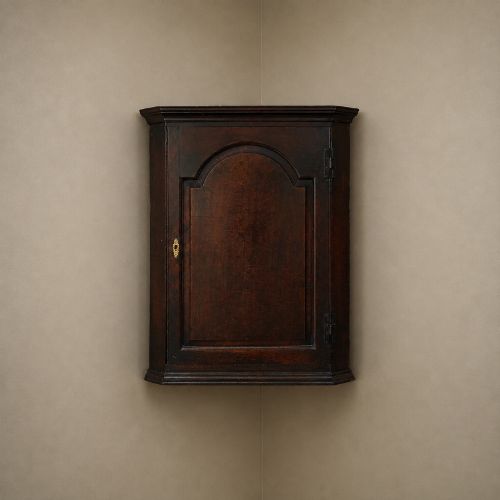
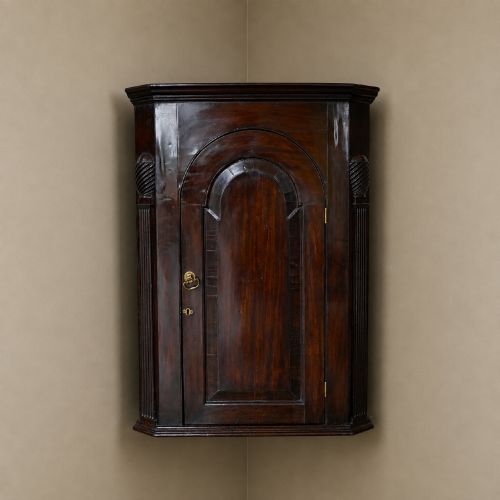
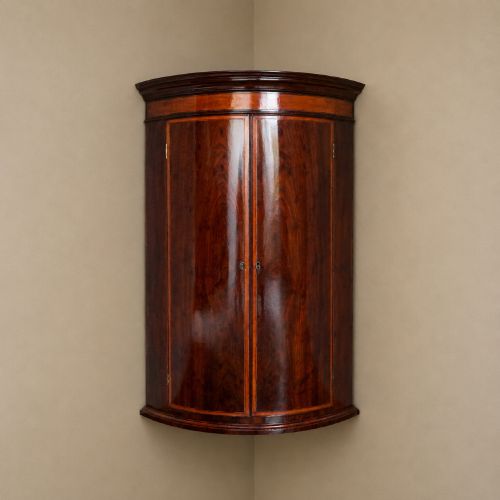
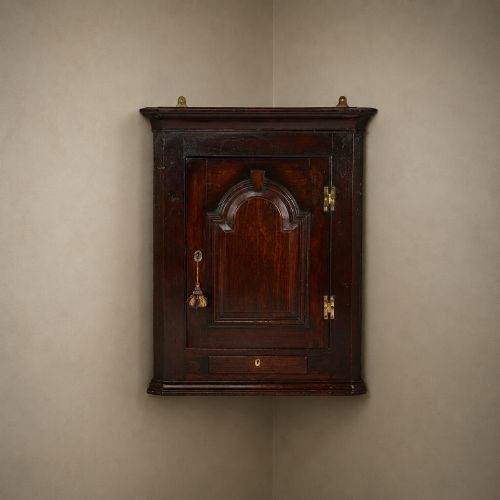
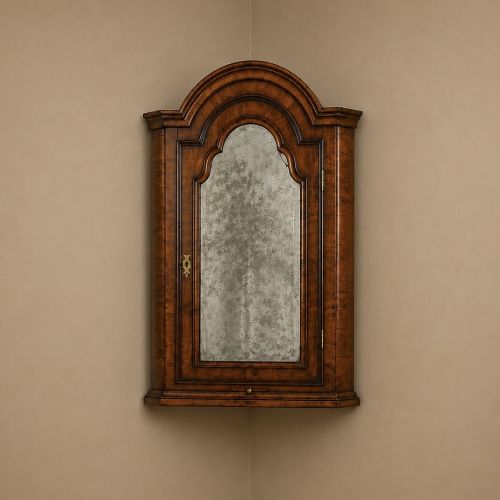
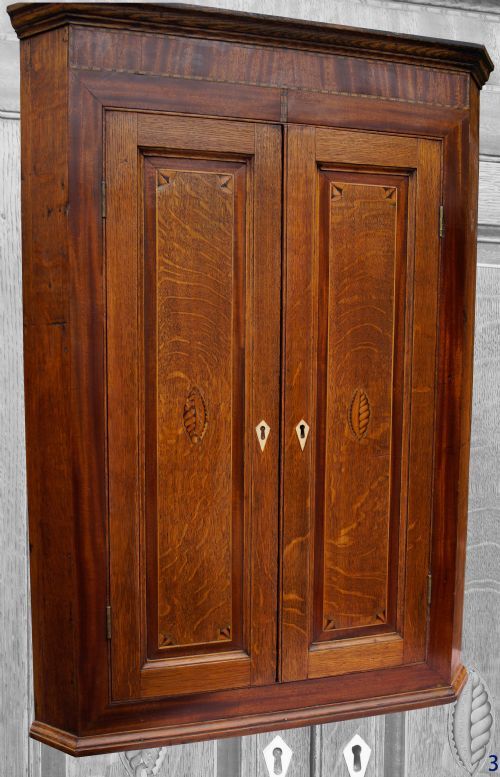
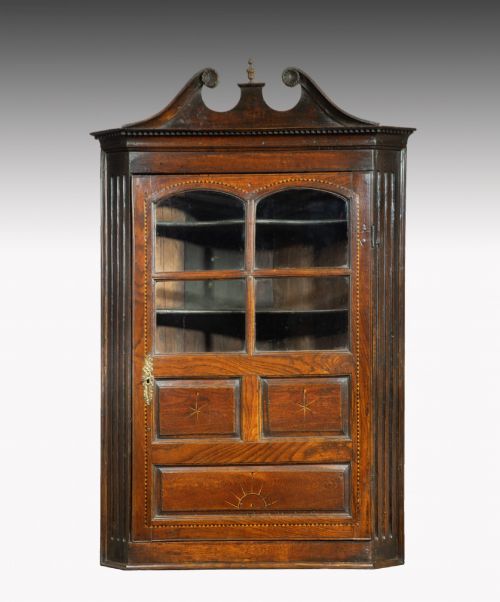
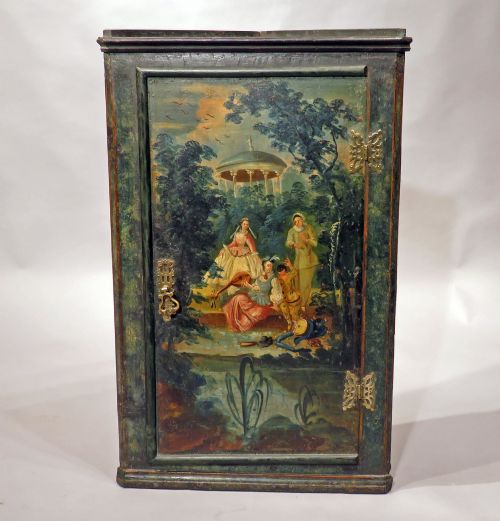
Georgian Hanging Corner Cabinet
A georgian hanging corner cabinet uses dead space to store china or bottles while anchoring a room with period timber.
Forms and Origins
A georgian hanging corner cabinet mounts directly to wall studs to utilise unhelpful angles in period rooms. These pieces originate in the eighteenth century and continue into the early nineteenth century under Georgian design influence.
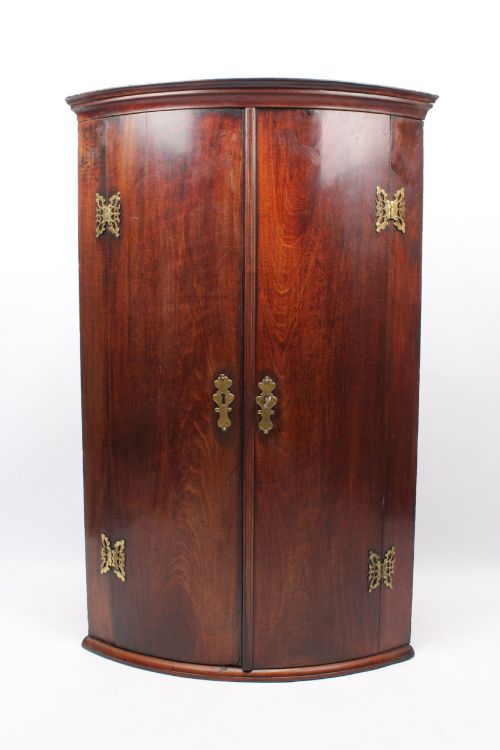
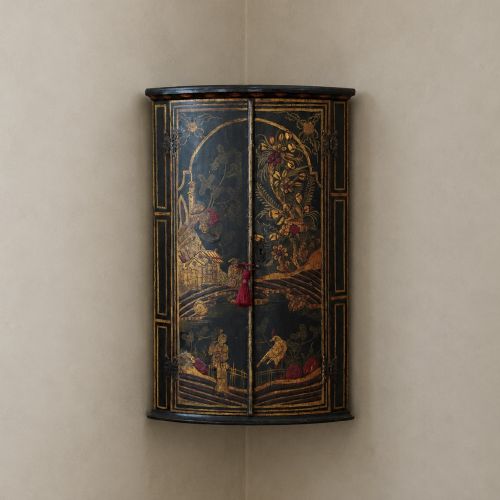
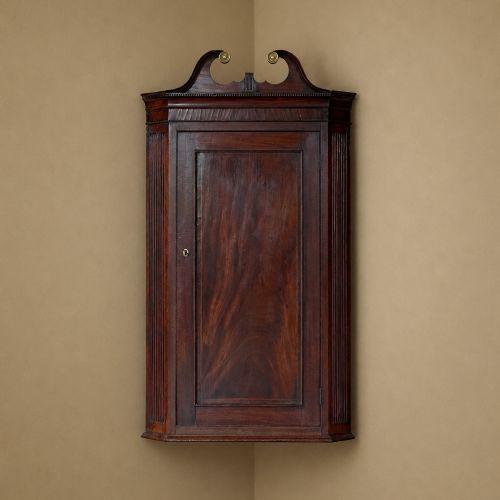
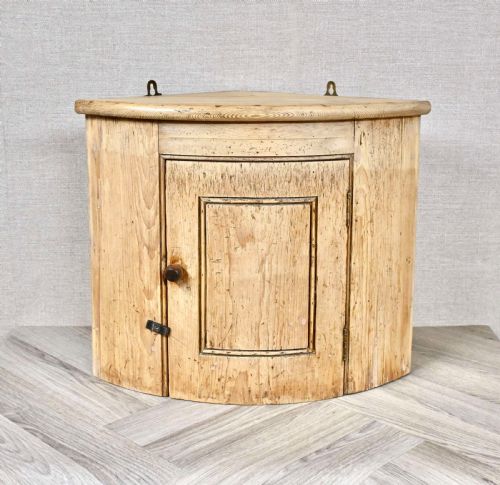
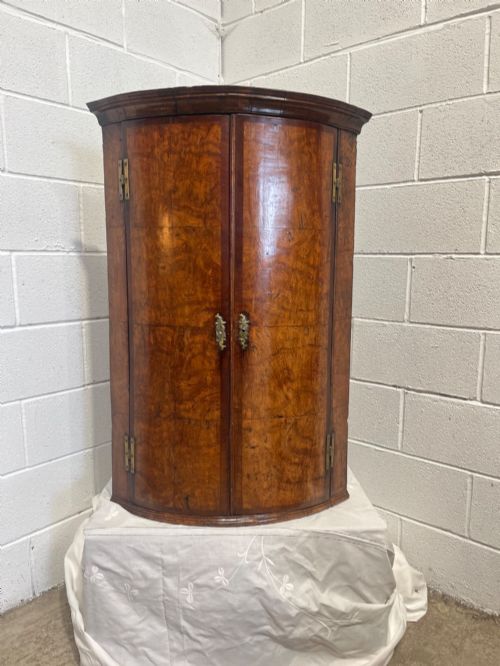
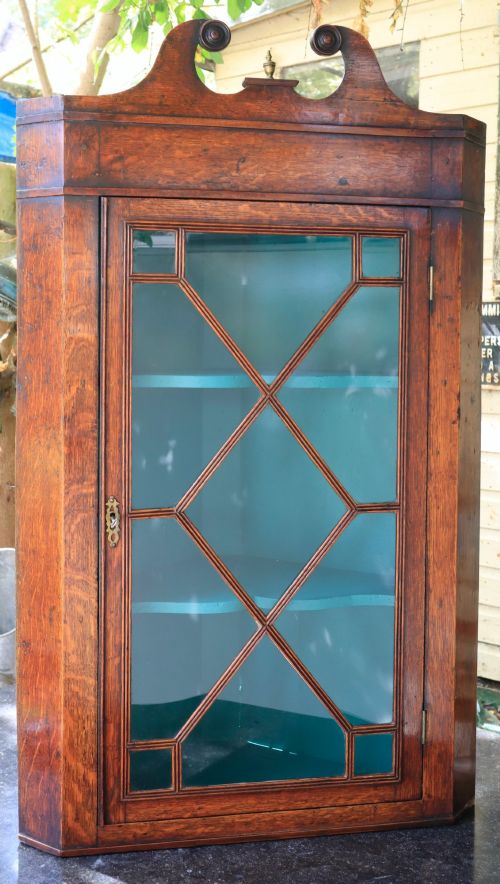
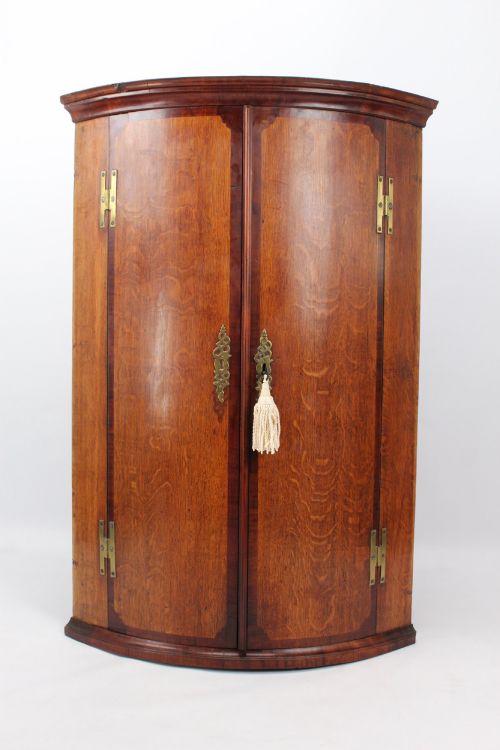
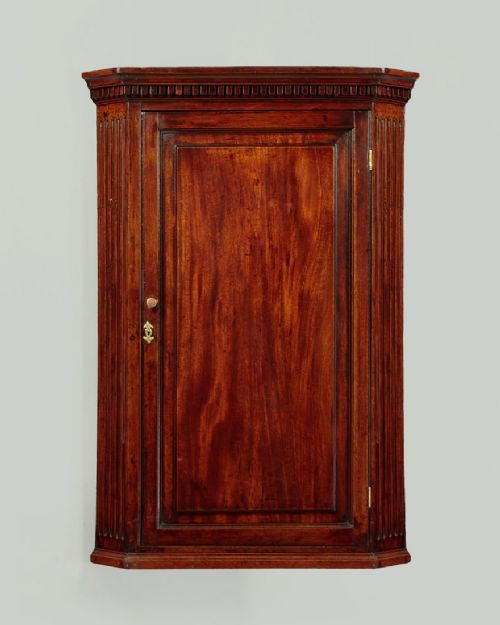
The most common version met on this page is built from oak, often featuring a flat panelled door or a curved bow front. Some examples incorporate mahogany, wood inlay, or astragal glazed doors to showcase contents.
Makers shaped these cupboards specifically to fit domestic interiors where floor space was scarce. They served variously for display, drink storage, or general concealment.
Materials and Technique
Cabinetmakers built these wall units predominantly using solid oak or mahogany boards. Timber selection dictated the weight and grain pattern visible on the finished exterior.
Construction relied on traditional joinery techniques such as dovetailed carcases and panelled doors to handle seasonal wood movement. Brass hinges and escutcheons secured the doors and added functional detail.
More elaborate versions include contrasting wood inlay or curved barrel bow fronts shaped from solid timber. Glazed variants used timber bars to hold small panes of glass.
Retail Price Guide 2026
Typical UK retail prices for georgian hanging corner cabinet, calculated from the Sellingantiques database of over a million retail prices indexed since 2003. This retail price guide relies exclusively on Sellingantiques data; no external sources or auction records are used, so the figures do not describe the wider market.
Many of these corner cupboards survive because they stayed screwed firmly to the same kitchen or parlour wall for generations.
Judging Quality
Quality rests upon timber selection and the precision of the cabinetmaker's joinery. Plain oak carcases contrast with examples displaying rich flame mahogany veneers or intricate wood inlay.
Proportion and curvature separate standard units from finer pieces, particularly where timber is steam-bent or carved for a bow front. Original brass hardware and intact glass panes also elevate the standard of a piece.
The Georgian Hanging Corner Cabinet Glossary
- Bow front
- A convex curved cabinet front that projects forward from the corner angles. This shape requires advanced woodworking skill to construct from solid timber or veneers.
- Astragal glazed
- A glass door divided into smaller panes by thin wooden strips called glazing bars. This treatment allows visibility into the cabinet interior.
- Wood inlay
- Pieces of contrasting timber fitted flush into the surface to create decorative patterns. It frequently outlines door panels or cornices on late Georgian pieces.
- Carcase
- The main structural body of the cabinet without the doors. Its internal joints reveal the primary construction methods of the period.
Frequently Asked Questions
How were these cabinets mounted to walls?
These cabinets attach securely through the internal backboards directly into masonry or timber wall studs. Original fixing holes often remain visible inside the back corners.
Because they held heavy ceramics or bottles, makers engineered sturdy hanging points to bear the downward load safely.
What did people store inside them?
Households utilised these cupboards for storing glass tableware, ceramic tea services, and bottled spirits. Their elevated position kept valuable contents away from damp floors and children.
Some interiors retain small shelf divisions designed specifically for upright bottles or stemmed glassware.
How do I tell oak from mahogany versions?
Oak displays a pronounced grain with visible medullary rays and a warm brown tone. Mahogany offers a smoother texture with reddish-brown hues that darken considerably with age.
Combination pieces sometimes pair an oak carcase with a mahogany door panel or decorative inlay.
Why are some fronts curved?
Curved or bow fronts soften the sharp ninety-degree angle where walls meet in a corner. This shape required sophisticated carpentry to curve the timber frame and match the doors accordingly.
Such cabinets represented a more expensive option for polite rooms where straight lines felt too severe.