

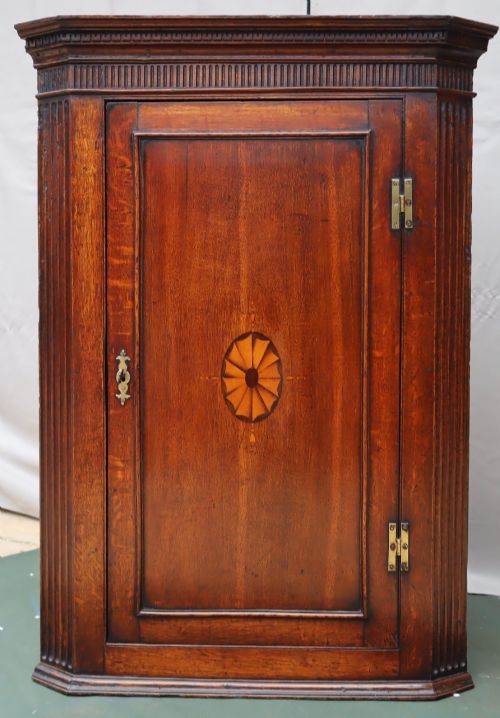
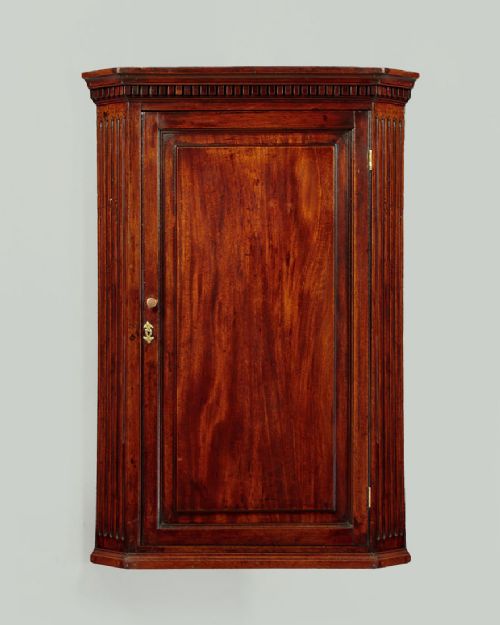
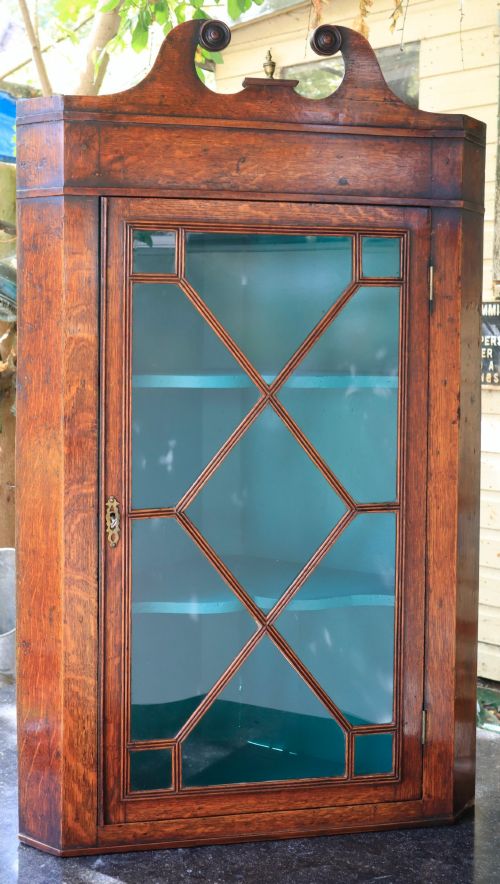
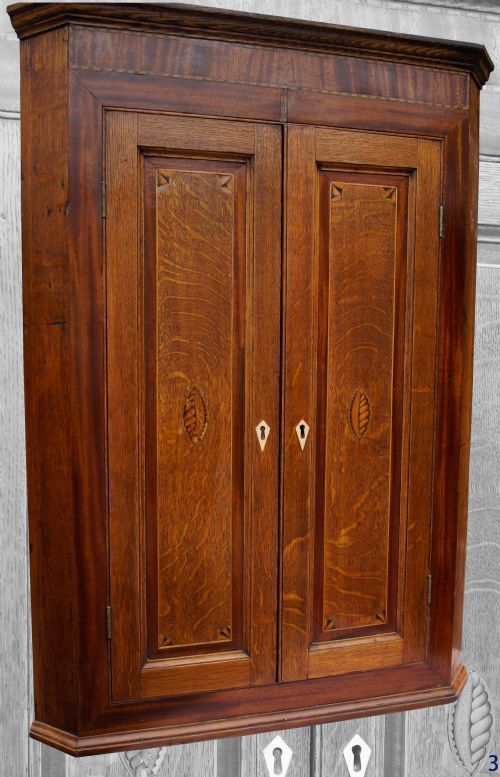


Wall Mounted Corner Cabinet
A wall mounted corner cabinet solves a difficult room layout by turning empty angles into useful display and storage space.
Wall Mounted Corner Cabinet
A wall mounted corner cabinet is a hanging storage piece designed to fit flush into the junction of two walls, saving floor space while drawing the eye upward.
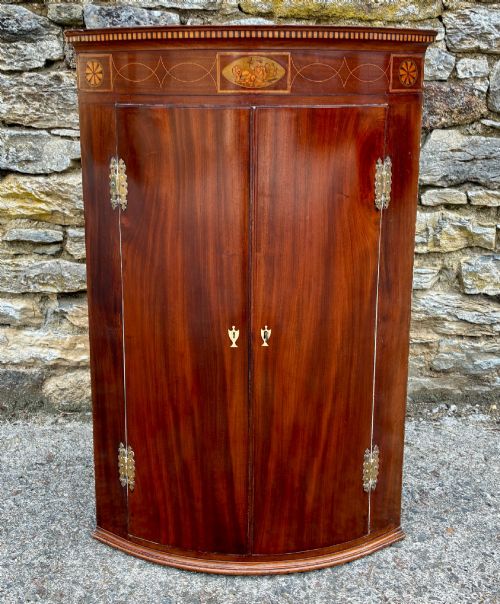
The versions most common in this selection range from simple oak or pine country cupboards to refined Georgian and George III mahogany pieces featuring bow fronts, glazed doors, and intricate inlays.
Cabinetmakers constructed these forms across the eighteenth and nineteenth centuries to utilise awkward domestic angles, combining practical internal shelving with decorative architectural details on the exterior.
How they were made
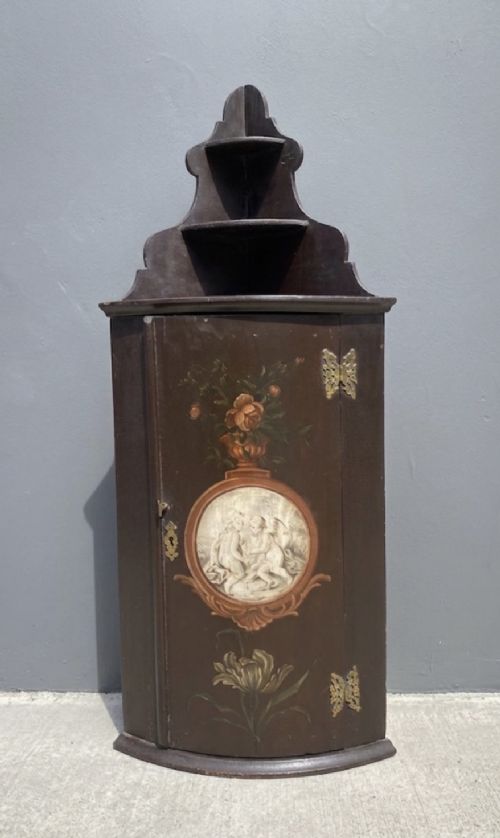
Cabinetmakers relied heavily on solid timbers such as mahogany, oak, and walnut, often applying finely figured veneers or painted finishes to the primary exterior surfaces.
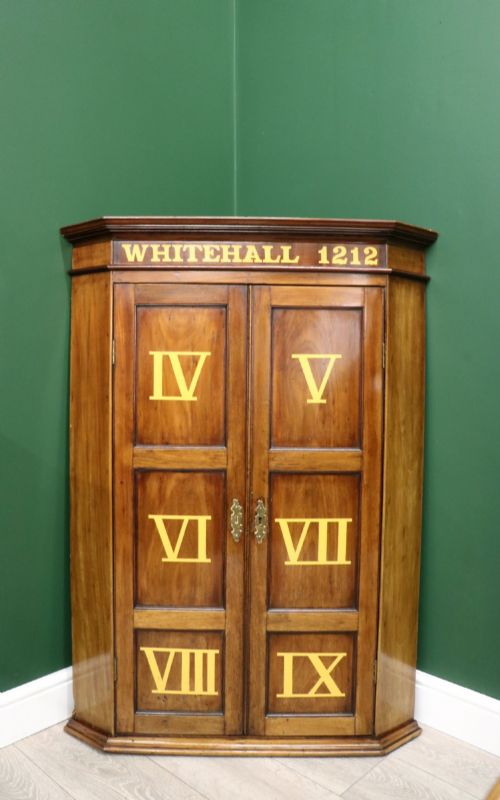
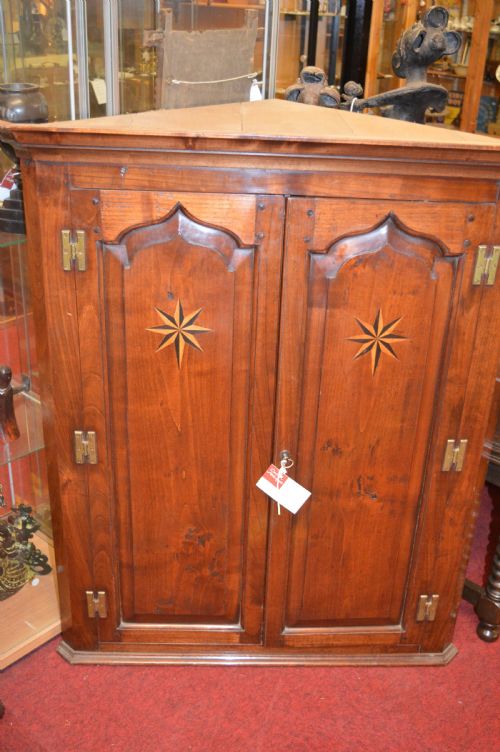
Construction involved sturdy dovetail joints for the carcase and panelled doors fitted with brass H-hinges, butterfly hinges, or working locks and keys.
More elaborate examples incorporate glass panes for display, tambour fronts, or carved architectural elements like broken arch pediments.
Wall Mounted Corner Cabinet Retail Price Guide 2026
Typical asking prices for wall mounted corner cabinet among the pieces listed under this phrase on Sellingantiques today, from the lower quarter to the upper quarter. They describe what is for sale here now, not the wider market.
Some Georgian drinks cabinets survive with their original locking keys intact, hinting at centuries of hidden hospitality.
What varies in quality
The grade of a piece rests upon the selection of timber, such as deeply figured flame mahogany or burr walnut, matched against secondary woods used for the interior linings and backboards.
Joinery execution distinguishes everyday utility items from superior workshop output, seen in the crispness of inlaid stringing, the precision of mitred mouldings, and the original survival of brass hardware and working locks.
Proportion and scale dictate visual success, where refined cornice details and well-balanced door panels separate provincial vernacular pieces from high-style urban commissions.
The Wall Mounted Corner Cabinet Glossary
- Bow front
- A convexly curved front facade that projects outward, common in later Georgian and nineteenth-century designs to soften sharp angles. This profile requires skilled joinery to bend or shape the timber and door frame.
- Broken arch pediment
- An architectural roof feature comprising a triangular pediment whose sloping sides do not meet at the apex, often leaving space for a central finial or urn. It signals a formal, high-status eighteenth-century cabinet.
- Tambour
- A flexible sliding door constructed from narrow vertical strips of wood glued to a canvas or leather backing. It runs in concealed tracks to provide access without requiring clearance for a swinging door swing.
- Stringing
- Thin lines of contrasting wood inlay used to outline panels, drawer fronts, and door edges. It creates linear definition and highlights the geometric proportions of the cabinet facade.
- Cornice
- The ornamental mouldings that crown the top of the cabinet structure. They range from simple cavetto profiles to elaborate dentil or dental block carvings.
Wall Mounted Corner Cabinet: Frequently Asked Questions
How do I hang a heavy corner cupboard safely?
These cabinets require secure fixing directly into wall studs or masonry using heavy-duty brackets screwed through the internal backboards.
Because eighteenth and nineteenth-century timber pieces carry substantial weight, professional installation prevents strain on the original carcase joints.
What is the difference between a corner cupboard and a corner cabinet?
Historically, makers used both terms interchangeably to describe triangular storage pieces designed for room intersections.
Some collectors reserve cabinet for glazed or more formal display versions, while cupboard often denotes solid wooden doors enclosing plain shelves.
How do I date a mahogany corner cabinet?
Dating relies on examining construction methods, timber choice, and hardware, such as hand-cut dovetails, secondary wood species, and original brass hinges.
Georgian and George III pieces from the late eighteenth century typically show tighter proportions and finer grain matching than later nineteenth-century adaptations.
Can I use these cabinets in modern rooms?
Their compact triangular footprint makes them practical for utilising dead corner space in modern kitchens, hallways, or dining rooms.
They offer concealed storage or display capacity without encroaching on floor space.