
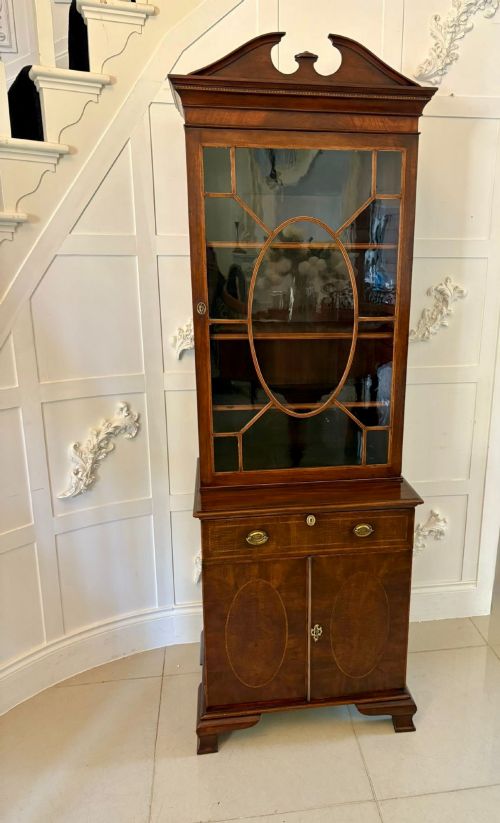
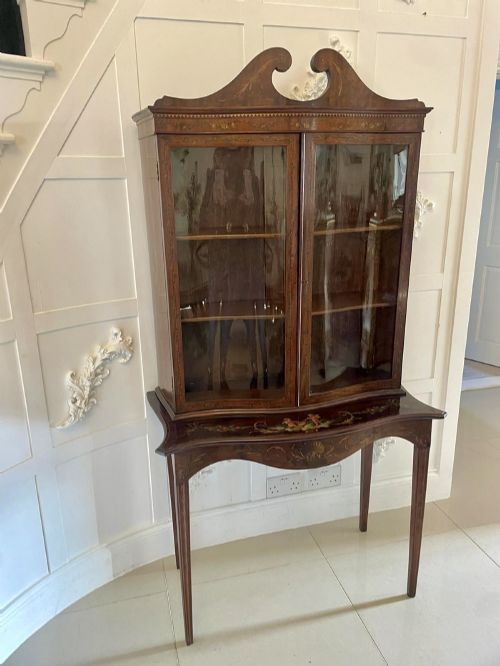
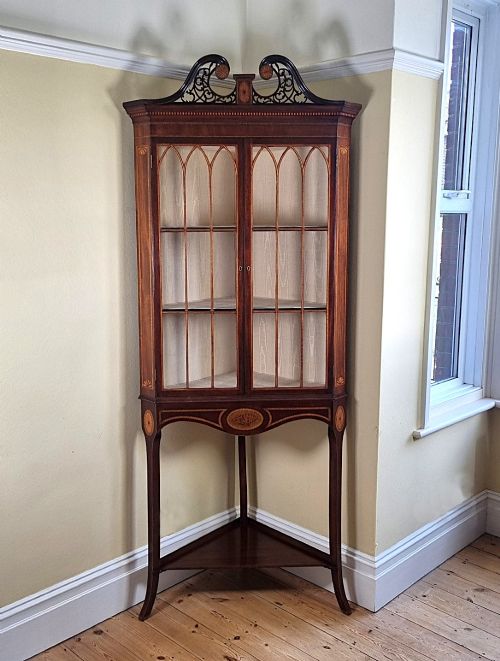
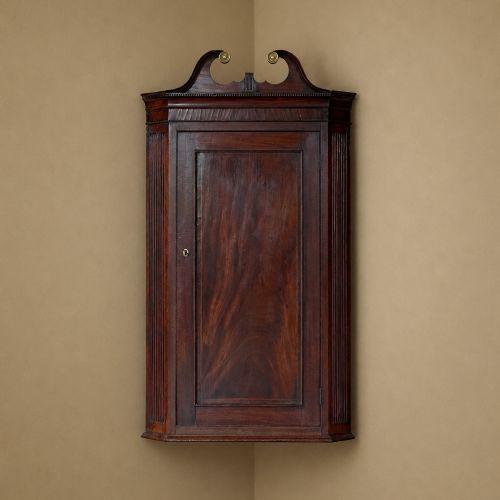
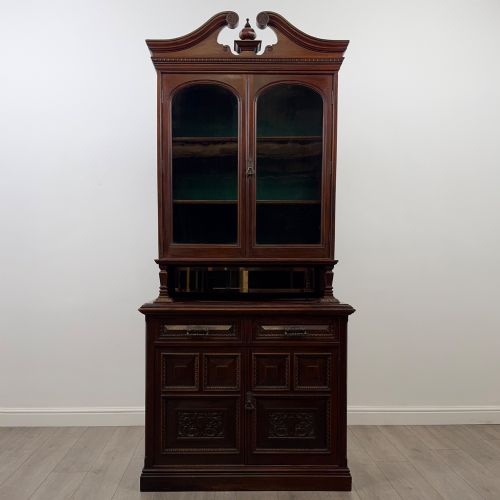
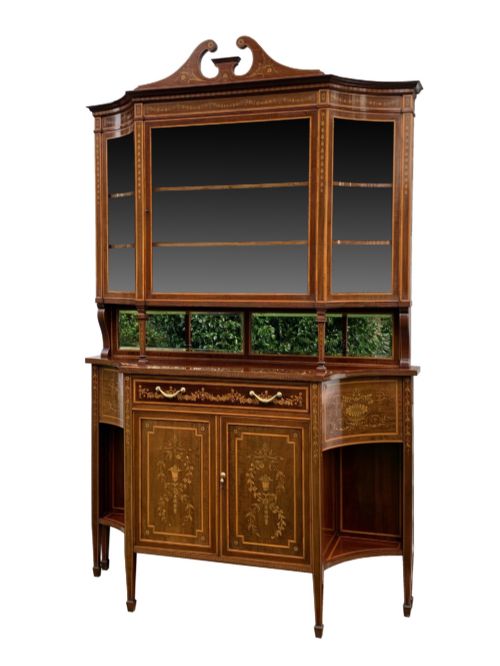
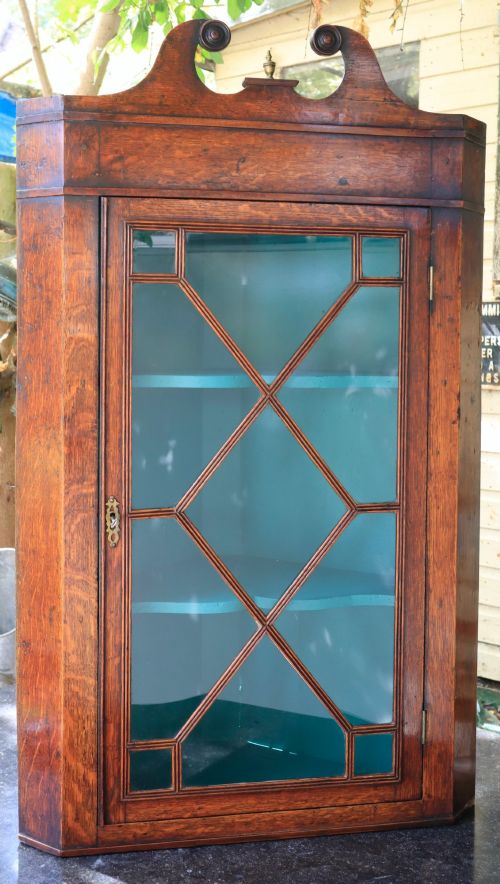
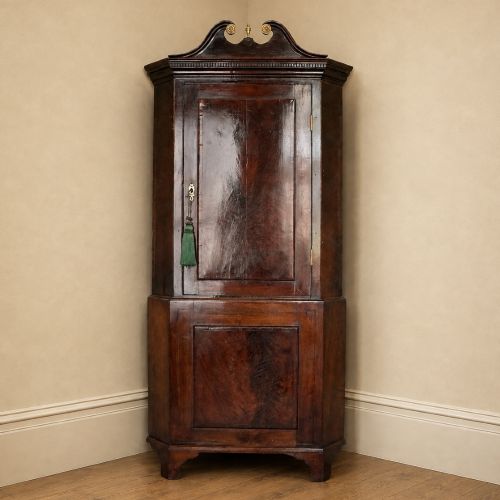
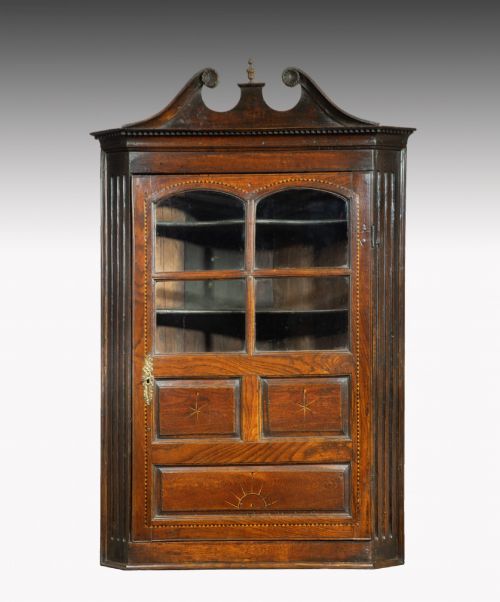
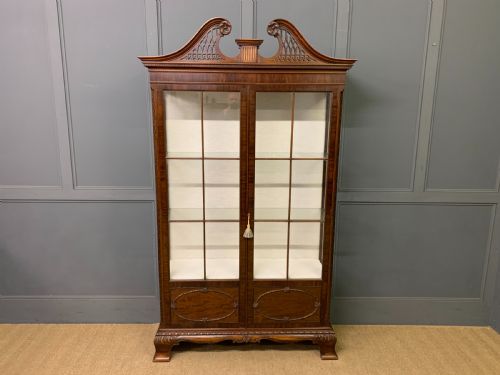
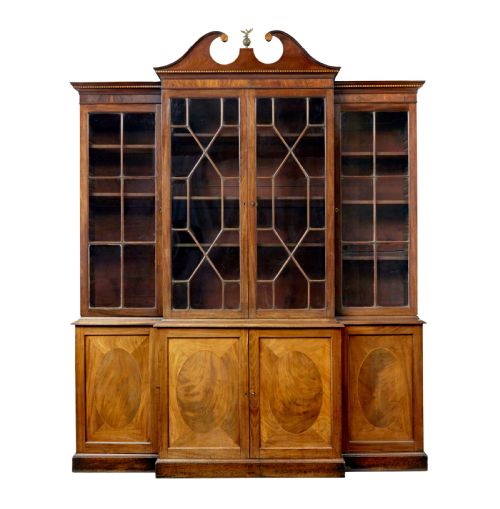

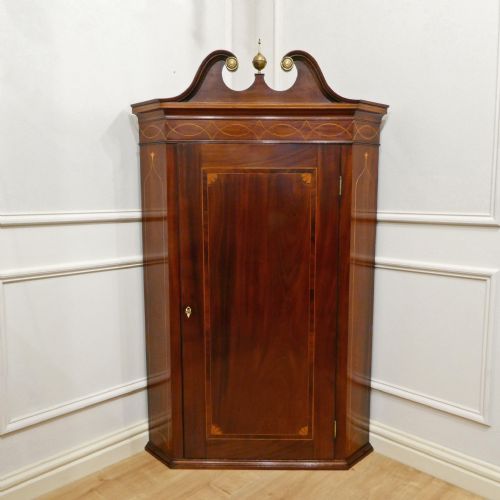


Swan Neck Pediment Cupboard
These swan neck pediment cupboard examples bring architectural grace to period interiors, combining refined joinery with practical storage.
What swan neck pediment cupboard forms reveal
A swan neck pediment cupboard represents a sophisticated form of storage cabinet typically designed to fit into a room intersection or stand as a substantial wardrobe piece. These items span the Georgian era, the eighteenth century, and the nineteenth century, reflecting classic British cabinet making traditions.
The buyer most frequently encounters corner cabinets and corner cupboards on this page, alongside larger linen presses. These variations demonstrate how cabinet makers adapted the curved architectural pediment to both wall-mounted units and floor-standing gentleman's press cupboards.
Materials and construction methods
Construction relies heavily on traditional hardwoods such as mahogany, flame mahogany, and oak, often detailed with contrasting satinwood and boxwood banding. Cabinet makers selected these timbers for their rich grain patterns and structural durability.
Hardware and glazing enhance the construction, incorporating brass fittings and glass panels where appropriate. These materials work together to create the characteristic arched hood and secure storage compartments recorded across the pieces.
Retail Price Guide 2026
Typical UK retail prices for swan neck pediment cupboard, calculated from the Sellingantiques database of over a million retail prices indexed since 2003. This retail price guide relies exclusively on Sellingantiques data; no external sources or auction records are used, so the figures do not describe the wider market.
The listings span the Georgian era and the nineteenth century, constructed primarily in mahogany, flame mahogany, and oak with brass and glass details.
Distinctions in quality
The hierarchy of quality rests on the selection of timber veneers, such as richly figured flame mahogany, and the precision of decorative elements like satinwood banding. Superior examples display meticulous attention to grain matching across the doors and the curved mouldings of the broken arch pediment.
Structural refinement also separates standard utility items from finer commissions, seen in the proportion of the cornice and the integration of brass hardware. Artisans who invested greater time in delicate stringing and inlay work achieved a more harmonious architectural silhouette.
The Swan Neck Pediment Cupboard Glossary
- Swan neck pediment
- A decorative architectural gable above the cornice formed by two opposing curved mouldings that resemble the neck of a swan, often terminating in a scroll or rosette. This classical feature draws the eye upward and defines the formal character of the upper case.
- Linen press
- A large storage furniture piece consisting of upper sliding trays for textiles and lower drawer storage for garments. It functions as a substantial wardrobe and display of fine cabinetry.
- Flame mahogany
- A highly figured veneer cut from the branch junction of the mahogany tree, producing a distinctive flame-like pattern. Furniture makers prized this timber for its dramatic visual movement.
- Stringing
- A narrow inlay of contrasting wood, such as boxwood, used to create delicate linear borders on panels and drawers. This technique accentuates the geometric lines of the cabinet.
- Chippendale
- A style of British furniture from the eighteenth century named after the cabinet maker Thomas Chippendale, characterised by classical proportions and meticulous carving. Pieces from this period reflect the height of Georgian design.
Frequently Asked Questions
What is a swan neck pediment?
A swan neck pediment is a broken scroll top above the cornice, formed by two curved mouldings that rise to meet a central finial or cartouche.
This architectural detail originates from classical building design and was adopted by Georgian cabinet makers to elevate the visual height and elegance of tall cupboards.
How were corner cupboards used?
Corner cupboards provided practical storage in domestic rooms while utilising otherwise wasted wall intersections.
Georgian households utilised these wall-mounted or freestanding cabinets to store tablewares, glassware, or documents safely out of the way.
What is a gentleman's press?
A gentleman's press is a large storage unit featuring upper sliding shelves for folded garments and lower drawers for other apparel.
These pieces served as the primary wardrobe furniture for storing fine linen and clothing in eighteenth and nineteenth century homes.
How do I date these cupboards?
Dating relies on examining the timber species, construction techniques, and stylistic markers such as inlay work and pediment shapes.
Pieces attributed to the Georgian period or the eighteenth century typically exhibit hand-cut dovetails, native oak secondary woods, and specific veneer choices like flame mahogany.