



George III Corner Cabinet
A george iii corner cabinet turns awkward domestic angles into centres of display, bringing Georgian proportion to idle room spaces.
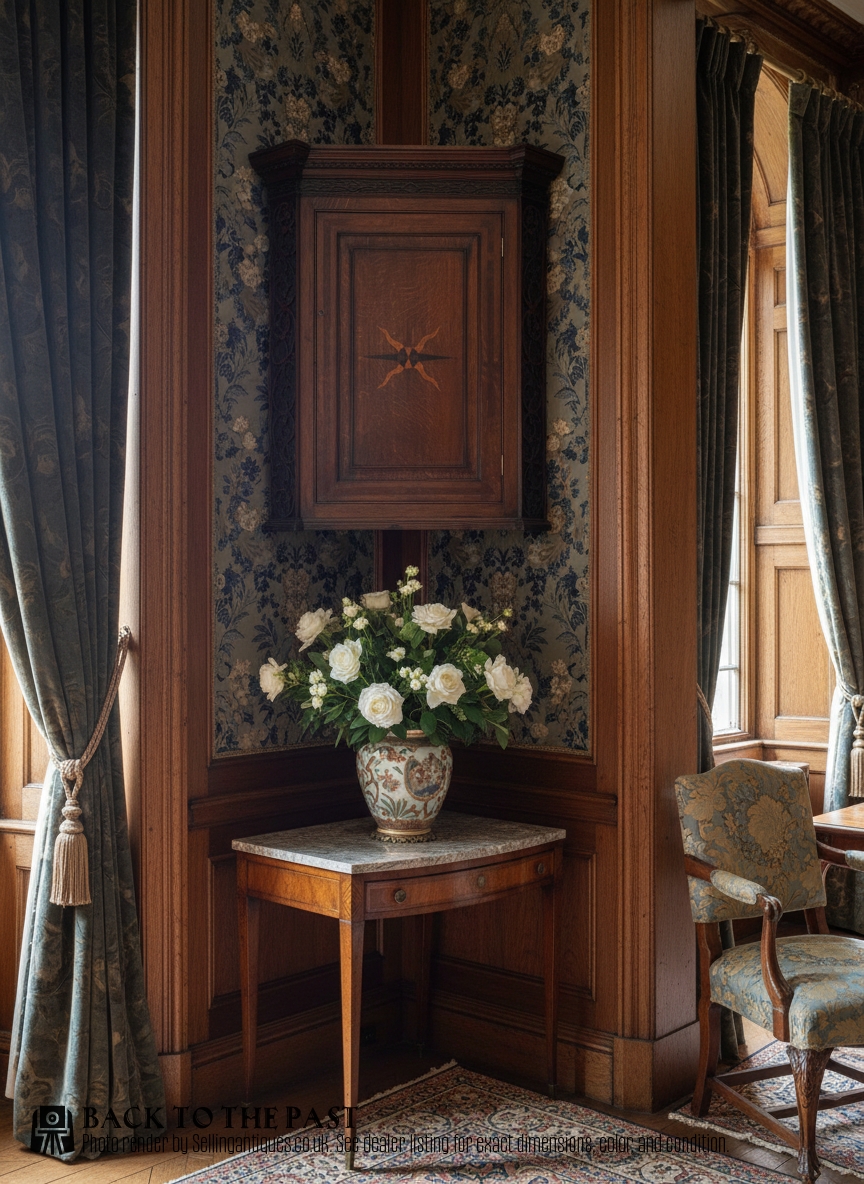
George III Corner Cabinet
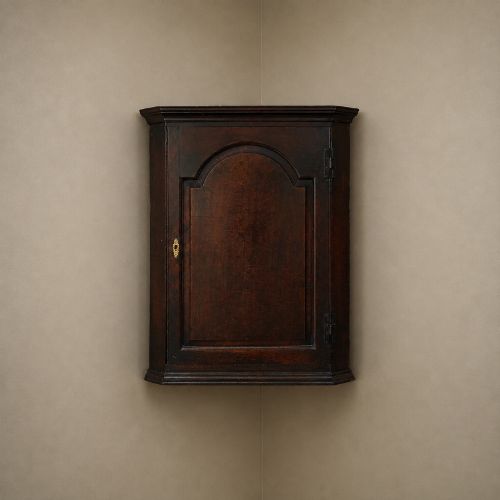
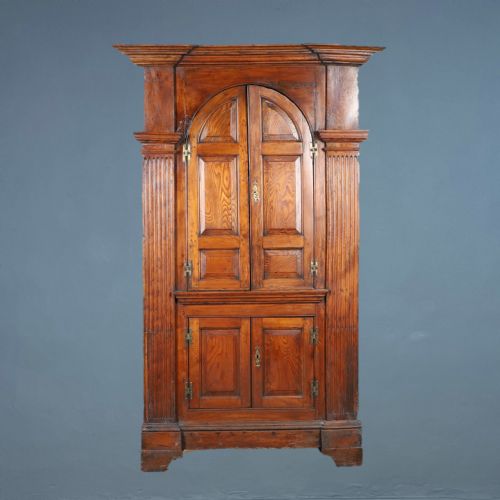
A george iii corner cabinet addresses the perennial problem of dead angles in eighteenth-century rooms by fitting flush into a ninety-degree wall joint. You meet these primarily as wall-hanging or standing cupboards constructed during the Georgian period.
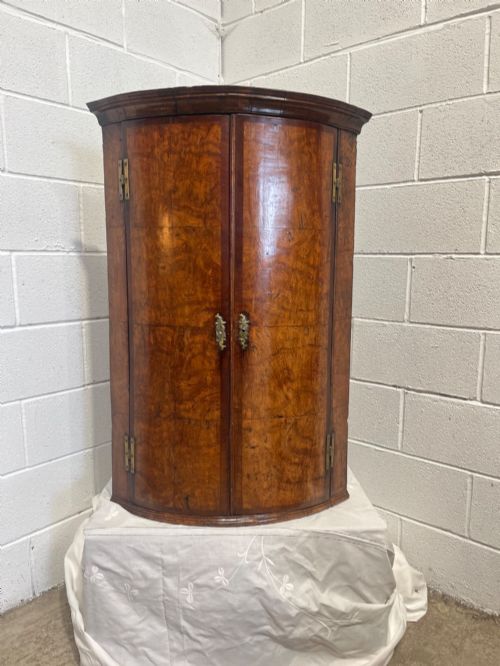
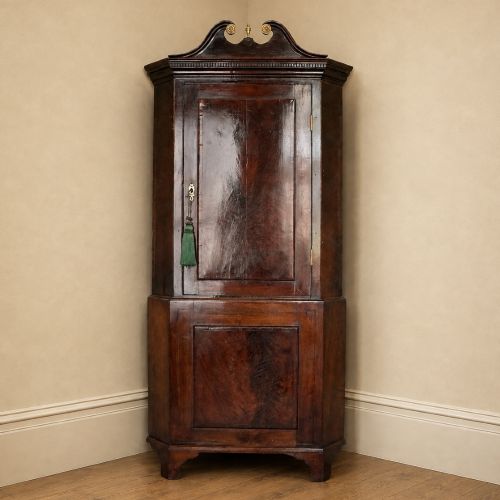
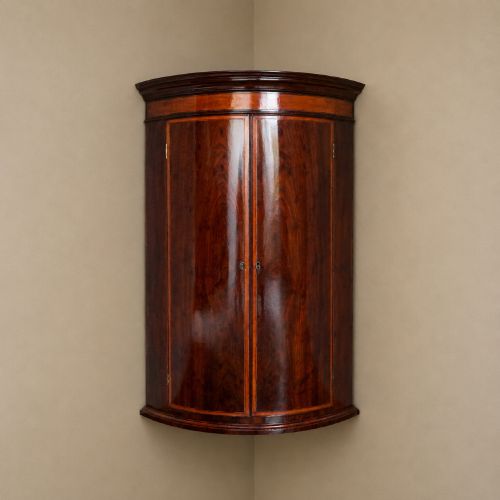
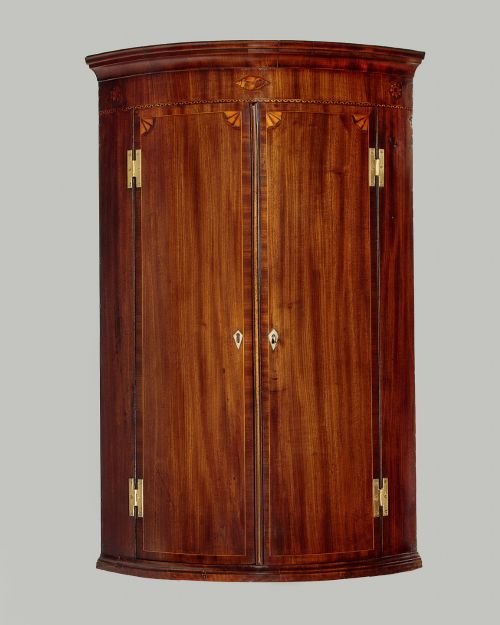
The form divides cleanly between hanging variants designed to mount above other furniture and floor-standing versions that command a full corner. Mahogany and oak dominate these architectural storage pieces, frequently finished with bow fronts.
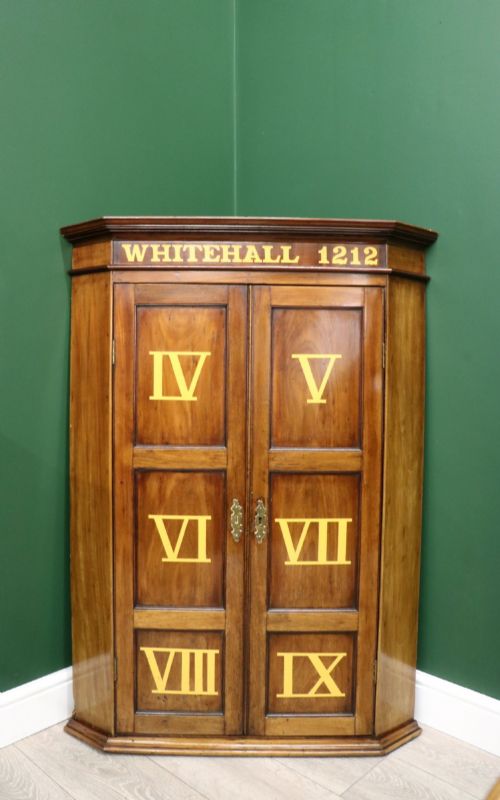
Makers of the period adapted the triangular footprint to domestic utility, producing single doors or double doors that conceal shelving for china, spirits, or ledgers. Many examples employ glazed upper doors to display curated collections within the room.
How they were made
Cabinet makers relied principally upon solid mahogany and native oak, pairing dense timbers with structural pine for internal carcases. Timber selection dictated whether a piece received a clear polish or a painted finish.
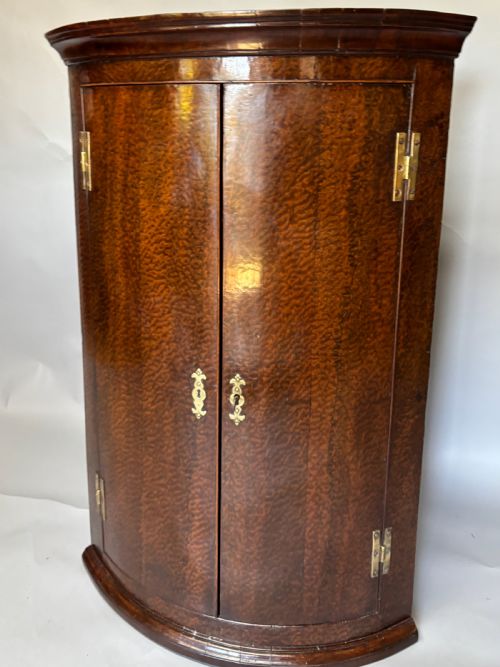
Surface ornamentation involved contrasting veneers and linear stringing, utilising satinwood, boxwood, and crossbanding to frame panel doors and cornices. Specialised varieties like burr oak or plum pudding mahogany display highly figured grain patterns requiring steady hand-veneering.
Joinery techniques included dovetailed carcase construction and framed doors designed to accommodate seasonal timber movement without splitting. Brass H-hinges and working escutcheons secured the doors while adding metallic contrast to the timber.
George III Corner Cabinet Retail Price Guide 2026
Typical asking prices for george iii corner cabinet among the pieces listed under this phrase on Sellingantiques today, from the lower quarter to the upper quarter. They describe what is for sale here now, not the wider market.
Listings demonstrate that oak and mahogany serve as the primary structural materials for these cabinets, complemented by occasional satinwood and boxwood inlay.
What varies in quality
Design ambition separates basic utility cupboards from sophisticated architectural compositions. Pediments, swan neck crowns, and astragal glazing bars elevate the joinery from simple storage to formal reception furniture.
The choice of timber grain governs the visual hierarchy of the piece. Highly figured plum pudding mahogany or carefully matched burr oak veneer denotes a workshop catering to more affluent patrons.
Precision in internal fittings and secondary woods indicates workshop standards. Hand-cut dovetails, secondary oak drawer linings, and intact original brass hardware separate superior examples from standard provincial work.
Gillows Lancaster
The George III Corner Cabinet Glossary
- Bow front
- A convex curved cabinet face that projects forward from the corner walls. This curved profile softens the hard geometry of the room corner.
- Astragal glazing
- Wooden bars dividing glass panes into smaller geometric lights within a cabinet door. These delicate muntins secure the glass while creating a decorative grid pattern.
- Crossbanding
- A border veneer applied around the edges of a panel where the grain runs perpendicular to the central piece. This technique frames the primary wood surface.
- Pediment
- The decorative structure surmounting the upper cornice of a standing or hanging cabinet. Styles include swan neck curves and broken architectural triangular forms.
George III Corner Cabinet: Frequently Asked Questions
How were george iii corner cabinets used?
These cupboards served primarily to store porcelain, glassware, or bottled spirits in dining rooms and parlours. Their triangular footprint maximised interior storage while preserving valuable floor space in smaller domestic interiors.
Standing versions often held heavier tableware in the lower section with display shelving above. Hanging models positioned glassware safely out of the way of daily household traffic.
Where should I hang a corner cabinet?
Mount the cabinet securely into wall studs within a dining room, hallway, or drawing-room corner. Ensure the height allows comfortable access to the interior shelves without obstructing passage.
Pairing a wall-hanging cupboard above a low sideboard or washstand creates balanced proportions on adjacent walls. Keep the piece away from direct heat sources to protect historic timbers and veneers.
How do I distinguish oak from mahogany pieces?
Oak displays prominent medullary rays and an open grain structure with a pale golden-brown tone. It characterises earlier provincial pieces and sturdy country house furniture.
Mahogany presents a heavier, reddish-brown hue with tight pores and occasional dramatic grain figures. It was favoured for more formal urban drawing rooms and refined Georgian cabinet work.
What is the difference between hanging and standing versions?
Hanging cabinets attach directly to wall studs via internal brackets and feature a flat base designed to clear furniture below. They generally suit moderate room heights and lighter storage duties.
Standing versions rest directly on the floor with full-length sides or plinths. They provide greater internal capacity and often incorporate two tiers of cupboards or a cabinet-on-stand format.