


Single Door Corner Cabinet
A single door corner cabinet makes clever use of awkward domestic space while keeping your prized possessions secure behind glazed or panelled timber.
What these single door corner cabinets are
A single door corner cabinet uses the intersection of two walls to hold domestic items without cluttering floor space. The examples on this page span the Georgian period, the year eighteen hundred, and the late nineteenth century.
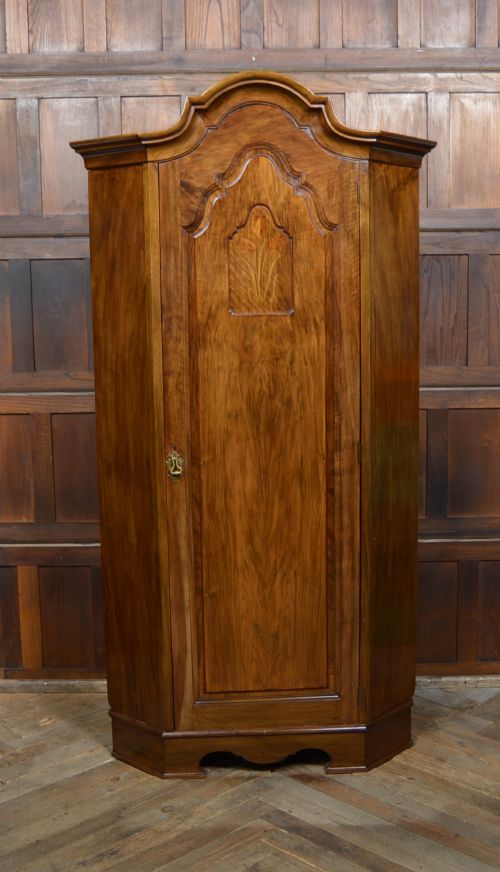
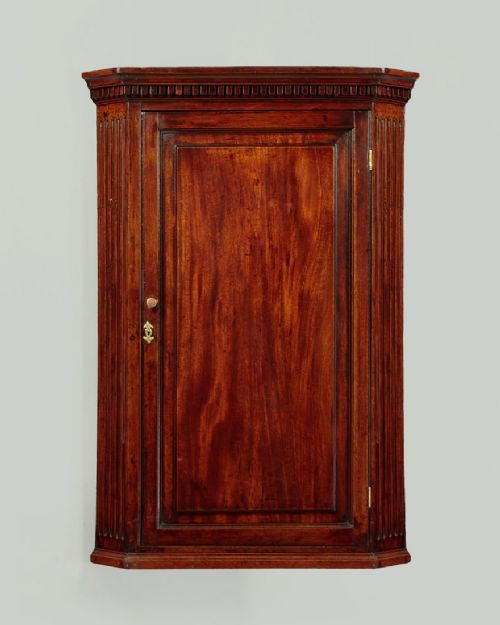
Forms include standing models, cupboard units on stands, and hanging wall versions. You will encounter both tall floor-standing cupboards and smaller hanging variants across English country and Georgian styles.
Materials represented in these single door corner cabinets include oak, mahogany, fruitwood, and brass hardware. Certain iterations feature flame mahogany veneers, serpentine profiles, and upholstered shelved interiors with pie crust trim.
How they were made
Cabinet makers constructed these pieces using solid hardwoods like oak and mahogany, alongside fruitwood timbers. Panels were fitted into corner frames to withstand seasonal timber movement in domestic rooms.
Brass fittings such as hinges and locks secure the single door, while internal shelving holds display items. Standing versions often utilise swept supports to elevate the main body from the floor.
Retail Price Guide 2026
Typical UK retail prices for single door corner cabinet, calculated from the Sellingantiques database of over a million retail prices indexed since 2003. This retail price guide relies exclusively on Sellingantiques data; no external sources or auction records are used, so the figures do not describe the wider market.
Listings feature oak, mahogany, and fruitwood across Georgian and late nineteenth century periods.
What varies in quality
Quality rests upon the selection of timber figures, such as flame mahogany or well-grained oak. Superior examples display refined proportions and thoughtful details like pie crust trim on swept supports.
Construction methods and internal detailing distinguish standard items from finer pieces. Upholstered shelved interiors and carefully fitted brass hardware elevate the character of the piece.
The Single Door Corner Cabinet Glossary
- Hanging corner cupboard
- A wall-mounted storage unit designed to fit snugly into the corner of a room. These save floor space and often feature enclosed timber doors.
- Standing corner cabinet
- A floor-resting storage piece that utilises corner space from the ground up. Some rest on dedicated stands with swept supports.
- Flame mahogany
- A decorative wood veneer displaying a fiery, rippling grain pattern. This timber was favoured by cabinet makers for high-end Georgian display pieces.
- Pie crust trim
- A decorative carved moulding with a ruffled edge resembling a pie crust. It frequently tops fine furniture pieces.
- Serpentine
- A curved line that bends outward in the centre and inward at the sides. This contour adds visual movement to cabinet fronts.
Frequently Asked Questions
Where do I put a single door corner cabinet?
These cabinets fit directly into the ninety-degree angle of any room, making use of dead space that flat furniture ignores.
Hanging versions attach securely to walls at eye level, while standing models anchor firmly on the floor against two adjoining walls.
How do I tell Georgian from late nineteenth century cabinets?
Georgian pieces generally show simpler, robust construction in oak or early mahogany from around eighteen hundred. Late nineteenth century examples often incorporate more ornate elements like flame mahogany veneers and serpentine shapes.
Looking at the interior construction and timber age helps clarify the exact manufacturing period of each cabinet.
Can I store heavy items inside them?
Internal wooden or upholstered shelves hold everyday objects, books, or ceramics securely behind the locked door. Hanging versions depend on wall strength, so heavier items suit floor-standing models on stands.
The sturdy hardwood construction of oak and mahogany variants provides reliable support for standard collections.
What is the difference between hanging and standing versions?
Hanging cupboards mount directly to wall studs, leaving the floor entirely clear underneath. Standing models rest on the ground, sometimes elevated on distinct stands with swept supports.
Both designs feature a single door but offer different capacities and visual weights within a room.