
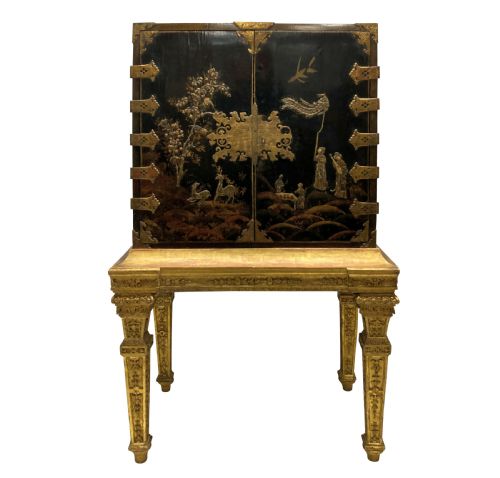
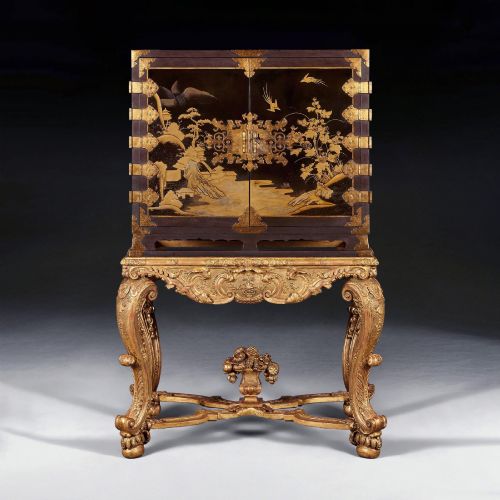
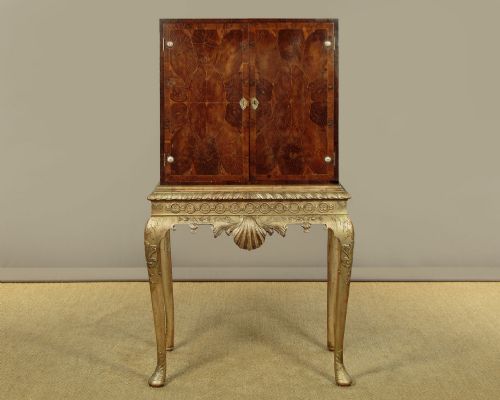


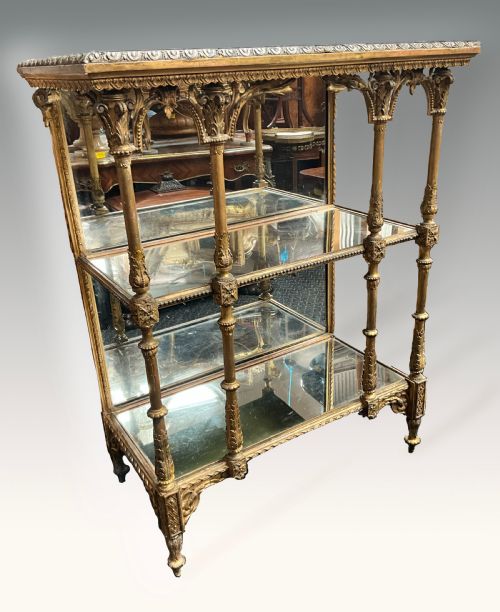


Giltwood Cabinet Stand
A giltwood cabinet stand brings gilded architectural presence and elevated storage to a room, pairing fine decorative frames with enclosed display space.

Giltwood Cabinet Stand
A giltwood cabinet stand unites an elevated support with an enclosed cabinet, bringing together architectural woodwork and fitted storage. When you search for a giltwood cabinet stand, you encounter forms ranging from seventeenth-century japanned mounts to nineteenth-century French vitrines and twentieth-century revival pieces.
The selection here includes cabinets on stands, display cabinets, bookcases, and boudoir cabinets. Styles stretch across William and Mary, Regence, Rococo Revival, and Chinoiserie, alongside George I and Victorian interpretations.
Origin points span seventeenth-century origins through to nineteen-thirties revivals. The forms adapt to varied interior demands, serving as floor-standing corner units, cylindrical pedestals, or elaborate glazed display pieces.
How they were made
Construction relies upon timber frameworks shaped into stands and cabinets, utilising wood and timber as the primary structural bodies. Gesso provides the smooth preparatory foundation layer necessary for subsequent gilding.
Giltwood finishes coat the carved elements, while glass panels and glazed sides enclose display areas. Brass hardware, engraved brass mounts, and painted panels furnish operational details and decorative contrast.
Early cabinet stands often elevated miniature worlds of japanned lacquer so noble owners could inspect their medals without stooping.
What varies in quality
The standard of carving across the giltwood and gesso surfaces determines much of the visual depth. Crisp, undercut relief work on stands and frames separates ambitious craftsmanship from simpler mouldings.
The integration of the upper cabinet with its underlying stand reveals the maker's structural intent. Cohesion between japanned, lacquered, or timber upper sections and their gilded supports dictates the overall design success.
The Giltwood Cabinet Stand Glossary
- Giltwood
- Wood that has been coated with gold leaf or a gold-coloured metallic finish over a prepared ground. This treatment creates a brilliant reflective surface designed to catch candlelight or daylight in formal rooms.
- Gesso
- A plaster-like mixture applied to wood surfaces as a base for gilding or painting. It allows craftsmen to carve intricate relief details before the gold leaf is laid down.
- Japanned
- European furniture finished with imitation East Asian lacquerwork, typically using raised motifs and dark grounds. It reflects the seventeenth and eighteenth-century fascination with imported oriental goods.
- Vitrine
- A glass-sided display cabinet intended for the exhibition of porcelain, curiosities, or books. The glazed panels maximise light penetration around fragile objects.
- Regence
- A French transitional style bridging the Louis XIV and Rococo periods, marked by lighter symmetrical curves and ornate gilt mounts. It heavily influenced later revival stands.
Giltwood Cabinet Stand: Frequently Asked Questions
What is a giltwood cabinet stand?
A giltwood cabinet stand is a piece of furniture comprising a raised support finished in gold leaf paired with an enclosed storage or display cabinet. These pieces elevate treasures off the floor and introduce a strong decorative focal point.
They combine the joinery of the cabinetmaker with the sculptural work of the gilder. Surviving examples range from seventeenth-century imported lacquer boxes on European stands to later Victorian and twentieth-century revival pieces.
How were these cabinets used historically?
Historically, these cabinets served to display prized possessions such as medals, porcelain, and exotic curiosities. Raising the cabinet on a stand brought the contents closer to eye level for inspection.
They functioned as status symbols in formal reception rooms and private boudoirs alike. The glazed doors or open shelves allowed owners to exhibit their refined tastes to visiting guests.
How do I care for giltwood furniture?
Giltwood requires gentle maintenance to preserve the delicate gold leaf and underlying gesso layers. Dusting should be performed with a dry, soft brush rather than a cloth that might catch on carved edges.
Keep these pieces away from direct sunlight, high humidity, and heat sources that could cause the wood to warp or the gesso to crack. Avoid all liquid polishes and chemical cleaners.
How can I tell different revival styles apart?
Revival styles borrow distinct decorative vocabulary from earlier centuries. William and Mary or Queen Anne revivals favour rich japanning and structured stands, while Rococo pieces show asymmetric scrolls and naturalistic floral carving.
Examining the construction methods, secondary woods, and wear patterns helps distinguish an original seventeenth-century mount from a nineteenth or twentieth-century interpretation.