

Seventeenth Century Cabinet
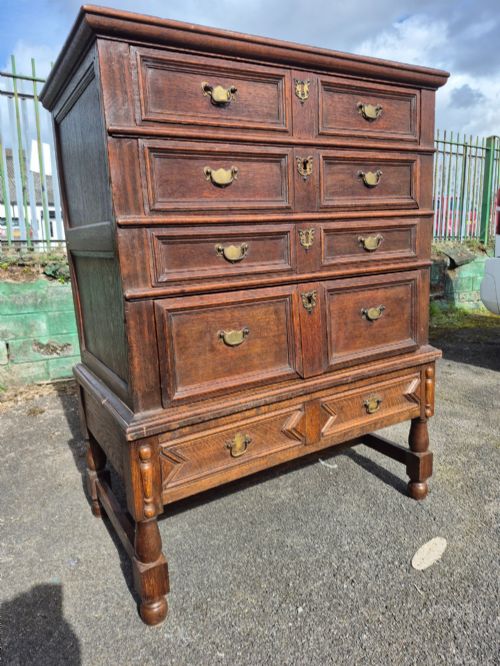
A seventeenth century cabinet brings heavy timber, intricate veneers and substantial storage into a room.
Seventeenth Century Cabinet
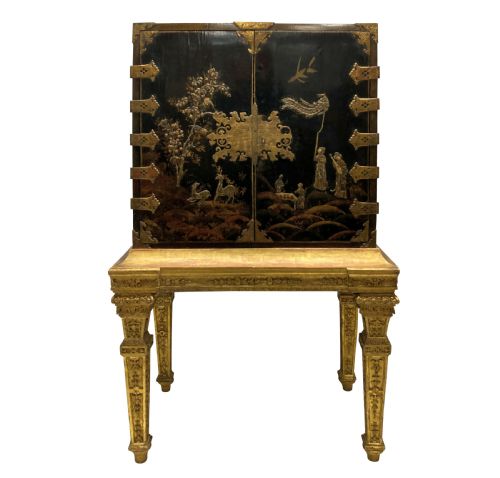
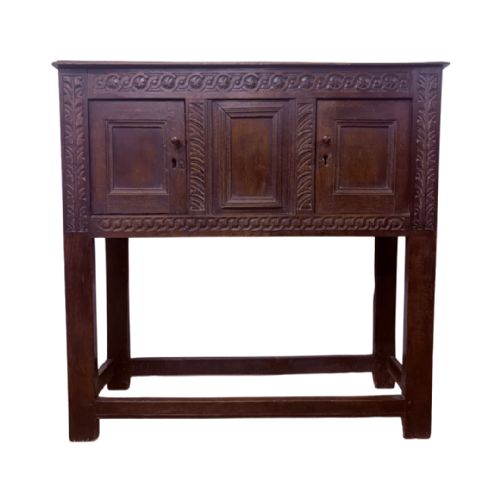
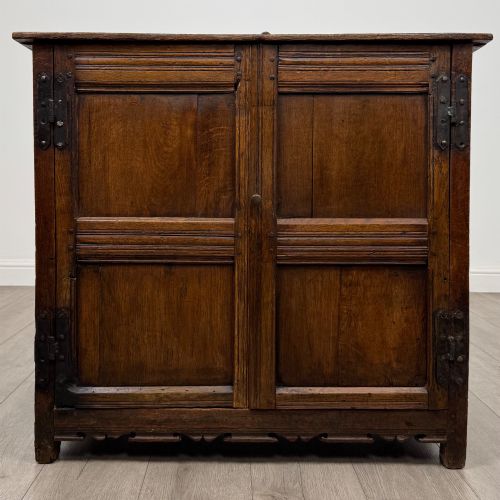
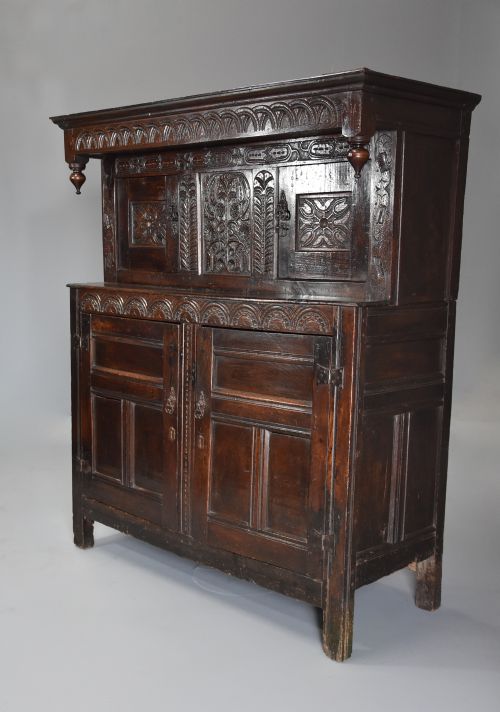
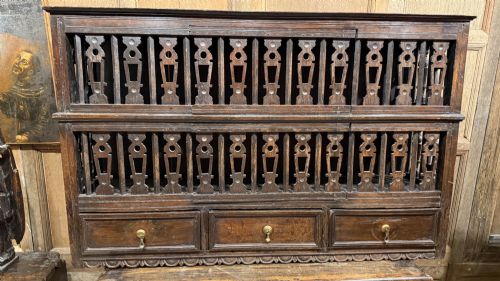
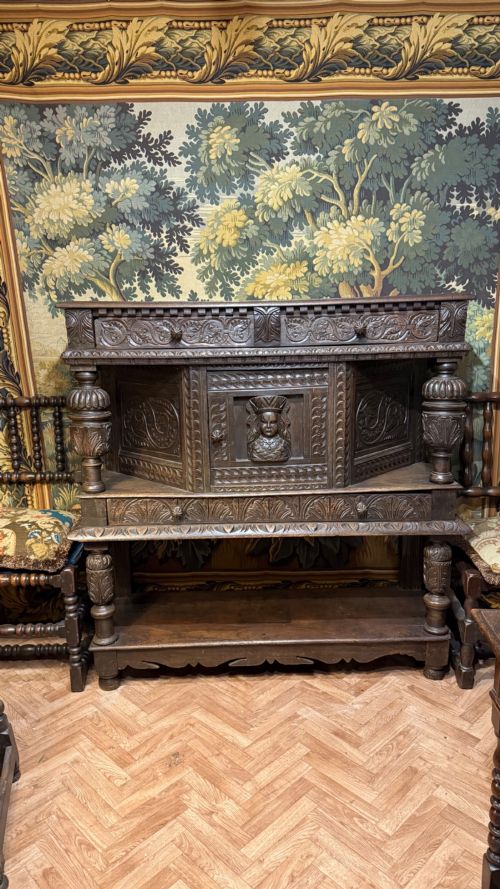
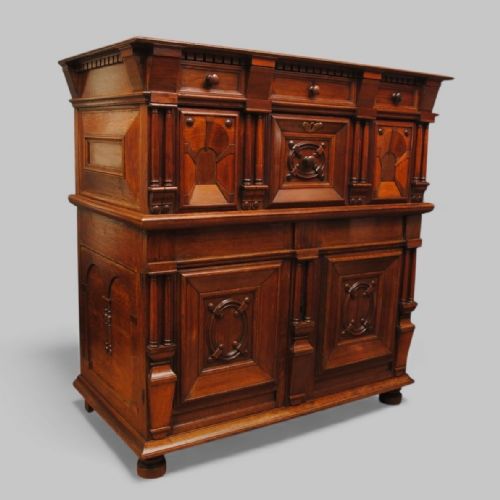
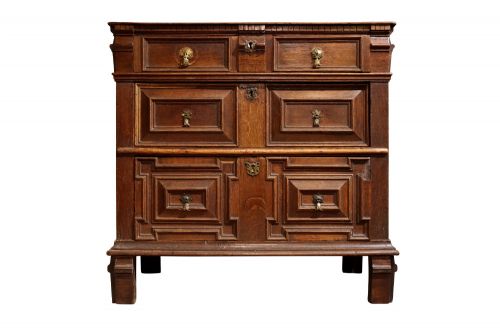
A seventeenth century cabinet covers forms ranging from joined oak cupboards and court cupboards to walnut cabinets on stands and marquetry pieces. The core function is secure storage, expressed through doors enclosing shelves, drawers, or drop fronts.
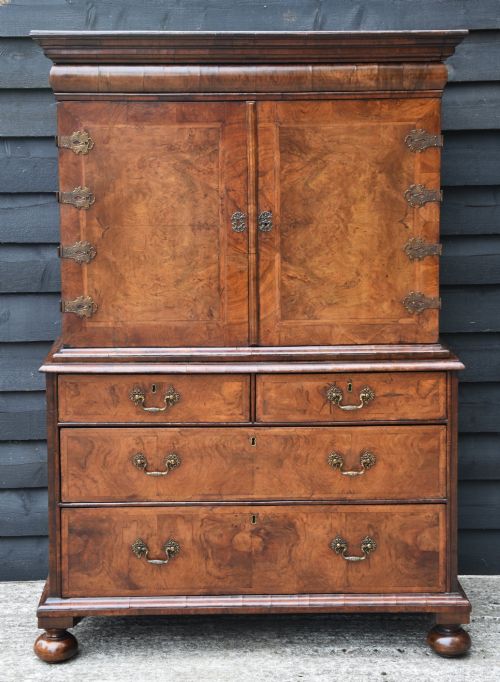
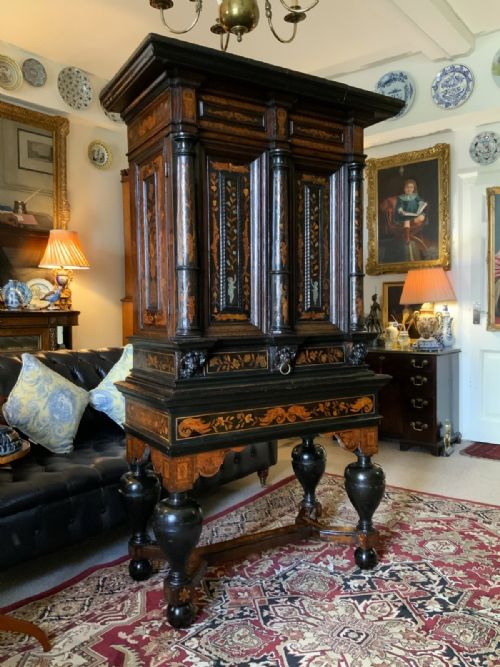
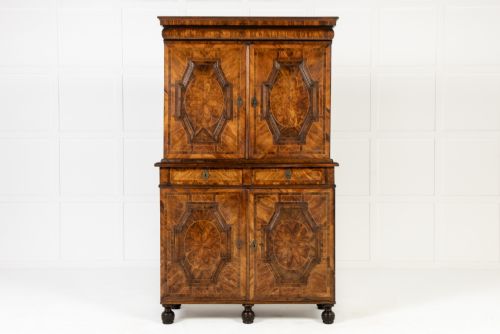
The versions most commonly met here include sturdy joined oak cupboards from English workshops alongside more decorative walnut and marquetry cabinets on stands from the William and Mary period. Regional variations appear in court cupboards and press cupboards from local makers.
Makers utilised timber construction appropriate to the period, building strong carcases designed to hold heavy loads of household goods and textiles.
Materials and construction methods
Joiners built structural carcases primarily from solid oak, walnut, and fruitwood, often employing frame and panel construction to accommodate seasonal wood movement. Surfaces received decorative enrichment through marquetry, oyster veneers, and geometric mouldings.
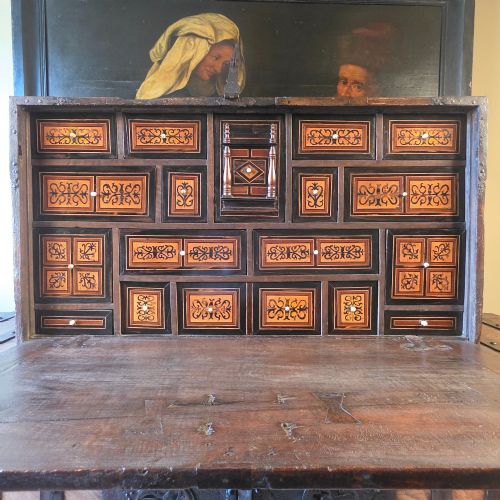
Hardware played a functional and decorative role, with brass and iron mounts, hinges, and locks securing doors and lids. Inlays incorporate boxwood, snakewood, and pewter to create contrasting patterns across drawer fronts and door panels.
Seventeenth Century Cabinet Retail Price Guide 2026
Typical asking prices for seventeenth century cabinet among the pieces listed under this phrase on Sellingantiques today, from the lower quarter to the upper quarter. They describe what is for sale here now, not the wider market.
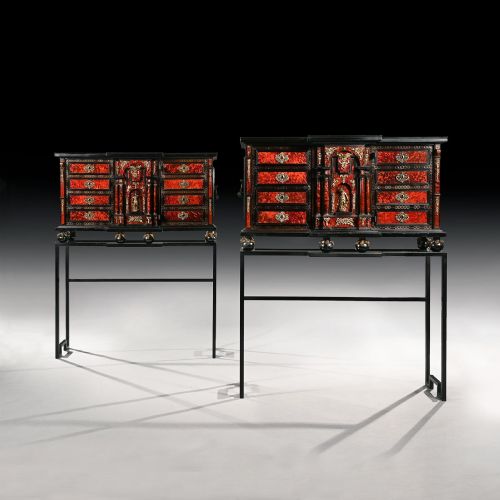
The listings show materials spanning plain oak, walnut, fruitwood, and wrought iron, alongside exotic additions like tortoiseshell and kingwood.
Distinctions in construction and surface execution
Quality rests in the crispness of carved details, the precision of inlaid marquetry work, and the integrity of the timber surfaces. Pieces retaining original patination and untouched construction demonstrate higher grade joinery.
The sophistication of the timber selection dictates the tier of the piece, moving from straightforward joined oak utility forms up to elaborate walnut, kingwood, and tortoiseshell surfaces mounted with gilt bronze.
The Seventeenth Century Cabinet Glossary
- Court cupboard
- A heavy oak storage piece with enclosed upper and lower sections, typically used for displaying plate and storing food or linens. These items form a substantial part of the early English furniture record.
- Oyster veneer
- Small circular or oval cross-sections sliced from branch wood, laid together to create an intricate repeating pattern resembling oyster shells. This technique appeared frequently on walnut and olive wood cabinets.
- Marquetry
- The art of forming decorative patterns by fitting together thin slices of various coloured woods and other materials like pewter. It covers drawer fronts and cabinet doors on Baroque pieces.
- Joined oak
- Furniture constructed using mortise and tenon joints secured with wooden pegs rather than metal nails. This method defined English cabinetmaking throughout the seventeenth century.
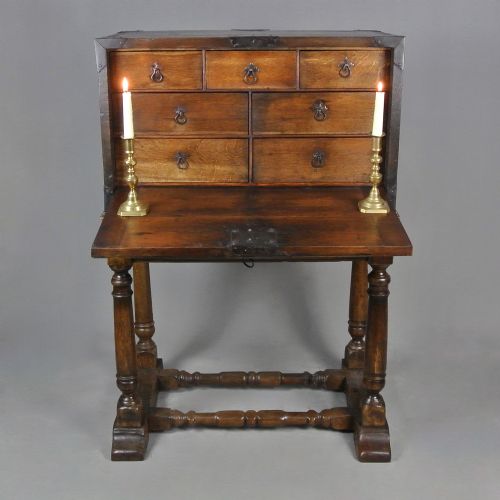
- Vargueno
- A traditional Spanish cabinet form featuring a drop-front lid that opens to reveal a cluster of small drawers and compartments, usually mounted on an open stand.
Seventeenth Century Cabinet: Frequently Asked Questions
What is a seventeenth century cabinet?
A seventeenth century cabinet is a piece of storage furniture made during the 1600s or the William and Mary period, encompassing oak cupboards, chests of drawers, and decorative cabinets on stands.
These items were built for domestic storage, holding valuable textiles, documents, and household provisions.
What woods were used?
Joiners relied heavily on native English oak for structural strength and everyday furniture forms.
Finer decorative pieces incorporated walnut, burr walnut, fruitwood, olive wood, and kingwood alongside imported exotic veneers.
Where should I place one?
These cabinets suit reception rooms, hallways, and dining spaces where their substantial timber presence and storage capacity function effectively.
Position them away from direct heat sources and strong sunlight to protect the aged wood surfaces and historic finishes.