


Geometric Panel Chest
A geometric panel chest brings substantial seventeenth-century timber and architectural moulding into a room.
What a geometric panel chest is
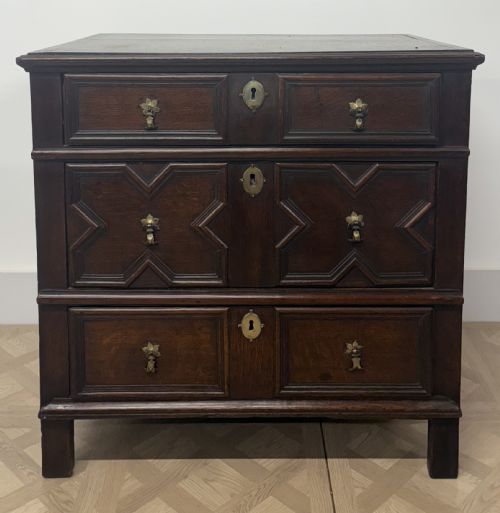
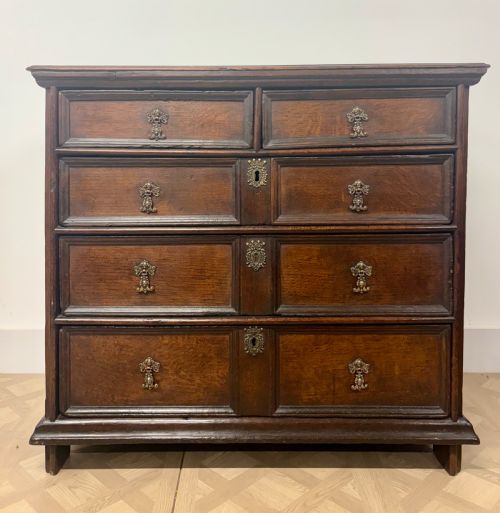
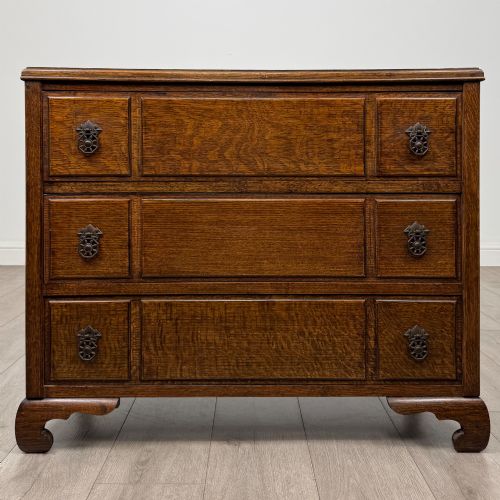
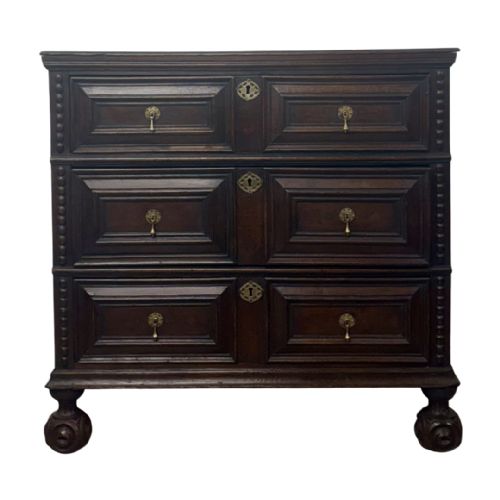
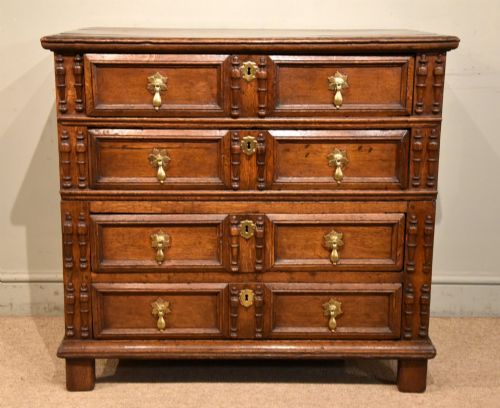
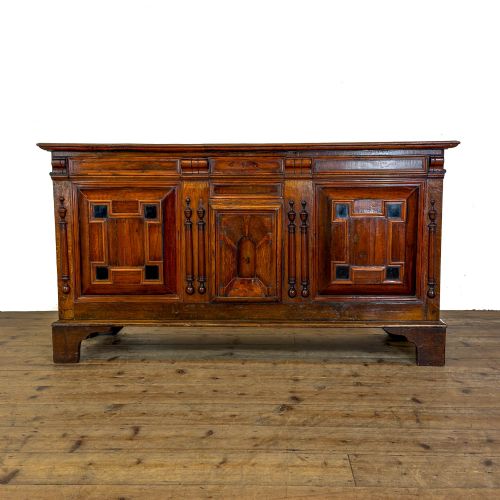
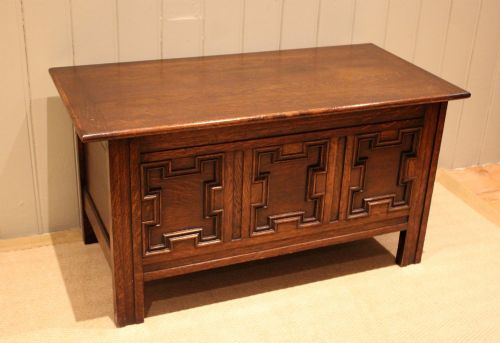
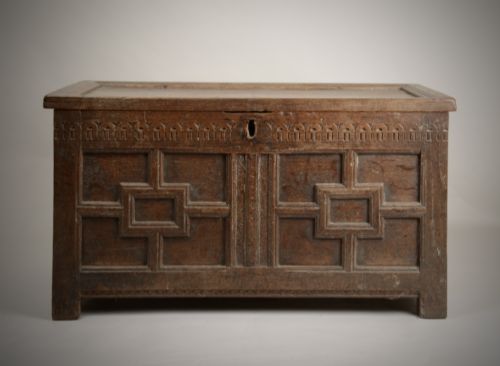
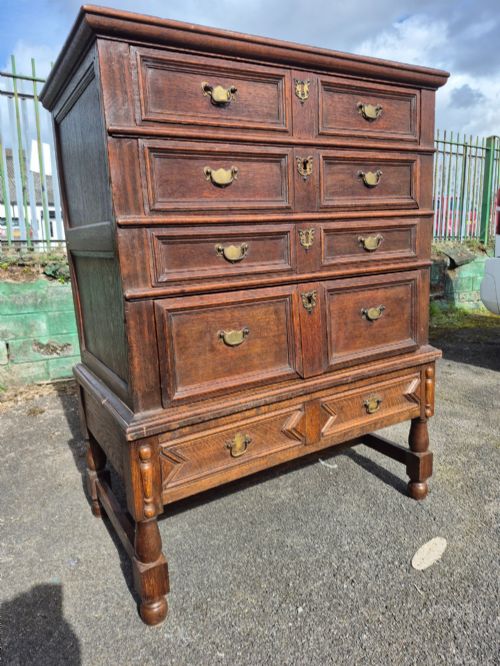
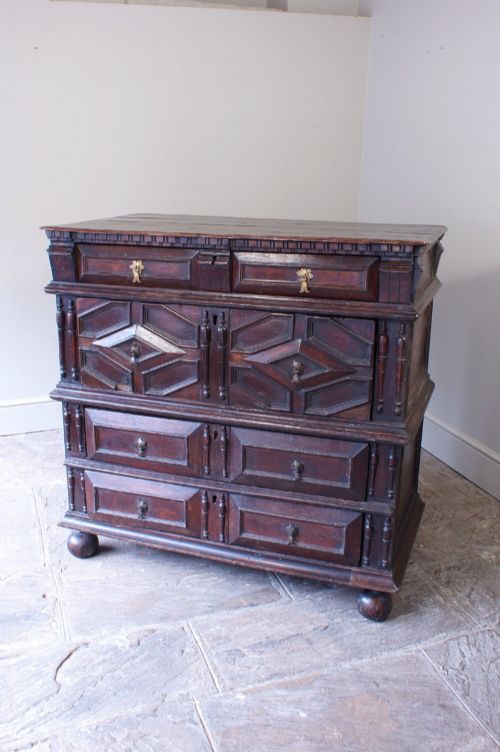
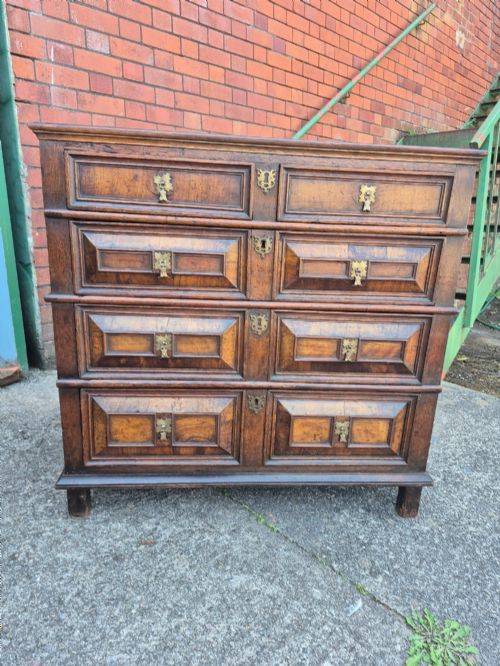
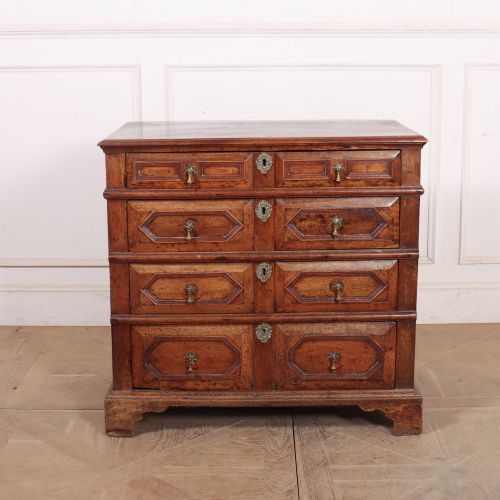
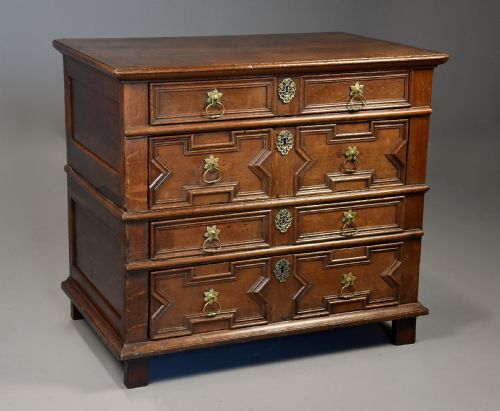
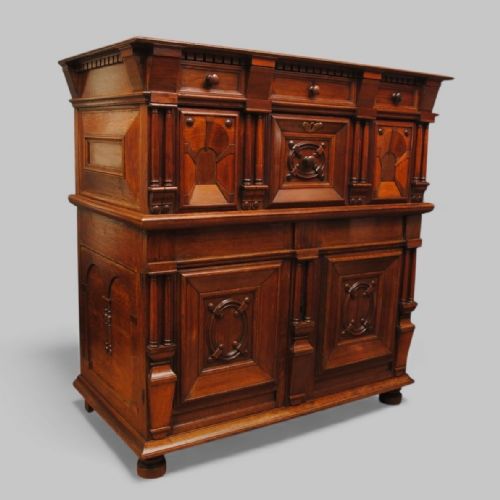
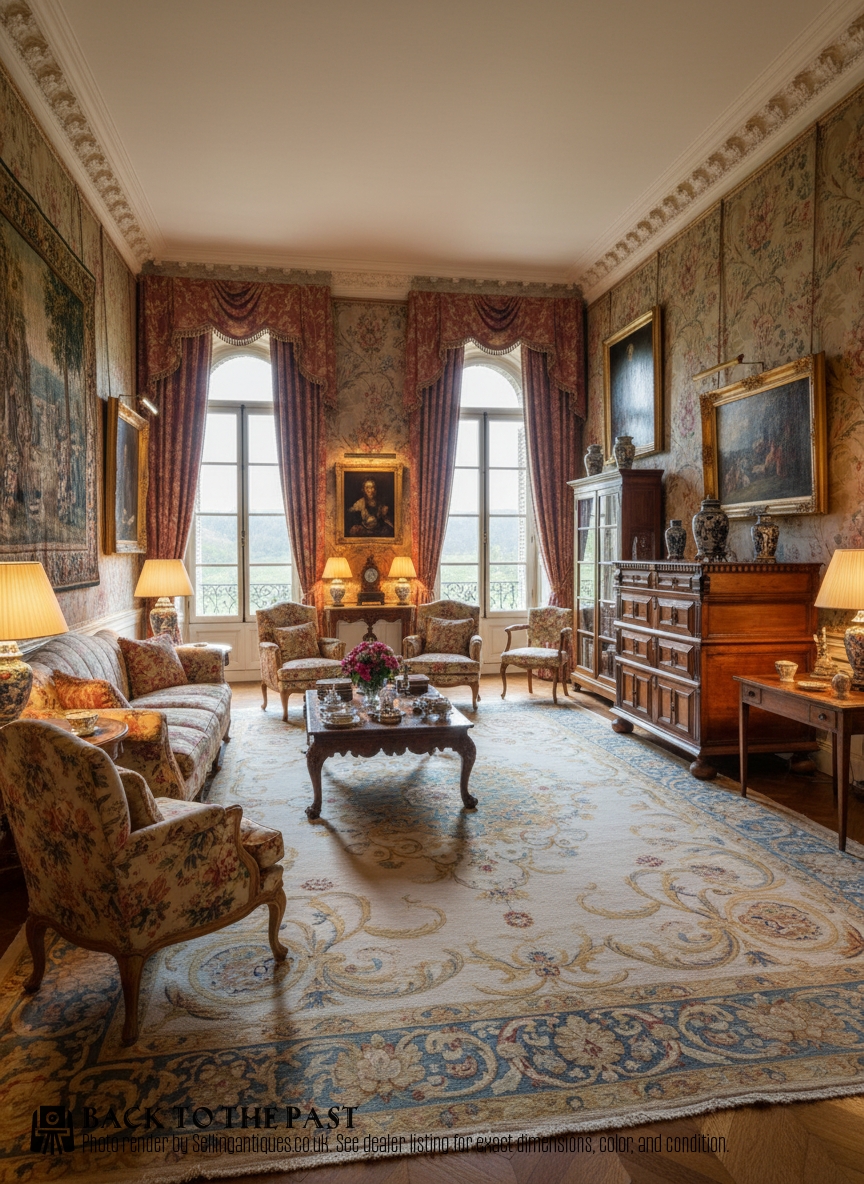
A geometric panel chest combines functional storage with applied wooden mouldings arranged in decorative patterns across the facade. When you search for a geometric panel chest, you are looking at heavy case furniture built during the seventeenth century and the Georgian period. The form appears as coffers, mule chests, chests on stands, and chests of drawers.
You are most likely to meet seventeenth-century examples constructed from English oak, often detailed with panels and drawers. These pieces reflect early joinery traditions where frames hold floating panels to accommodate seasonal wood movement. The proportions are low, wide, and heavily grounded.
The style spans late seventeenth-century William and Mary and Jacobean influences, alongside later Georgian interpretations. Surviving pieces show regional variations in their drawer counts and stand configurations. Some incorporate lower drawers beneath a primary compartment, while others sit raised upon separate stands.
How they were made
Carpenters built these carcases using solid timbers including oak, walnut, fruitwood, cedar, and occasionally brass for hardware fittings. Boards were hand-sawn and planed, showing the tool marks of early workshops. Joinery relied on mortise and tenon frames secured with wooden pegs.
The characteristic geometric patterns on the front facades were created by applying small, shaped mouldings onto flat panels. These mouldings required precise mitre cuts and were pinned or glued into place. Side panels were typically fielded or left plain to contrast with the elaborate fronts.
Retail Price Guide 2026
Typical UK retail prices for geometric panel chest, calculated from the Sellingantiques database of over a million retail prices indexed since 2003. This retail price guide relies exclusively on Sellingantiques data; no external sources or auction records are used, so the figures do not describe the wider market.
Cedar wood was utilised inside chests not just for its strength, but because its sharp aroma naturally discouraged moths from eating stored woollens.
What varies in quality
Quality rests in the crispness of the applied mouldings and the selection of figured timbers. Superior examples display intricate geometric arrangements that align precisely across drawer fronts and stiles. Poorer execution shows clumsy mitres and poorly fitted drawer linings.
The integrity of the original construction dictates value, particularly whether the base boards, backboards, and brass handles remain intact. Pieces that retain their original stands or uncompromised drawer configurations stand at the top of the range. Alterations to drawer depths or replacement mouldings alter the original architectural balance.
The Geometric Panel Chest Glossary
- Mule chest
- A storage chest featuring one or more drawers at the base beneath the main lift-top compartment. This form bridges the traditional coffer and the modern chest of drawers.
- Chest on stand
- A case piece raised above the floor on a distinct structural frame or legs. This elevation lightens the visual weight of heavy timber construction.
- Mitre joint
- A corner joint formed by cutting two pieces at an angle, commonly forty-five degrees, used extensively when framing geometric mouldings. Tight mitres indicate skilled joinery.
- Stile
- The vertical upright member of a frame that holds a panel in place. Stiles provide the structural backbone for seventeenth-century case work.
- Fielded panel
- A central panel with bevelled edges that thin toward the outer margins so it fits snugly into a surrounding groove. This technique allows the wood to expand and contract without splitting.
Frequently Asked Questions
What is a geometric panel chest?
A geometric panel chest is a storage piece from the seventeenth century or Georgian era featuring applied wooden mouldings arranged in patterns.
These mouldings create texture and architectural depth across the drawer fronts and doors.
How do I date a geometric chest?
Dating relies on examining the timber species, construction methods, and joinery techniques used in the carcase. Seventeenth-century examples often feature hand-split oak and pegged joints, whereas later pieces show sawn timber.
Hardware styles and the presence of walnut or fruitwood also help narrow the period of manufacture.
Where were these chests used?
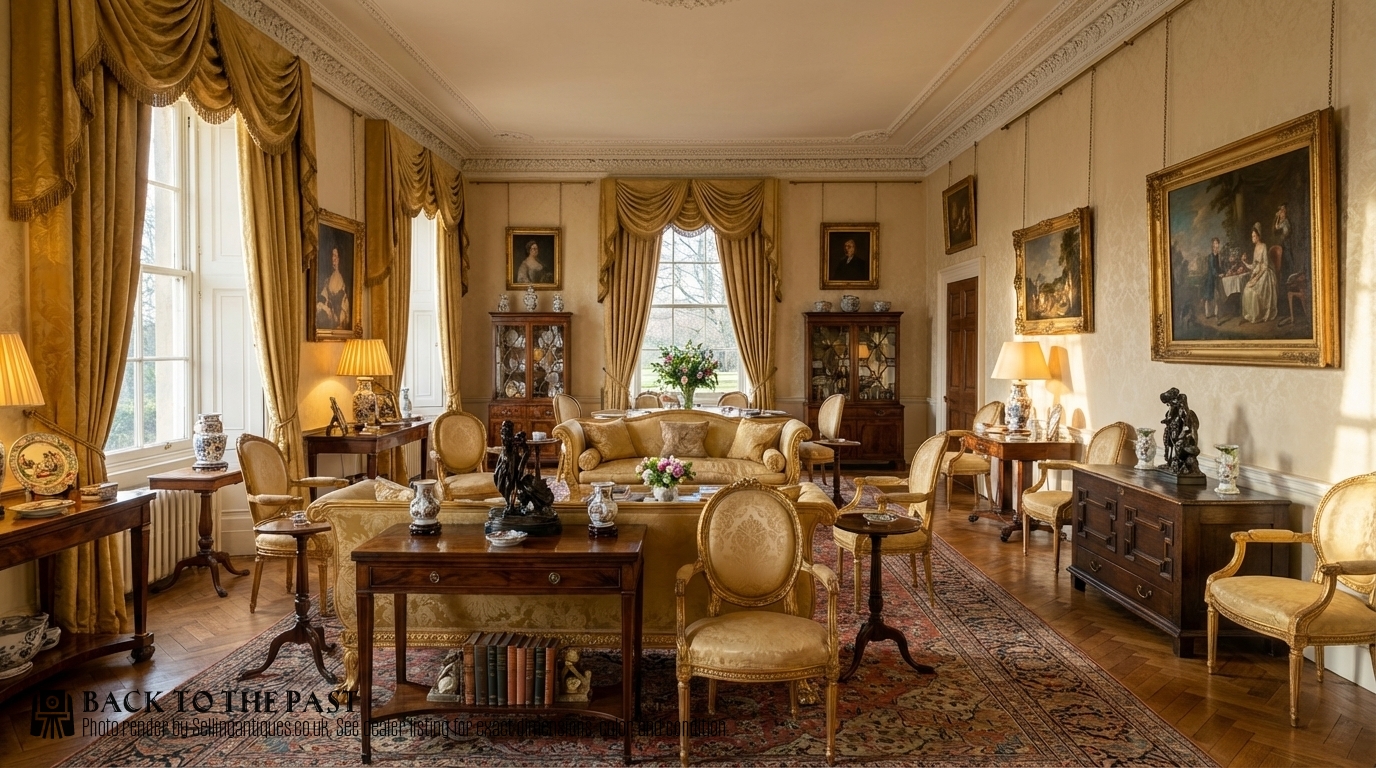
These chests served primarily as heavy storage furniture in principal rooms and chambers of early homes. They held textiles, linens, and personal valuables securely.
Over time, their decorative facades made them prominent display pieces.
How do I care for antique oak?
Antique oak benefits from stable indoor humidity and protection from direct sunlight and heat sources. Natural beeswax polish helps nourish dry timber without sealing the pores.
Avoid modern liquid silicone cleaners which can penetrate open-grain woods and damage the surface finish.