
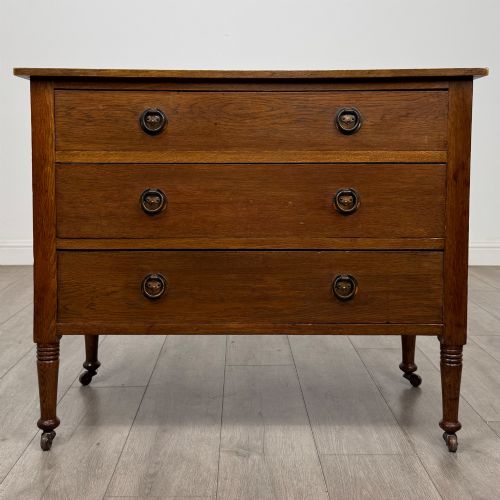
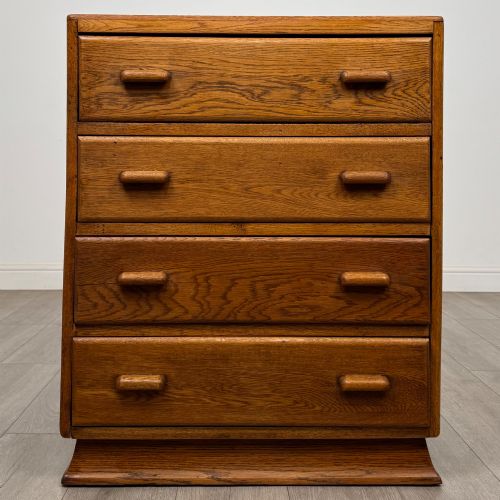
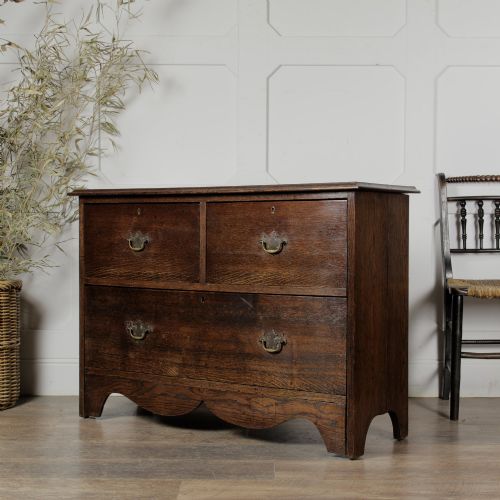
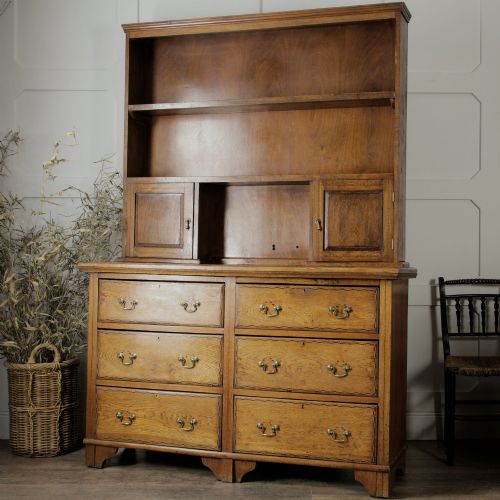

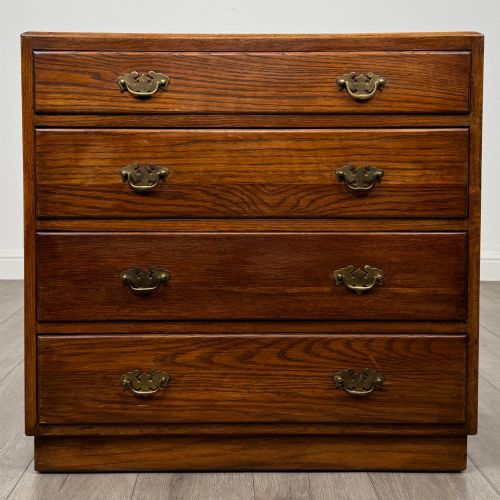
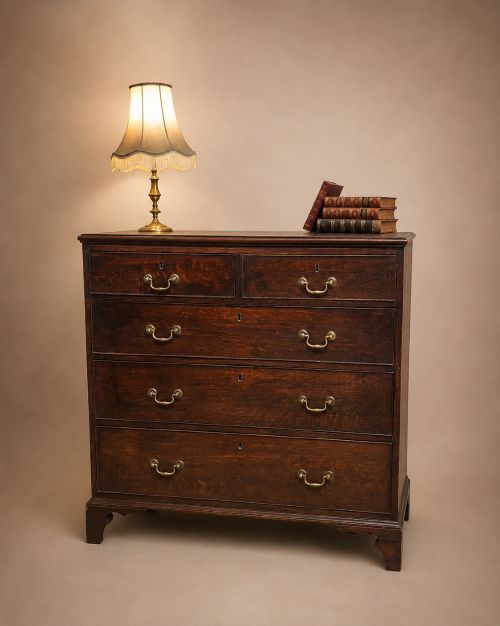
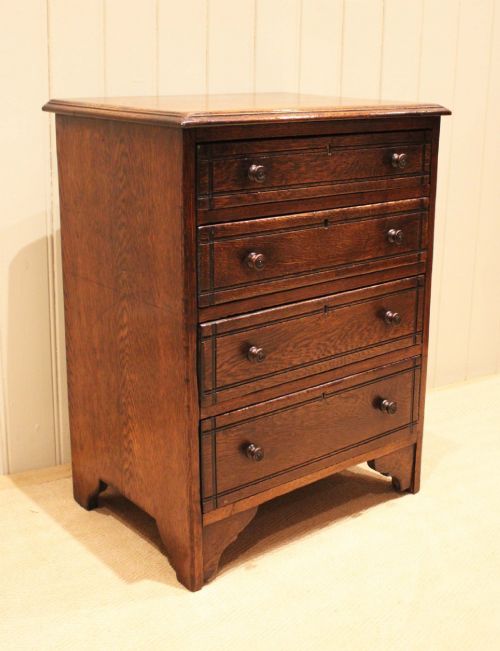
Solid Oak Chest Drawers
A solid oak chest drawers provides robust utility and heavy timber presence, drawing buyers who want enduring storage built from honest British hardwood.
Forms and periods of solid oak chest drawers
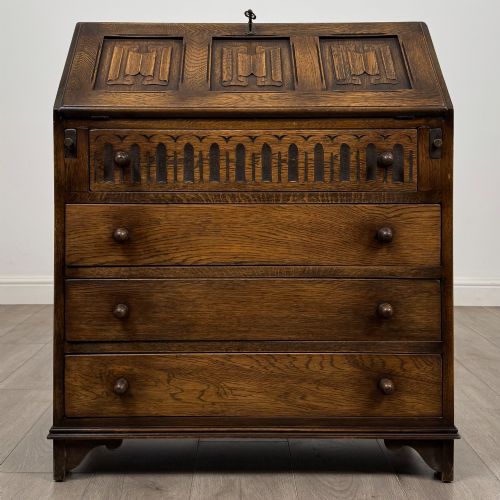
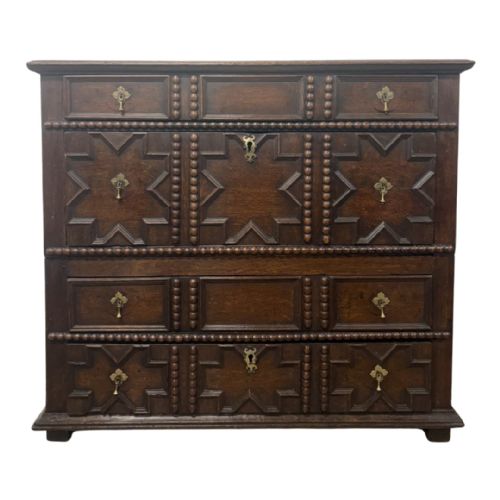
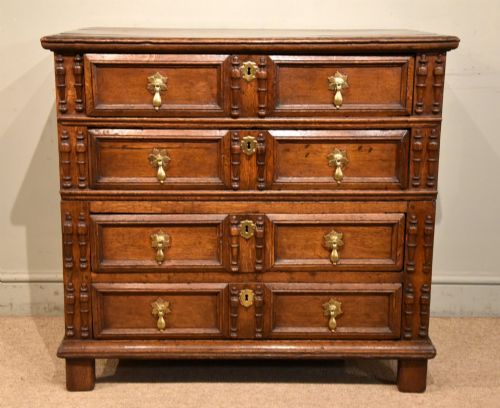
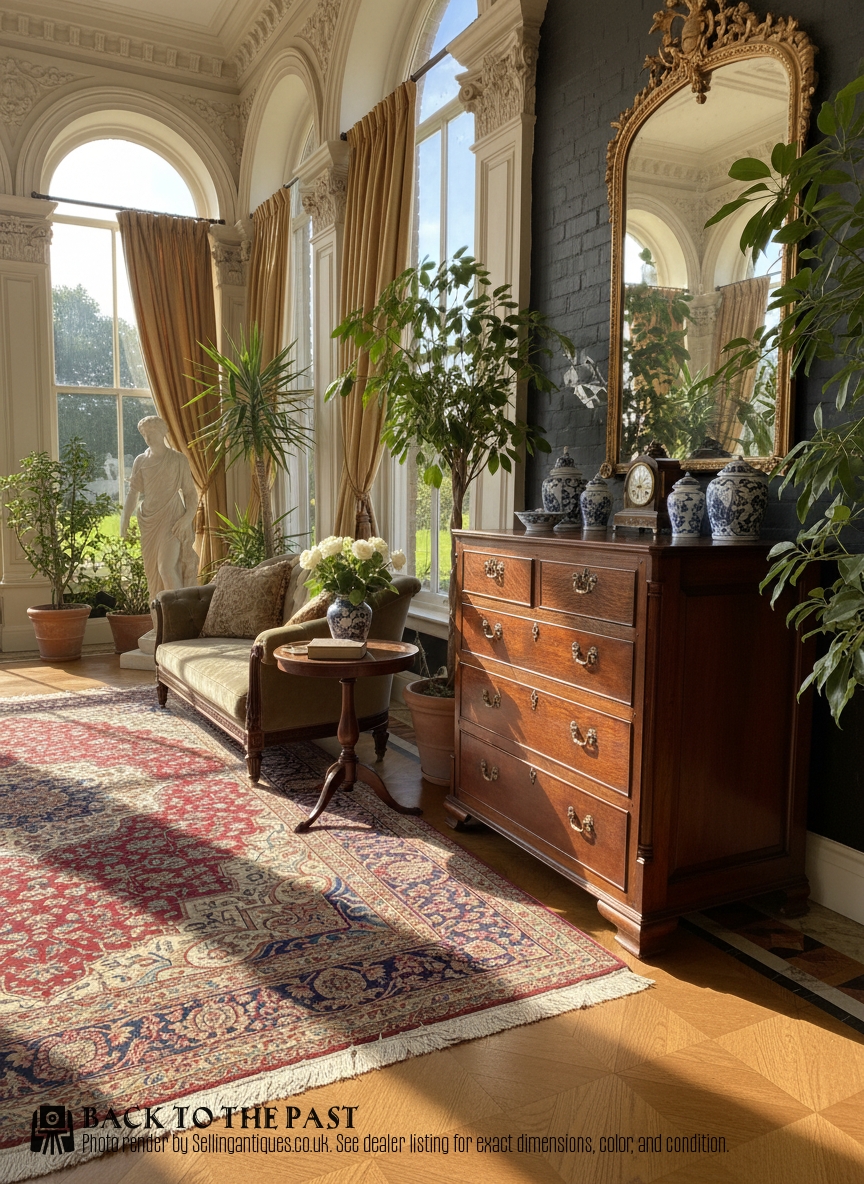
A solid oak chest drawers spans centuries of domestic storage, appearing in forms from low and narrow proportions to tall substantial pieces and five drawer configurations. Early examples emerge from the seventeenth century with geometric design and Jacobean character, alongside Charles II period pieces.
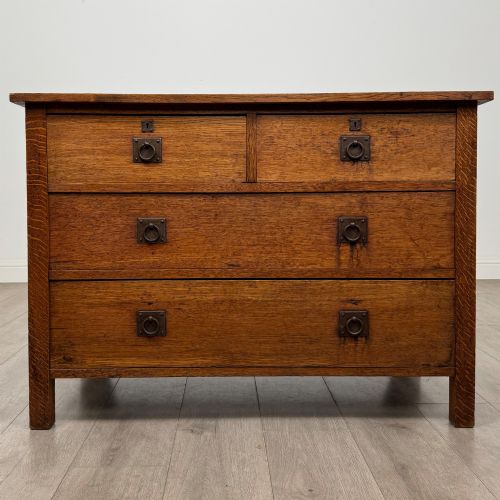
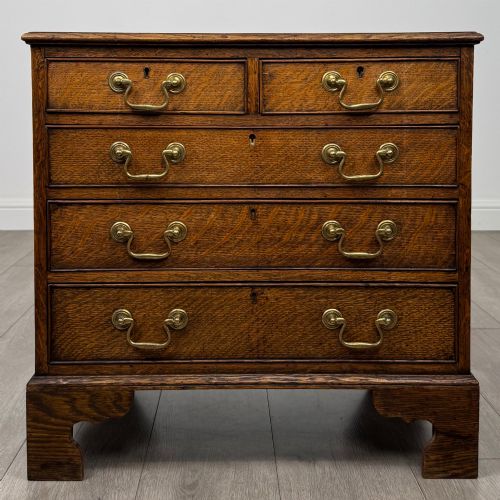
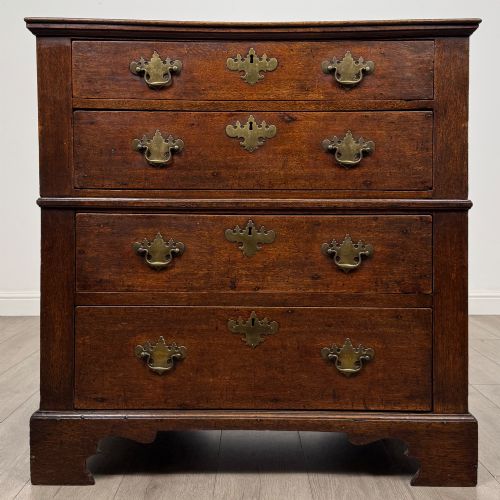
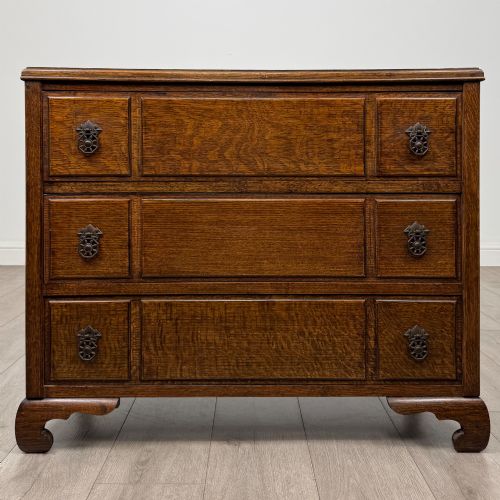
Georgian and George III editions bring refined proportions in solid oak, while Victorian, Edwardian, and Art Deco eras adapt the timber to later tastes including Arts and Crafts designs. English Country vernacular traditions run through the material alongside French serpentine interpretations and 1920s plan chests.
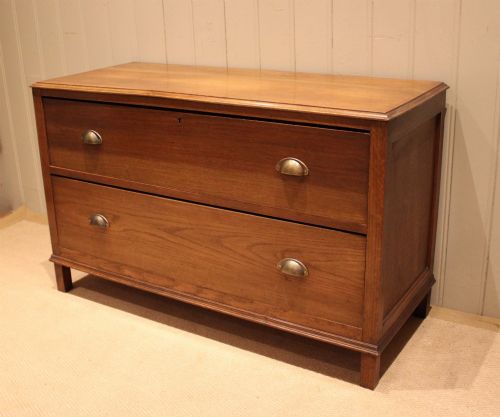
Buyers meet pieces ranging from early eighteenth century constructions to twentieth century revivals. The material demonstrates significant versatility across periods, retaining heavy structural integrity whether formed as a large storage unit or a small proportioned chest.
Judging the standard of manufacture
Quality rests in the handling of the solid oak timber and the precision of the drawer construction. Superior pieces demonstrate crisp geometric detailing, well-figured grain, and original metal hardware that integrates properly with the period style.
The distinction between standard examples and finer items lies in structural proportion and the integrity of the timberwork. Heavy substantial chests and small proportioned pieces alike succeed when the joinery remains tight and the wood retains its natural character without excessive alteration.
Retail Price Guide 2026
Typical UK retail prices for solid oak chest drawers, calculated from the Sellingantiques database of over a million retail prices indexed since 2003. This retail price guide relies exclusively on Sellingantiques data; no external sources or auction records are used, so the figures do not describe the wider market.
Some solid oak chests arrived with instructions to be waxed or painted, proving that even stern seventeenth century timber occasionally suffers an identity crisis.
Harris Lebus
The Solid Oak Chest Drawers Glossary
- Geometric design
- Decoration formed by applied mouldings in repeating geometric patterns on drawer fronts, typical of seventeenth century oak joinery.
- Jacobean style
- A heavy seventeenth century aesthetic characterised by sombre oak timber, panelled construction, and strong rectilinear forms.
- Swan neck handle
- A metal drawer pull shaped like a graceful double curve, frequently cast in brass and mounted on backplates during the Georgian period.
- Plan chest
- A wide, shallow multi-drawer cabinet designed for holding architectural plans or maps, occasionally executed in solid oak.
- Serpentine front
- A piece of furniture featuring a front facade with a convex centre flanked by concave curves.
Frequently Asked Questions
How do I date an oak chest?
Dating relies on observing construction methods, handle hardware, and stylistic indicators such as geometric mouldings or bracket feet. Seventeenth century pieces display heavy panel work, whereas Georgian items show refined proportions and dovetail joinery.
Later Victorian and Edwardian examples incorporate machine-sawn timber and varied hardware styles. Comparing the secondary woods and drawer linings helps confirm the period of manufacture.
Are these chests made entirely of oak?
Pieces matching this search use solid oak as the primary timber for frames, tops, and drawer construction. Secondary woods may appear in less visible areas like drawer bottoms or back panels.
Checking the grain patterns across the sides and drawer fronts confirms the presence of solid timber throughout the main carcass.
How should I care for solid oak?
Solid oak benefits from consistent indoor humidity levels and protection from direct heat sources. Regular dusting with a dry cloth maintains the surface.
Periodic application of appropriate wax preserves the finish and nourishes the timber without building up heavy residues.
What is an Arts and Crafts oak chest?
Arts and Crafts examples emphasise honest construction and the natural grain of solid oak over ornate carving. These pieces often date from the late nineteenth or early twentieth century.
They reflect a movement valuing handmade quality and straightforward utility in domestic furniture.