

Period Oak Chest Drawers
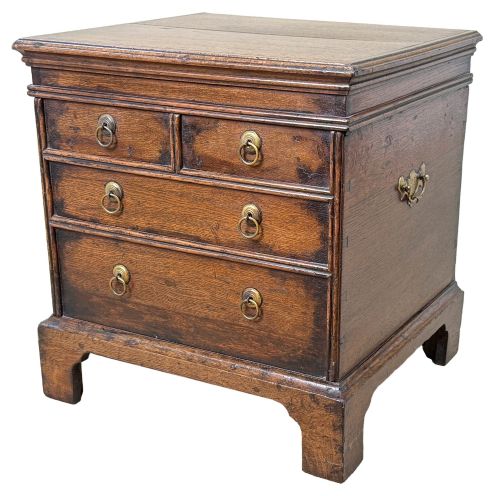
These period oak chest drawers offer heavy timber construction and centuries of utilitarian history for domestic storage.
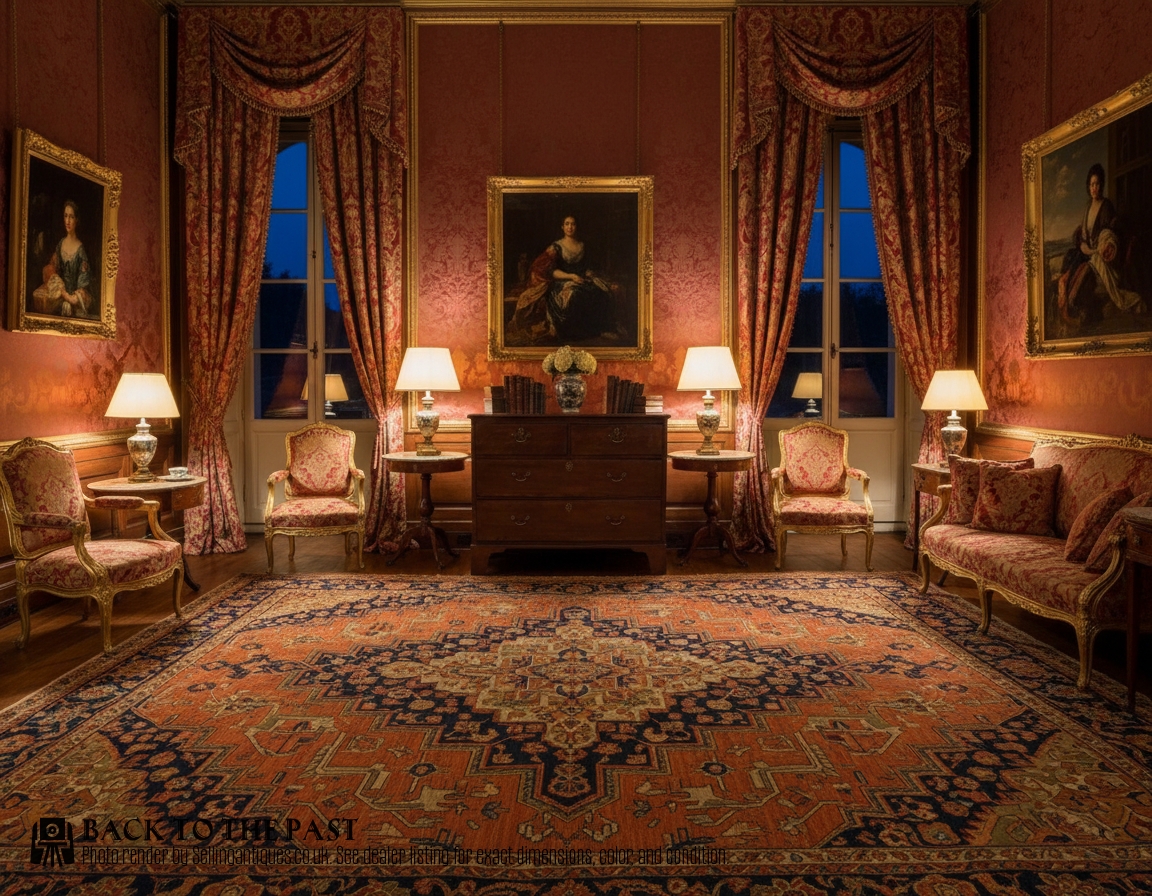
Period oak chest drawers
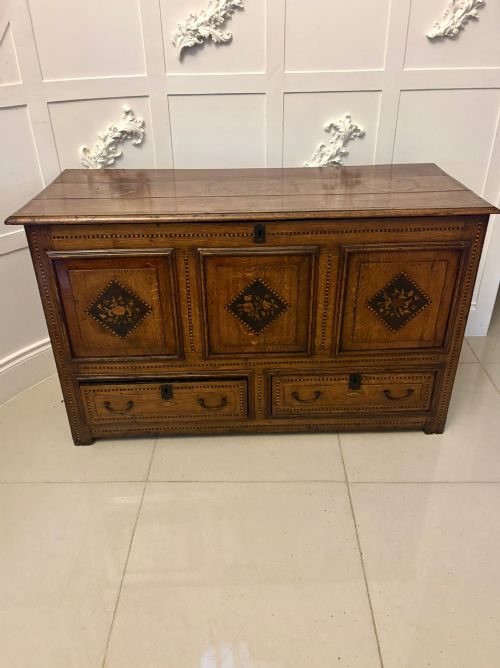
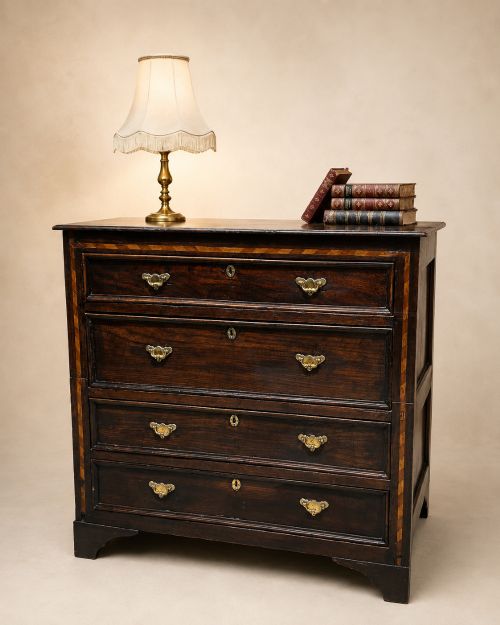
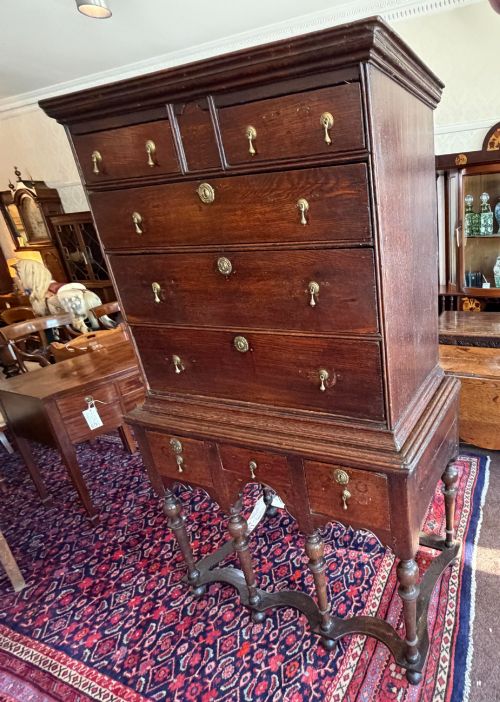
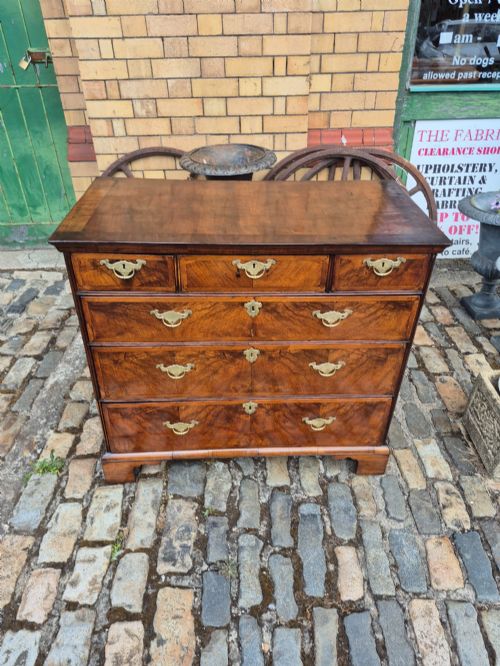
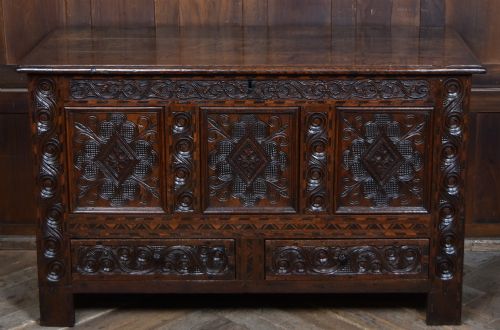
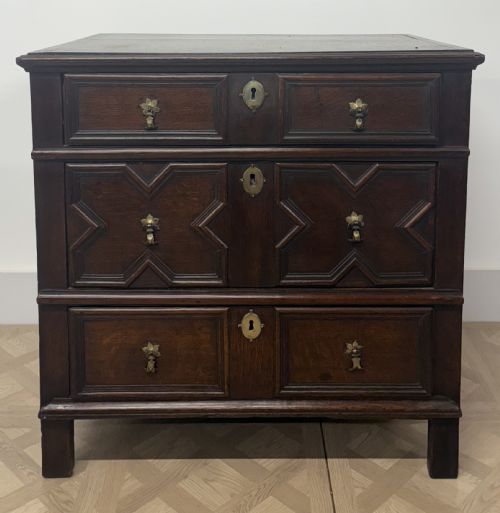
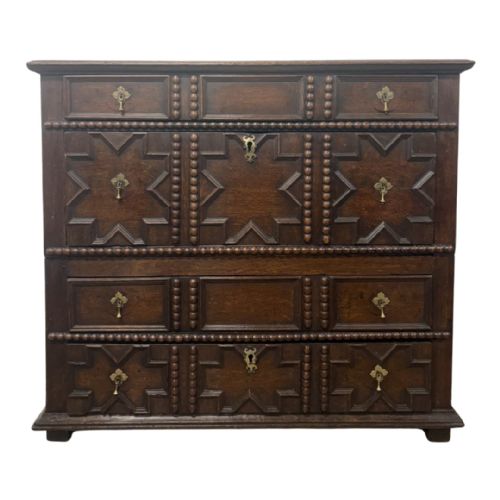
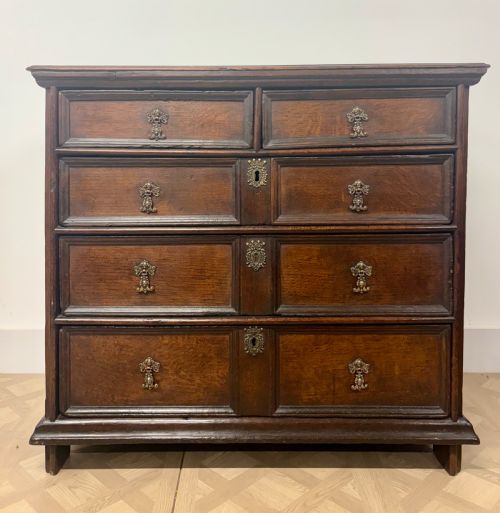
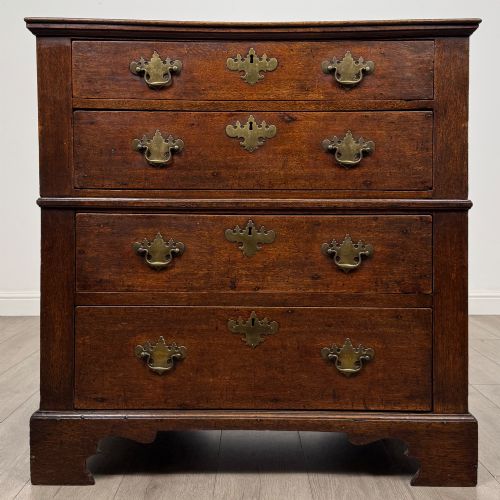
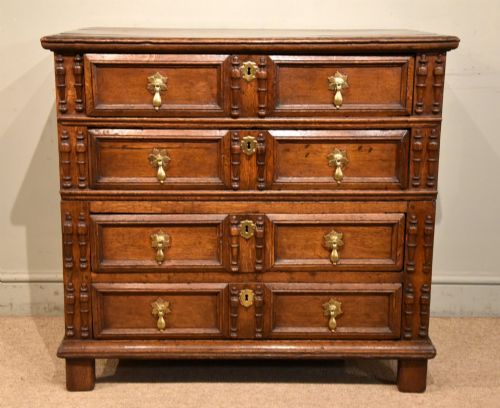
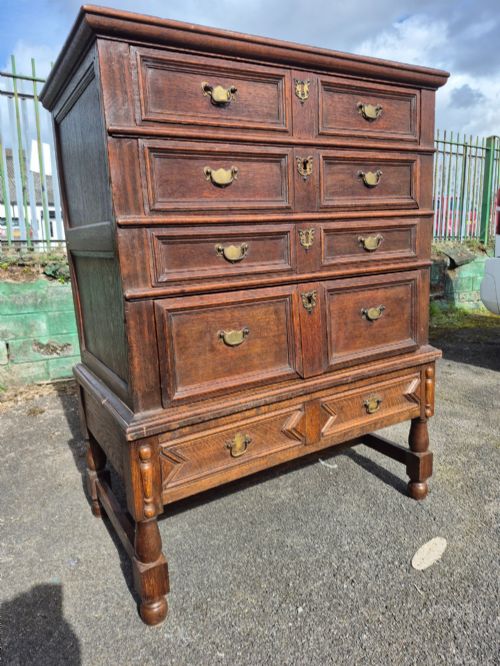
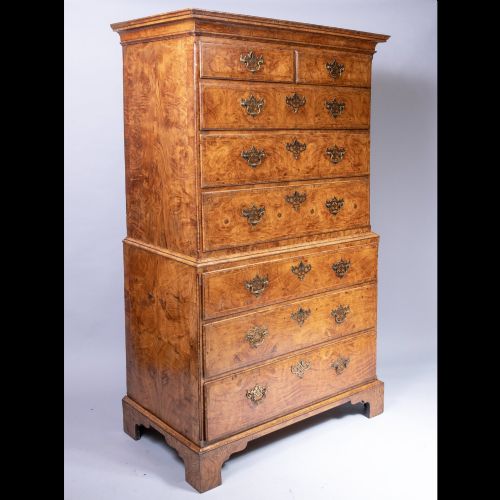
A period oak chest drawers provides robust bedroom or country house storage, predominantly appearing from the seventeenth and eighteenth centuries. The selection ranges from early geometric examples to later Georgian designs, including dwarf and chest on chest formats.
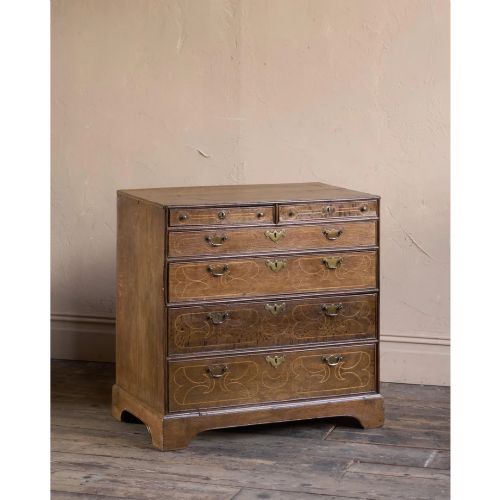
The materials and styles span Jacobean, William and Mary, Queen Anne, and George II periods. Buyers regularly encounter pieces showing fruitwood inlay, brass hardware, and distinct regional construction traits.
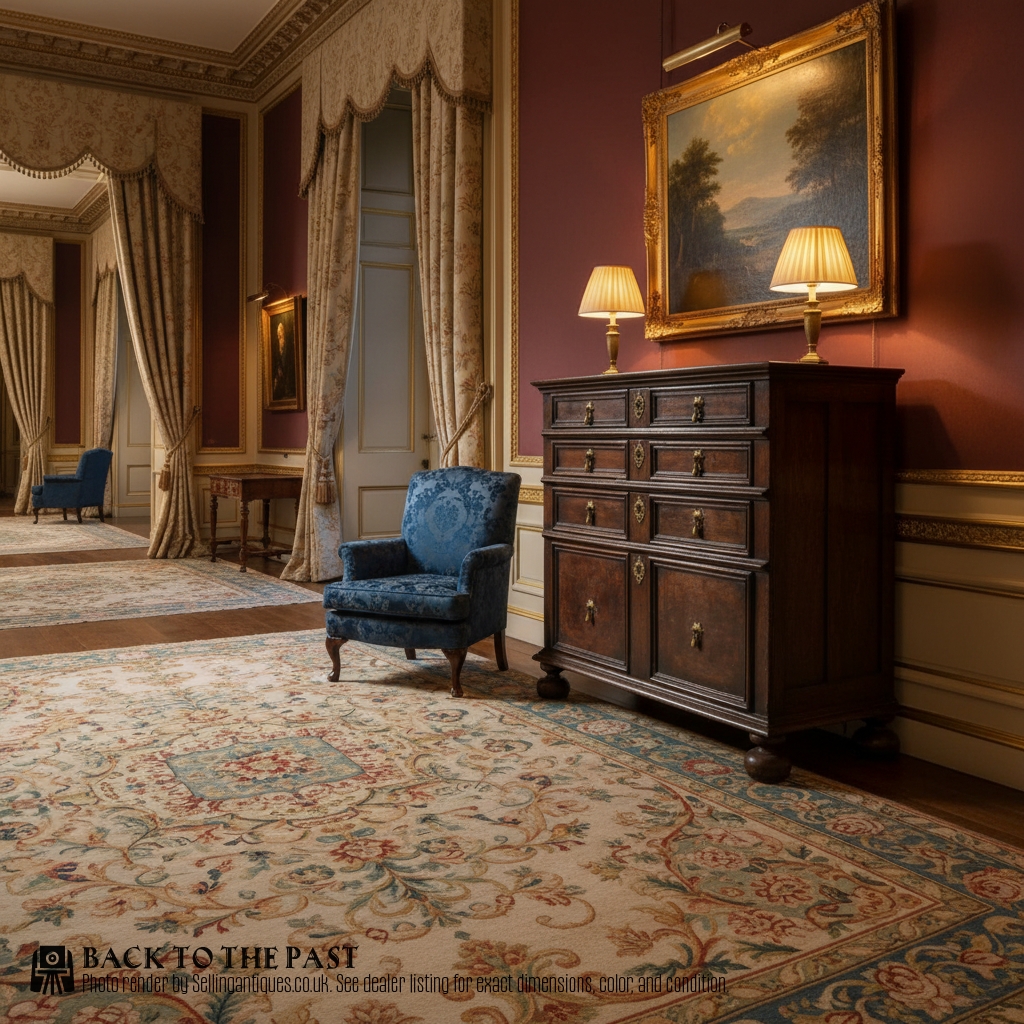
Construction and Materials
Makers utilised solid timber, primarily oak, supplemented by fruitwood inlay for decorative contrast on drawer fronts and panels. Brass handles and escutcheons were fitted to secure the drawers and aid operation.
Joinery methods rely on traditional framing and panel construction, often divided into two parts on seventeenth-century examples. Surfaces received hand finishing that developed patination over generations of use.
Retail Price Guide 2026
Typical UK retail prices for period oak chest drawers, calculated from the Sellingantiques database of over a million retail prices indexed since 2003. This retail price guide relies exclusively on Sellingantiques data; no external sources or auction records are used, so the figures do not describe the wider market.
The documented pieces span the 17th century through the Georgian era, incorporating oak, brass, and fruitwood inlay.
Judging Quality
Proportion and scale dictate the desirability of a piece, with diminutive or dwarf examples commanding particular attention from collectors. The crispness of geometric moulding and the survival of original brass hardware elevate the stature of early examples.
Surface patination plays a central role in valuation, where untouched timber surfaces and faded patinas indicate genuine age and minimal intervention. The integration of fruitwood inlay and the stability of the timber carcass demonstrate superior cabinet-making.
The Period Oak Chest Drawers Glossary
- Patina
- The surface sheen and colour developed by timber over centuries of handling, exposure, and polishing. It serves as a primary indicator of age and authenticity.
- Geometric moulding
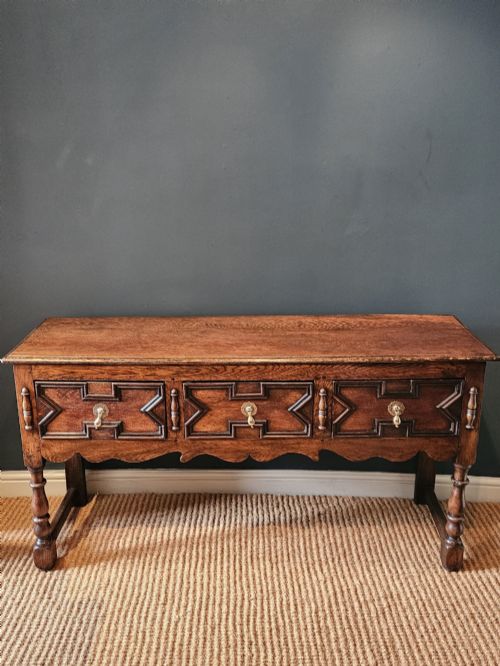
- Raised wooden mouldings applied in rectilinear or polygonal patterns to drawer fronts. This technique is typical of seventeenth-century joinery.
- Chest on chest
- A tall storage unit comprising a smaller chest stacked directly upon a larger base chest. This form emerges during the eighteenth century.
- Dwarf chest
- A low-format chest of drawers produced in the eighteenth century. These pieces stand closer to the floor than standard bedroom chests.
- Escutcheon
- A protective plate surrounding a keyhole, usually cast in brass. It prevents the timber around the lock from wearing down.
Frequently Asked Questions
How do I date a period oak chest?
Dating relies on observing construction methods, hardware types, and stylistic details such as geometric mouldings or bracket feet. Seventeenth-century pieces often utilise two-part frames, whereas eighteenth-century examples lean towards cleaner Georgian proportions.
Changes in drawer linings, backboards, and handles also provide clear chronological markers for the transition from the Stuart eras into the Georgian period.
What is a dwarf chest of drawers?
A dwarf chest is a lower, more compact version of the standard bedroom storage unit. These pieces were built with shallower proportions during the eighteenth century.
Their reduced height makes them adaptable for placement in smaller rooms or hallways while retaining standard storage capacity.
Are these chests suitable for daily bedroom use?
These pieces were originally built for domestic chambers and remain entirely practical for modern clothing storage. The solid timber construction provides durable internal space.
Maintaining stable room humidity protects the historic oak timbers from excessive drying or movement over time.
What does geometric moulding mean on seventeenth-century pieces?
Geometric moulding involves applying small lengths of shaped wood to drawer fronts in repetitive patterns. This decorative approach creates depth and texture on early oak surfaces.
It stands as a defining characteristic of Jacobean and late seventeenth-century cabinet work.