
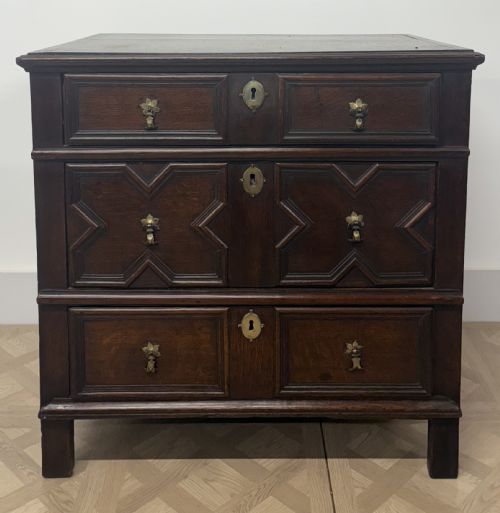
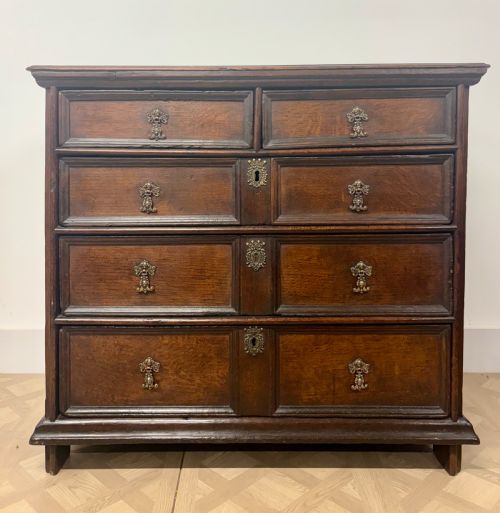
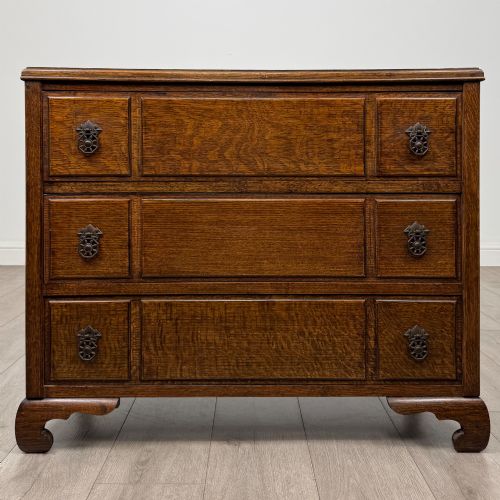
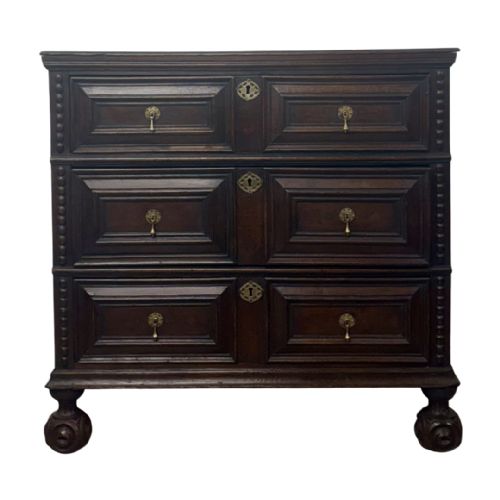
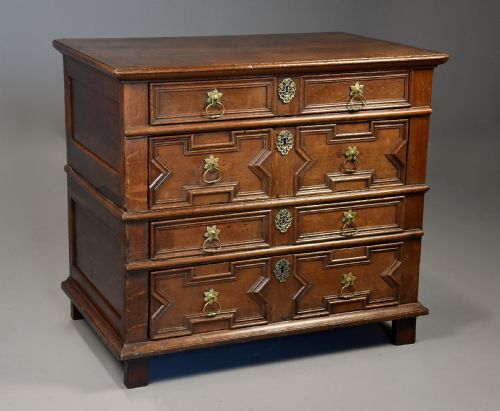
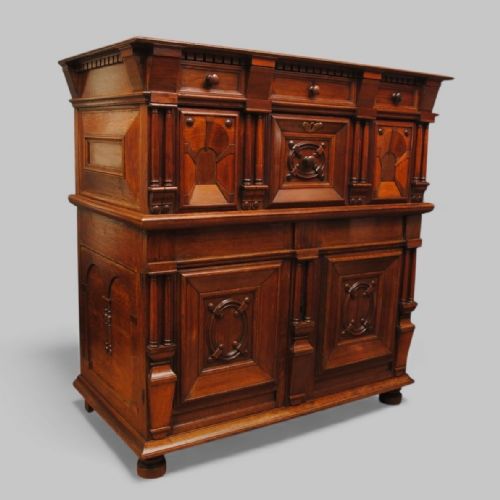


Geometric Panel Oak Chest
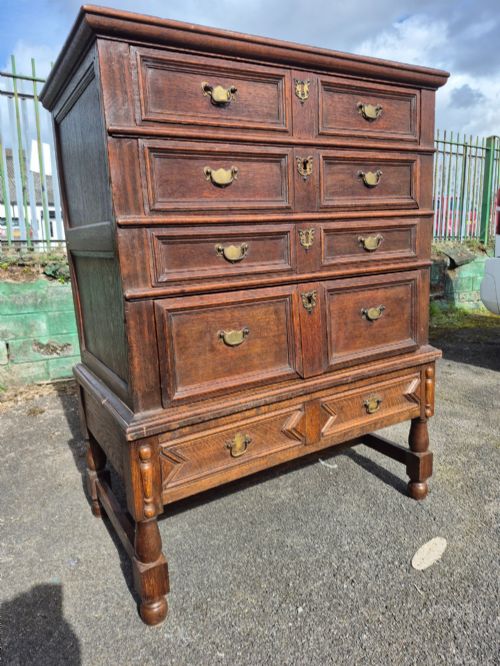
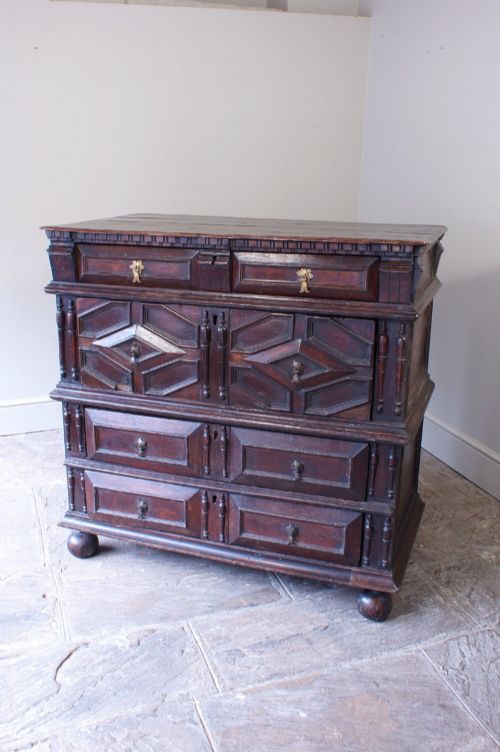
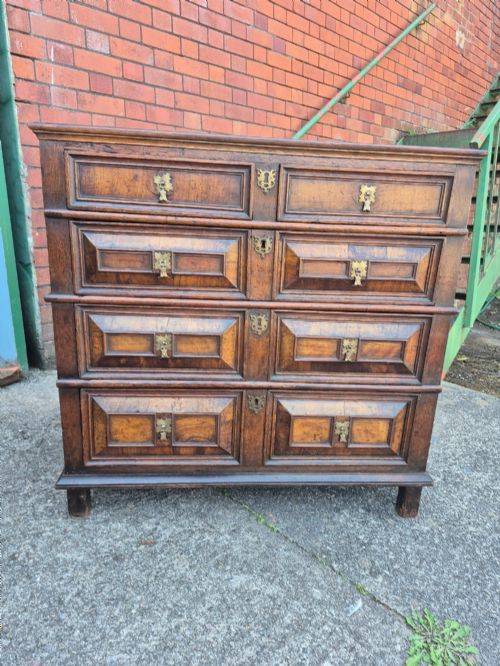
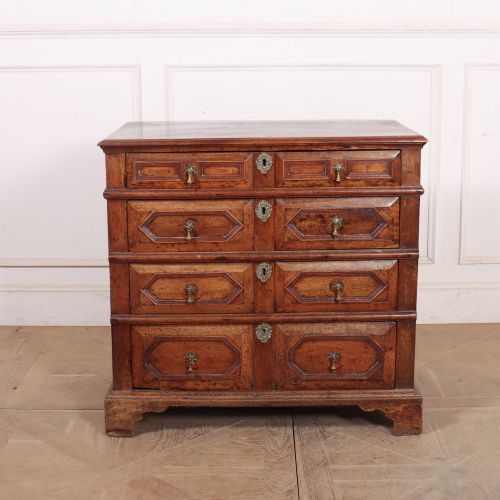
A geometric panel oak chest brings sturdy seventeenth-century timber and intricate surface moulding into a room.
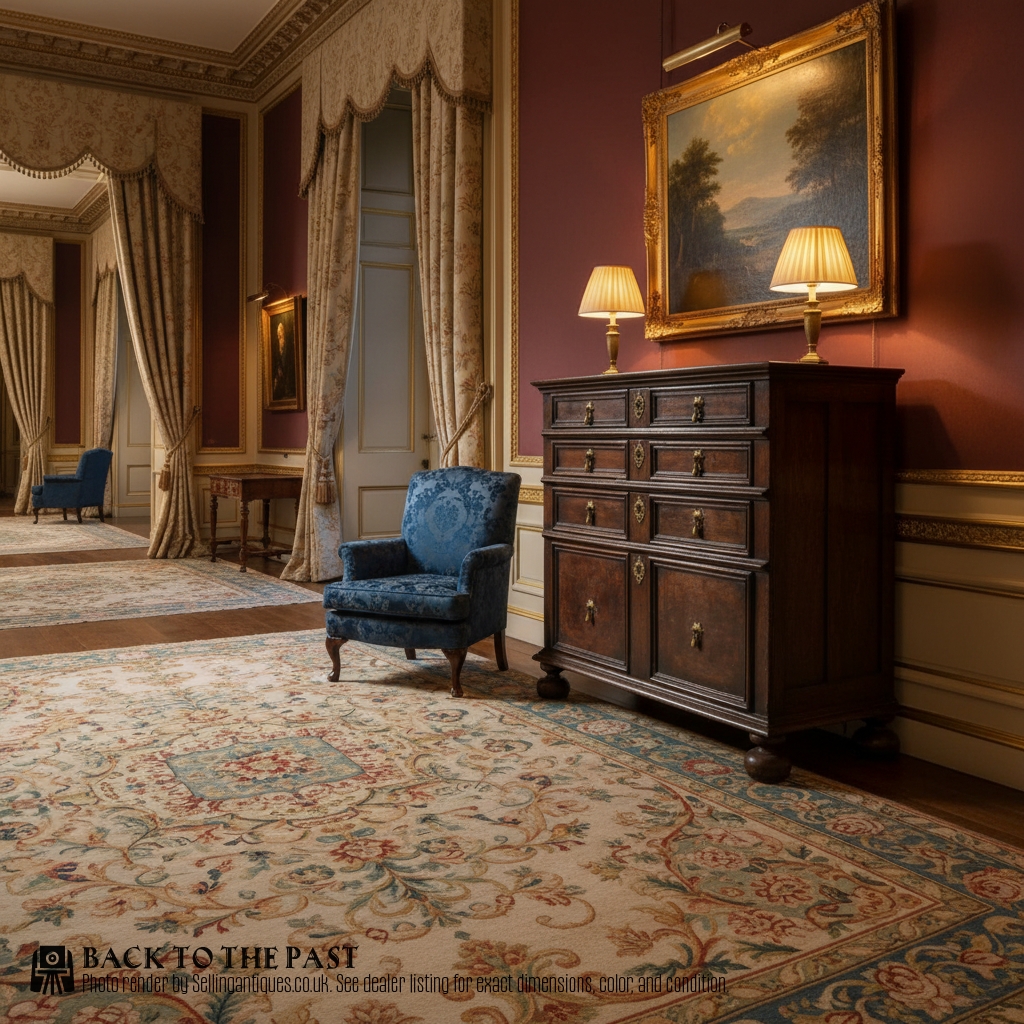
Geometric Panel Oak Chest
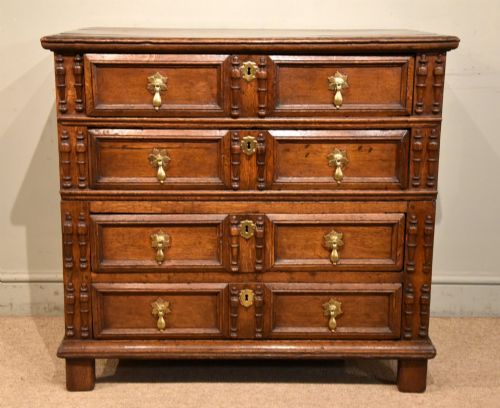
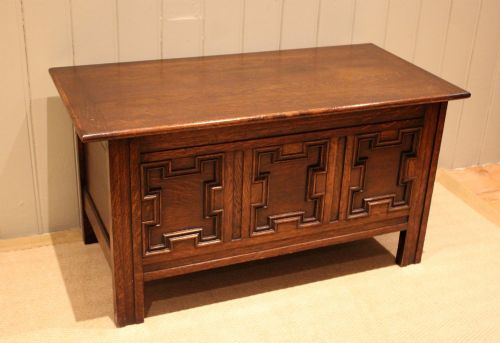
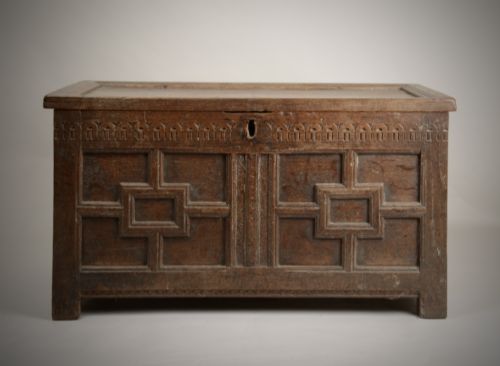
When you search for a geometric panel oak chest, you find seventeenth-century storage furniture built with heavy timber and panelled fronts. These pieces take the form of chests of drawers, coffers, and two-part chests originating from English workshops during the Charles II and William and Mary periods.
The version you are most likely to meet on this page is a late seventeenth-century oak chest of drawers decorated with applied mouldings on the drawer fronts. Many examples show the influence of Jacobean, Carolean, and Georgian styles, alongside later revivals from the twentieth century.
Mule chests and chests on stands also appear, offering lift-top storage or elevated drawer arrangements. The primary material is oak, often enriched with contrasting secondary timbers.
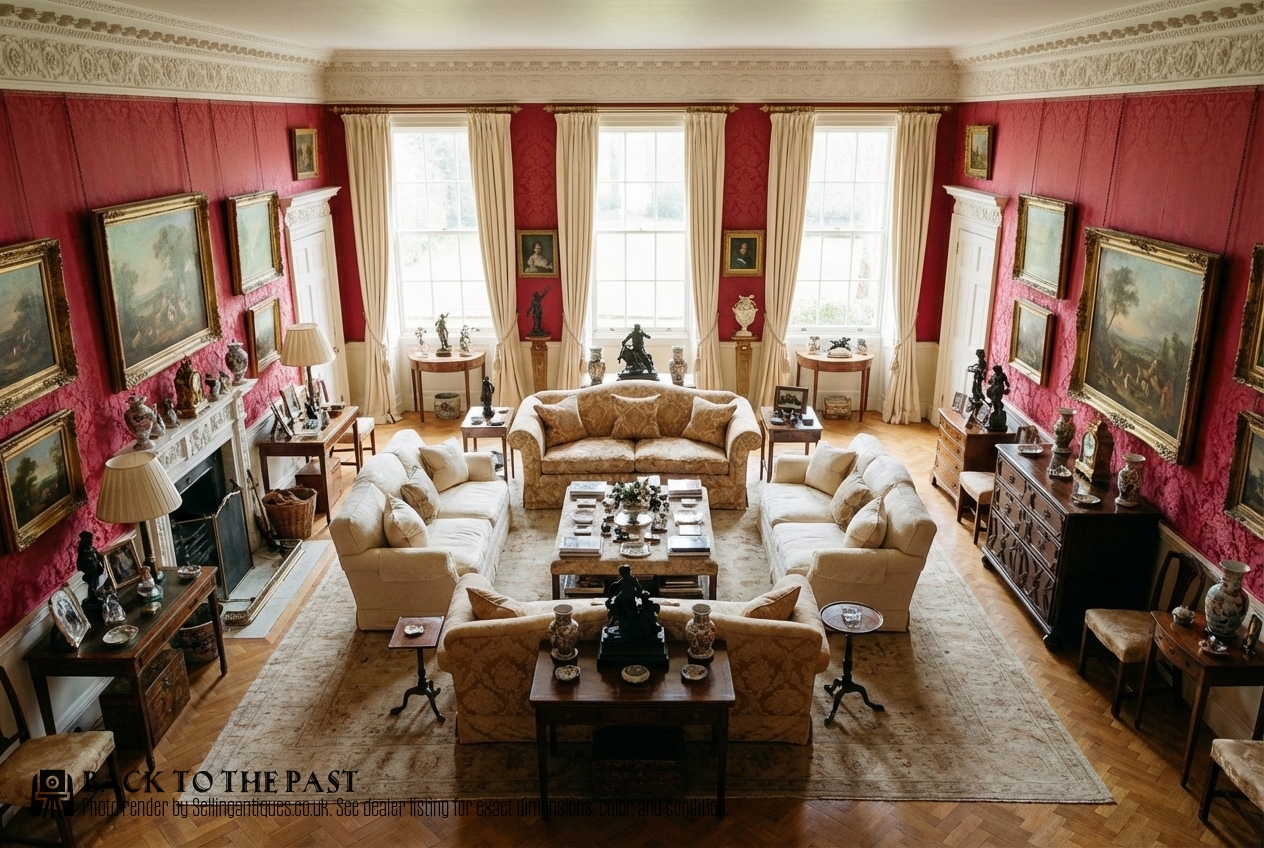
The markers of quality
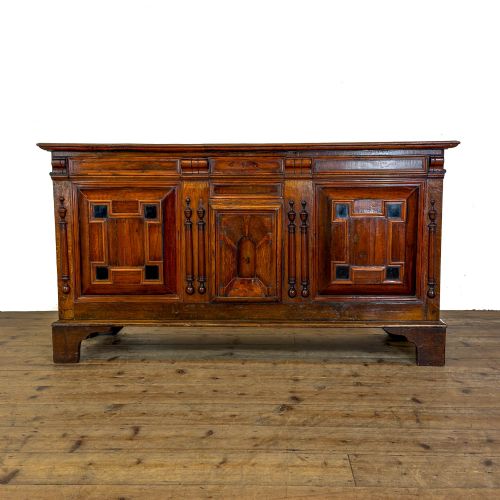
The sophistication of the applied geometric moulding separates standard storage boxes from exceptional examples of cabinetmaking. Crisp mitres, varied timber selections like snakewood or fruitwood, and intricate multi-layered panels indicate a higher tier of production.
The integrity of the original construction and timber surfaces dictates the standing of a piece. Examples retaining their initial two-part proportions, original stands, and unblemished oak patination hold greater historical weight than heavily altered items.
Geometric Panel Oak Chest Retail Price Guide 2026
Typical asking prices for geometric panel oak chest among the pieces listed under this phrase on Sellingantiques today, from the lower quarter to the upper quarter. They describe what is for sale here now, not the wider market.
Listings span the sixteenth to the twentieth centuries, featuring oak alongside walnut, fruitwood, snakewood, and brass.
The Geometric Panel Oak Chest Glossary
- Geometric moulding
- Applied wooden strips shaped in repeating rectilinear patterns on drawer fronts and panels. This technique defined late seventeenth-century decorative joinery.
- Mule chest
- A storage chest featuring one or more drawers beneath the main lift-top compartment. It bridges the design gap between a traditional coffer and a chest of drawers.
- Chest on stand
- A case piece elevated on a separate frame with legs. This form lifts the storage drawers off the floor.
- Ebonised wood
- Timber treated with a chemical stain or dye to imitate ebony. Cabinetmakers used this dark material to create strong visual contrast against pale oak.
- Patina
- The surface sheen and colour developed by aged wood through handling, waxing, and exposure to light over centuries.
Geometric Panel Oak Chest: Frequently Asked Questions
What is a geometric panel oak chest?
A geometric panel oak chest is a sturdy seventeenth-century storage piece featuring applied wooden mouldings arranged in patterns on the front. These items include chests of drawers and coffers built primarily from oak.
Craftsmen often added contrasting woods like walnut and fruitwood to the geometric designs. They served domestic storage needs in English homes.
How do I date a geometric chest?
Dating relies on construction methods, timber choice, and hardware styles. Seventeenth-century examples often feature hand-split oak, pegged joints, and applied geometric mouldings.
Later revival pieces from the twentieth century show different interior construction and machine-cut timber. Examining the backboards and drawer linings helps clarify the age.
Where were these chests made?
These chests originated in English workshops during the seventeenth century and later periods. Joiners used native oak supplemented by imported or specialty decorative woods.
Regional cabinetmakers adapted metropolitan styles for local households. Surviving pieces reflect the changing tastes from the Elizabethan era through to the William and Mary period.
How do I care for antique oak?
Care for antique oak involves maintaining stable humidity and temperature levels in the room. Direct sunlight and heat sources cause the timber to dry out and split.
Applying a traditional beeswax polish preserves the surface sheen. Avoid modern silicone sprays that damage the historic finish.