
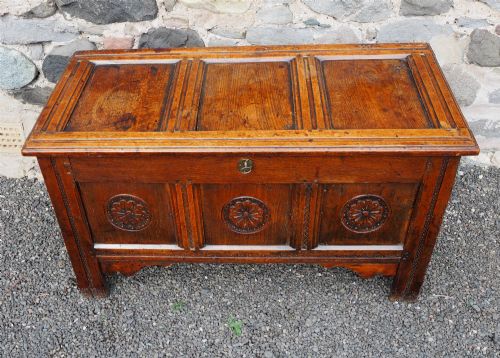
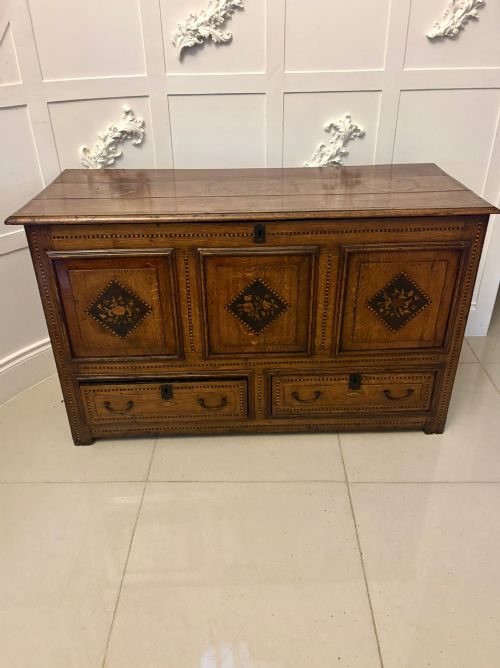

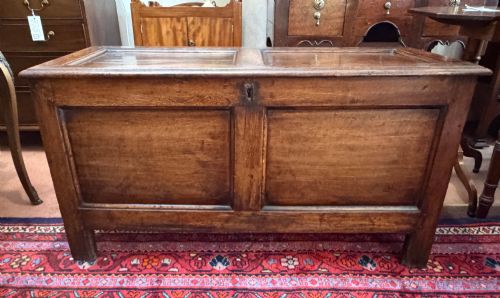
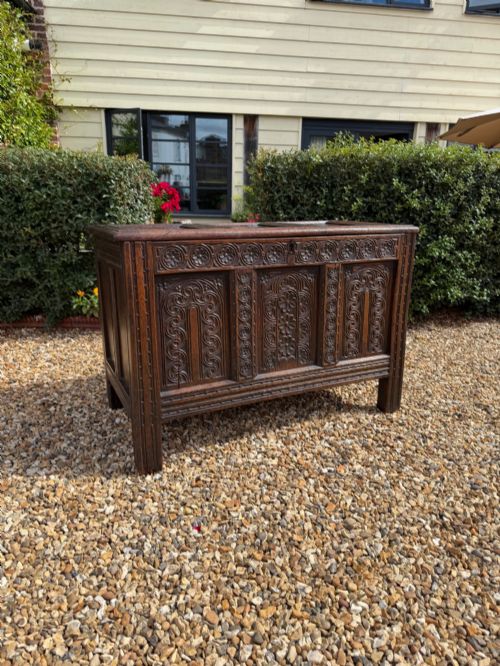
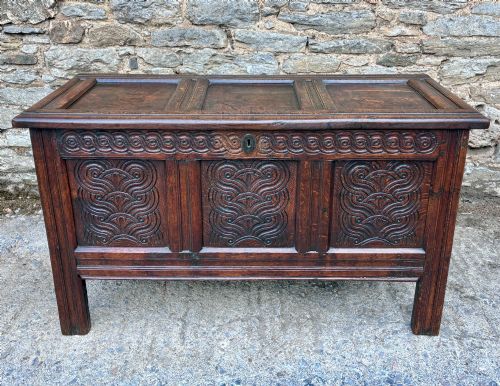
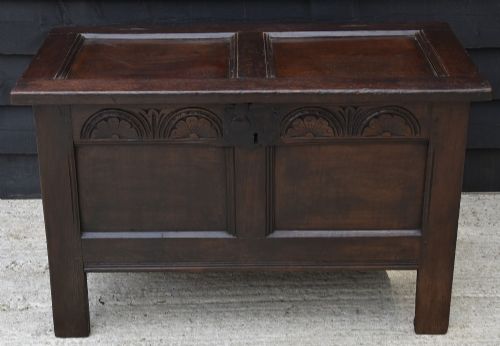
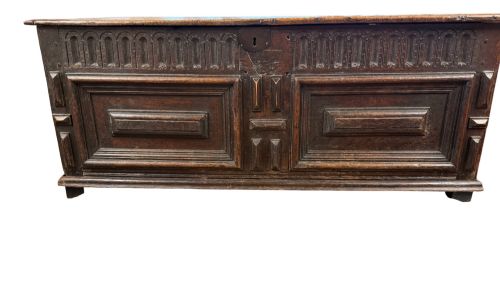
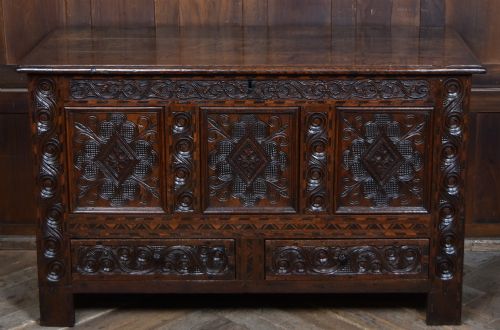
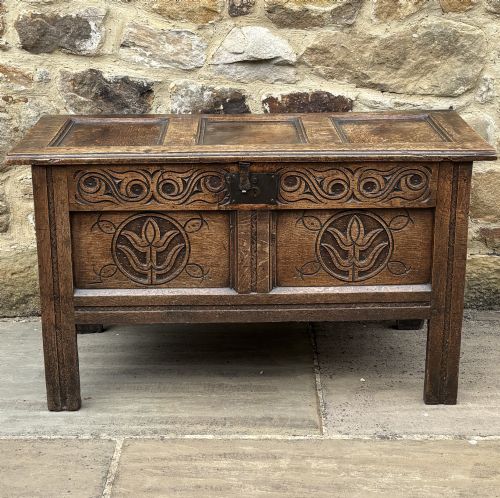
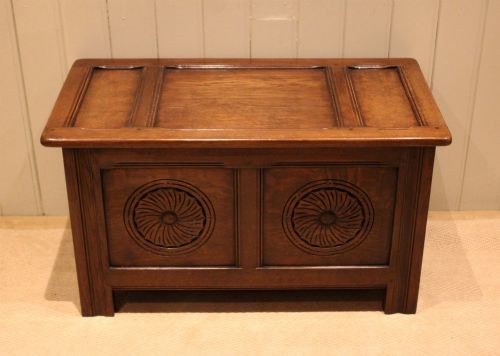
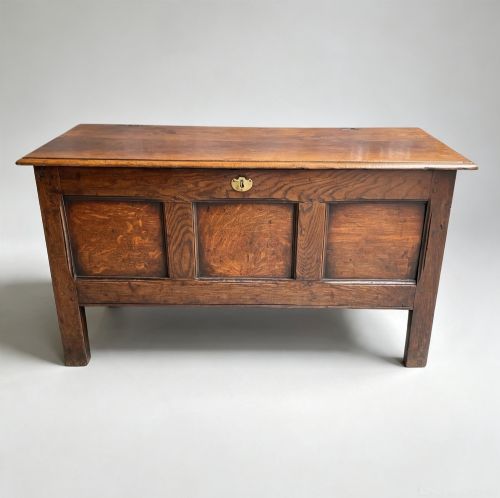
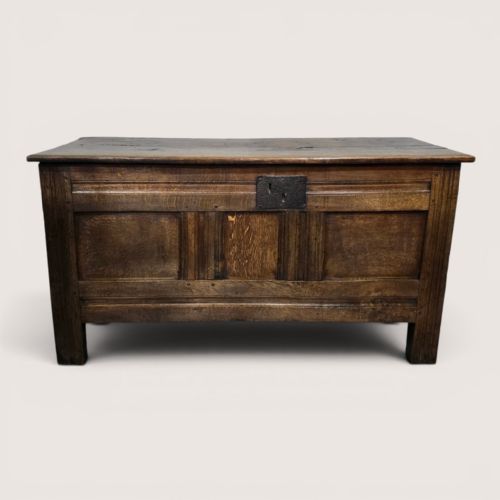
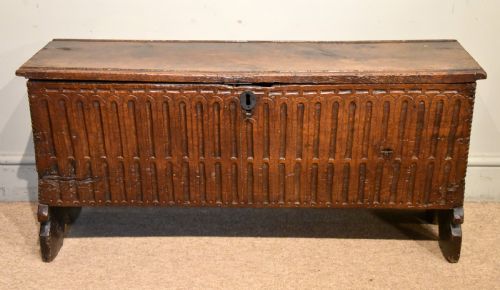
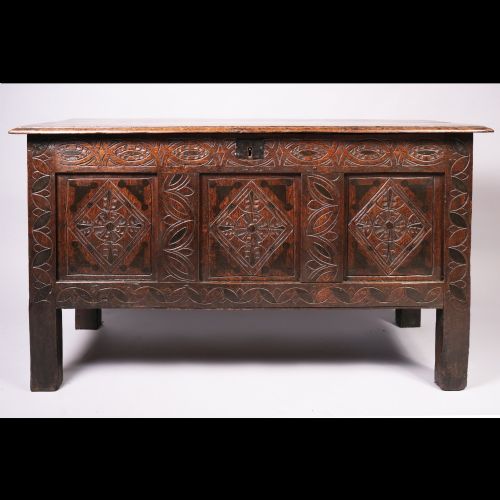
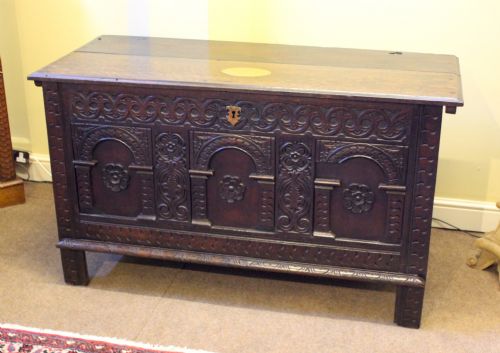
Period Oak Mule Chest
These period oak mule chest examples combine sturdy storage with useful drawers, offering a practical anchor for traditional interiors.
What a period oak mule chest is
When you search for a period oak mule chest, you encounter sturdy storage furniture that combines a deep coffer compartment with one or more lower drawers. These pieces date from the seventeenth century through the Georgian era, encompassing styles such as Jacobean, Queen Anne, and William and Mary.
The versions most commonly met on this page span seventeenth-century origins and eighteenth-century Georgian designs, including regional variations like Lancashire and Dorset forms. Some examples feature four-panel fronts or marriage inscriptions, while others incorporate cross-banding in mahogany.
As practical household furniture, these mule chests served generations before entering the antiques market. Their form reflects the evolution of domestic storage, bridging the gap between simple boarded coffers and fitted drawer chests.
How they were made
Cabinet makers constructed these pieces primarily from solid timber, utilising oak for the main structure and panels. Iron and brass hardware, including hinges and drawer pulls, provided the necessary functional and decorative metalwork.
Joinery techniques ranged from early joined frameworks with panelled construction to later veneered and cross-banded details in mahogany. Surfaces often display natural bleaching or historic patination accrued over centuries of use.
Retail Price Guide 2026
Typical UK retail prices for period oak mule chest, calculated from the Sellingantiques database of over a million retail prices indexed since 2003. This retail price guide relies exclusively on Sellingantiques data; no external sources or auction records are used, so the figures do not describe the wider market.
One recorded seventeenth-century chest bears the initials RF and the year 1653, commemorating the exact year Cromwell was appointed.
What varies in quality
The distinction between standard country pieces and finer examples rests in the crispness of the joinery and the selection of timber. Well-proportioned panels and restrained decorative carving elevate a piece above utilitarian workshops.
Original hardware and untouched surface patination separate authentic survivals from heavily restored examples. Regional flourishes, such as intricate cross-banding or inscribed dates, add distinct character to individual chests.
English Country Workshops·Lancashire Cabinet Makers
The Period Oak Mule Chest Glossary
- Mule chest
- A traditional storage chest featuring one or more drawers built beneath the main lifting lid compartment. This hybrid form emerged when makers realised the inconvenience of unloading a deep coffer to reach items at the bottom.
- Cofer
- An early box or chest used for storing valuables, linens, and documents before dedicated wardrobes became common. These often formed the basis for later mule chest developments.
- Cross-banding
- A decorative border technique where strips of veneer are laid perpendicular to the surrounding grain. This detail frequently appears on Georgian period examples in contrasting timbers like mahogany.
- Panelled construction
- A method of framing timber using stiles and rails to enclose a floating panel, accommodating natural wood movement. This technique defines the sturdy construction of seventeenth-century and eighteenth-century furniture.
Frequently Asked Questions
What is a period oak mule chest?
A period oak mule chest is a traditional storage piece that combines a top-opening coffer with one or more drawers built into the base.
These pieces date from the seventeenth and eighteenth centuries, reflecting styles from the Jacobean era through to the Georgian period.
How were mule chests used historically?
Households utilised these chests for storing household linens, blankets, and personal garments in bedrooms and living spaces.
The addition of bottom drawers allowed owners to access frequently used items without disturbing the contents of the main upper compartment.
How do I tell seventeenth-century chests apart from Georgian ones?
Seventeenth-century examples typically display heavier joined oak construction, geometric panel moulding, and occasionally carved initials or dates.
Georgian pieces often incorporate softer proportions, mahogany cross-banding, and smoother drawer arrangements reflecting changing interior fashions.
Where were these chests made?
Craftsmen produced these chests across various English regions, with notable regional variants originating from Lancashire and Dorset.
Local timber availability and prevailing rural workshop traditions heavily influenced their construction and decorative details.
How do I live with an antique mule chest?
Position the chest away from direct heat sources and radiators to prevent the solid oak panels from drying out and splitting over time.
Maintain stable indoor humidity levels and occasionally treat the timber with appropriate traditional wax to preserve the historic surface patination.