
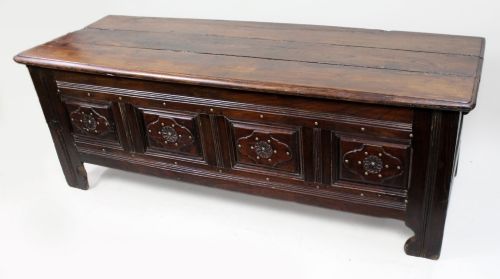
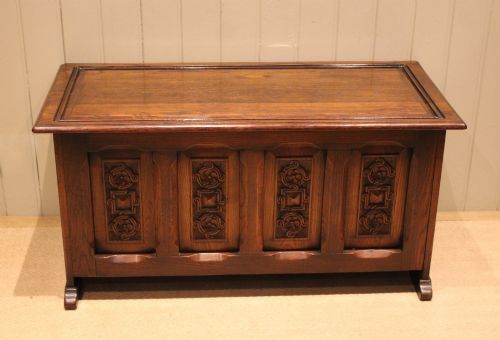
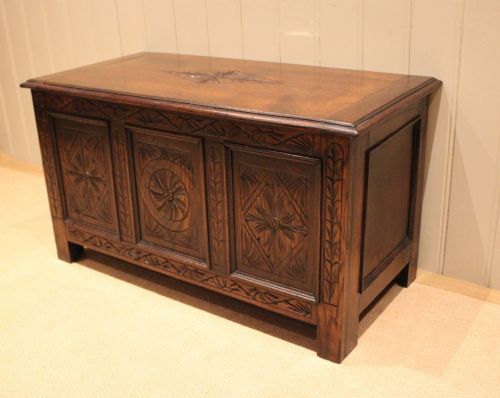
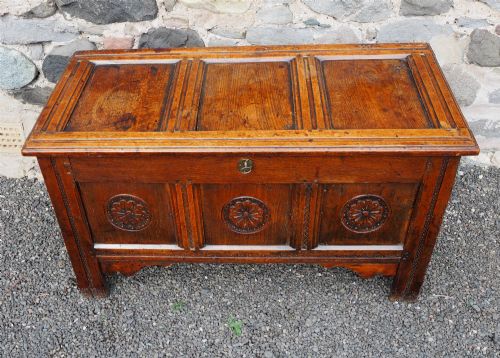


Carved Panel Oak Coffer
A carved panel oak coffer brings centuries of domestic history into a room while offering sturdy, practical storage for everyday use.

Carved Panel Oak Coffer
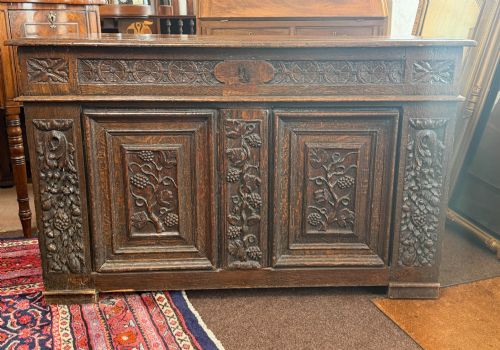
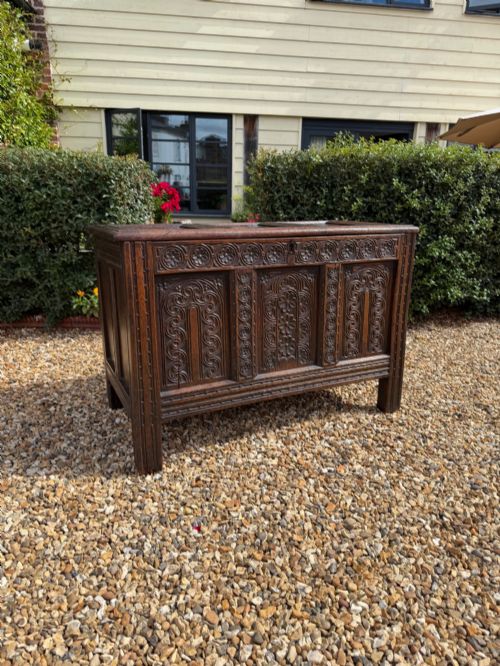
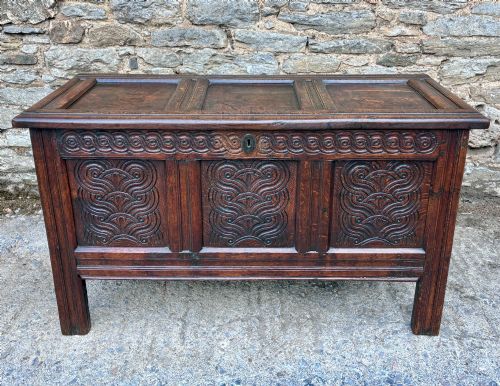
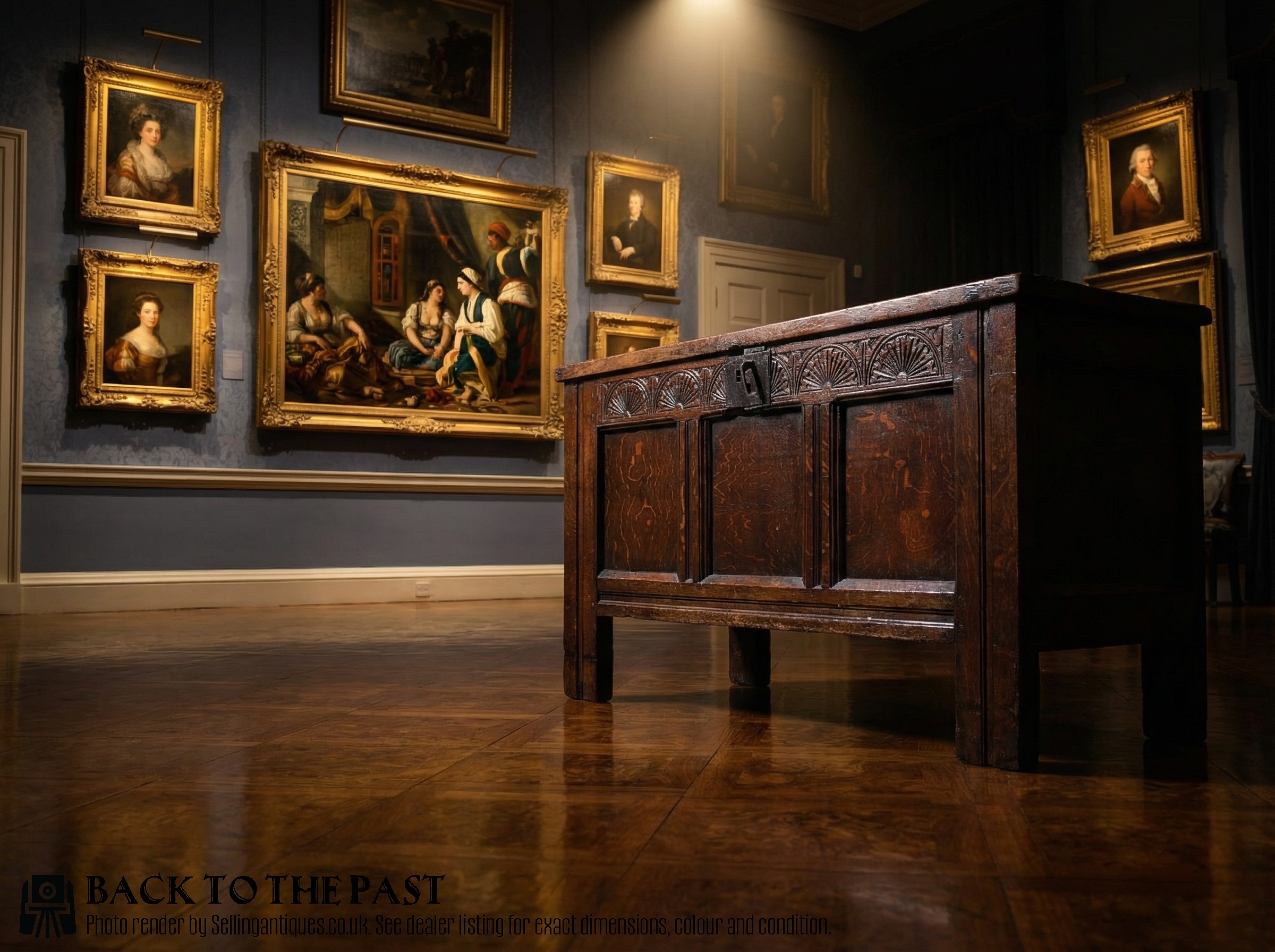
A carved panel oak coffer is a heavy wooden storage chest built primarily to hold linens, valuables, and household goods in early homes. These pieces date from the sixteenth and seventeenth centuries through to later revival periods, displaying styles such as Jacobean, Georgian, and French provincial. The examples found here range from robust country chests with simple geometric decoration to refined panelled boxes featuring intricate strapwork and floral motifs.
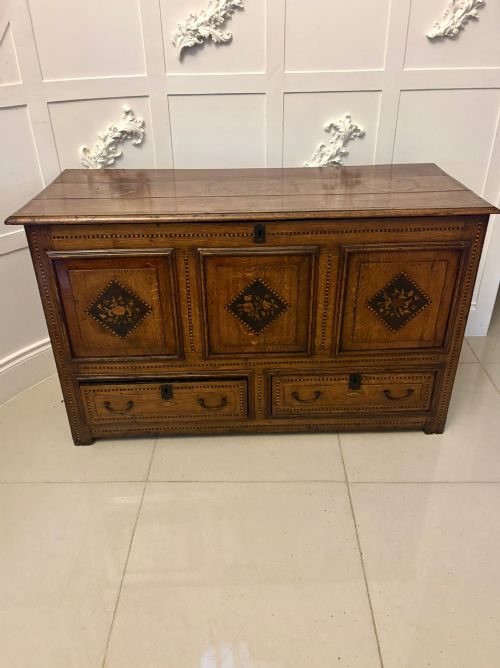
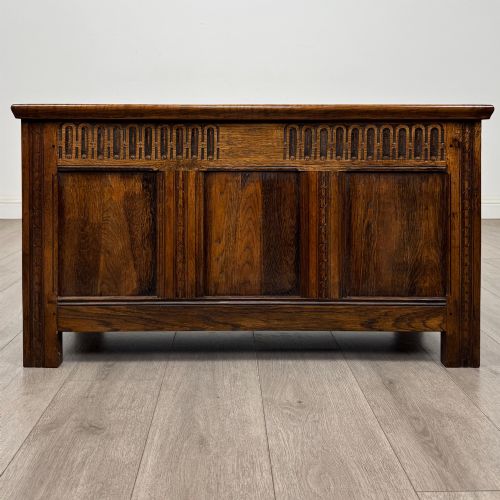
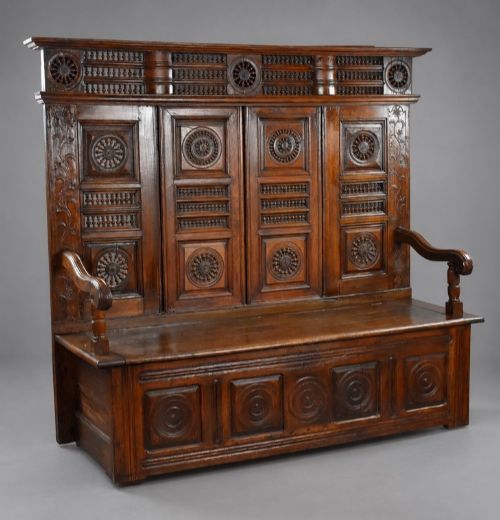
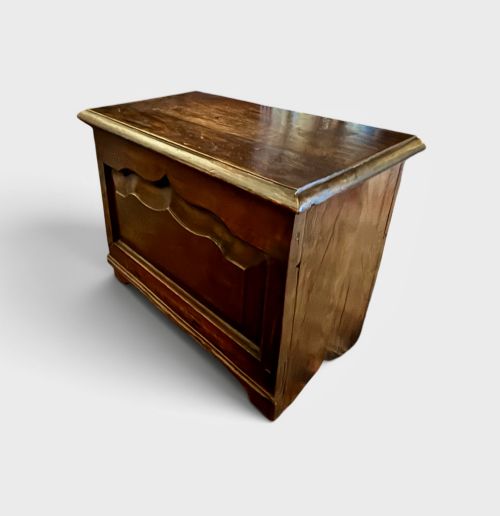
Most items encountered on this page belong to the seventeenth century or the eighteenth century, constructed with framed panel fronts rather than solid planks. Alongside standard blanket boxes, variations include mule chests equipped with lower drawers, high-back settle benches, and smaller proportioned coffers designed for compact spaces. Oak remains the defining material across the selection, often accompanied by secondary timbers like pine.
Buyers seeking a carved panel oak coffer will notice distinct regional traits, such as Welsh Gower pieces or Yorkshire panels bearing specific dates. While some retain their original hinged lids and interior candleboxes, others show signs of domestic adaptation over generations of use. The core utility of the piece endures, serving equally well as a coffee table or hallway storage box in modern interiors.
What varies in quality
The standard of carving distinguishes superior pieces, with crisp, deep relief work executed by skilled hands standing far above mechanical or shallow later additions. The integrity of the timber frame and the survival of original panelled lids also dictate value, as many lids suffer replacement or heavy alteration over time. Proportion and balance play a major role, with smaller, untouched proportions generally representing more desirable commissions.
Surface patination and originality of fittings separate honest domestic survivors from heavily restored examples. Retaining internal components like original candleboxes and untrimmed feet preserves the historical completeness of the coffer. The depth of colour achieved through centuries of wax and friction remains a reliable indicator of untainted age.
Carved Panel Oak Coffer Retail Price Guide 2026
Typical asking prices for carved panel oak coffer among the pieces listed under this phrase on Sellingantiques today, from the lower quarter to the upper quarter. They describe what is for sale here now, not the wider market.
Listings feature solid oak and pine constructions spanning the sixteenth to the twentieth centuries, including regional Welsh and Yorkshire variants.
The Carved Panel Oak Coffer Glossary
- Cofer
- An early term for a strongbox or chest used for transporting valuables or storing household textiles.
- Mule chest
- A storage chest featuring one or more drawers beneath the main lift-top compartment, combining the functions of a coffer and a small chest of drawers.
- Strapwork
- A carved decorative motif resembling interlaced leather bands or ribbons, frequently seen on seventeenth-century panels.
- Linenfold
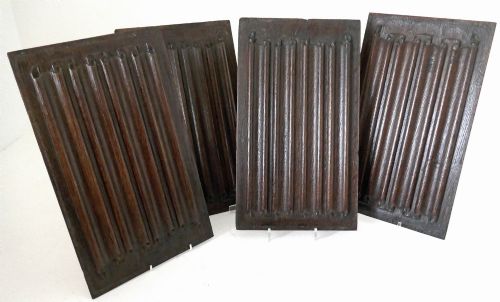
- A style of wood carving that mimics folded fabric or linen napkins, popular on sixteenth-century panels.
- Lozenge
- A diamond-shaped geometric motif commonly carved into the central panels of early oak furniture.
- Candlebox
- A small internal compartment built into one side of a chest to hold candles safely away from linens.
Carved Panel Oak Coffer: Frequently Asked Questions
What were oak coffers originally used for?
Households used coffers to store valuable textiles, woollens, and legal documents securely away from damp stone floors. Because they were heavy and fitted with sturdy locks, they also served as strongboxes for family wealth.
Over time, their flat lids allowed them to double as benches, tables, or sleeping surfaces for servants within the great hall.
How can I tell a seventeenth-century coffer from a later revival piece?
Seventeenth-century coffers display hand-cut joinery secured with irregular wooden pegs, alongside distinct tool marks left by pit saws on the unexposed timber boards. The timber itself shows deep oxidation and shrinkage consistent with four hundred years of age.
Revival pieces made in the nineteenth or twentieth centuries often feature overly uniform machine-sawn components and cleaner, less natural surface wear.
Are these chests suitable for modern living rooms?
Their low profile and sturdy construction make them ideal for use as coffee tables while providing hidden storage for blankets and board games. Placing them in a hallway creates practical seating alongside boot and shoe storage.
To protect the ancient oak, keep them away from direct heat sources and sudden humidity shifts to prevent timber splitting.
What is the difference between a coffer and a mule chest?
A standard coffer opens only from the top via a hinged lid, requiring items at the bottom to be lifted out first. A mule chest incorporates one or two drawers beneath the main box compartment, allowing easier access to stored garments.
This transitional form appeared as homes demanded more sophisticated storage arrangements during the late seventeenth and eighteenth centuries.