

Antique Oak Bedroom Chest
An antique oak bedroom chest brings solid character and generous storage to a room, ranging from early seventeenth-century carved panels to clean Edwardian lines.
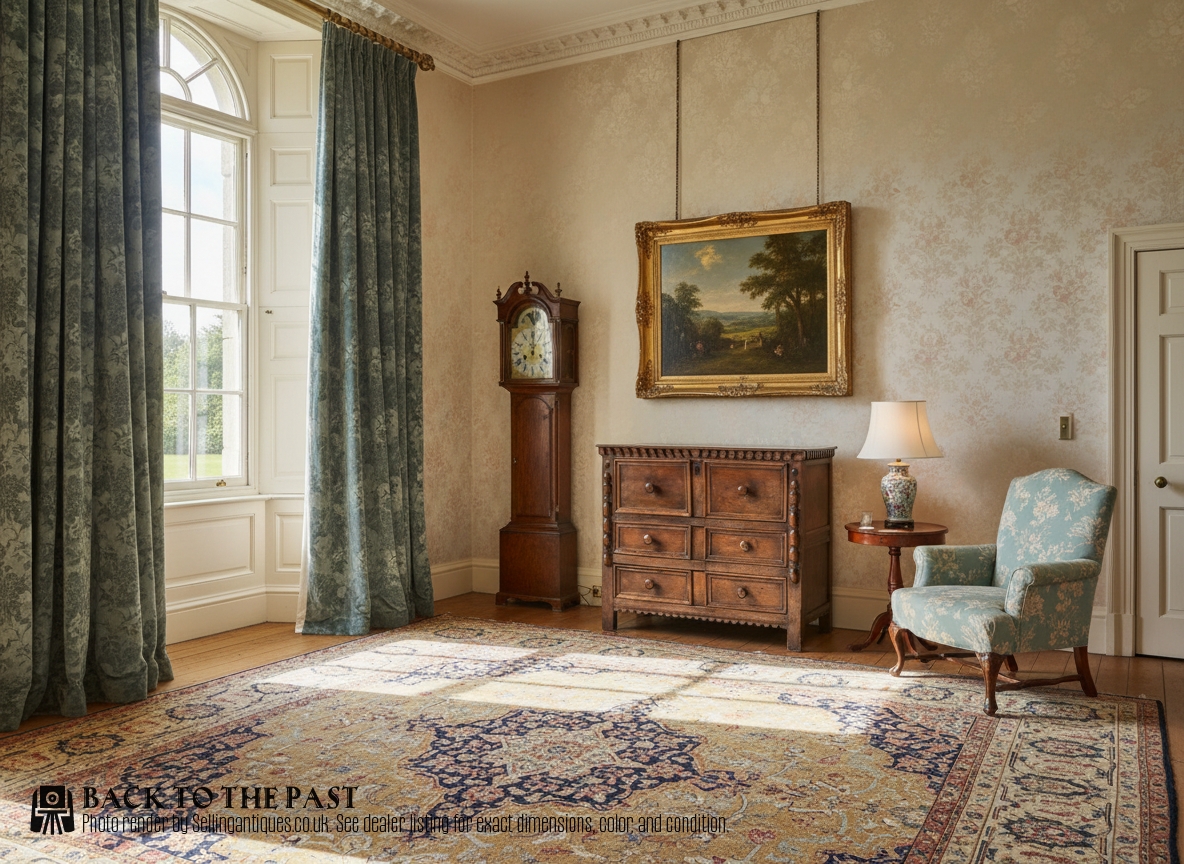
Antique Oak Bedroom Chest
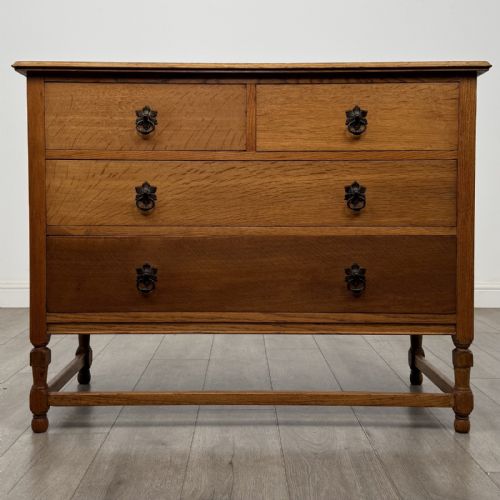
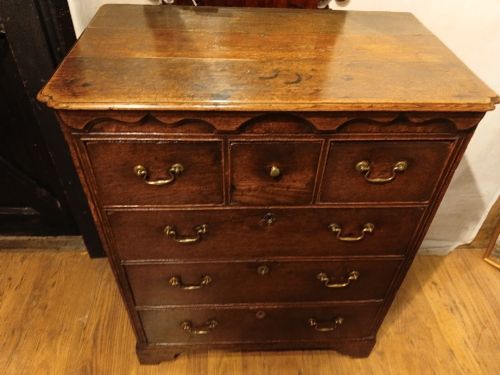
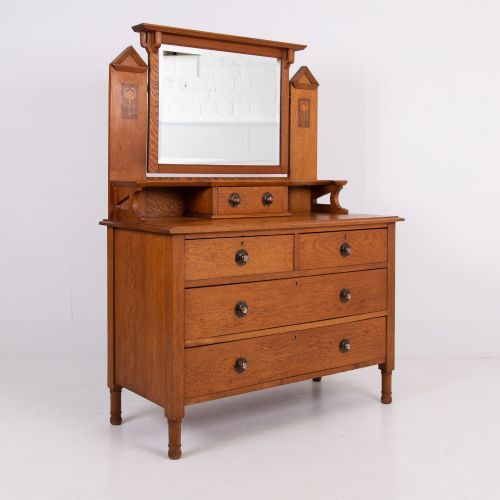
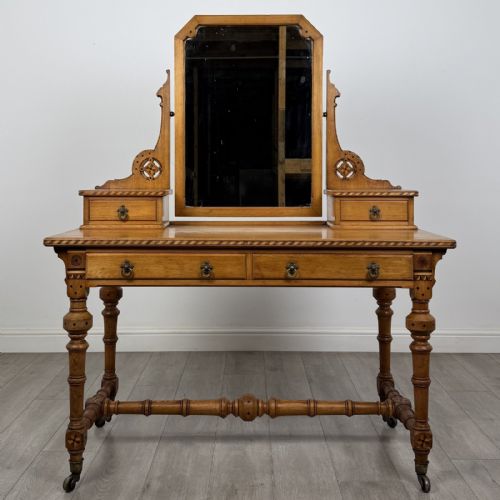
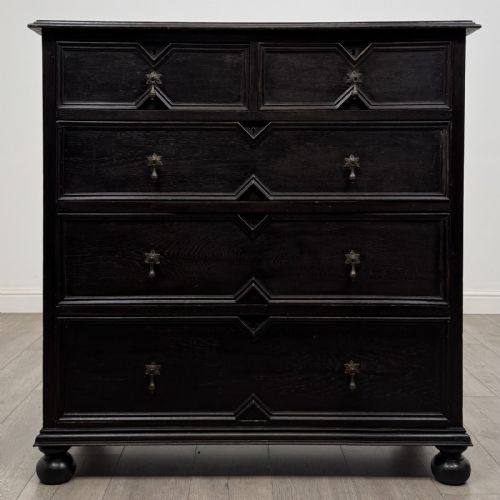
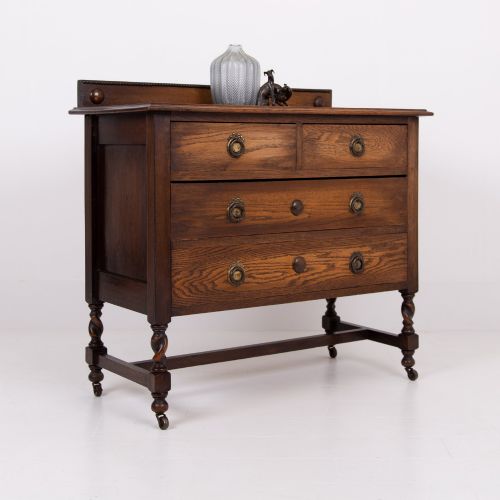
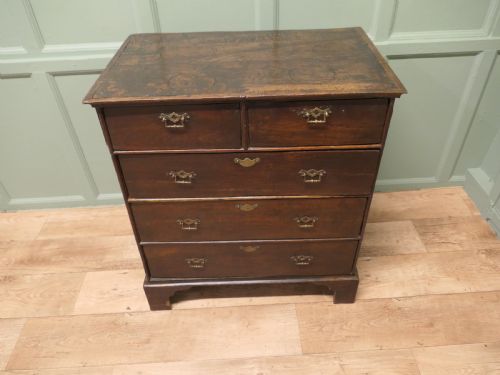
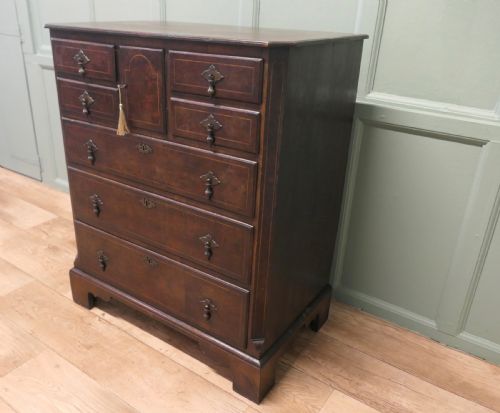
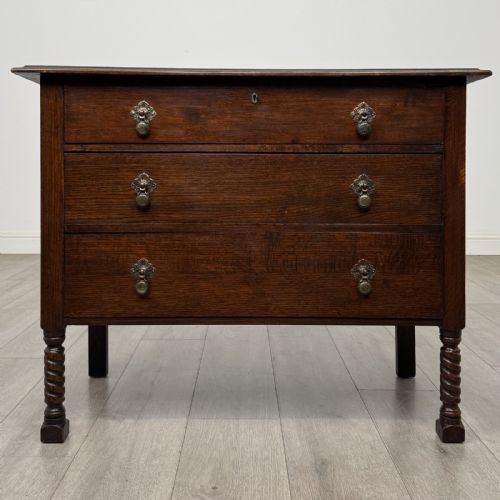
An antique oak bedroom chest serves as a primary storage piece, appearing most frequently on this page in Edwardian and Georgian forms with multiple drawers. Buyers encounter standard straight fronts, tallboys, and occasional crossbanded variations.
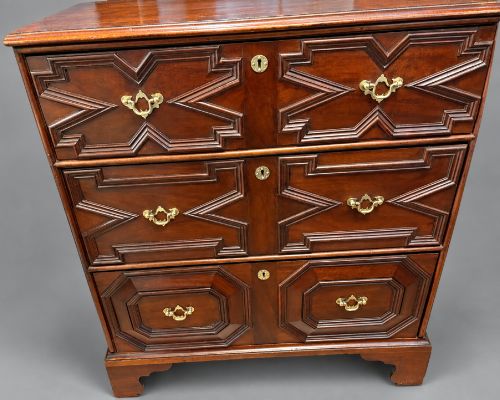
The selection encompasses centuries of domestic furniture, stretching from seventeenth-century Charles II examples to early twentieth-century designs. Pieces vary from small proportioned chamber chests to substantial tall chests and bedroom suites.
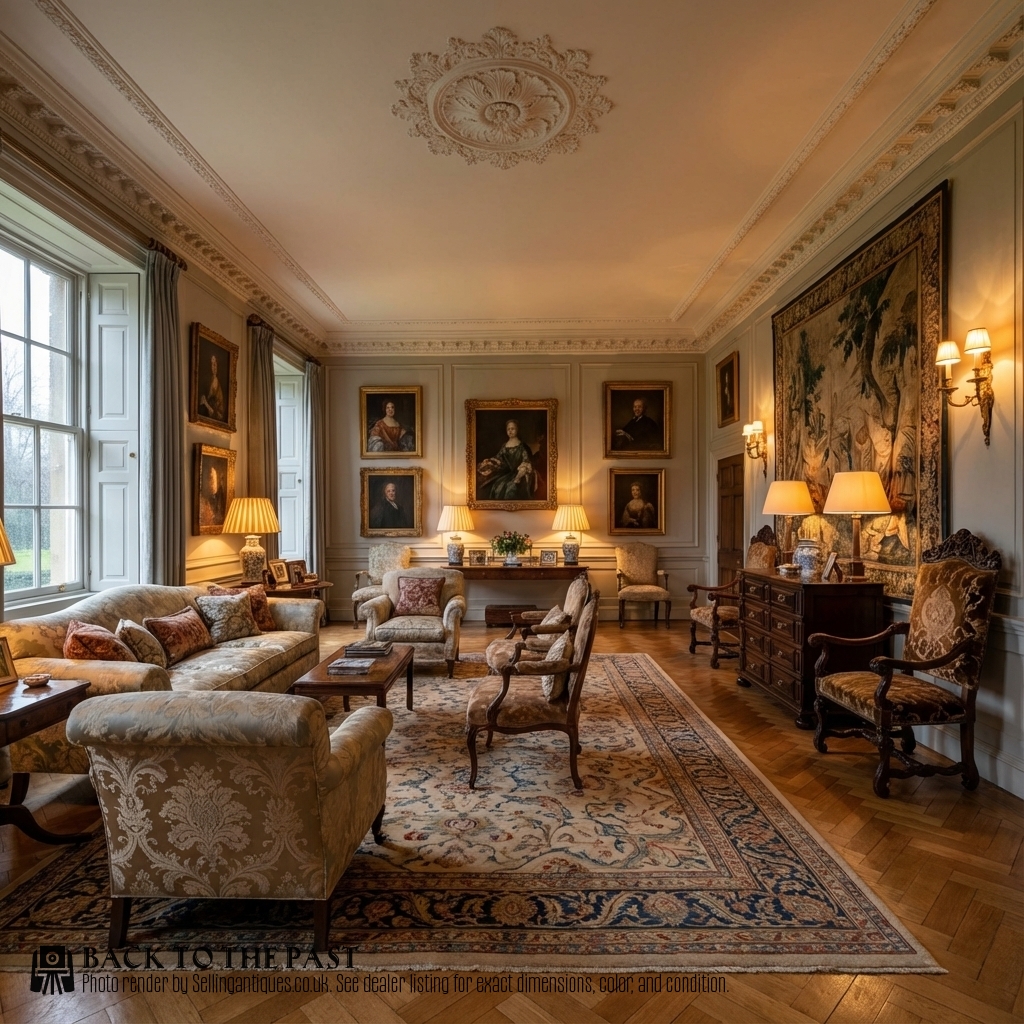
How they were made
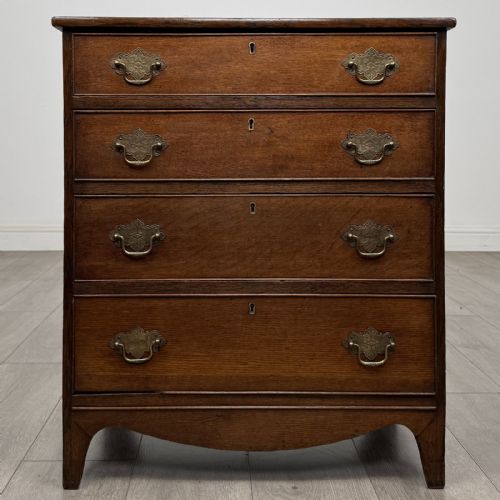
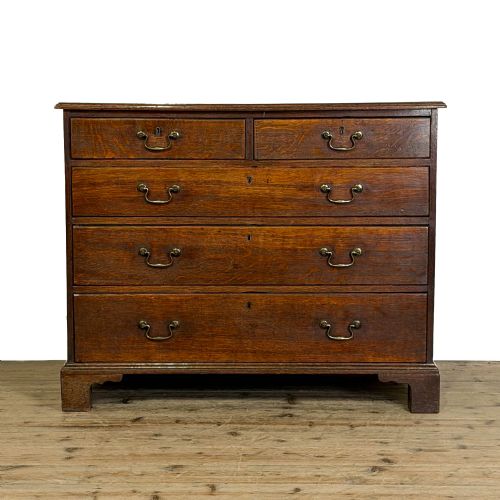
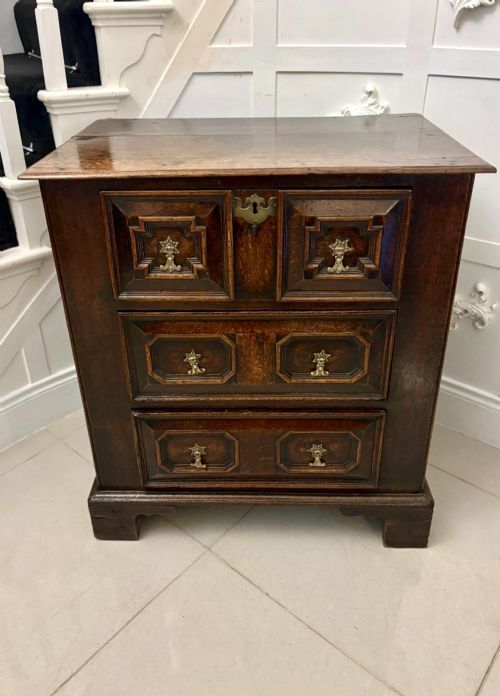
Cabinet makers built these pieces using solid oak, frequently augmented by walnut, mahogany, or fruitwood inlay to create visual contrast on drawer fronts and surfaces. Metal and brass hardware, including original handles, fastened the drawers and added functional detail.
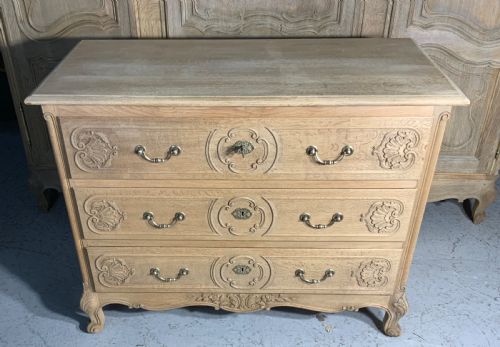
Surface treatments range from natural golden oak and dark period patination to limed finishes and carved embellishments like linenfold or Green Man grotesques. Construction methods evolved from early joined frameworks to later veneered and crossbanded drawer fronts.
Antique Oak Bedroom Chest Retail Price Guide 2026
Typical asking prices for oak bedroom chest among the pieces listed under this phrase on Sellingantiques today, from the lower quarter to the upper quarter. They describe what is for sale here now, not the wider market.
A Victorian green man grotesque stares out from the drawer front, keeping a watchful eye over your spare socks.
What varies in quality
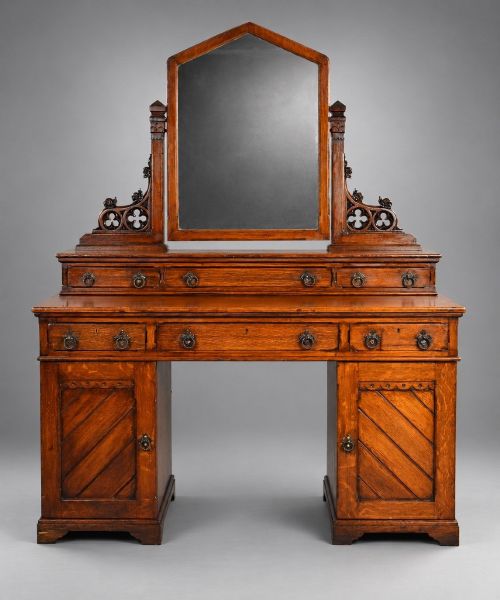
The standard of carving and surface timber sets exceptional examples apart, distinguishing simple country pieces from finely figured golden oak and walnut-banded specimens. Finer items retain original brass handles and crisp detailing on stylistic elements like geometric panels or gothic motifs.
Proportion and period integrity define the tier of a chest, where untouched seventeenth-century surfaces or well-balanced Georgian proportions command greater appreciation than later adaptations. The integration of secondary woods such as mahogany for crossbanding signals higher workshop ambition.
The Antique Oak Bedroom Chest Glossary
- Tallboy
- A tall chest of drawers, often constructed in two sections with a smaller chest stacked upon a larger base.
- Crossbanding
- A border of veneer laid around the perimeter of a drawer front so the grain runs perpendicular to the central panel.
- Linenfold
- A style of carved wooden panelling that resembles folded fabric, frequently seen on Edwardian and earlier panels.
- Limed oak
- A finish applied to wood to create a pale, pickled appearance that highlights the open grain of the oak.
- Commode
- A decorative chest of drawers, often referencing continental European forms found alongside domestic British pieces.
Antique Oak Bedroom Chest: Frequently Asked Questions
How do I date an oak chest?
Dating relies on examining construction techniques, hardware, and timber characteristics. Early pieces utilise pegged frame-and-panel methods, while later Victorian and Edwardian examples show machine-sawn elements and different dovetailing.
Secondary woods and surface patination provide further clues to the era of manufacture. Comparing hardware styles against known periods helps narrow down the decade of creation.
Where should I place an antique chest?
These chests suit bedrooms, hallways, or living spaces where solid wood furniture anchors the room. Keeping them away from direct heat sources and strong sunlight protects the timber and finish.
Allowing adequate clearance ensures drawers open smoothly without obstruction. Their robust construction handles everyday placement in active modern homes.
Are all oak chests British?
While many pieces originate from British workshops, the selection includes continental examples such as French commodes and American items. Regional variations appear in the choice of secondary timbers and carving styles.
Makers across different countries utilised local oak stocks combined with regional aesthetic preferences. Examining decorative motifs reveals whether a piece follows a British or continental tradition.
What is golden oak?
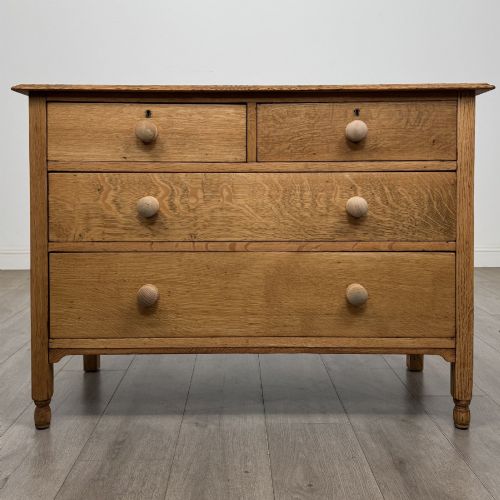
Golden oak describes timber finished to a warm, bright tone that accentuates the natural grain of the wood. This appearance occurs frequently in Edwardian and later twentieth-century pieces.
The lighter shade contrasts with the darker, heavier patination found on seventeenth-century and 18th-century examples. It brings a lighter visual weight to bedroom furniture.