
Vintage Dressing Chest
A vintage dressing chest brings practical surface space and period character into a bedroom, offering a combination of useful drawers and pivoting mirrors.
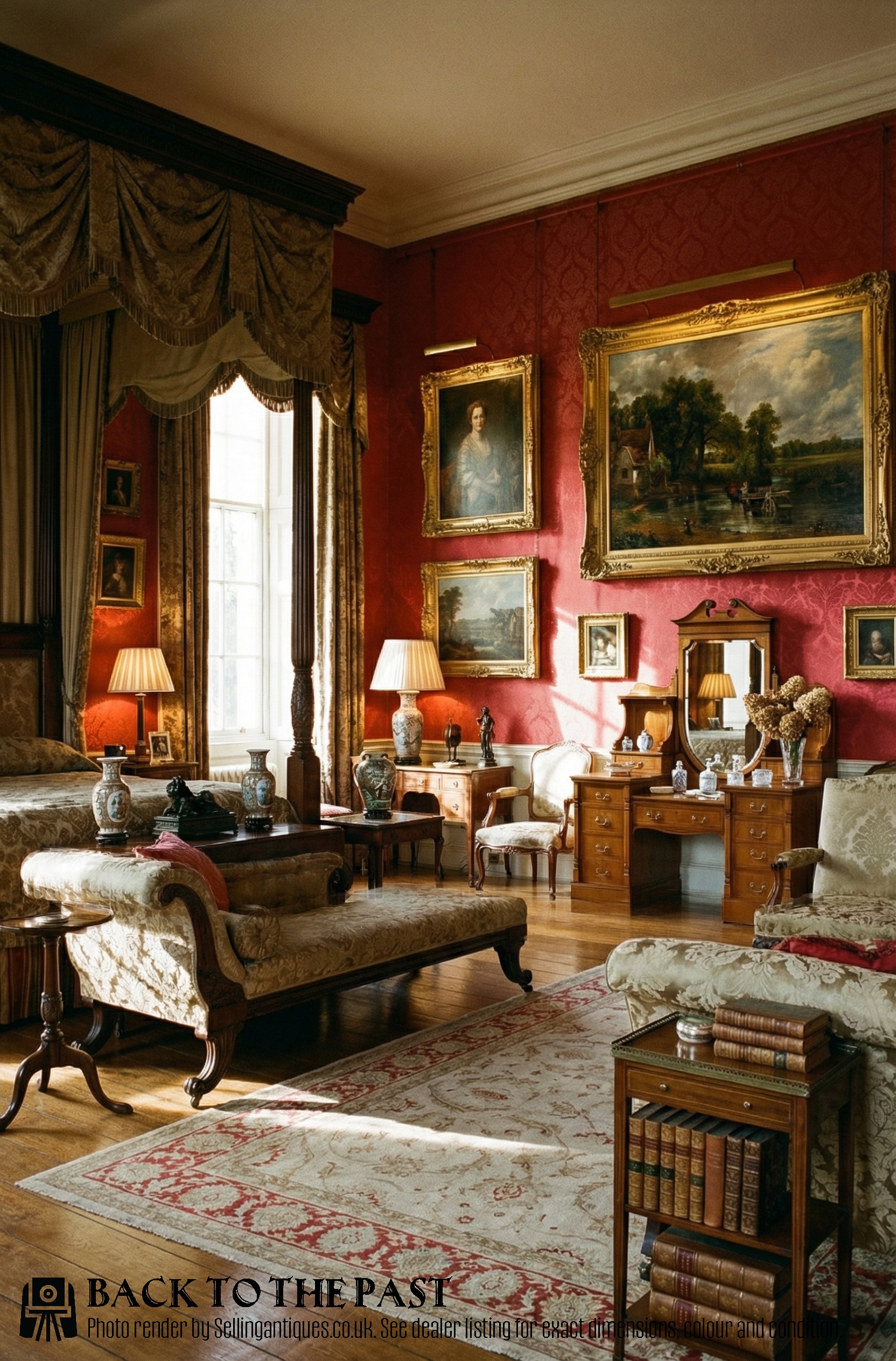
Understanding the vintage dressing chest
A vintage dressing chest bridges the gap between bedroom storage and a dedicated grooming station, uniting timber drawers with adjustable mirror glass. These pieces appear across several distinct historical epochs, spanning the Georgian era through to the 1930s.
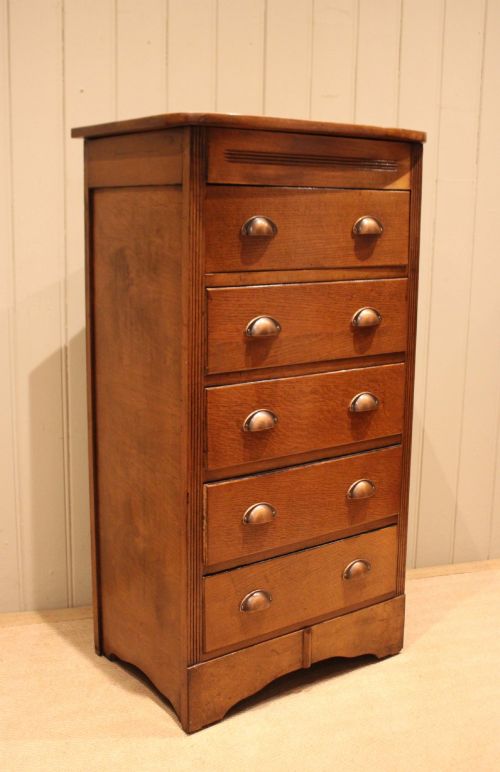
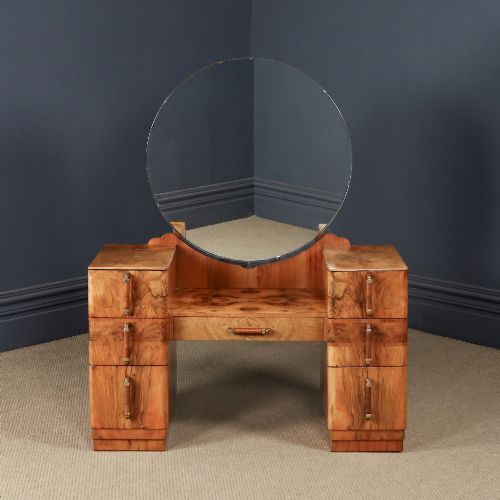
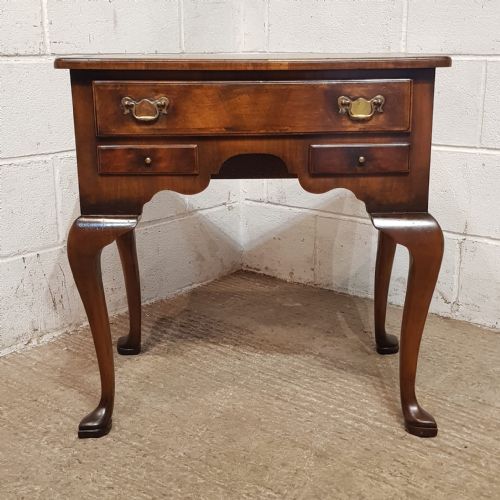
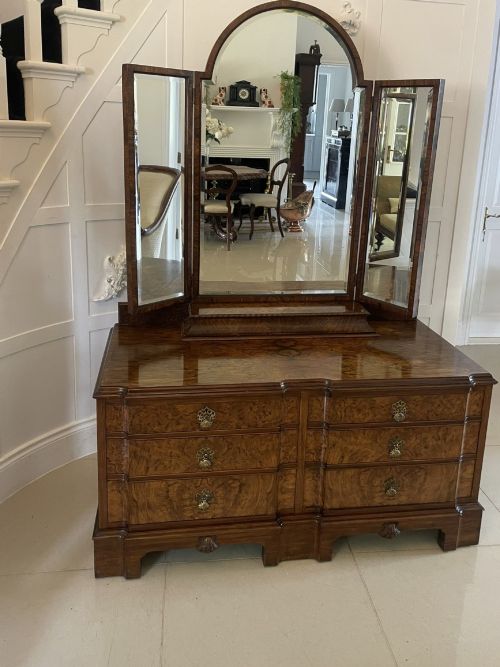
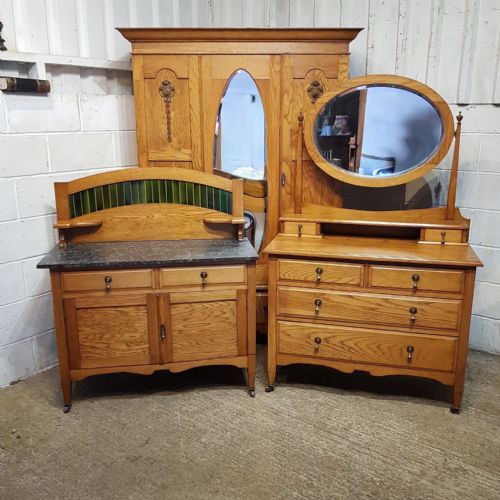
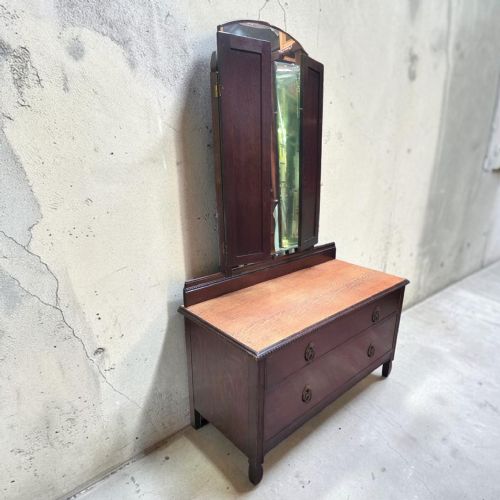
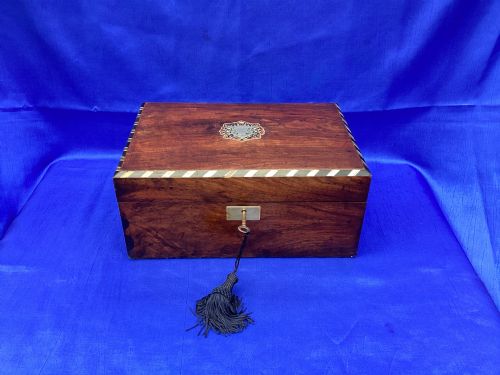
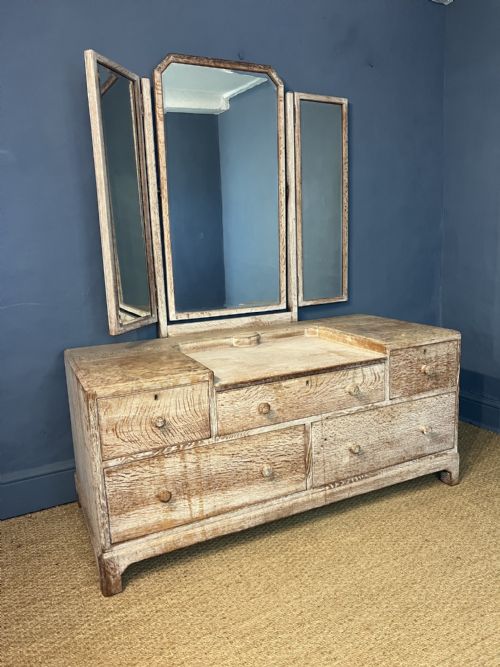
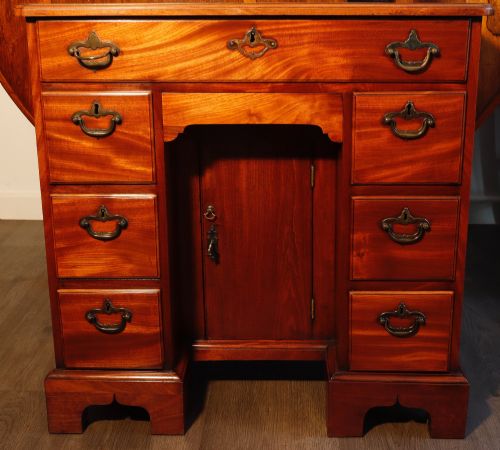
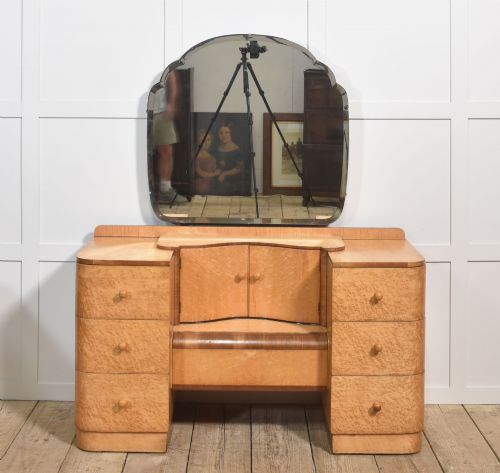
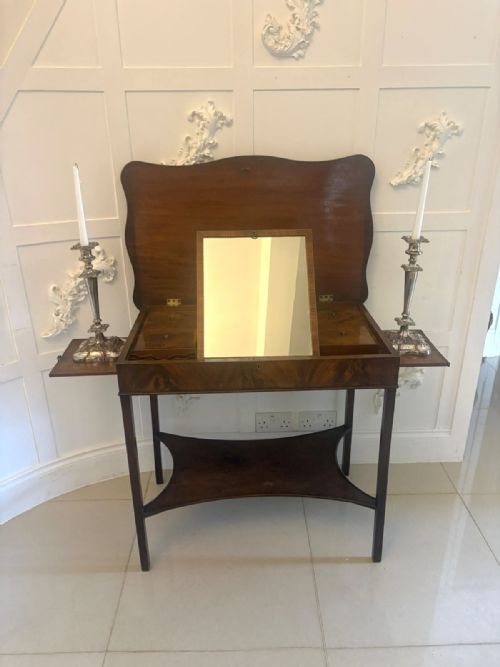
The versions most frequently encountered on this page combine timber construction with surface mirrors, taking forms such as pedestal dressing tables, oak chests with triple mirrors, and inlaid mahogany designs. They serve equally well today as functional bedroom chests or compact writing desks.
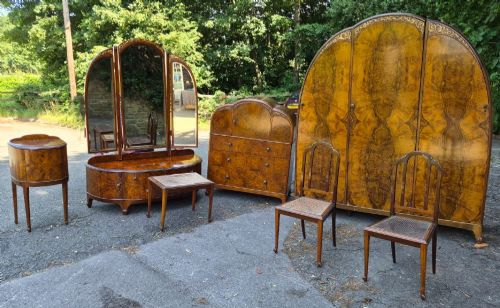
Makers adapted these forms across changing stylistic movements, resulting in variations from heavy Jacobean Revival oak to streamlined Art Deco walnut. Each piece reflects the domestic habits and interior tastes of its specific decade.
Materials and construction
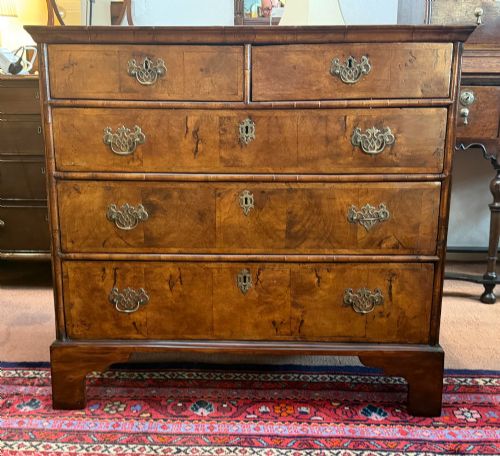
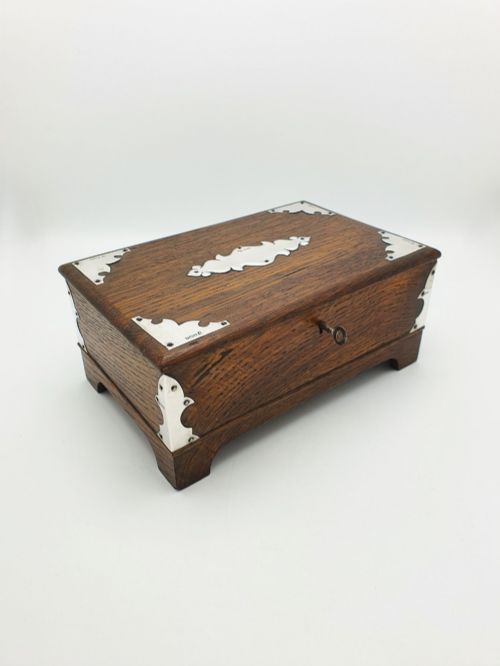
Cabinet makers utilised a selection of hardwoods including oak, mahogany, and walnut, often applying burr walnut veneer to enhance visual depth on drawer fronts and surfaces. Brass hardware such as handles and key escutcheons punctuate the timber grain across the various periods.
Mirror glass is an integral component, held within pivoting wooden frames that allow the user to adjust the angle of reflection. Inlaid details and serpentine shapes demonstrate advanced joinery and cabinet-making techniques appropriate to each era.
Retail Price Guide 2026
Typical UK retail prices for vintage dressing chest, calculated from the Sellingantiques database of over a million retail prices indexed since 2003. This retail price guide relies exclusively on Sellingantiques data; no external sources or auction records are used, so the figures do not describe the wider market.
Current listings feature oak, walnut, burr walnut, mahogany, brass, and mirror glass across Victorian, Georgian, and 1930s periods.
Distinguishing quality
Quality in a vintage dressing chest is measured by the selection of timber figures, such as matched burr walnut veneer, and the crispness of inlaid decorative stringing. Finer examples display thoughtful proportioning, harmonious timber grain across multiple drawers, and substantial brass mounts.
The integrity of the mirror glass and the smoothness of the drawer construction further separate standard utility pieces from higher-tier cabinet work. Superior craftsmanship shows in the dovetail joints and the stability of the mirror framing.
The Vintage Dressing Chest Glossary
- Serpentine
- A curved furniture front characterised by a convex centre flanked by concave ends, creating a gentle wave effect across the drawers.
- Pedestal dressing table
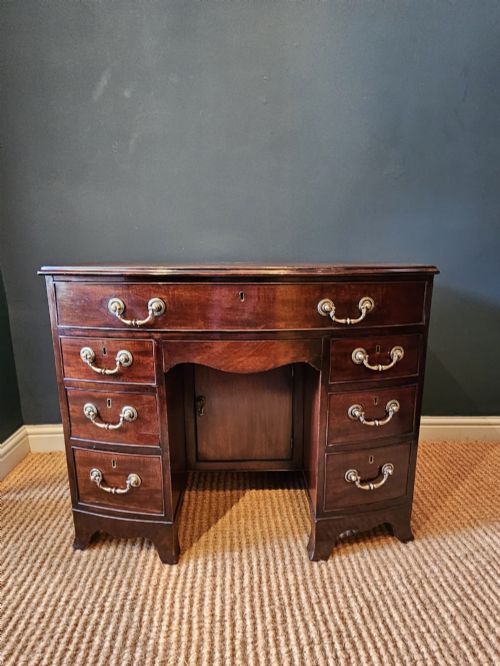
- A form featuring banks of small drawers flanking a central knee-hole space beneath the main surface.
- Burr walnut veneer
- Thin slices of decorative walnut timber taken from the gnarled growths of the tree, applied to give a swirling, highly figured surface pattern.
- Inlay
- A technique where contrasting materials are inserted into recessed cavities in the wood surface to form decorative patterns.
- Triple mirror
- An arrangement comprising a large central mirror flanked by two smaller adjustable side plates, commonly mounted atop dressing chests.
Frequently Asked Questions
What is a vintage dressing chest?
A vintage dressing chest is a piece of bedroom furniture that combines drawer storage with an integrated mirror for grooming.
These items range from Georgian knee-hole desks to 1930s Art Deco walnut dressing tables.
How do I date a dressing chest?
Dating relies on identifying the prevailing style, timber choices, and hardware associated with specific periods such as Victorian or Art Deco.
Details like triple mirrors or inlaid mahogany often point towards early twentieth-century or nineteenth-century craftsmanship.
Are dressing chests practical for modern bedrooms?
These pieces provide ample drawer space alongside a surface suitable for everyday use or display.
Many examples function well as compact writing desks or traditional bedroom vanities.
What woods were used for dressing chests?
Cabinet makers constructed these chests using solid timbers like oak and mahogany, alongside decorative options including walnut and burr walnut veneer.
Brass fittings and glass mirrors complete the primary materials found on these pieces.