
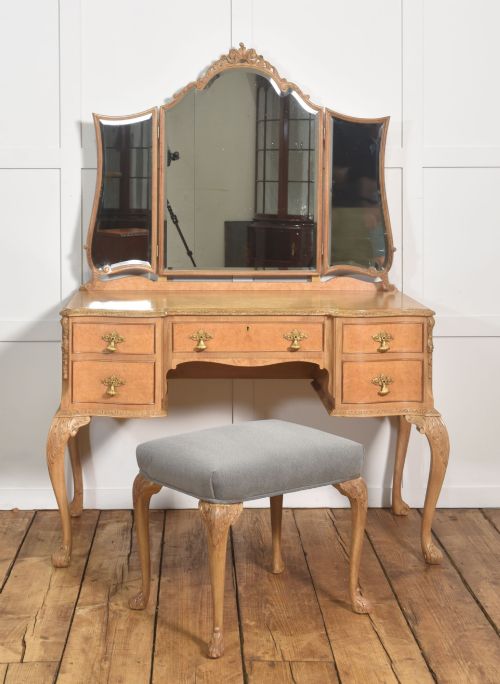
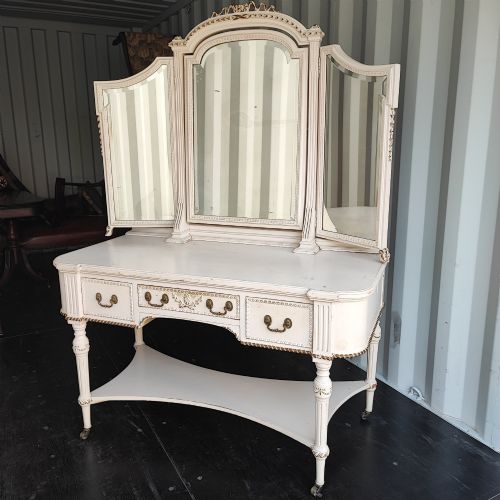
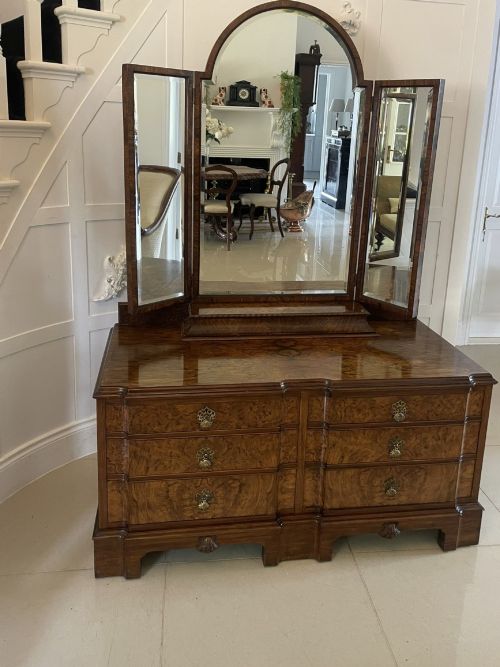
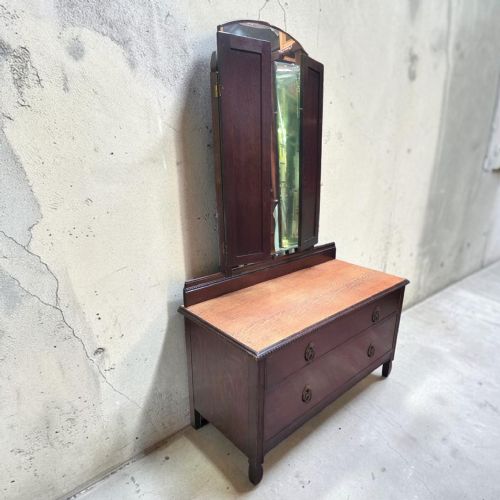
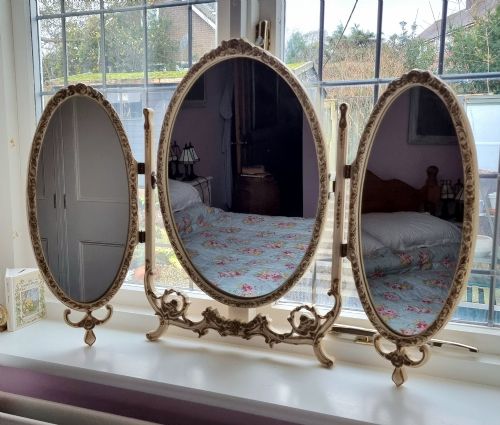
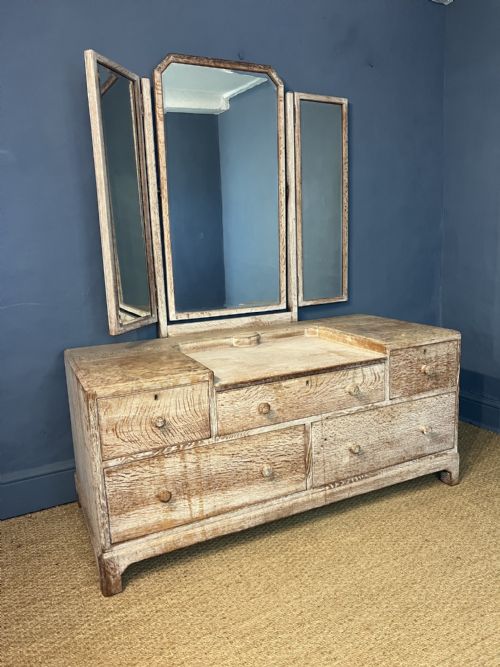


Triple Mirror Dressing Table
A triple mirror dressing table offers the practical charm of adjustable flanking plates combined with rich walnut, oak, and mahogany timbers.
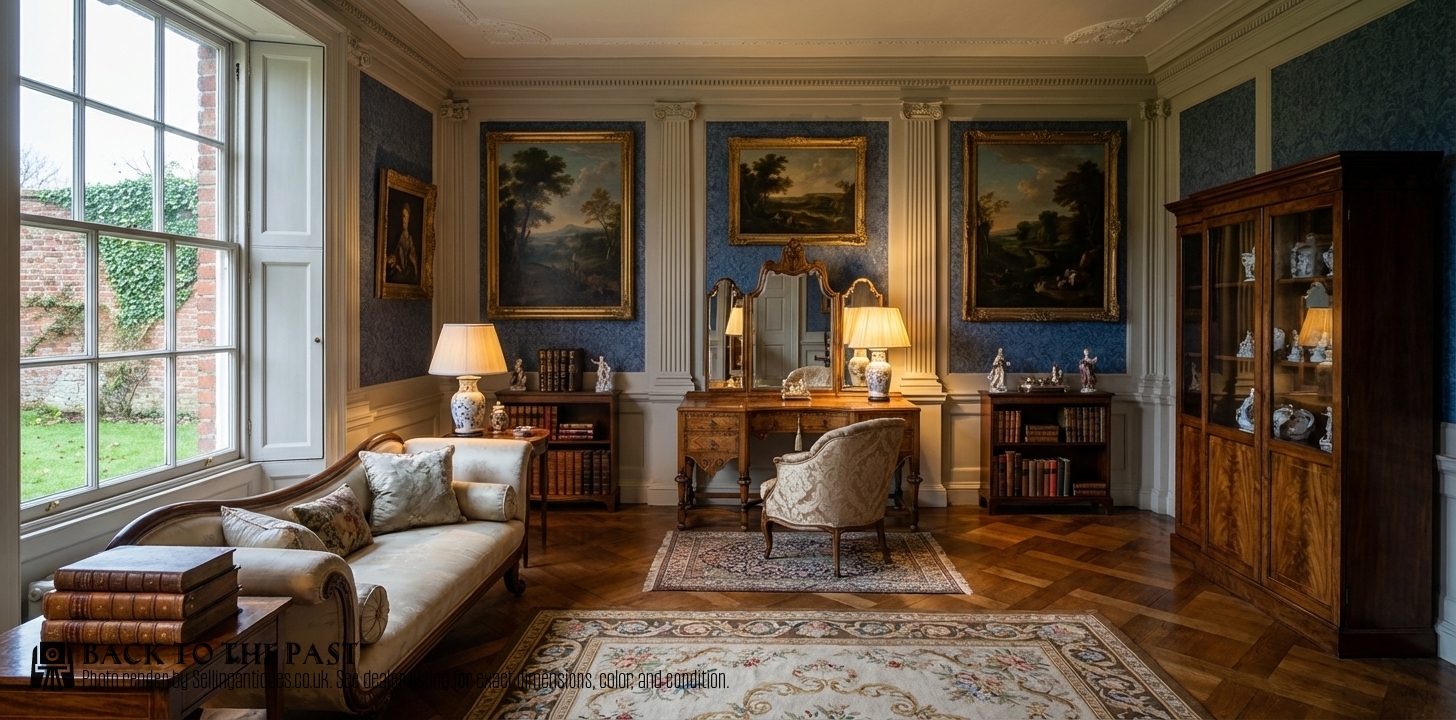
Understanding triple mirror dressing tables
A triple mirror dressing table serves as a functional centrepiece for the bedroom, combining a central looking glass with two adjustable side plates to provide varied angles of reflection. These pieces predominantly date from the Edwardian era through the 1920s and 1930s, embracing styles such as Queen Anne Revival, Art Deco, and Jacobean Revival.
The surviving examples range from substantial burr walnut and figured walnut designs to lighter satin walnut, limed oak, and painted French alternatives. Buyers will frequently encounter variations that incorporate matching stools or dedicated compartments, reflecting the domestic habits of the early twentieth century.
Originating in both British workshops and continental studios, these vanity units showcase the evolving tastes of the twentieth century. From the clean geometry of Art Deco pieces to the ornate curves of Louis XV Revival and carved French oak, each iteration offers a distinct aesthetic for the modern interior.
Materials and construction methods
Cabinet makers utilised a palette of walnut, burr walnut, oak, satin walnut, and mahogany, often applying figured or burr veneers to large flat surfaces to highlight natural grain patterns. Brass hardware, including adjustable mirror hinges and drawer pulls, provided both structural durability and subtle metallic contrast against the polished wood.
Mirror plates were bevelled and silvered by hand, then set into wooden frames designed to tilt independently on robust brass brackets. Secondary elements such as fabric inserts and carved detailing appeared on specific revival pieces, while limed oak finishes reflected the lighter, more modern interior trends of the 1930s.
Retail Price Guide 2026
Typical UK retail prices for triple mirror dressing table, calculated from the Sellingantiques database of over a million retail prices indexed since 2003. This retail price guide relies exclusively on Sellingantiques data; no external sources or auction records are used, so the figures do not describe the wider market.
Distinctions in quality and finish
The hierarchy of quality rests primarily on the selection of timber veneers and the intricacy of the cabinet work. Finely figured burr walnut and master-carved French oak command attention through their rich visual depth, whereas simpler satin walnut or standard oak examples lean towards utilitarian robustness.
Attention to detail in the mirror mechanism and framing separates standard production pieces from finer workshop outputs. The fluidity of the tilting brass hinges, the precision of the dovetail joinery in the drawers, and the integrity of the original bevelling on the triple glass plates all indicate superior craftsmanship.
Heals·Maples
The Triple Mirror Dressing Table Glossary
- Triptych
- A three-panel arrangement where two outer wings hinge inward around a fixed central mirror. This design allows the user to adjust the side plates for side and rear views.
- Burr Walnut
- A specialised wood cut from the burl growth of a walnut tree, yielding a highly swirled and mottled grain pattern. Cabinet makers prized this veneer for its luxurious appearance on drawer fronts.
- Limed Oak
- A wood finishing technique that leaves a white or pale pigment in the open pores of oak timber. This treatment achieved a lighter, bleached effect popular during the 1930s.
- Queen Anne Revival
- A decorative style popular in the early twentieth century that reinterprets eighteenth-century forms. It is typically characterised by cabriole legs and restrained classical proportions.
- Bevelled Glass
- Mirror glass with an angled edge polished down to a thinner profile. This traditional method catches the light and adds a refined decorative border to the looking glass.
Frequently Asked Questions
How do I date a triple mirror dressing table?
Dating relies on stylistic clues, timber choices, and construction methods. Pieces showing heavy carved oak or satin walnut often point to the Edwardian period, while clean geometric lines indicate Art Deco influences from the 1930s.
Examining the mirror brackets, drawer dovetails, and secondary woods helps narrow the decade of manufacture. Comparing the hardware to known period examples provides further verification.
Can the side mirrors be removed?
The flanking mirror plates are attached to the central frame or desk back via adjustable brass pivot screws. These can generally be unscrewed to facilitate safe transport.
Retaining the original fixings and hinges is essential for stability when reassembling the mirror unit. Care should be taken with older brass screws to avoid stripping the wood threads.
Are these dressing tables suitable for modern use?
These pieces function well as contemporary dressing tables or compact writing desks in bedrooms and studies. Their ample surface area and drawer storage accommodate modern grooming items and stationery.
Integrating them into a modern interior requires balancing antique wood tones with existing decor. The adjustable mirrors remain fully functional for daily routines.