

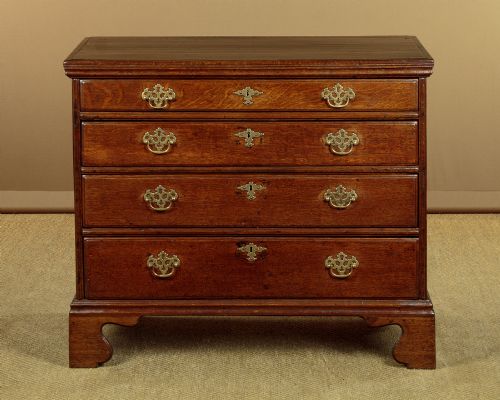
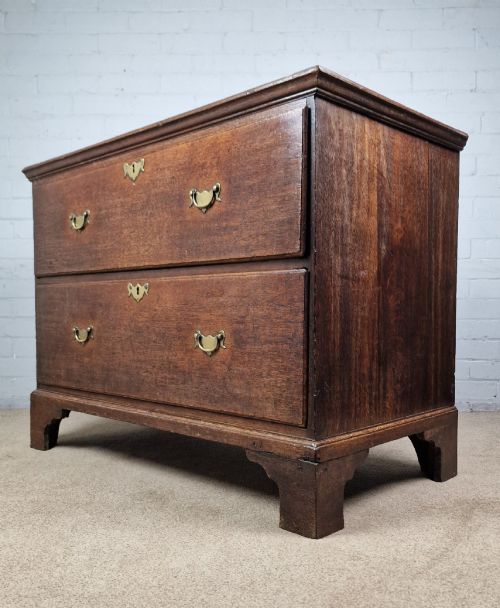
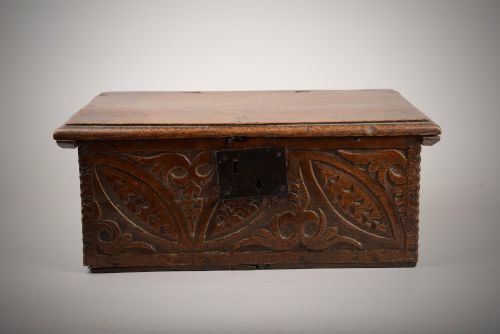
Antique Oak Coffer Drawers
Antique oak coffer drawers combine storage and display in sturdy timbers that hold centuries of domestic history.
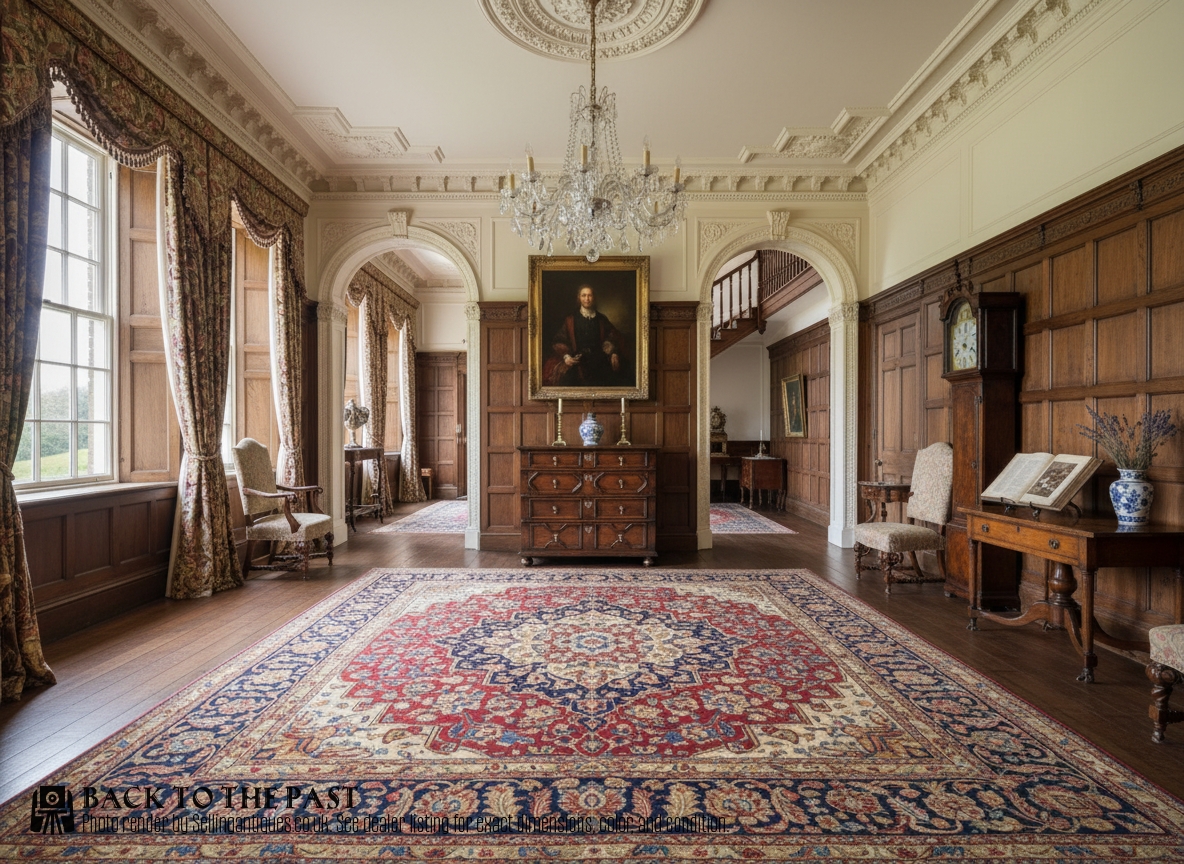
What antique oak coffer drawers are
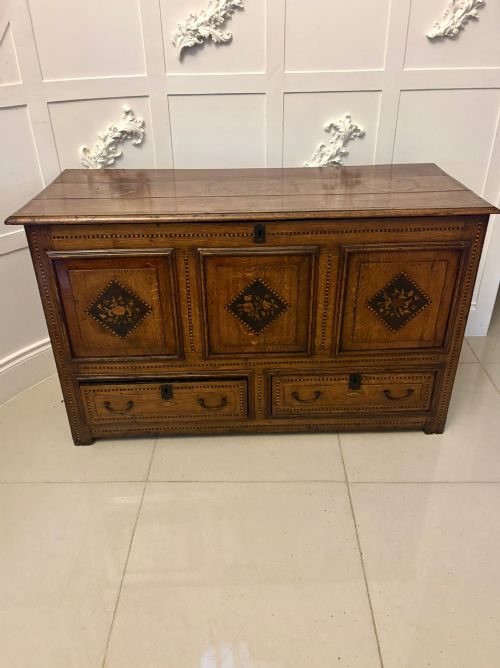
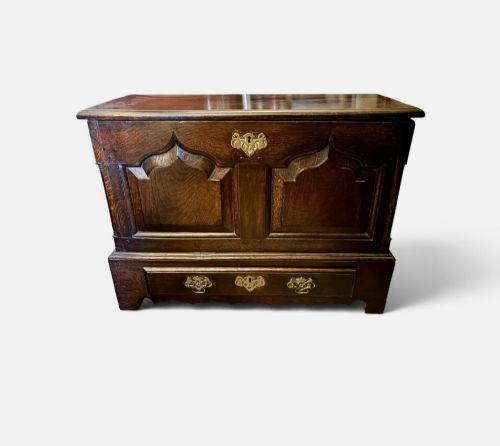
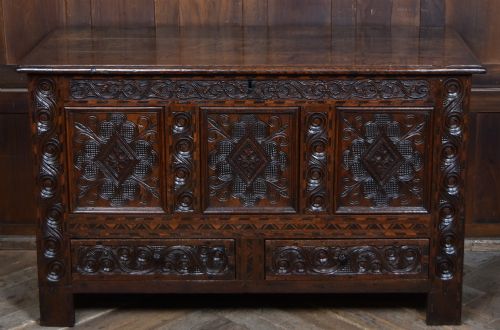
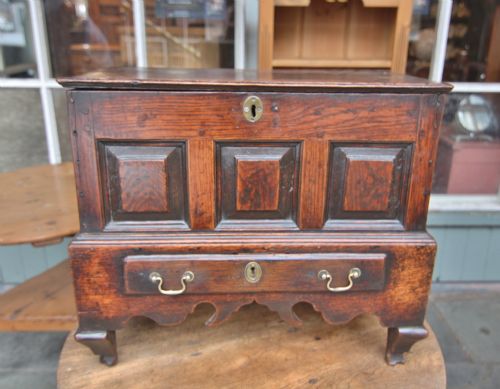
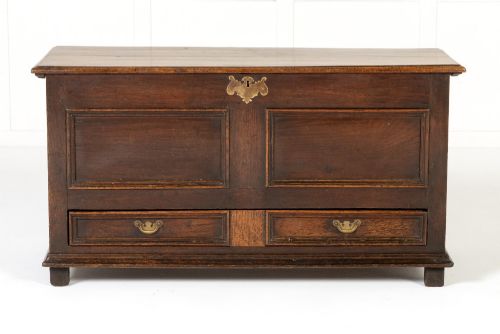
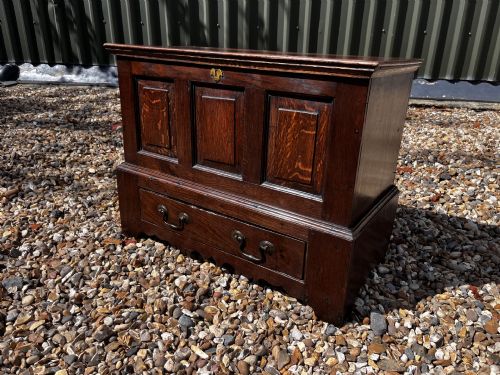
When you search for antique oak coffer drawers, you find robust storage furniture spanning the seventeenth and eighteenth centuries. These pieces bridge the simple mule chest and the fitted drawer unit, often combining a lidded trunk space with lower drawer storage.
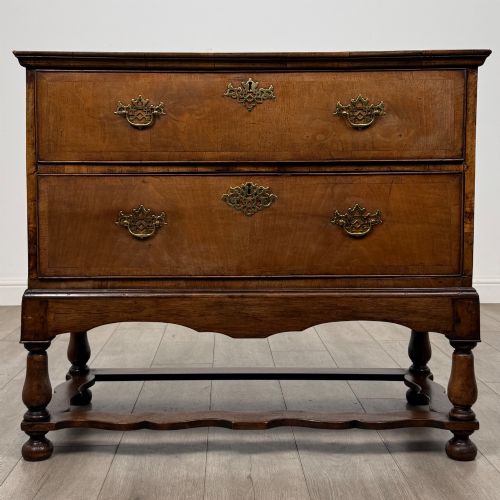
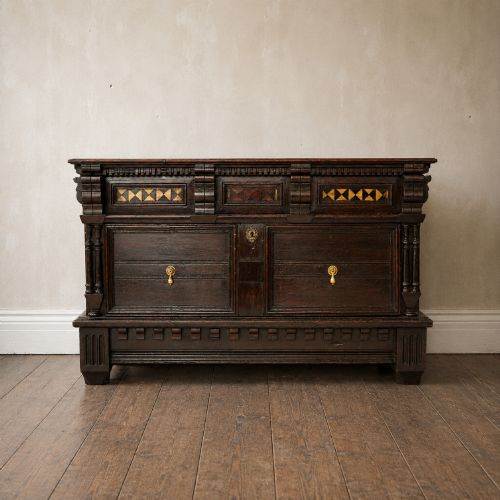
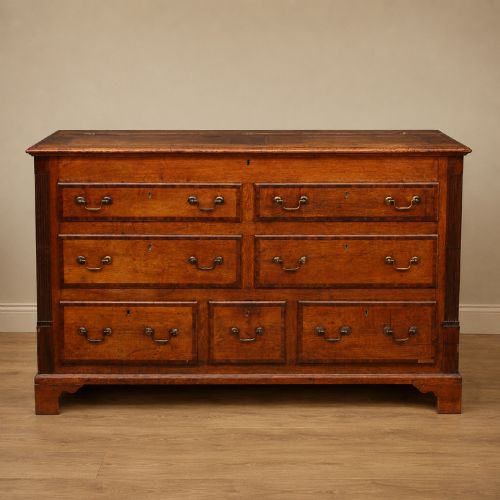
The versions most common on this page date from the seventeenth century, including Charles II and Jacobean styles. You also encounter eighteenth-century Georgian examples, which frequently merge coffer functionality with chest of drawers construction.
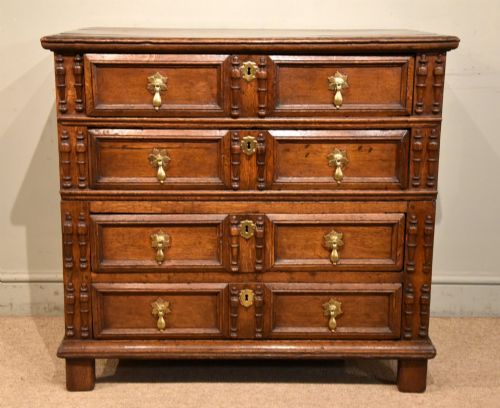
Makers built these items using oak as the primary timber, sometimes incorporating walnut for contrast and brass for hardware. The forms range from two-part chests of drawers to moulded front designs and mule chests.
How they were made
Craftsmen built these items primarily from solid oak, supplemented occasionally by walnut veneers for decorative surfaces. They joined panels and frames using traditional methods that allowed timber to expand and contract naturally through the seasons.
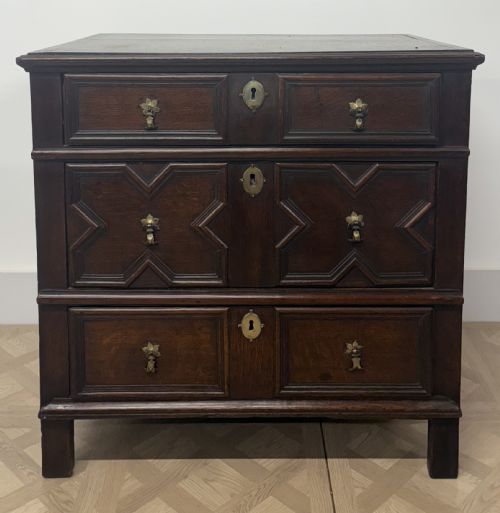
Mouldings were shaped directly into the solid wood or applied in geometric patterns across the drawer fronts. Joiners finished these surfaces with brass handles and escutcheons, which secured the locking mechanisms and added functional detail.
Surface treatments developed over time through handling and wax polishing, producing the faded patina seen on seventeenth-century moulded front examples. Construction methods evolved from simple boarded boxes to panelled frameworks and multi-drawer carcases.
Retail Price Guide 2026
Typical UK retail prices for oak coffer drawers, calculated from the Sellingantiques database of over a million retail prices indexed since 2003. This retail price guide relies exclusively on Sellingantiques data; no external sources or auction records are used, so the figures do not describe the wider market.
The listings here span the seventeenth and eighteenth centuries, incorporating Charles II, Jacobean and Georgian styles.
What varies in quality
Quality rests upon the selection of timber and the precision of the joinery rather than mere age alone. Pieces featuring crisp geometric mouldings and well-figured oak boards sit comfortably at the top of the range.
The integrity of the construction and the harmony of the timber grain dictate the visual strength of each piece. Faded patination developed over centuries adds depth, whereas heavily altered surfaces diminish the historical character.
The Antique Oak Coffer Drawers Glossary
- Coffer
- A large wooden chest used historically for storing valuables and household goods. These often formed the basis for later designs that incorporated drawers beneath the main compartment.
- Mule chest
- A storage trunk featuring one or more drawers at the base beneath a hinged lid. This form represents the transition between a traditional coffer and a chest of drawers.
- Geometric moulding
- Raised wooden decoration applied in repeating patterns across drawer fronts or panels. This technique was particularly popular during the seventeenth century.
- Patina
- The surface sheen and colour developed by wood over years of handling, polishing and ageing. A fine, faded patina is a hallmark of untouched older pieces.
- Two-part chest
- A piece of furniture constructed in upper and lower sections to ease transport and placement. This format appears frequently in seventeenth-century joinery.
Frequently Asked Questions
What is a mule chest?
A mule chest combines a hinged top box with lower drawers for versatile storage.
This form bridges the gap between a traditional coffer and a standard chest of drawers.
How do I date seventeenth-century oak?
Seventeenth-century oak pieces display distinct joinery methods, such as pegged mortise and tenon frames.
Stylistic markers like Charles II geometric mouldings also help establish the period.
Where should I place a coffer?
These sturdy items suit hallways, living rooms or bedrooms as functional focal points.
Keep them away from direct heat sources to protect the historic timber.
What does geometric moulding mean?
Geometric moulding refers to raised wooden patterns applied across drawer fronts and panels.
Cabinet makers used this technique during the seventeenth century to create texture and visual depth.