




Antique Faux Bamboo Seat
An antique faux bamboo seat brings playful Regency and Victorian whimsy to a room, mimicking exotic cane with clever painted wood.
Antique Faux Bamboo Seat
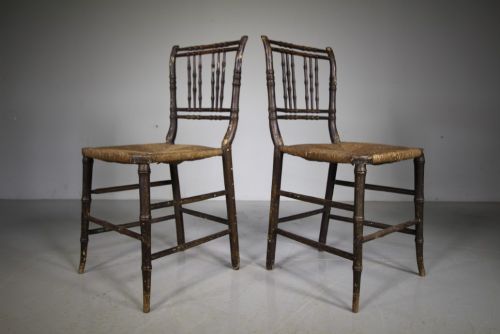
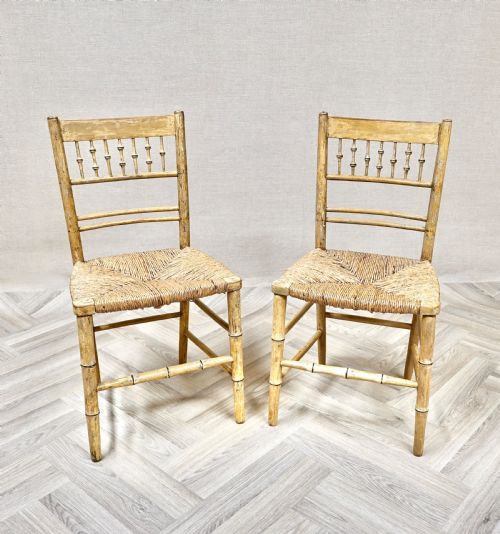
When searching for an antique faux bamboo seat, you find chairs shaped to imitate exotic imported cane using native timbers. These seating forms span the Regency and Victorian periods, reaching into the early twentieth century through various revival movements.
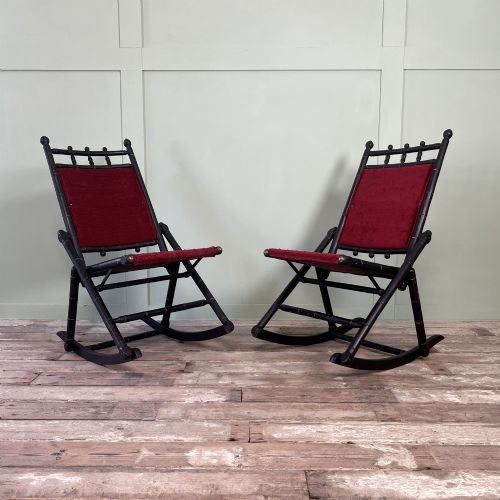
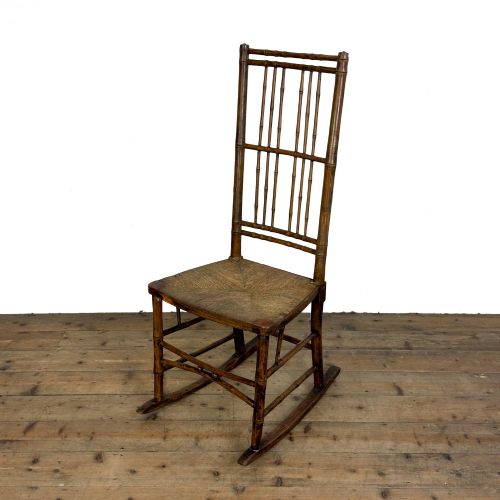
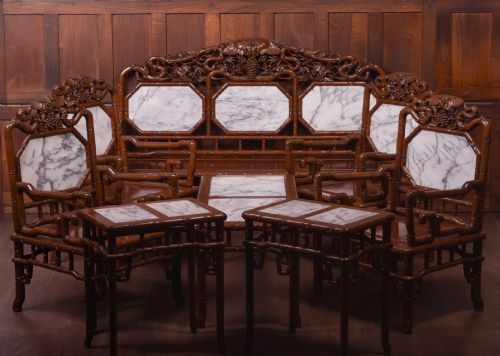
The pieces on this page appear mainly as side chairs and armchairs, alongside occasional rocking chairs, parlour suites, and children's highchairs. They originate from British workshops and French makers influenced by Aesthetic taste and Chinoiserie design.
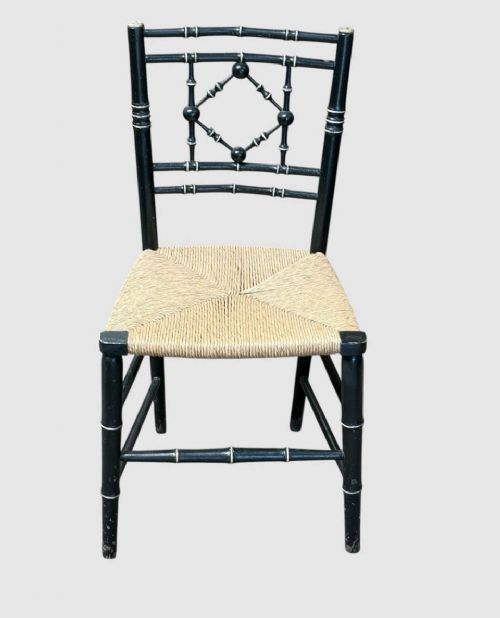
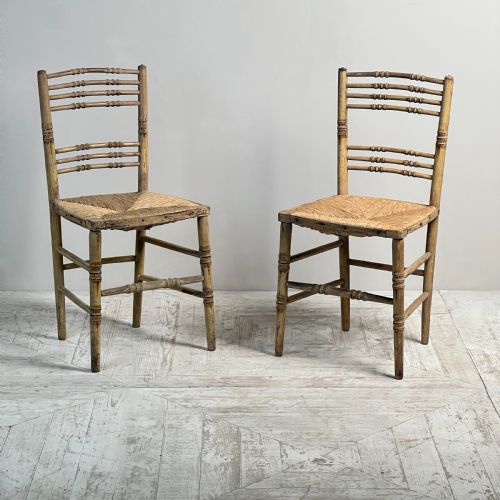
Makers utilised beech, pine, and ebonised wood, turning and carving the solid timber to replicate the characteristic nodes and joints of natural bamboo. Many examples retain their original painted surfaces, while others show later decorative coats applied over decades of use.
How they were made
Cabinetmakers turned solid hardwoods on a lathe to create the distinctive segmented rings and swelling joints of natural bamboo stalks. Artisans then painted, ebonised, or decorated the turned wooden frames by hand to simulate the varied tones and grain of genuine oriental cane.
Seat frames were constructed to accept traditional woven materials like rush and cane, threaded tightly through drilled rails to provide resilient support. Some folding chair mechanisms incorporated brass hinges and pins to allow portable campaign use without losing structural stability.
Object forms on this page include side chairs, armchairs, rocking chairs, parlour suites, and children's highchairs made in Britain and France.
What varies in quality
The skill of the turning defines the upper tier of these seats, where the carved bamboo nodes look crisp and convincing rather than flat or uniform. Finer examples maintain their original decorative paintwork and gilt highlights, whereas simpler pieces show heavy overpainting or plain ebonising.
Structural integrity depends on the tightness of the turned joints and the preservation of the woven rush or cane seating platforms. Superior craftsmanship shows in balanced proportions and sturdy arm attachments that withstand regular sitting rather than decorative display alone.
The Antique Faux Bamboo Seat Glossary
- Faux bamboo
- A decorative technique where native timber is turned and painted to resemble oriental bamboo. Cabinetmakers utilised this method extensively during the Regency and Victorian periods.
- Rush seat
- A seating surface woven from dried marsh rushes twisted into strong cords. This traditional material appears frequently on provincial and Regency dining chairs.
- Ebonised wood
- Timber stained or painted black to imitate expensive ebony. This finish was particularly popular during the nineteenth century for Aesthetic Movement and Regency seating.
- Aesthetic Movement
- A late nineteenth-century design style that emphasised visual beauty over narrative meaning. Pieces from this era often feature simulated bamboo and Japanese-inspired decoration.
- Chinoiserie
- European artistic interpretation of Chinese decorative motifs and forms. This style heavily influenced the painted decoration on early nineteenth-century seating.
Antique Faux Bamboo Seat: Frequently Asked Questions
Are these seats comfortable to use daily?
Most side chairs and armchairs provide firm upright seating suited for occasional use at a desk or in a hallway. The wooden frames and woven rush platforms offer robust support when maintained properly.
Heavier daily lounging is better suited to the wider armchairs or rocking variants found within the selection. Placing a soft pad on the seat adds comfort without obscuring the turned wooden frame.
How do I spot original paint?
Original painted surfaces show fine craquelure, subtle wear patterns, and gentle fading accumulated across generations of use. Examining the layers under magnification reveals authentic hand-applied pigments rather than flat modern emulsions.
Later overpainting often feels thicker and hides the crisp details of the turned bamboo nodes underneath. Genuine Regency and Victorian decorative schemes display tonal variations that modern touch-ups struggle to replicate.
Where should I place these chairs?
These decorative seats work well as accent pieces in living rooms, bedrooms, or entrance halls where their botanical silhouettes stand clear of clutter. Pairing a single armchair with a reading table highlights the playful turned woodwork.
Avoid positioning them in direct sunlight or damp environments that could damage the painted finishes or brittle rush seating. Gentle placement preserves both the structural joints and the delicate surface decoration.
How do I date an antique faux bamboo seat?
Dating relies on observing the turning style, construction joints, and material combinations recorded across the different manufacturing periods. Regency examples often feature crisp hand-painted pine frames, while later Victorian versions frequently utilise ebonised beech or incorporate folding mechanisms.
Changes in decorative taste from Chinoiserie whimsy to Aesthetic Movement simplicity also help establish the approximate decade of production. Comparing the joinery methods against known period standards confirms the likely origin.