
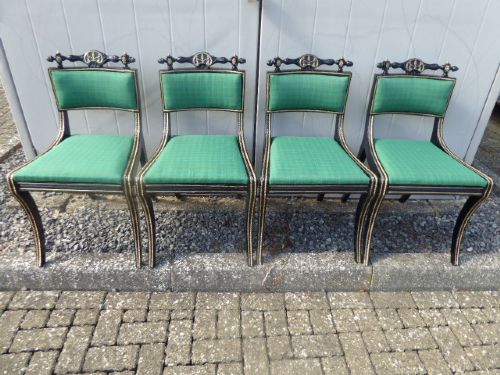
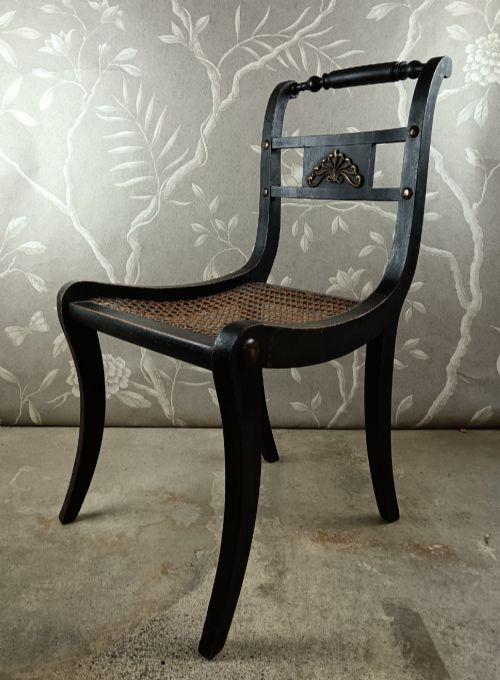
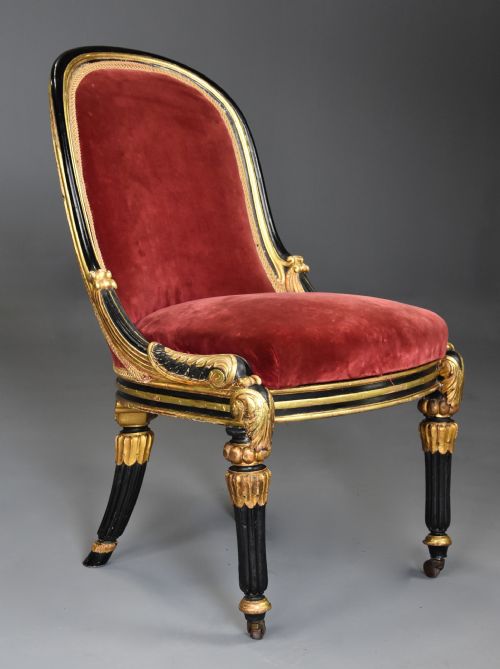
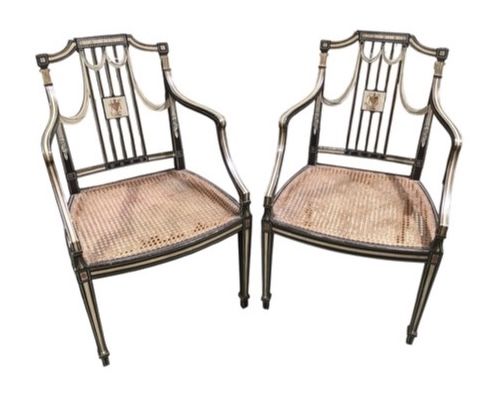


Regency Ebonised Side Chair
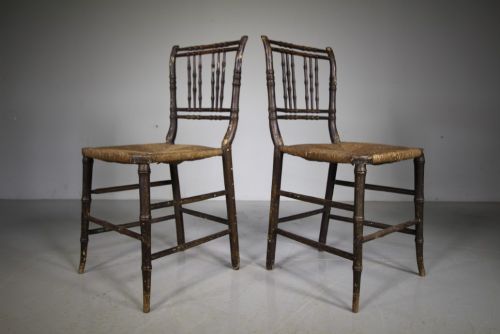
These regency ebonised side chair examples bring classical proportion and striking dark finishes into a room.
Regency Ebonised Side Chair
A regency ebonised side chair brings the classical lines of the early nineteenth century into a modern interior. These seating pieces typically feature dark finishes, sometimes paired with gilt highlights, reflecting the taste for neoclassical design during the Regency period.
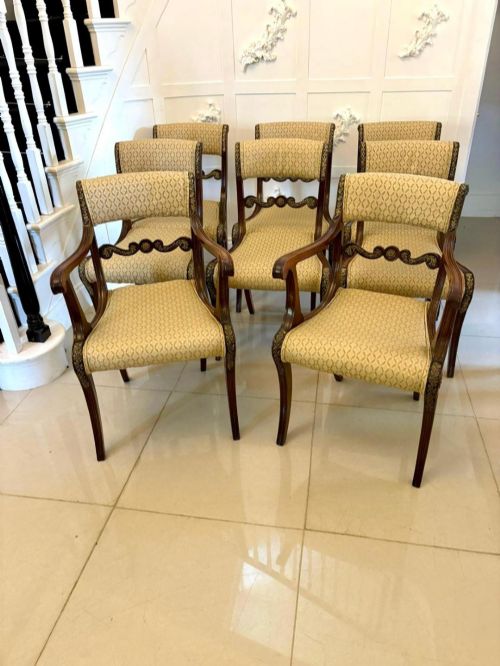
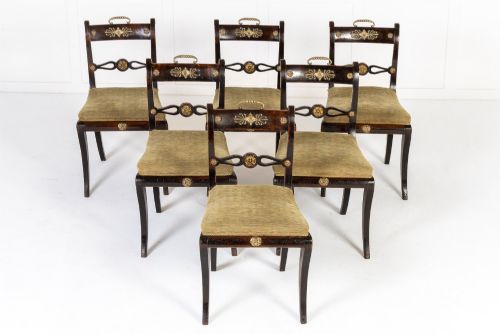
Buyers frequently encounter single chairs, pairs, or larger sets spanning genuine Regency manufacture, nineteenth-century production, and later revival periods. The forms range from plain side chairs to elaborate rope-back and Trafalgar models with sabre legs.
How they were made
Cabinetmakers utilised timber such as mahogany and pine, applying ebonised finishes to simulate more costly exotic hardwoods. Many examples incorporate parcel gilt details to accent carved mouldings and classical motifs.
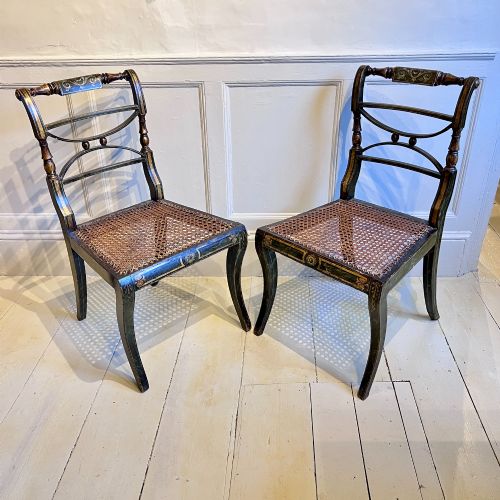
Seating constructions frequently combine wooden frames with woven cane panels or upholstered pads covered in fabric. Turned members and curved backs demonstrate the joinery techniques standard to the period.
Some chairs incorporate faux bamboo turnings, showing how cabinetmakers playfully imitated exotic materials using standard British hardwoods.
What varies in quality
The sophistication of the turning and the crispness of any parcel gilding distinguish finer examples from simpler production. Original surfaces carry greater integrity than later painted interventions.
Structural stability depends on the tightness of the original joints and the condition of the underlying timber, particularly where cane seating panels undergo stress.
The Regency Ebonised Side Chair Glossary
- Ebonised wood
- Timber finished with a dark stain or paint to resemble ebony. This dark surface creates a sharp contrast against gilt highlights.
- Sabre leg
- A curving, outward-flaring leg tapering towards the foot. This form derives from ancient Greek klismos furniture.
- Parcel gilt
- Wood or plaster partially covered with gold leaf. It accentuates carved details and mouldings.
- Cane seat
- A seating surface woven from rattan strips. It offers a lightweight and flexible support.
Regency Ebonised Side Chair: Frequently Asked Questions
Are these chairs suitable for daily dining use?
Original period seating requires careful handling due to age and structural delicacy.
Many buyers choose to use them selectively around a room rather than as heavy daily seating.
How do I distinguish Regency from later revival pieces?
Genuine period examples display the construction methods, wear patterns, and timber characteristics typical of the early nineteenth century.
Revival versions often utilise twentieth-century timber preparation and cleaner, more uniform finishes.
What is a Trafalgar chair?
A Trafalgar chair is a specific Regency seating form featuring distinctive sabre legs and often a curved top rail.
These pieces frequently incorporate ebonised finishes and nautical or classical motifs popular during the period.
How should I care for an ebonised surface?
Dust the wood gently with a soft, dry cloth to prevent abrasion of the dark finish.
Avoid liquid cleaners and wax polishes that might cloud the ebonised or gilded layers.