
Traditional Oak Kitchen Chairs
Traditional oak kitchen chairs bring dependable utility and honest country character into everyday dining spaces.
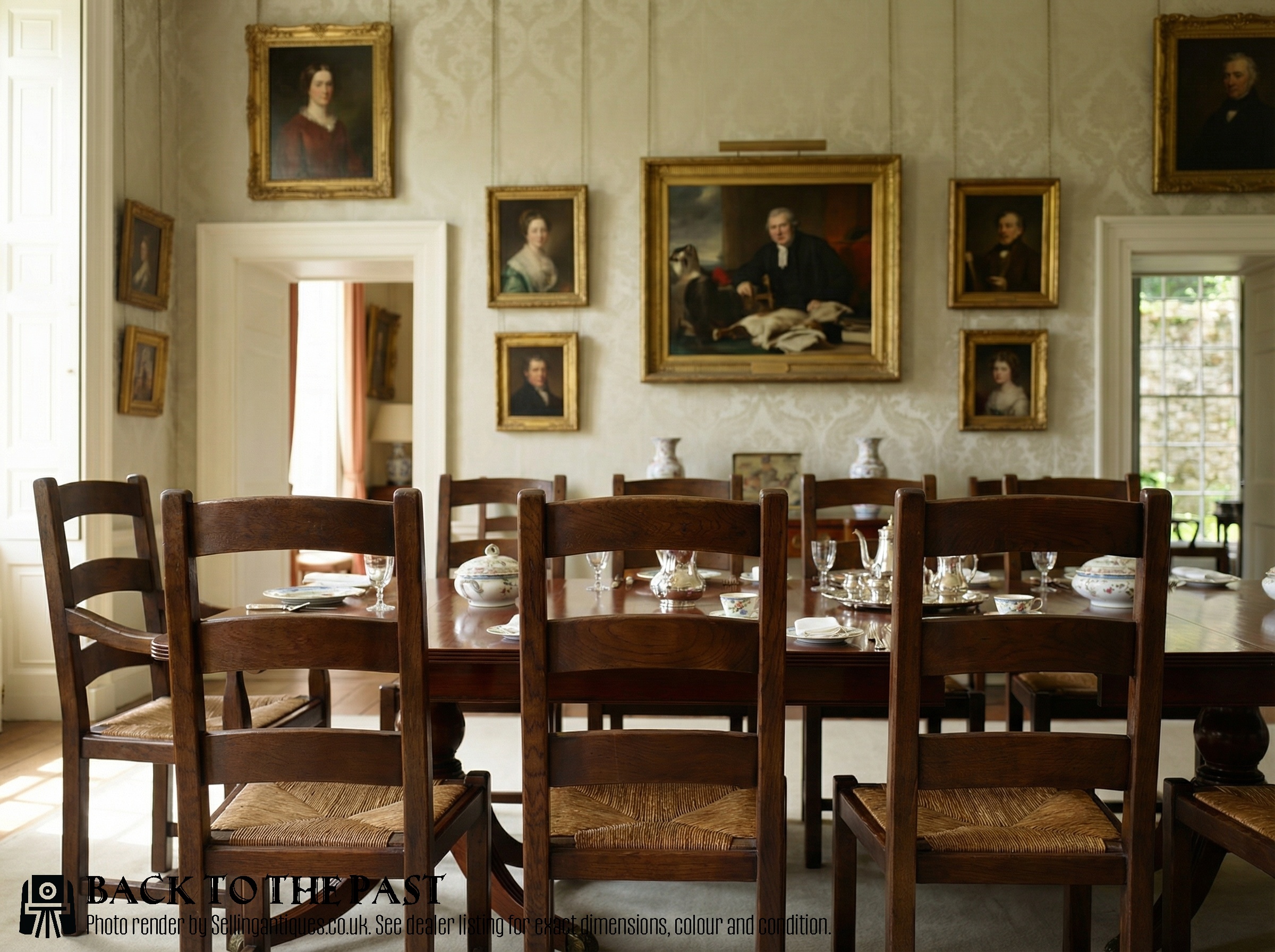
Traditional Oak Kitchen Chairs
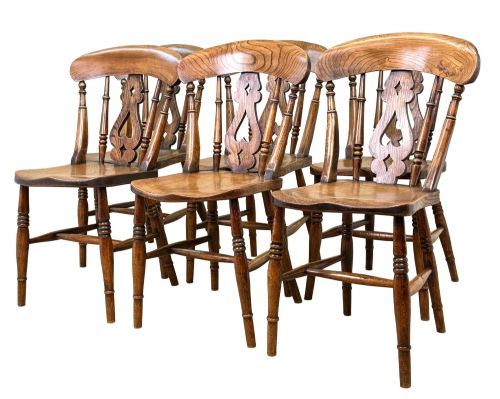
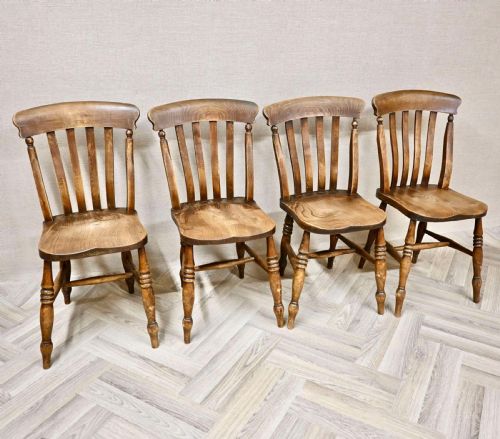
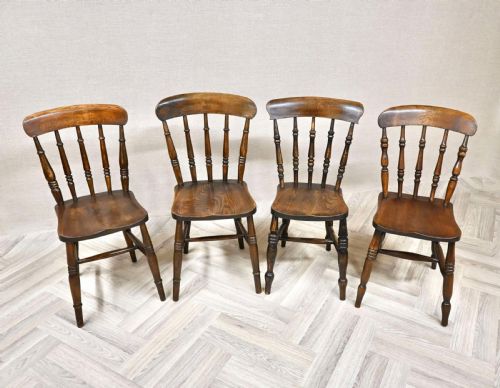
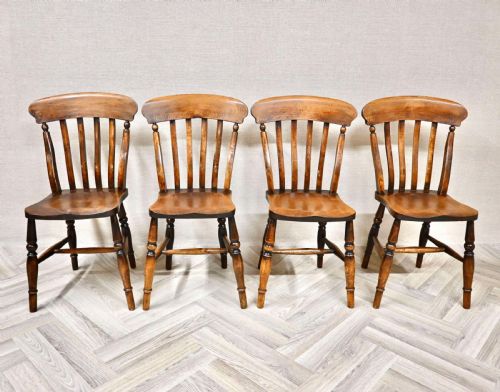
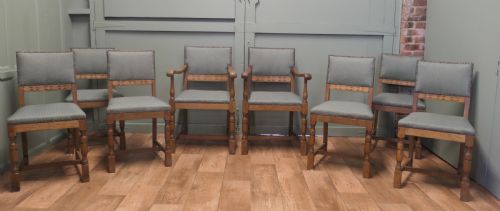
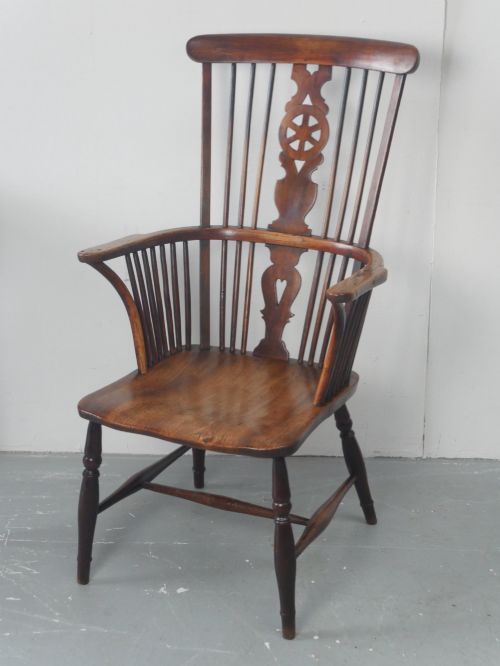
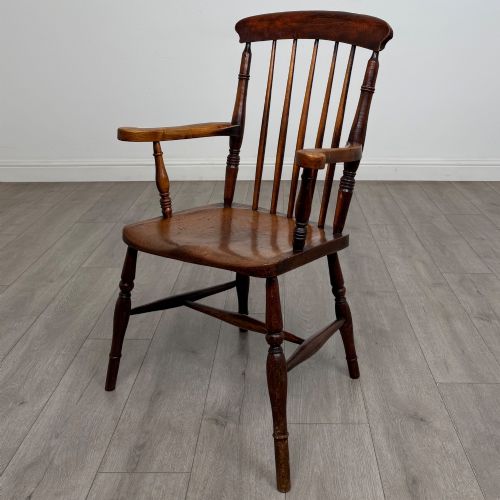
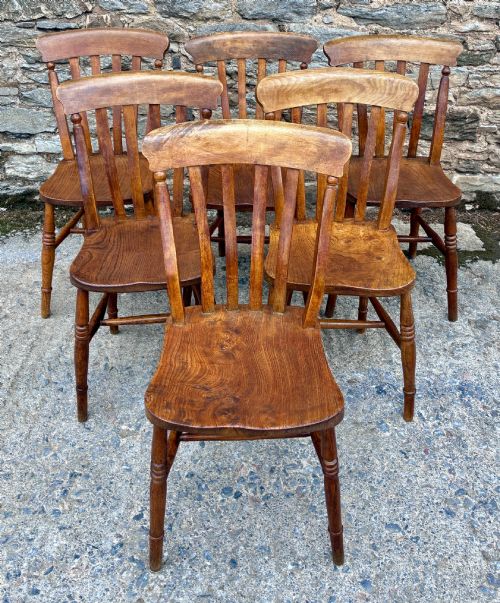
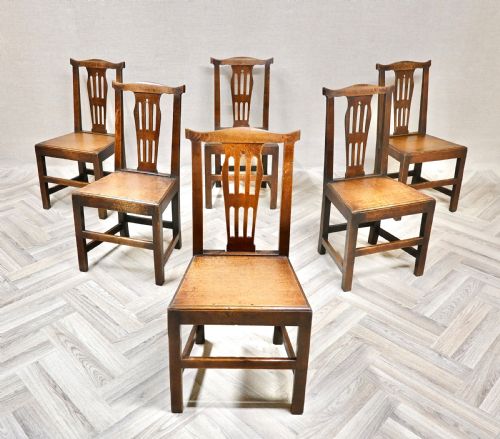
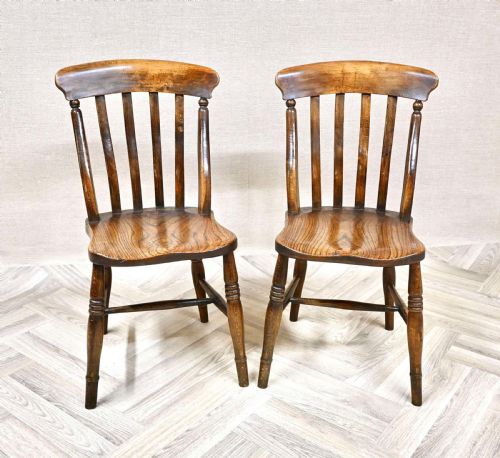
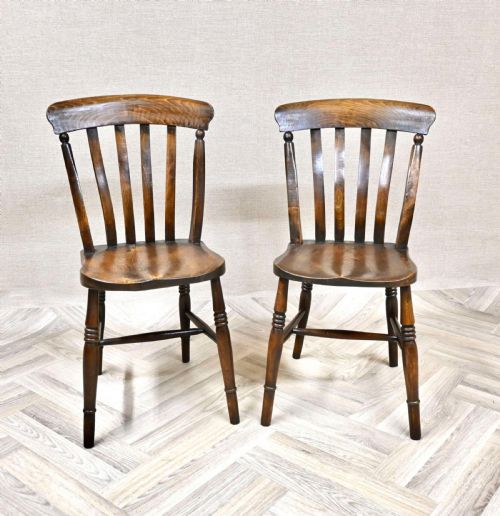
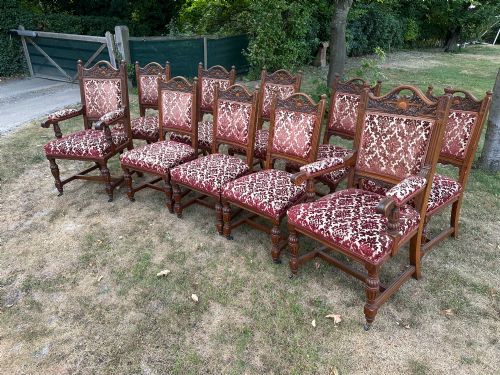
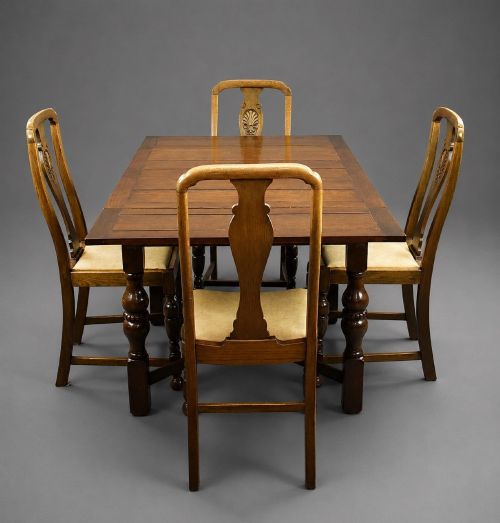
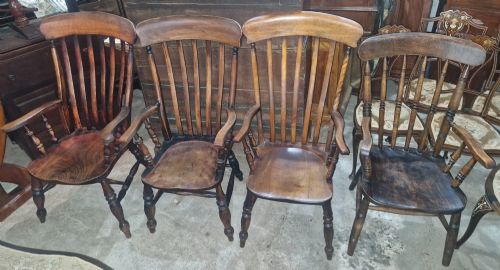
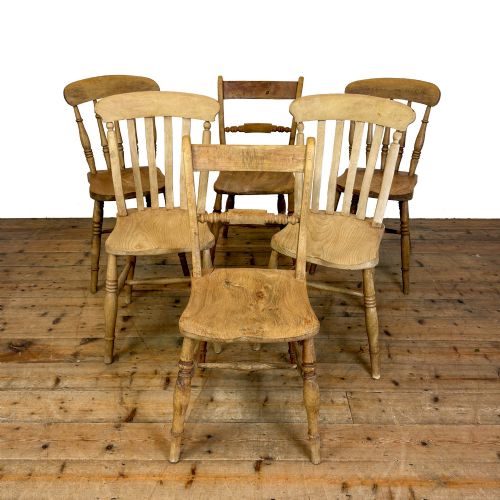
When you search for traditional oak kitchen chairs, you encounter robust seating built for heavy domestic use across the Georgian, Victorian, and Edwardian eras. These pieces typically take the form of Windsor chairs, ladderbacks, and stick backs designed for farmhouse dining rooms and kitchens. Sets of four, six, or ten frequently appear alongside single armchairs and pairs.
The most common examples on this page date from the nineteenth century, reflecting regional English, Welsh, and Scottish domestic woodworking traditions. They range from simple slat-backed forms to refined Arts and Crafts dining chairs and Gothic Revival seating. Buyers find both matching sets and harlequin groups gathered over generations of domestic life.
How they were made
Joiners and country craftsmen built these seats using solid timber frames combined with turned spindles and steam-bent components. Oak served as the primary structural material for frames and legs, while elm frequently provided durable, carved seats shaped for comfort. Beech, ash, and pine appeared routinely for spindles, stretchers, and internal framing.
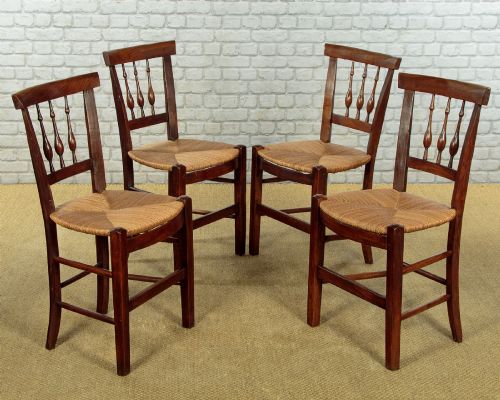
Many chairs incorporated woven rush for seating pads, while others utilised solid wood saddles or fabric upholstery. Traditional methods relied on wedged mortise and tenon joints to secure the legs and backs firmly into thick wooden seats without modern adhesives.
Traditional Oak Kitchen Chairs Retail Price Guide 2026
Typical asking prices for traditional oak kitchen chairs among the pieces listed under this phrase on Sellingantiques today, from the lower quarter to the upper quarter. They describe what is for sale here now, not the wider market.
Listings span the Georgian, Victorian, and Edwardian periods, featuring oak, elm, ash, beech, and rush materials across dining chairs and bar stools.
What varies in quality
Quality separates chairs by the integrity of their timber selection and the retention of their original component parts. Examples retaining deep, untouched grain patination on solid elm seats and matching oak frames stand apart from pieces with replaced legs or heavily sanded surfaces. The crispness of the original spindle turnings and the tightness of the structural joints dictate the long-term stability of each chair.
Harlequin sets vary depending on how closely the individual forms, timbers, and heights match across the group. Superior sets maintain consistent proportions and uniform colour tone, whereas lesser groupings show mismatched repairs or excessive replacement timber that alters the original silhouette.
The Traditional Oak Kitchen Chairs Glossary
- Windsor chair
- A wooden chair featuring a solid sculpted seat into which the legs and back spindles are directly fitted. These chairs rely on steam-bent bows and central splats for back support.
- Ladderback
- A chair style characterised by horizontal wooden slats or rails set between two upright back posts. This form appears frequently in country kitchens and dining sets.
- Stick back
- A seating design constructed with simple vertical wooden rods secured into a bentwood rail or straight crest. This structural method provides lightweight yet rigid support.
- Rush seat
- A seating surface woven from dried marsh rushes around a wooden frame. This traditional technique creates a textured and flexible pad.
- Harlequin set
- A collection of dining chairs that share similar periods, styles, or proportions rather than originating as a single factory-made set. These groups were typically assembled over time.
- Draw leaf table
- A dining table equipped with sliding extension leaves stored beneath the main top surface. This mechanism allows the table length to expand easily.
Traditional Oak Kitchen Chairs: Frequently Asked Questions
What is a Windsor chair?
A Windsor chair is a traditional seat built with a thick wooden saddle base that holds the legs and back spindles directly. These chairs use bentwood bows to create supportive, enveloping backs.
Craftsmen often combined different timbers within a single chair, using elm for the comfortable seat and ash or beech for the turned spindles.
How do I care for antique oak chairs?
Antique oak chairs require stable indoor humidity and protection from direct sunlight to prevent the timber from drying and splitting. Regular dusting with a dry cloth maintains the surface finish.
Application of traditional beeswax helps nourish the wood and preserves the natural patination built up over centuries of use.
Are harlequin sets matching?
Harlequin sets consist of individual chairs that share a similar style, period, or material rather than being manufactured together as a single uniform batch. These groups often combine armchairs and side chairs with complementary profiles.
Collectors assembled these sets over time to accommodate larger dining tables while maintaining a cohesive country aesthetic.
What timber was used for seats?
Elm served as the primary timber for chair seats due to its interlocking grain, which resisted splitting when craftsmen carved out the deep saddles. Oak was generally reserved for structural frames, legs, and back posts.
Other woods such as ash and beech appeared frequently in the turned spindles and stretchers for added rigidity.