
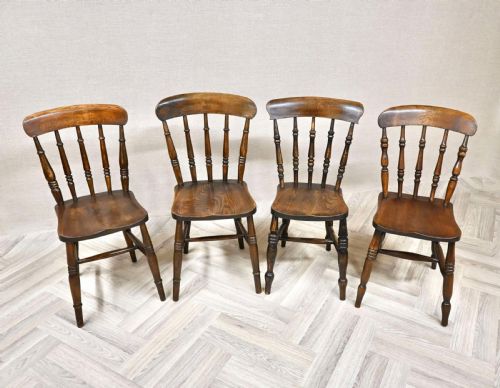

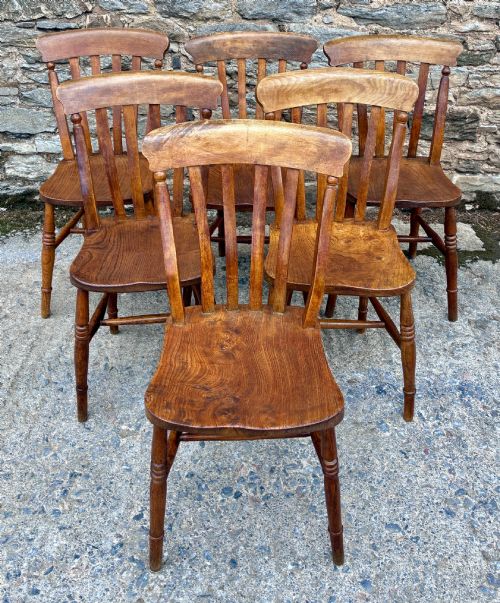
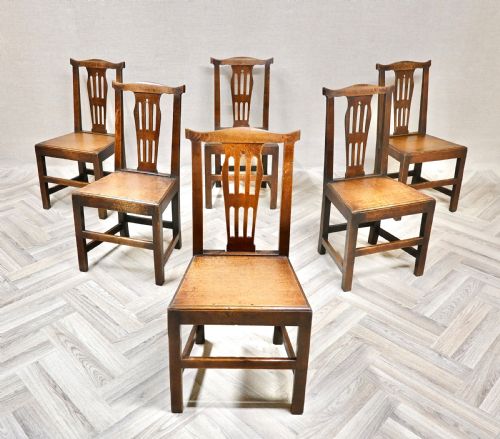
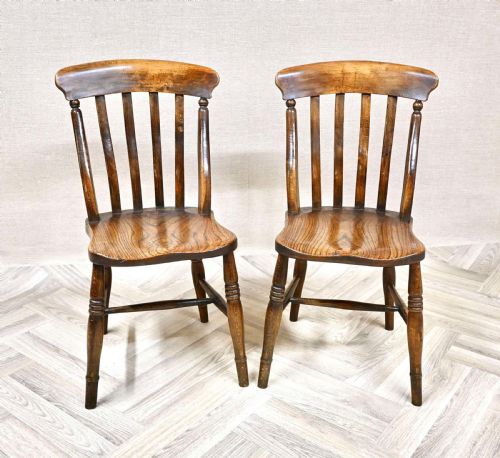
Country Oak Side Chairs
These country oak side chairs are honest vernacular seating built for daily use, offering warmth and sturdy construction to ground a rustic dining room.
Country Oak Side Chairs
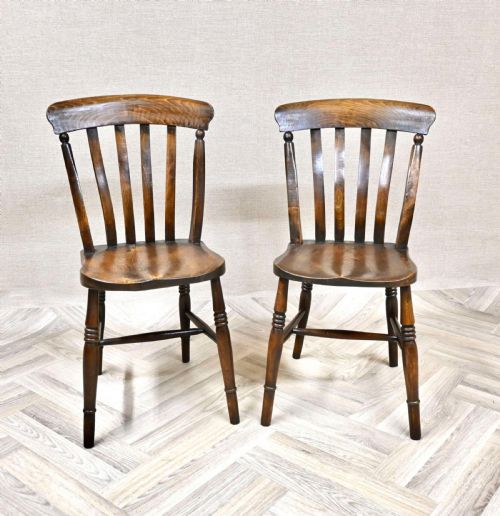
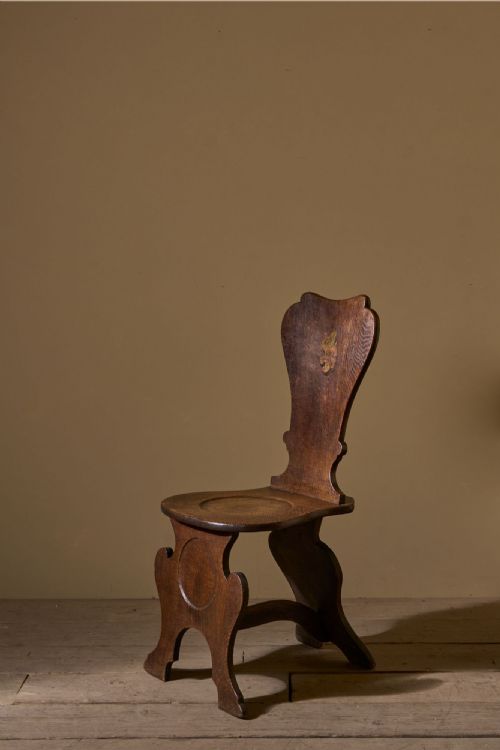
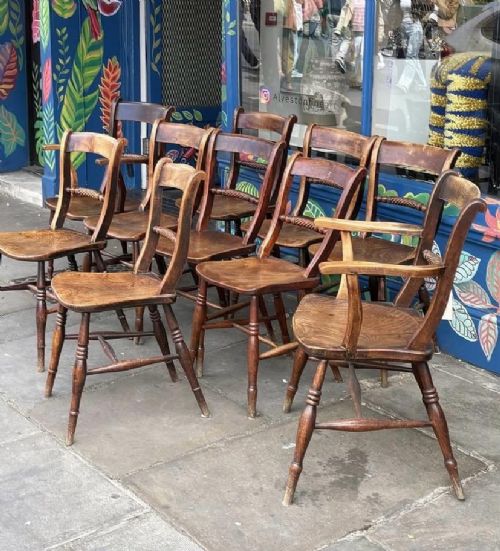
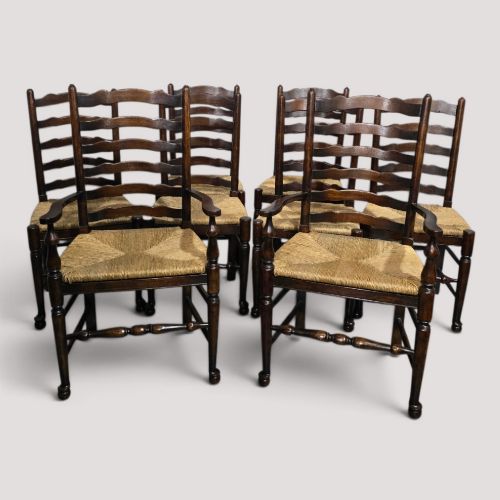
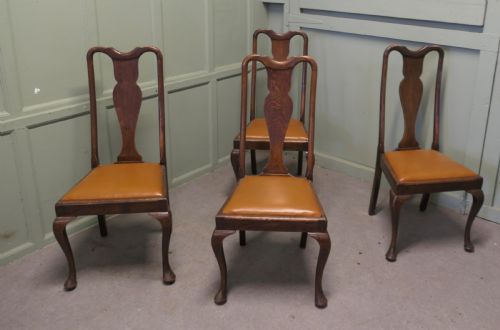
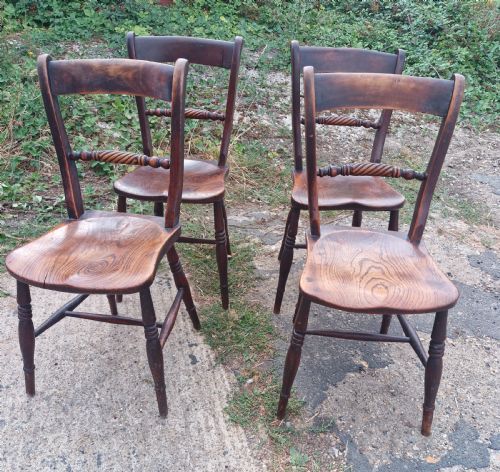
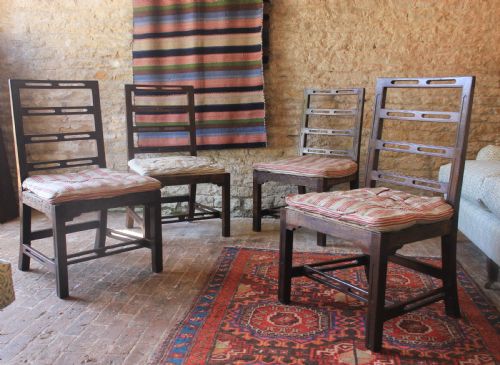
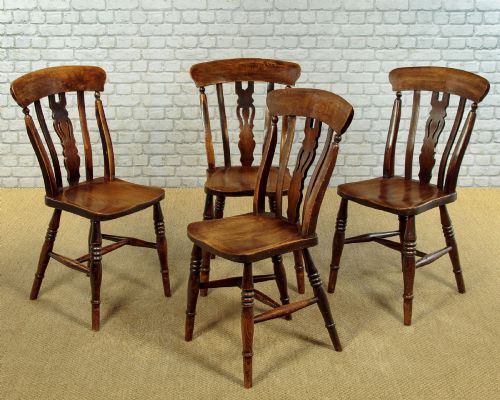
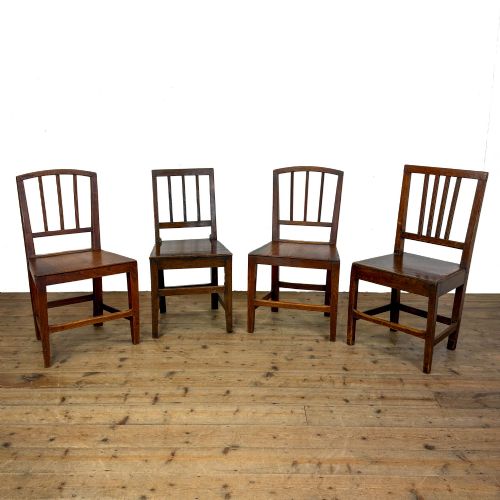
Country oak side chairs encompass robust domestic seating recorded across periods from the seventeenth century through the Georgian and Victorian eras up to nineteen-ten and nineteen-twenty. These practical forms include dining chairs, kitchen farmhouse chairs, and hall chairs designed without arms to tuck neatly beneath tables or stand against walls.
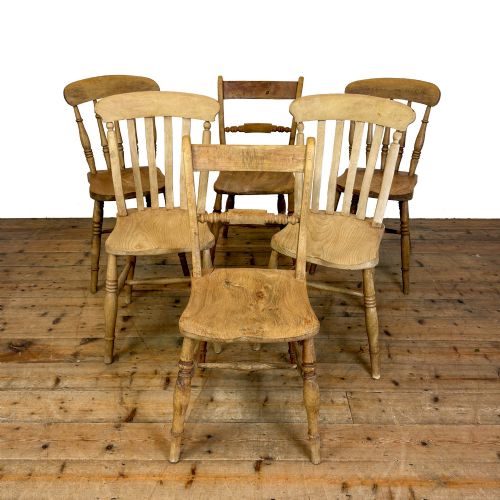
The versions most commonly met on this page range from plain seventeenth-century joyned examples and eighteenth-century Georgian provincial styles to nineteenth-century farmhouse sets and early twentieth-century Arts and Crafts interpretations. They frequently appear in matched pairs or larger sets, sometimes assembled as harlequin collections over time.
Makers working in regional idioms favoured sturdy vernacular designs rather than courtly fashions, utilising native timbers. The resulting pieces reflect the changing domestic requirements of country houses, farmhouses, and provincial halls through successive generations.
Materials and Construction
The primary material across these pieces is solid oak, frequently paired with elm for seats and structural components. Artisans relied on traditional joinery methods, such as pegged mortise and tenon joints, to ensure structural longevity without relying on metal fasteners.
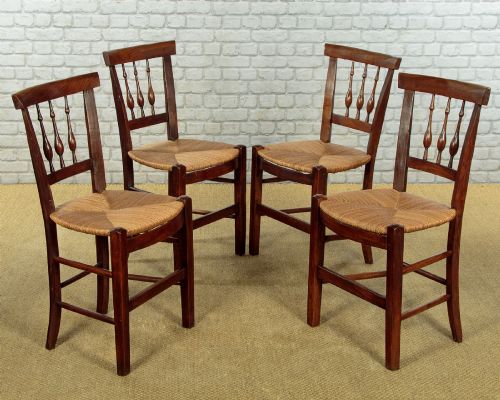
Surface details involve hand carving, panelled backs, and high carved backs seen in Carolean and Jacobean inspired pieces. Seating surfaces often incorporate solid timber, woven rush, or incorporate fabric and textile squab cushions for added comfort.
Retail Price Guide 2026
Typical UK retail prices for country oak side chairs, calculated from the Sellingantiques database of over a million retail prices indexed since 2003. This retail price guide relies exclusively on Sellingantiques data; no external sources or auction records are used, so the figures do not describe the wider market.
Some harlequin sets prove that matching furniture was strictly optional for ancestors who simply pulled up whatever sturdy seat was nearest.
Judging Quality
Quality in these vernacular chairs rests upon the integrity of the original timber and the honesty of the construction. Superior examples retain their early patination, sound structural joinery, and minimal intervention from later restorations.
The distinction between standard utility seating and finer provincial work lies in the crispness of hand-carved details, the selection of figured oak, and whether sets have remained together organically rather than being assembled recently.
The Country Oak Side Chairs Glossary
- Joyned oak
- Furniture constructed using traditional frame and panel joinery rather than basic nailed boards. This method provides superior structural stability for early chairs.
- Harlequin set
- A collection of chairs that match in general style, period, or material but were not originally made as a single uniform set. They offer a traditional, collected appearance around a dining table.
- Side chair
- An upright chair without arms designed primarily for dining or occasional use against a wall. These pieces save space while providing practical seating.
- Rush
- Woven marsh plant material traditionally used to create durable, textured seat bases. This technique appears frequently on vernacular country seating.
Frequently Asked Questions
What defines country oak side chairs?
These chairs are vernacular seating pieces constructed primarily from native oak for domestic use in farmhouses, cottages, and country houses. They prioritise sturdy utility and regional craftsmanship over ornate courtly styles.
They appear in various forms including kitchen dining chairs, hall seats, and high-backed decorative versions spanning several centuries of English woodworking tradition.
How were these chairs originally used?
They served as practical daily seating around farmhouse dining tables, in hallways for callers, or positioned against walls in country parlours. Their armless side chair design allowed them to be tucked away easily when not in use.
Over generations, larger sets accommodated families and guests in communal dining spaces, while smaller pairs functioned as occasional furniture in domestic interiors.
How do I live with antique oak chairs?
Living with these pieces involves placing them away from direct heat sources and sudden humidity changes to protect the historic oak timber and traditional joinery. Regular gentle dusting preserves the natural wax finish and accumulated surface patination.
They integrate well into modern dining spaces, pairing naturally with rustic wooden tables or serving as accent pieces in hallways and living rooms.
How do I tell different periods apart?
Early pieces from the seventeenth century often feature heavy framing, peg construction, and carved high backs in Jacobean or Carolean styles. Georgian and Victorian examples typically show cleaner geometric lines, simpler slat backs, or provincial interpretations of prevailing urban fashions.
Examining the tool marks, timber shrinkage, and joinery style helps distinguish seventeenth and eighteenth-century examples from nineteenth-century farmhouse revivals and nineteen-ten Arts and Crafts pieces.