
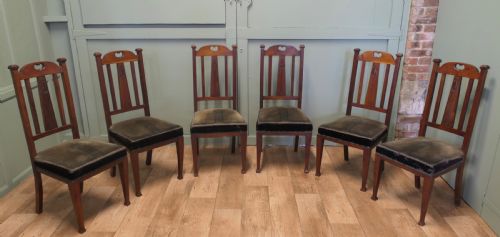
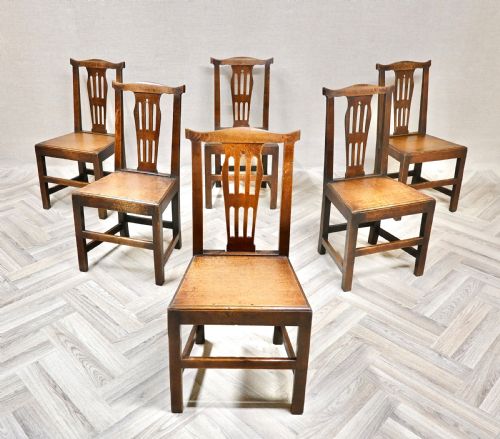
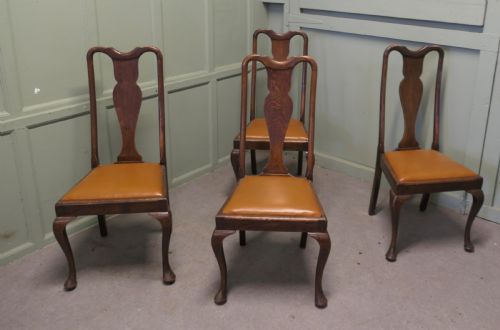
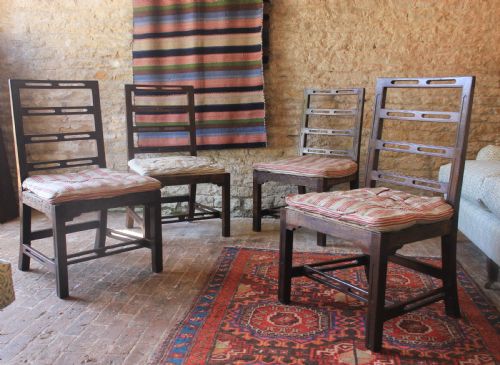
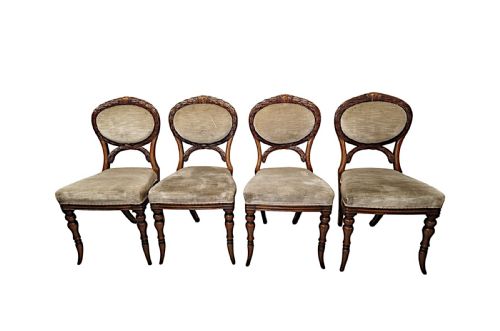
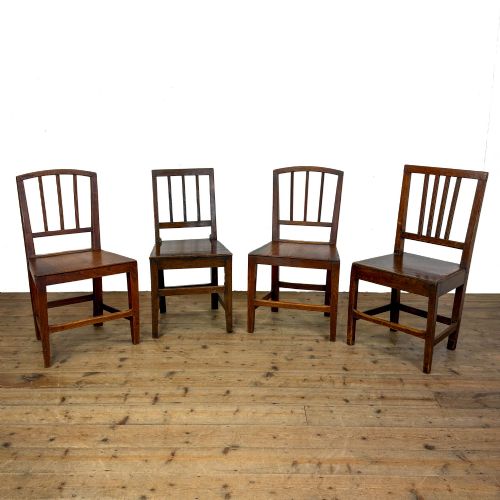
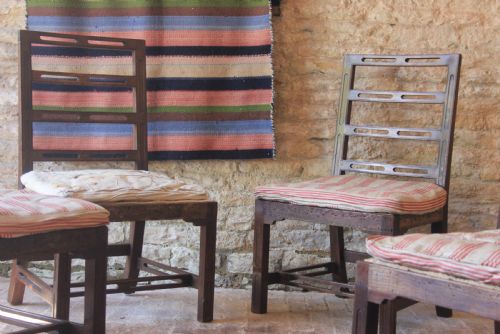
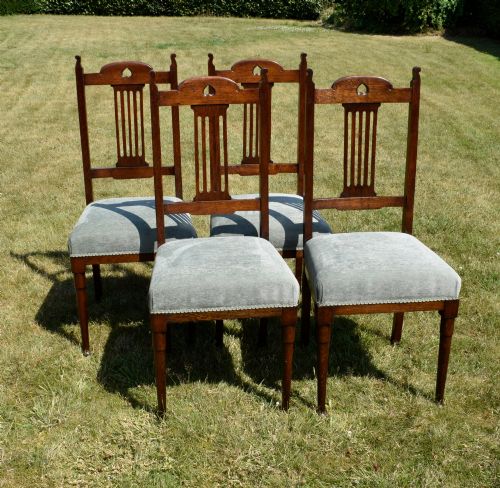

Period Oak Side Chairs
Period oak side chairs bring substance to a room, offering sturdy frames and honest craft that collectors prize.
What period oak side chairs are
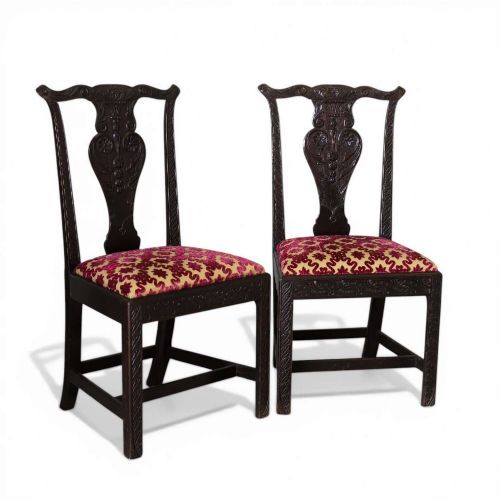
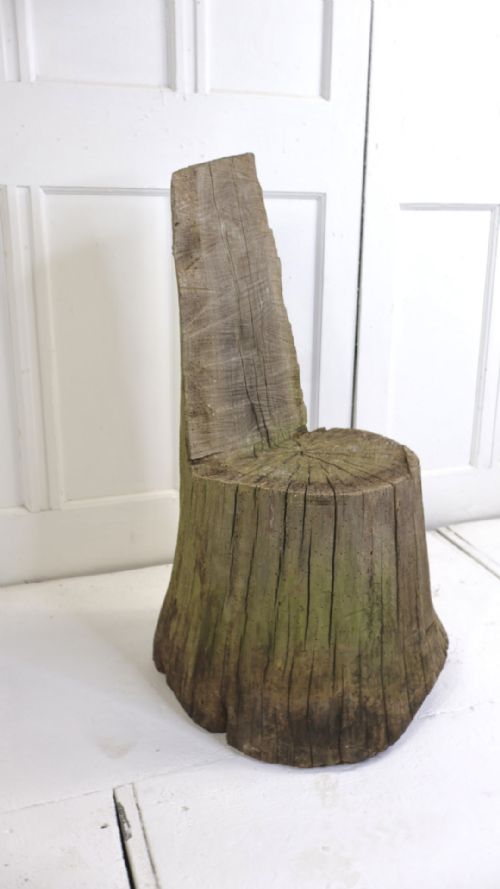
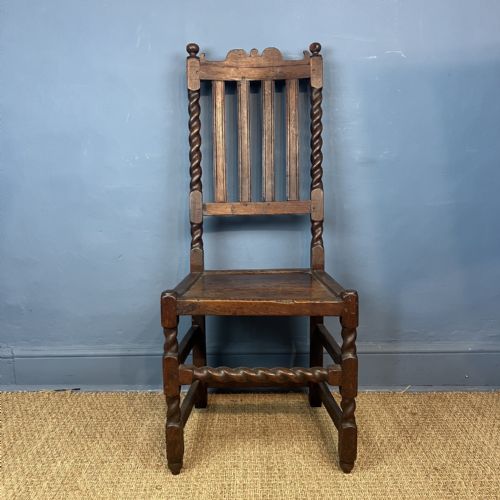
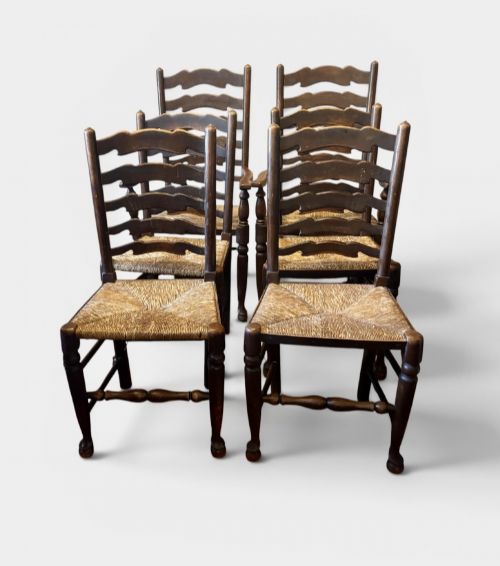
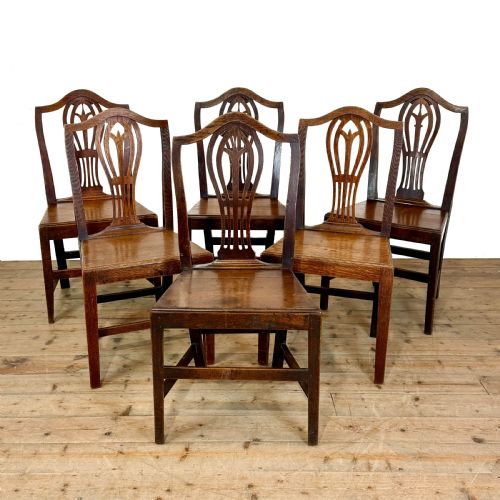
Period oak side chairs encompass sturdy seating from the seventeenth, eighteenth, and nineteenth centuries, designed for domestic use without arms. Buyers seeking period oak side chairs encounter vernacular forms such as ladder backs, hall chairs, and farmhouse chairs alongside formal seventeenth-century types like Derbyshire, Yorkshire, and farthingale chairs.
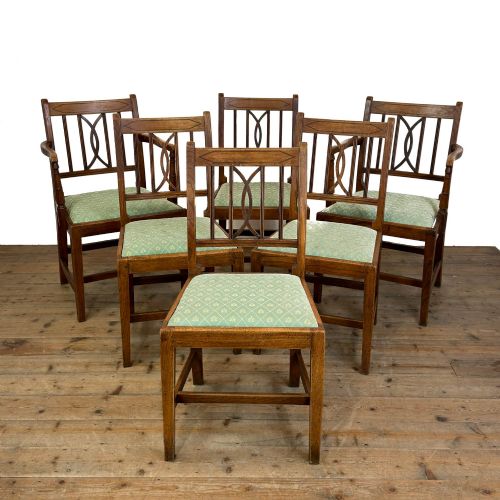
The selection ranges from seventeenth-century provincial seating to nineteenth-century vernacular revivals, including sets of six chairs as well as pairs. Styles span Jacobean, English Country, Welsh Country, and Georgian Provincial, showing how regional makers adapted the timber to local tastes.
How they were made
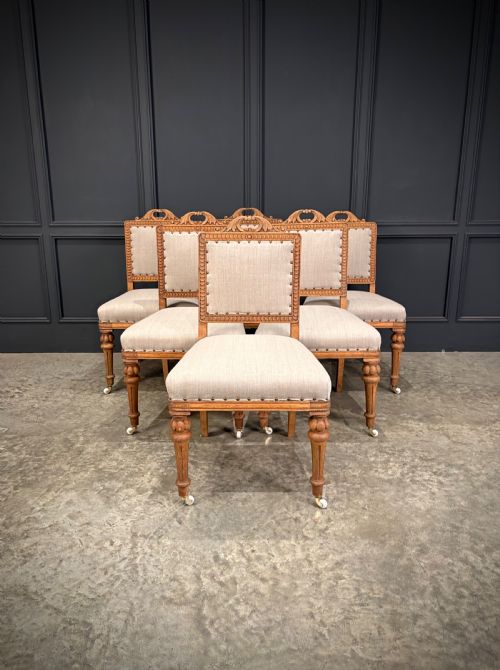
Maker's workshops built these chairs using solid oak timbers, shaping the wood with traditional joinery techniques suited to the period. Frames frequently incorporate rush seating or support upholstered elements finished in tapestry and textile.
Metal components appear sparingly, typically as brass fixings or structural reinforcement, while surface treatments rely on the natural grain of the timber and period upholstery methods.
Retail Price Guide 2026
Typical UK retail prices for period oak side chairs, calculated from the Sellingantiques database of over a million retail prices indexed since 2003. This retail price guide relies exclusively on Sellingantiques data; no external sources or auction records are used, so the figures do not describe the wider market.
Farthingale chairs were built wide so sixteenth and seventeenth-century ladies could sit down without crushing their architectural skirts.
What varies in quality
Quality rests in the integrity of the original timber and the coherence of the regional style, whether executed as a Derbyshire chair or a Welsh farmhouse seat. Pieces that retain their early rush or textile upholstery elements command greater attention from purists.
The refinement of the turnings and the survival of distinct regional characteristics, such as those found on Yorkshire backstools or seventeenth-century hall chairs, separate standard vernacular examples from more ambitious provincial work.
The Period Oak Side Chairs Glossary
- Backstool
- An early term for an upholstered chair without arms, common in seventeenth-century probate inventories. These pieces provide padded comfort while maintaining a compact footprint.
- Farthingale chair
- A wide, low-seated chair without arms designed to accommodate the voluminous skirts of the early seventeenth century. They typically feature upholstered seats and backs.
- Derbyshire chair
- A distinctive regional seventeenth-century chair type featuring carved and turned open-work backs. They represent the more decorative end of provincial oak seating.
- Ladder back
- A chair back constructed with horizontal slats between the upright posts. This traditional form appears across multiple centuries in vernacular furniture.
- Rush
- Dried marsh grass twisted into cord and woven to form traditional seat pads. It offers a resilient, flexible surface that responds to atmospheric changes.
Frequently Asked Questions
What is a farthingale chair?
A farthingale chair is an armless seat with a wide base and padded upholstery, designed to suit the fashion of wide skirts in the seventeenth century.
These pieces function well as occasional seating in reception rooms where space is at a premium.
How do I date an oak chair?
Dating relies on identifying construction methods, timber characteristics, and regional stylistic markers such as those seen on Derbyshire or Yorkshire chairs.
Comparing joint types and turnings against established seventeenth and nineteenth-century examples provides a reliable chronology.
Were these chairs used at dining tables?
While some served around dining boards, many functioned as hall chairs or general household seating in seventeenth and nineteenth-century interiors.
Their sturdy oak frames suited heavy daily use across various domestic rooms.
How should I care for rush seats?
Rush seats require stable humidity levels to prevent the natural fibres from becoming brittle or drying out over time.
Gentle dusting and avoidance of excessive moisture keep the woven material in stable condition.