

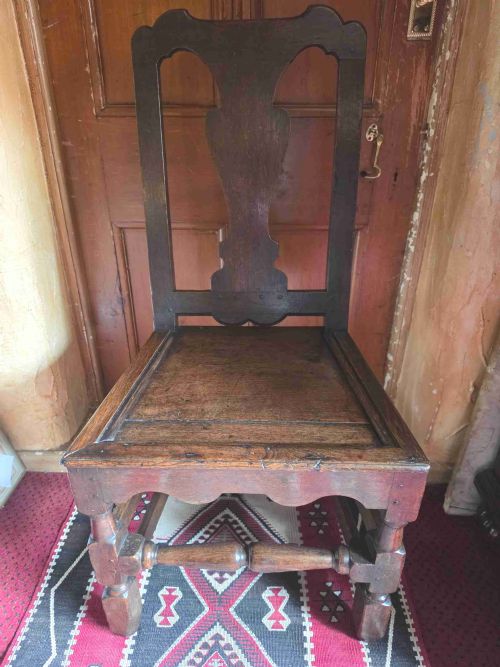


Georgian Oak Hall Chairs
Georgian oak hall chairs are sturdy timber seats made for entranceways, built to last and carrying centuries of domestic history in their grain.
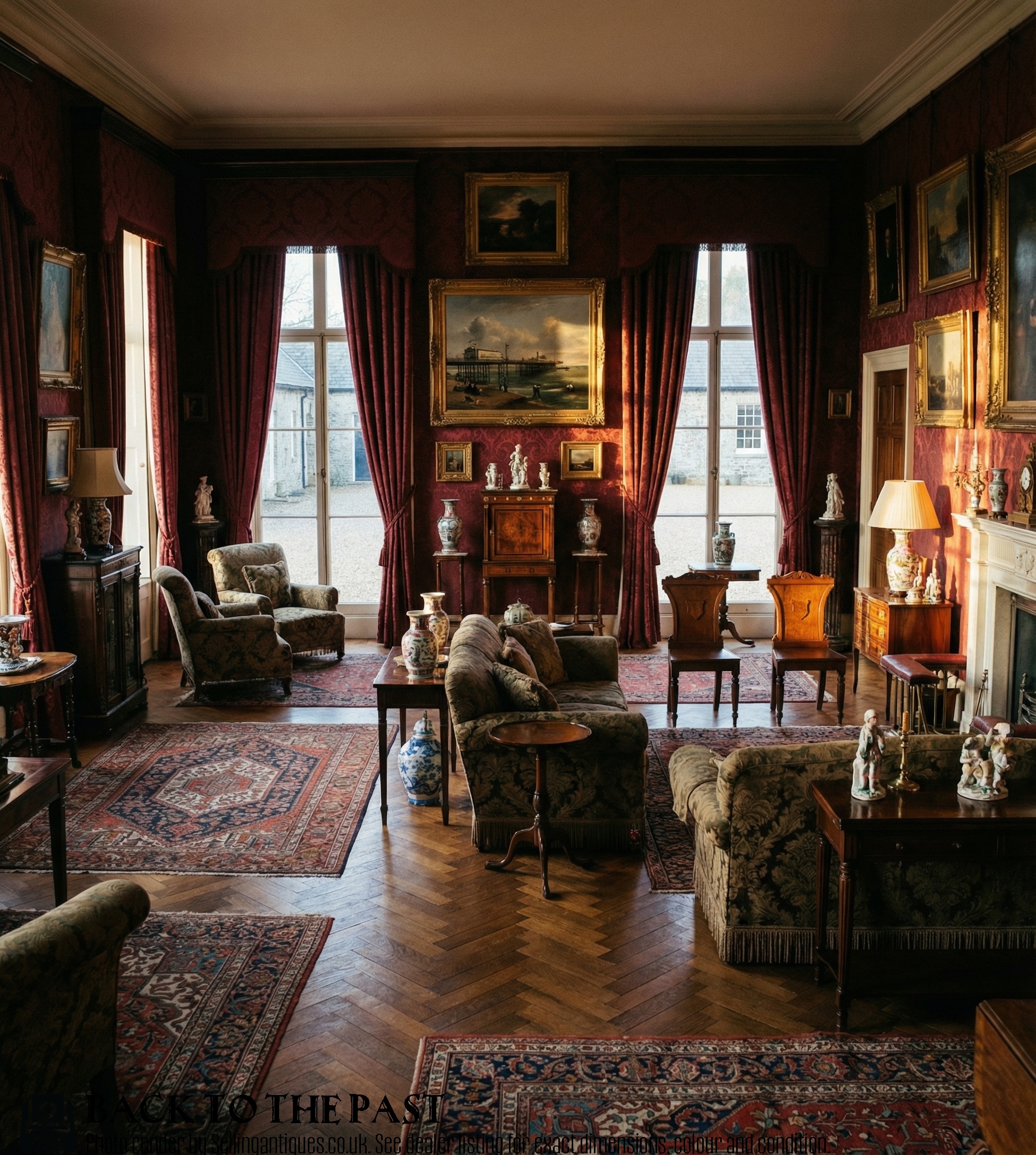
Georgian Oak Hall Chairs
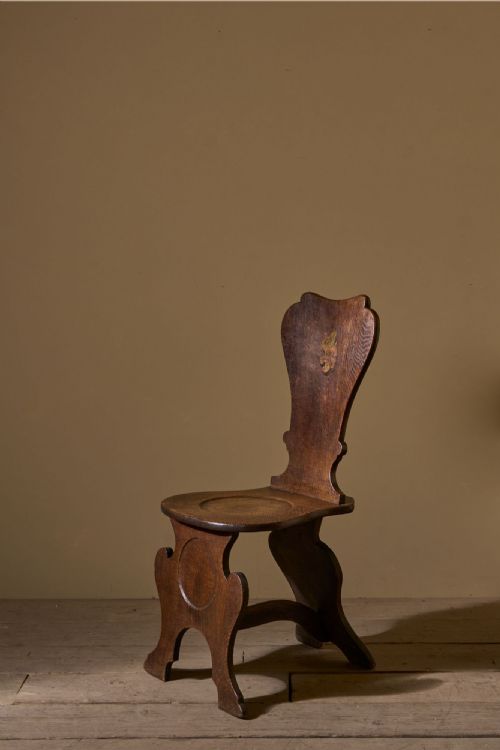
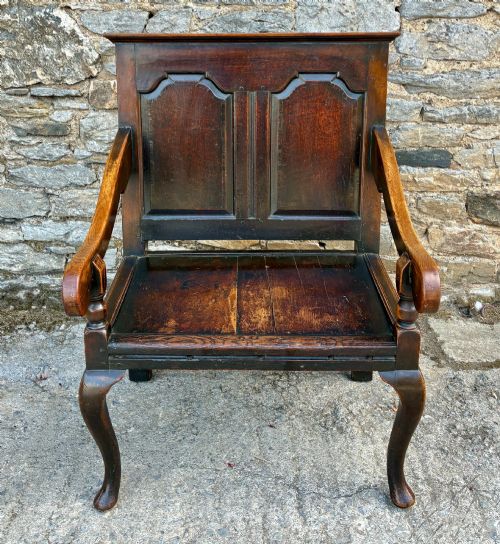
When you search for georgian oak hall chairs, you are looking at utilitarian timber seating designed for the entrance halls and corridors of period homes. The examples found here span the eighteenth and nineteenth centuries, taking the form of side chairs, high back chairs, and occasional benches rather than domestic lounging furniture.
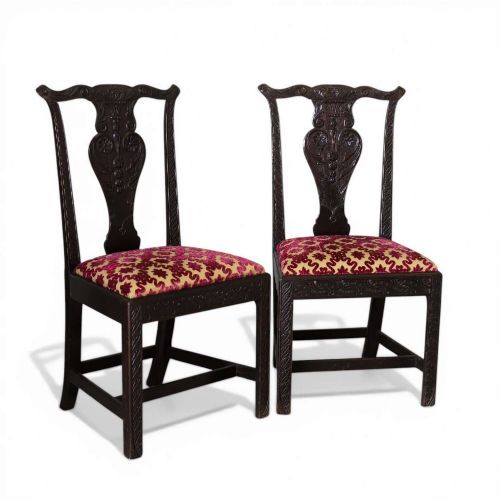
The pieces on this page draw from Georgian, Regency, and early eighteenth-century periods, alongside later revivals. You will encounter plain country vernacular pieces as well as more formal Chippendale and George III designs executed in solid timber.
While primarily called hall chairs, the evidence shows these forms blur into dining chairs, settles, and country side chairs made from oak and elm. They were built for function in high-traffic spaces, meaning their construction is robust and straightforward.
How they were made
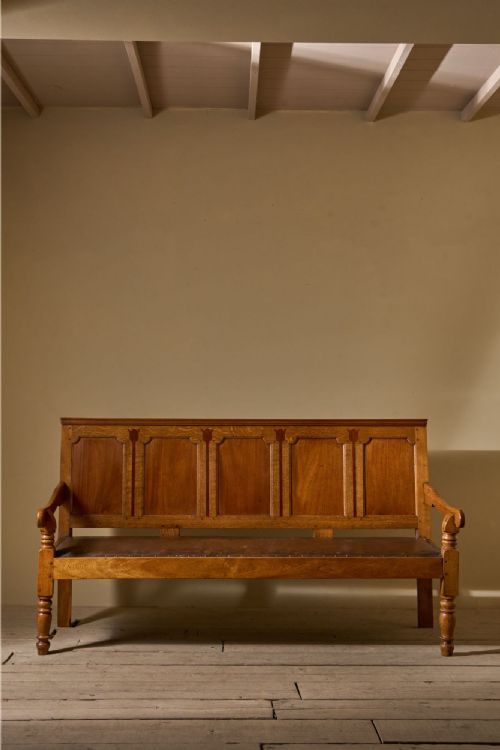
Cabinetmakers relied heavily on solid oak and elm for these frames, utilising the natural density of the timber to withstand heavy daily use in hallways. Surfaces occasionally feature painted finishes, wood inlay, or carved decoration such as tulip motifs.
Construction techniques include traditional joinery alongside turned elements like bobbin turning on the legs and stretchers. Some seating surfaces incorporate rush or are adapted for later fabric upholstery including velvet and Zoffany material.
One enthusiastic maker spent hours carving tulips into an oak hall bench, proving that even a hallway seat deserved a little floral flourish.
What varies in quality
The distinction between ordinary and superior examples lies in the depth of the carving and the architectural ambition of the backrest. A shield back or hand-carved Chippendale apprentice piece displays a level of joiner's skill absent in a basic vernacular side chair.
Proportion and timber selection also drive differences in standard, with tightly grained oak and well-figured elm commanding greater appreciation. The integrity of the original construction and the survival of early surface patination elevate individual pieces above heavily restored equivalents.
The Georgian Oak Hall Chairs Glossary
- Hall chair
- A rigid wooden seat placed in an entranceway for visitors to use briefly, often featuring a solid timber back carved with a crest or shield.
- Vernacular
- Everyday furniture made by local regional cabinetmakers using accessible regional timber like oak and elm, free from high London fashion.
- Bobbin turned
- Legs and stretchers shaped on a lathe to resemble a string of beads or bobbins, common in seventeenth and eighteenth-century seating.
- Shield back
- A chair back shaped in the outline of a heraldic shield, popularised during the latter half of the eighteenth century.
- Settle
- A wooden bench with high solid back, enclosed arms, and often a storage box beneath the seat, designed to keep out drafts in large halls.
Georgian Oak Hall Chairs: Frequently Asked Questions
Where were hall chairs placed in a house?
These chairs stood in entrance halls, corridors, and vestibules to provide a temporary seat for visitors waiting to be announced.
Because they lived in drafty hallways rather than heated parlours, they were made without upholstery to resist damp air and heavy wear.
Are oak hall chairs comfortable to sit on?
Most historic examples were built with rigid wooden seats rather than deep padding, as they were meant for brief use.
Some country pieces incorporate woven rush or later fabric additions, but the primary design prioritised upright posture and durability over comfort.
How do I tell an 18th-century chair from a later copy?
Look closely at the joinery, timber shrinkage, and the colour of the grain underneath the surface. Eighteenth-century pieces show tool marks, peg construction, and natural wear patterns built up over generations of use.
Revival pieces from later periods often use different wood preparation methods and lack the organic patina of genuine age.
Did these chairs match the dining room furniture?
Hall furniture was typically treated as a distinct category from dining sets, often made in tougher woods like oak or elm to withstand heavy outerwear.
They were designed to be seen immediately upon entering the home, making them decorative statements rather than matching parts of a suite.