

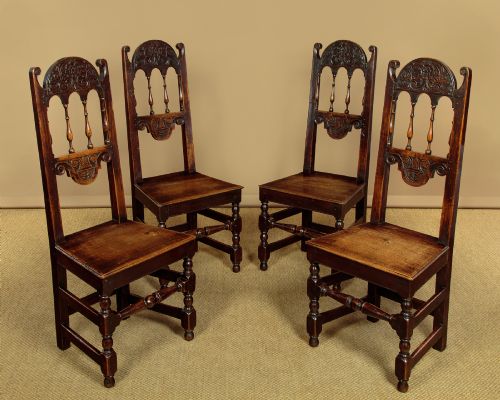


Carved Oak Backstool
These carved oak backstool examples are sturdy seventeenth-century seats built for practical household utility.
Carved Oak Backstool
A carved oak backstool is a traditional seventeenth-century seat designed without arms, featuring a high vertical back and a wooden or upholstered seat. These sturdy chairs served everyday domestic purposes in early homes and chambers.
The pieces on this page belong entirely to the seventeenth century, encompassing regional types such as Yorkshire and South Yorkshire variants. They appear as side chairs and dining chairs built from heavy timber.
Regional diversity shapes these seventeenth-century survivors, showing subtle variations in height, back panel configuration, and framing. Buyers encounter both plain timber seats and those fitted with tapestry upholstery.
How they were made
Joiners built these chairs using solid oak timbers, employing traditional mortise and tenon joints secured with wooden pegs. This rigid construction method ensures the frame remains stable across centuries of use.
Craftsmen decorated the uprights and rails with hand-carved motifs typical of the Jacobean style. Some examples integrate tapestry upholstery into the seat or back for added comfort.
Carved Oak Backstool Retail Price Guide 2026
Typical asking prices for carved oak backstool among the pieces listed under this phrase on Sellingantiques today, from the lower quarter to the upper quarter. They describe what is for sale here now, not the wider market.
Every listed item on this page originates from the seventeenth century and is constructed from solid oak.
What varies in quality
The refinement of the hand-carved detail distinguishes finer examples from simpler provincial work. Crisp, deep relief carving on the oak crest rails indicates greater artisanal skill during construction.
Proportion and timber selection drive the distinction between standard utility seats and more ambitious regional pieces. Denser oak grain and well-balanced structural proportions create a more commanding presence in a room.
The Carved Oak Backstool Glossary
- Backstool
- An early seventeenth-century term for a chair without arms, featuring a padded or wooden back. These seats were common in vernacular domestic interiors.
- Jacobean
- The stylistic period spanning the reign of James I, characterised by sturdy proportions and geometric or strapwork carving on oak furniture. This style heavily influences seventeenth-century seating design.
- Mortise and tenon
- A fundamental woodworking joint where a projecting tongue fits snugly into a corresponding cavity to lock timbers together. This technique underpins the rigid frame of joined furniture.
- Tapestry upholstery
- Woven textile fabric applied to seating frames to provide a softer surface. Surviving early examples offer a textural contrast to the hard oak structure.
Carved Oak Backstool: Frequently Asked Questions
What is a backstool?
A backstool is an early term for a chair without arms, designed with a high back for upright posture at a table or desk.
These seventeenth-century seats function well as occasional chairs in a hallway or study today.
Where were these chairs used?
Original owners placed these sturdy oak seats in the principal rooms and chambers of seventeenth-century houses.
They sit comfortably against a wall or around a dining table in modern traditional interiors.
How do I date a backstool?
Dating relies on examining the construction methods, joint pegs, and the style of the carved oak woodwork.
Regional characteristics, such as those from Yorkshire, also help identify the period and origin.
Are they comfortable to sit on?
Seventeenth-century oak chairs were built for upright posture rather than lounging, reflecting the domestic habits of the period.
Versions featuring tapestry upholstery offer a slightly softer seat while retaining their historic character.