
Traditional Armchair Pair
A traditional armchair pair brings balanced seating and period character to a room, offering matching proportions that single chairs cannot manage.
Traditional Armchair Pair
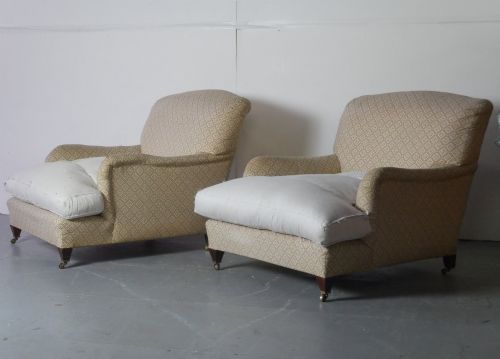
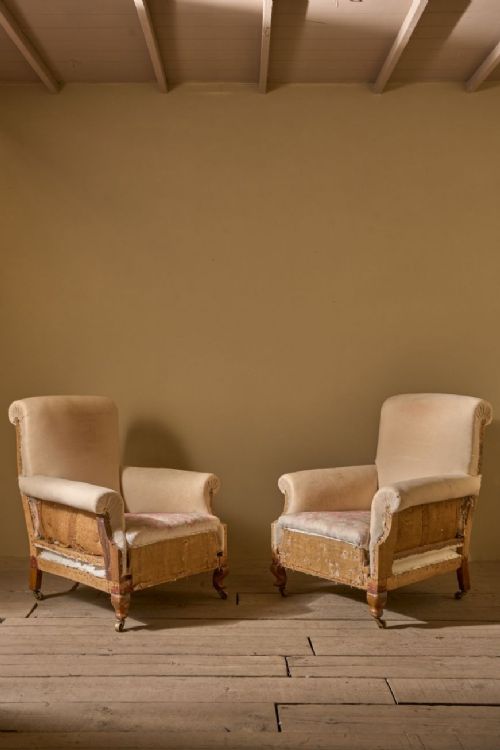
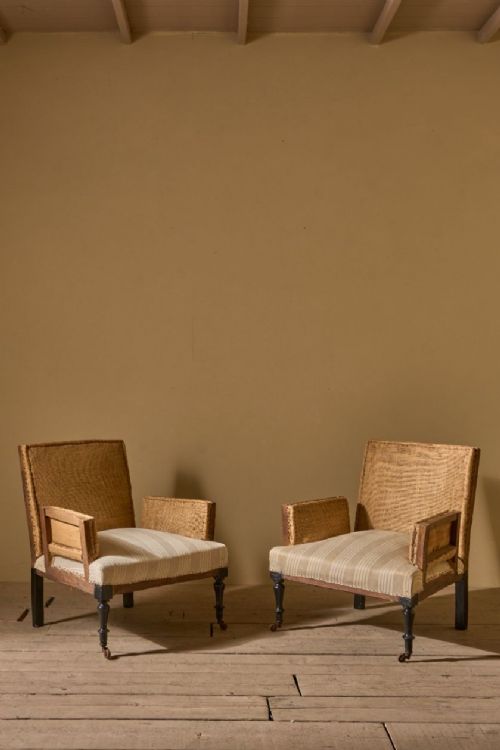
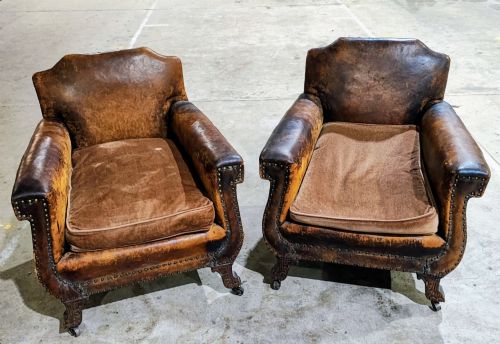
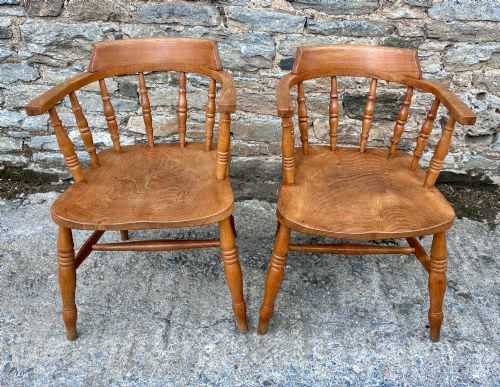
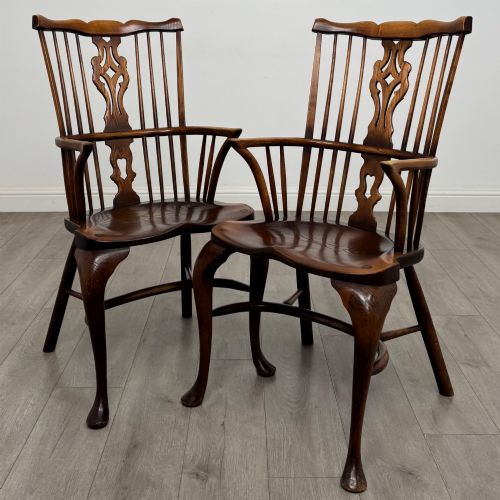
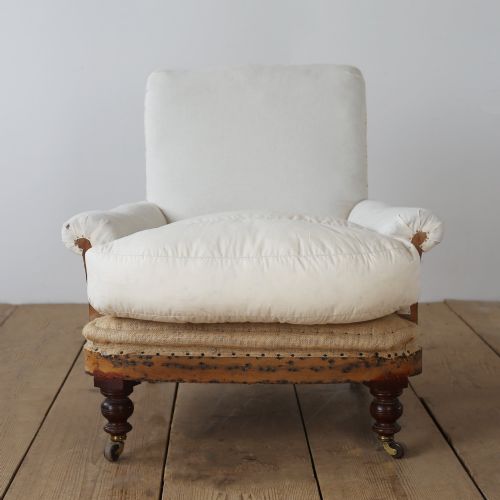
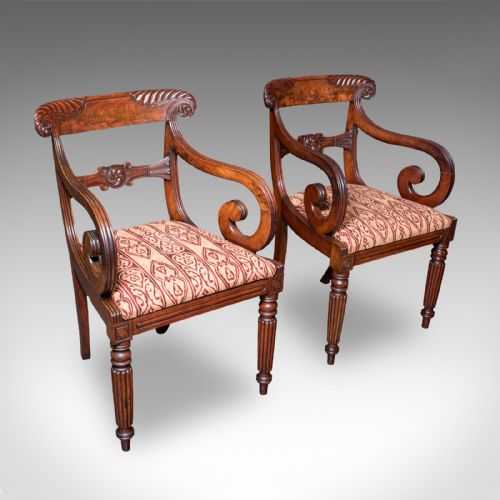
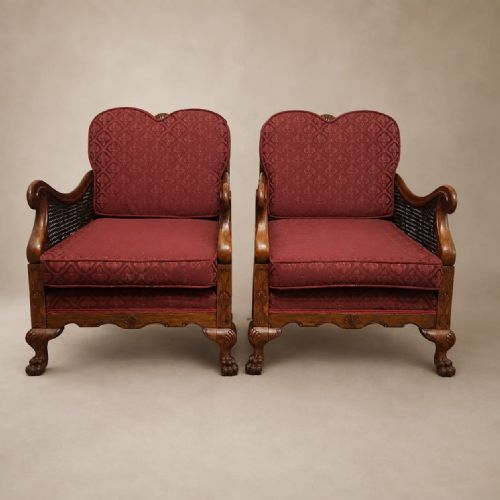
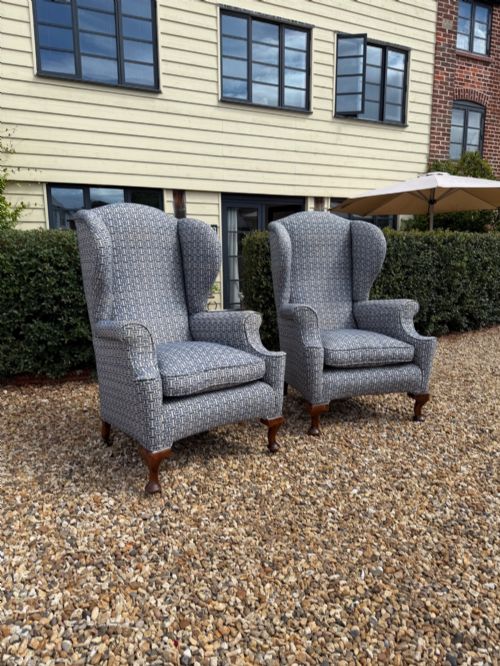
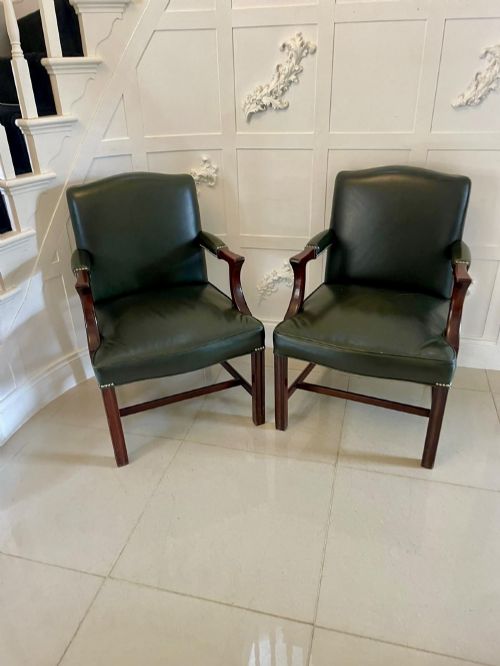
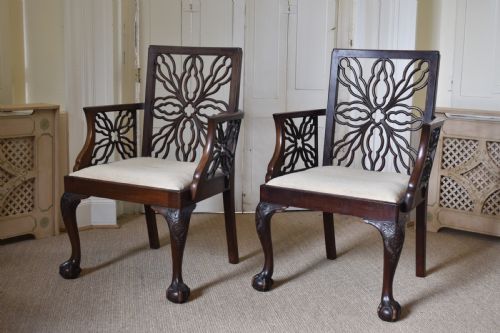
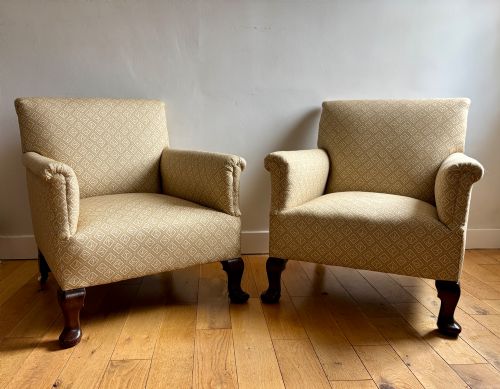
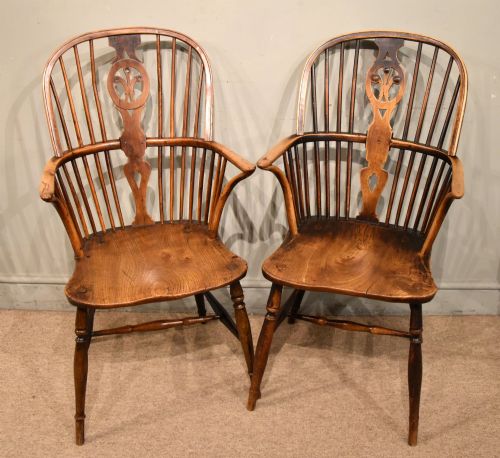
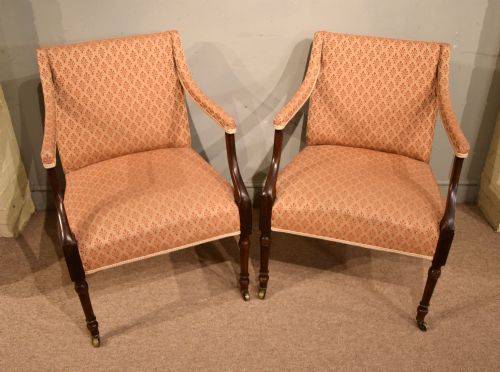
A traditional armchair pair encompasses matched seating options spanning the Georgian, Victorian, and Edwardian eras, alongside later twentieth-century interpretations. Buyers seeking a traditional armchair pair will encounter various forms, from upholstered wing chairs and leather club seats to Windsor stick-backs and walnut tub armchairs.
The selection ranges from English country house seating and formal mahogany reception chairs to French designs and Chinese hardwood yoke-back models. Elm, mahogany, and walnut dominate the wooden frameworks, paired with leather, velvet, and woven cane upholstery.
Materials and Construction
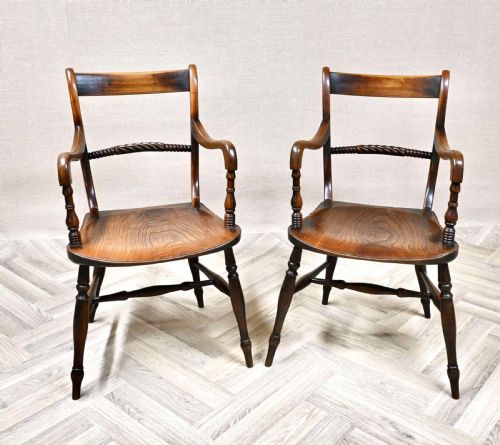
Frames rely on sturdy timbers such as elm, ash, yew, mahogany, and walnut, frequently joined using traditional methods suited to each regional workshop style. Windsor and captain chairs utilise turned spindles and bentwood parts, while formal library and desk chairs employ carved mahogany or walnut framing.
Upholstered variations incorporate stitched leather, velvet, split cane, and fabric over padded seating foundations. Brass hardware and decorative details appear on specific desk and club models to secure joints and accent the woodwork.
Smokers bow chairs earned their name because landlords kept them in public house taprooms where patrons could smoke without snagging their coat tails.
Distinctions in Standard
The calibre of a traditional armchair pair rests in the integrity of the timber frame and the crispness of any carved detailing. Higher-tier examples display superior grain selection in woods like yew and walnut, alongside harmonious matching between the two chairs.
Structural stability and the retention of original components, such as cane panels or turned stretchers, separate utilitarian pieces from finer specimens. The depth of patina on exposed wood and the quality of traditional upholstery execution further define the upper tier.
Whytock and Reid·Howard and Sons
The Traditional Armchair Pair Glossary
- Windsor
- A wooden chair construction method featuring seats bored to receive turned legs and vertical back spindles. These often incorporate a bentwood bow or high comb back.
- Wingback
- An upholstered armchair style featuring protective side panels designed to shield the occupant from draughts. Early versions frequently used horsehair stuffing beneath leather or fabric.
- Captain chair
- A sturdy low-backed wooden seating form with a rounded armrest rail supported by spindles. They frequently feature elm seats and appear in studies or captain cabins.
- Bergere
- An enclosed armchair featuring upholstered sides filled with cane or webbing. The wooden frame is typically exposed and polished.
- Patina
- The surface sheen and mellowing developed by wood and leather through decades of handling and ageing. It serves as an indicator of genuine period use.
Traditional Armchair Pair: Frequently Asked Questions
How do I match mismatched chairs?
Matching disparate seating requires finding common elements in wood tone, height, and overall silhouette. Placing them with a shared focal point helps unify the pairing.
Alternatively, distinct pieces work well when linked by similar upholstery fabric or shared period proportions.
Are these chairs comfortable for daily use?
Period seating varies significantly in ergonomics, depending on whether the design leans toward formal reception use or relaxed lounging. Deep-seated club chairs and wingbacks offer substantial comfort for everyday sitting.
Stiff wooden Windsor and captain chairs provide upright support suited to desks and dining tables rather than slouching.
How do I care for leather upholstery?
Leather surfaces require regular dusting with a soft, dry cloth to prevent grit accumulation in the creases. Applying a specialist leather conditioner periodically keeps the hide supple and prevents cracking.
Keep antique leather away from direct sunlight and heat sources to maintain the natural finish.
How do I distinguish Edwardian from Victorian?
Victorian seating generally displays heavier proportions, darker woods, and more exuberant carved ornamentation. Edwardian pieces tend to feature lighter frames, simplified lines, and brighter wood tones.
The transitional decades around nineteen hundred often blend these characteristics, reflecting shifting interior fashions.