



Antique Italian Armchairs
These antique italian armchairs bring centuries of regional craft, rich carved walnut, and gilded surfaces straight into a modern room.
Antique Italian Armchairs
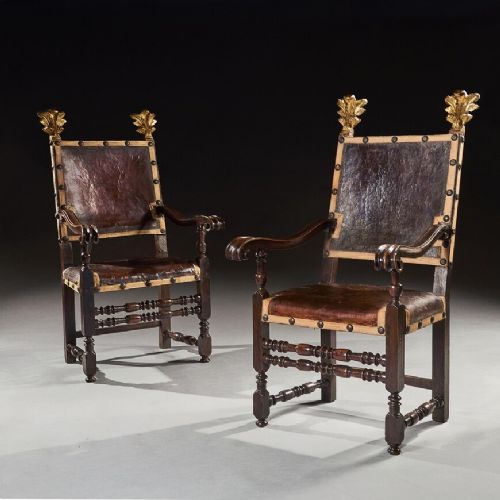
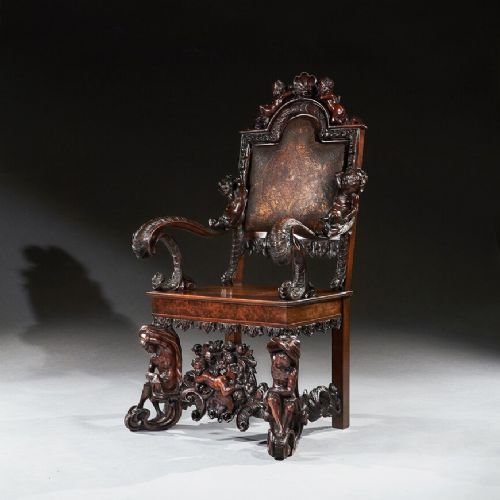
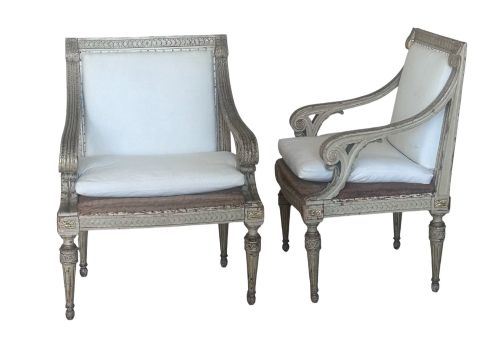
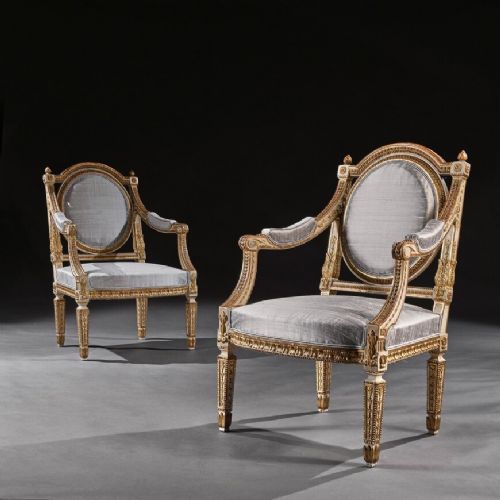
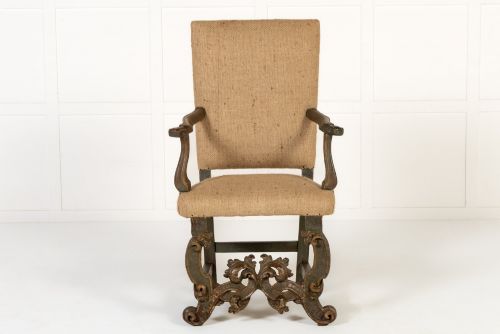
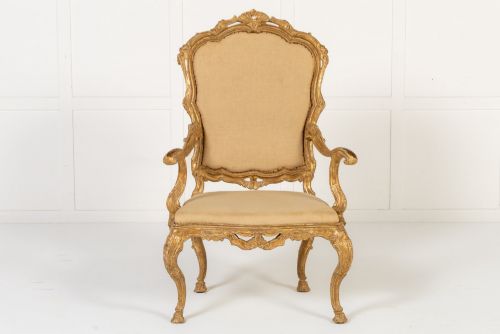
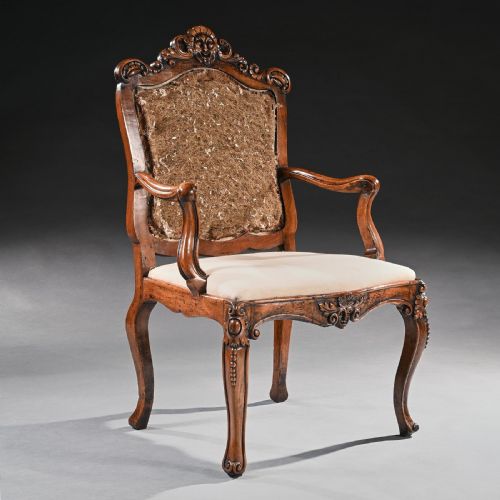
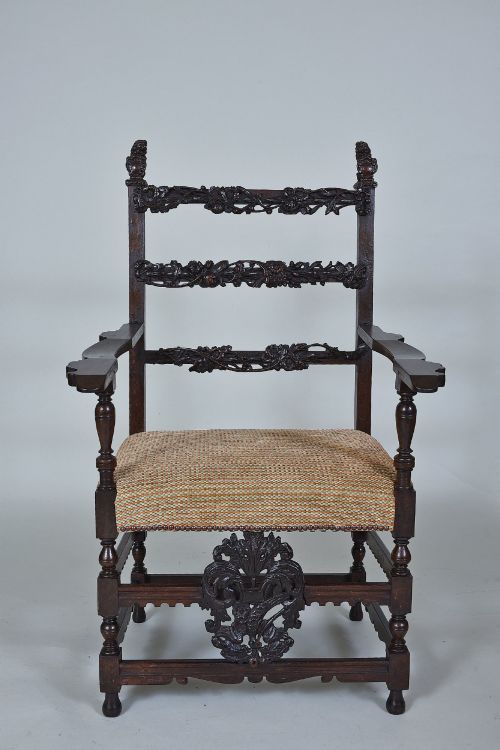
When you search for antique italian armchairs, you encounter seating built across centuries of distinct regional workshops, spanning the seventeenth, eighteenth, and nineteenth periods. The forms range from high back open walnut frames to gilded salon chairs and carved audience armchairs.
Walnut and gesso constructions dominate the selection, often finished with gold leaf or painted surfaces. You will frequently find pairs listed alongside single pieces, reflecting how they were originally commissioned for grand interiors and palazzos.
How they were made
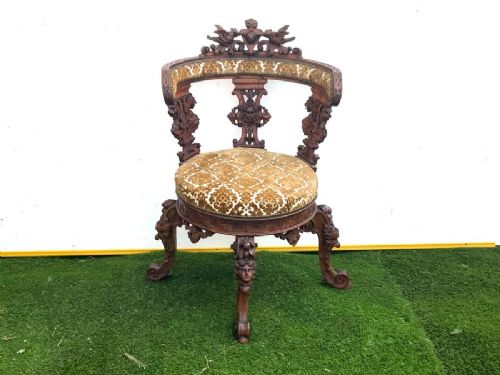
Carpenters shaped these frames primarily from solid walnut, employing hand carving to achieve elaborate ornamentation such as figural details and scrollwork. Gesso and gold leaf were then applied to wooden structures to create shimmering gilded surfaces.
Upholstery methods relied on traditional textiles including leather, fabric, Hessian, and needlework. Artisans secured these coverings directly to the wooden frameworks, often pairing structural turned wood elements with plush padding.
Listings feature walnut as the primary timber alongside decorative applications of gold leaf, gesso, and textile upholstery.
What varies in quality
The distinction between ordinary seating and exceptional pieces lies in the depth and crispness of the hand carving on the head rails and arm supports. Master carvers produced spirited figural work and intricate relief that lesser workshops simply imitated with softer lines.
Original surface treatments separate top-tier examples from heavily restored ones. Retaining authentic parcel-gilt, silver gilt, or early paint finishes preserves the visual integrity intended by the original maker.
White Allom and Co·Henry Thomas Peters of Genoa·Andrea Brustolon
The Antique Italian Armchairs Glossary
- Barocchetto
- The Italian version of the Rococo style, known for lighter proportions and asymmetrical carved ornamentation. This style flourished during the eighteenth century.
- Gesso
- A plaster-like mixture applied to wood surfaces as a smooth base for gilding or painting. Artisans used it extensively on giltwood frames.
- Gondola chair
- A curved-back seat form originating in Venice, often associated with eighteenth-century interior design. The enclosed back resembles the traditional boat.
- Parcel-gilt
- A decoration technique where only specific raised portions of a wooden object receive gold leaf, leaving the underlying walnut exposed elsewhere.
Antique Italian Armchairs: Frequently Asked Questions
How do I clean antique velvet or fabric upholstery?
Surface dust can be removed gently with a soft brush or low-suction vacuum attachment. Avoid using water or chemical cleaners on historic textiles.
For deeper cleaning or fragile needlework, consult a professional textile conservator to prevent damage to the historic fibres and stitching.
Can I use these armchairs in daily seating?
Many walnut frames remain structurally robust for regular use, provided they are placed on level flooring. Avoid rocking or putting excessive weight on the carved arms.
Consider the original scale and delicate gilding when choosing a location in a busy room to prevent accidental knocks.
What is the difference between Baroque and Rococo frames?
Baroque chairs from the seventeenth century feature heavier proportions, dark walnut, and robust architectural turns. They project solemnity and formal authority.
Eighteenth-century Rococo examples introduce lighter curved lines, asymmetric shell motifs, and gilded surfaces designed for playful interior elegance.
How do I identify a gesso finish?
Gesso forms a hard, smooth white underlayer beneath gold leaf or paint on wooden chair frames. It allows carvers to achieve sharp relief details.
Over time, this material develops a fine network of age cracks beneath the metallic leaf, which helps confirm its period authenticity.