



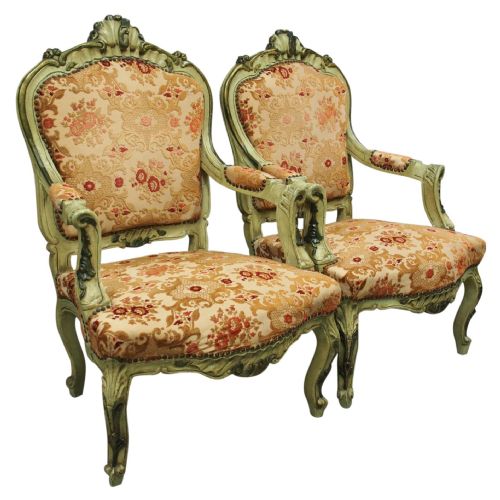
Italian Painted Armchairs
These Italian painted armchairs bring vibrant colour and carved grace into a room, offering a functional seat steeped in historical European style.
Italian Painted Armchairs
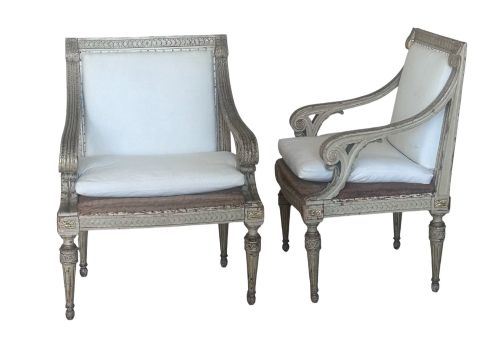
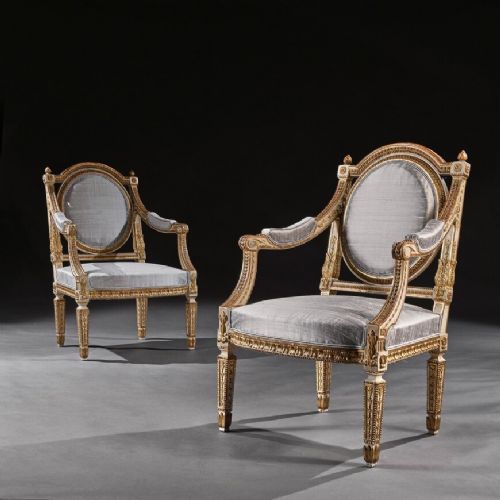
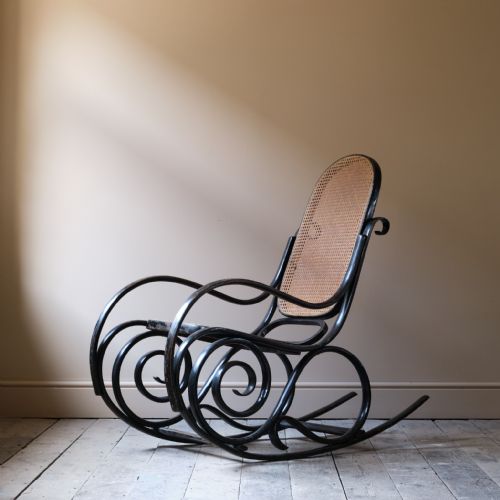
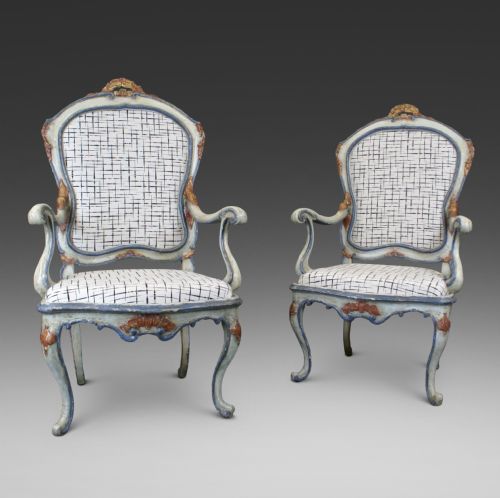
When you search for italian painted armchairs, you are looking at seating forms ranging from standard armchairs to rocking chairs and gondola chairs. The most common examples on this page are pairs dating from the eighteenth and nineteenth centuries, often showing regional influences such as Piedmontese or Venetian origins.
The decorative vocabulary spans Venetian Rococo, Neoclassical, and Barocchetto styles, reflecting distinct periods of European design history. These seating options combine practical utility with ornamental paintwork, gesso, and gilding.
Armchairs in this category frequently incorporate textile elements like silk upholstery and needlework alongside carved wood frames. Buyers encounter both robust nineteenth-century interpretations and earlier eighteenth-century survivors.
How they were made
Construction relies primarily on carved wood and painted wood substrates, often enhanced with applications of gesso and gold leaf. Artisans shaped structural timber before applying layered paint finishes and decorative parcel gilding.
Upholstery techniques involved traditional fabric installation, including silk upholstery and intricate needlework inserts. Frameworks combined structural joinery with delicate surface ornamentation tailored to prevailing period aesthetics.
Listings feature periods spanning from the eighteenth century through to 1920, utilising materials such as gesso, silk upholstery, and gold leaf.
What varies in quality
The degree of artistic execution in the carved wood details and the preservation of the original painted surface separate different examples. Pieces featuring integrated parcel gilt work and sophisticated Neoclassical or Rococo carving demonstrate higher levels of period craftsmanship.
The integrity of the underlying wooden frame and the quality of the textile elements, such as period silk upholstery or hand-worked needlework, influence the overall character of the furniture. Surviving eighteenth-century items often exhibit distinct regional joinery methods compared to later nineteenth-century revivals.
White, Allom & Co.
The Italian Painted Armchairs Glossary
- Gesso
- A plaster-like mixture applied to wood frames to create a smooth surface for painting or gilding. This preparation layer is fundamental to traditional decorative techniques.
- Parcel gilt
- A decorative technique where specific carved elements of an object are partially highlighted with gold leaf. It creates contrast against the main painted wood surface.
- Barocchetto
- An Italian variation of the Rococo style characterised by lighter, more playful asymmetrical ornamentation. This aesthetic appears frequently in eighteenth-century seating design.
- Gondola chair
- A specific nineteenth-century seating form featuring a curved, enclosing backrest reminiscent of Venetian boat silhouettes. These pieces offer a distinct regional profile.
- Fauteuil
- An open-armed upholstered armchair with exposed wooden framing, originating in French design but adopted across European neoclassical traditions. The term denotes a specific formal seating type.
Italian Painted Armchairs: Frequently Asked Questions
How do I spot an eighteenth-century piece?
Eighteenth-century examples often display specific regional characteristics such as Venetian Rococo or Barocchetto carving styles. Their construction methods and surface wear reflect prolonged historical age.
Examine the application of paint and gesso to see how the finishes have aged naturally over time. Structural joinery within the wooden frames also provides clues regarding period production techniques.
Are these chairs comfortable for daily use?
Many of these seating options feature upholstered components like silk or needlework designed for functional use. However, their primary role historically was decorative as well as utilitarian.
Buyers should consider the scale and structural rigidity of individual frames when planning regular seating. Lighter gondola chairs or rocking variants offer different physical experiences compared to formal armchairs.
What is parcel gilding?
Parcel gilding involves applying thin sheets of gold leaf to selected portions of a carved wooden frame. This technique highlights specific decorative motifs against the painted background.
In Italian furniture, this method accentuates Neoclassical or Rococo relief work. It adds visual depth to the overall surface design without covering the entire piece in gold.
How should I clean painted wood?
Painted and gilded wooden surfaces require gentle dusting with a soft, dry cloth to prevent abrasion. Avoid liquid cleaners that might damage delicate historical paint layers or gesso.
Professional conservation advice is recommended if deeper cleaning or structural stabilisation becomes necessary. Preserving the original painted finish is essential for maintaining the character of the piece.