


Parcel Gilt Side Chairs
Parcel gilt side chairs bring brilliant highlights to any room, catching the light on carved timber details.
Parcel Gilt Side Chairs
Parcel gilt side chairs combine timber construction with selective gilding to emphasise carved details, bringing a distinct elegance to domestic spaces. When you search for parcel gilt side chairs, you encounter seating designed for dining rooms and reception spaces, spanning periods from the eighteenth century through the nineteenth century and into the twentieth century.
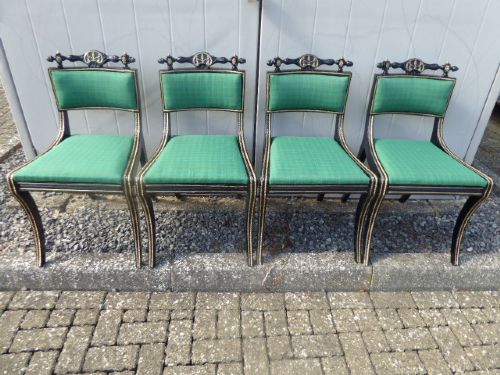
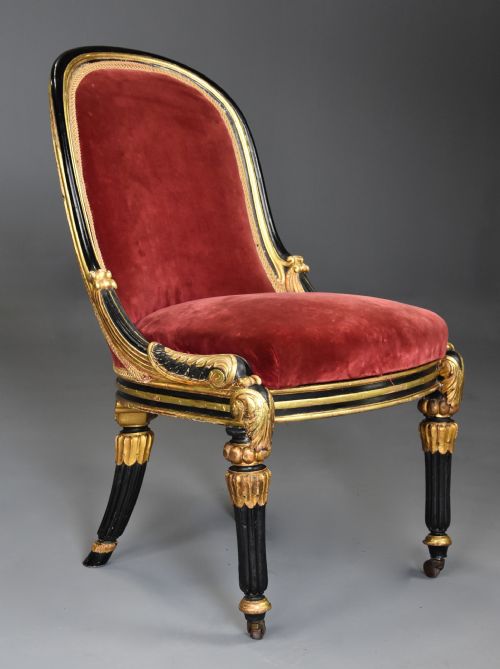
The selections recorded here encompass diverse regional interpretations, including English Regency examples, Italian rococo models, and Anglo-Dutch walnut high-back forms. You are most likely to meet painted, ebonised, and polished wood versions upholstered in fabric or velvet, often presented in pairs or larger matching sets.
How they were made
Cabinetmakers constructed these frames using traditional timbers such as walnut and general wood, shaping the supports and backrests with sophisticated joinery techniques. Surfaces were frequently painted, ebonised, or left natural before skilled artisans applied gold leaf selectively to highlight specific carved motifs and mouldings.
Upholstery completed the pieces, utilising durable materials like fabric and velvet to provide comfortable seating. The interplay between dark ebonised or painted surfaces and bright metallic leaf required precise craftsmanship to achieve the characteristic contrast defining the style.
Some ebonised Regency chairs whisper of candlelit dinners from eighteen-fifteen, still waiting to hear the rustle of silk.
What varies in quality
The refinement of the carved ornament dictates the visual success of each piece, distinguishing ambitious workshops from standard production. Crispness in the foliage and scrollwork shows the hand of a confident carver who understood how light would strike the gilded surfaces.
The integrity of the underlying timber frame and the quality of the finish, whether ebonised paint or polished walnut, set individual examples apart. Proportions also play a crucial role, as well-balanced rails and well-raked legs create a harmonious silhouette that lesser pieces miss.
The Parcel Gilt Side Chairs Glossary
- Parcel Gilt
- A decorative treatment where only specific carved areas of an object receive an application of gold leaf, leaving the surrounding timber or paint exposed. This technique creates a striking contrast between the dark or painted wood and the bright metallic highlights.
- Ebonised
- Wood treated with a stain or finish to simulate expensive ebony. This dark ground provides a dramatic background for the application of parcel gilt details.
- Giltwood
- Timber that has been entirely coated in gold leaf rather than receiving partial gilding. It gives a completely opulent appearance across the entire frame of the furniture.
- Regency Style
- A design aesthetic drawing inspiration from the British Regency period, known for classicism and restrained neoclassical ornament. Pieces in this style frequently incorporate ebonised finishes and parcel gilding.
- Bergere
- An enclosed upholstered armchair with wooden framing, often featuring exposed polished or painted woodwork. This form offers a comfortable seating option distinct from standard dining chairs.
Parcel Gilt Side Chairs: Frequently Asked Questions
Where were parcel gilt side chairs used?
These chairs originally served in formal dining rooms, reception spaces, and grand drawing rooms where impressing guests was paramount. Their decorative nature meant they stood against walls when not in use around a dining table.
Today, they transition easily into modern interiors as accent seating or around a dining setting, adding historical character and visual contrast to a room.
How do I identify Regency examples?
Regency pieces typically display classical restraint, clean lines, and dark ebonised finishes contrasted with precise gold leaf highlights. They often draw on ancient Roman, Greek, or Egyptian motifs.
Examining the turning of the legs and the flatness of the carving helps separate these early nineteenth-century forms from later revivals.
How do I care for velvet upholstery?
Velvet requires gentle brushing with the pile to maintain its texture and prevent crushing over time. Keeping these chairs away from direct sunlight preserves both the fabric colour and the delicate gold leaf.
Professional cleaning ensures the pile remains plush without damaging the antique timber frame or the underlying structure.
Can I mix different chair styles together?
Combining different periods and regional styles, such as pairing Anglo-Dutch walnut forms with Regency ebonised seating, creates a layered interior. Matching finishes or similar wood tones helps tie disparate pieces into a cohesive arrangement.
Scale and proportion remain the most important factors when placing varied chairs around the same table.